An Overview of Headstarting Curlews

Headstarting is a crisis conservation technique for endangered species in which eggs are removed from areas in which they are unlikely to survive, reared in captivity and the young birds fledged back to the wild.

In February 2025, Curlew Action brought together conservationists and organisations from across Europe who are involved in headstarting the European Curlew to share knowledge and discuss the feasibility and best practices of curlew headstarting projects. This blog is the first of 8 that will disseminate the presentations and outputs from this 2-day virtual event.


Headstarting: The Big Picture

Dr Geoff Hilton (Wildfowl & Wetlands Trust)

Geoff puts curlew headstarting into context as a conservation intervention. What is the problem we are trying to solve with headstarting? Why is it a promising technique and what are its limits and constraints? What does all this tell us about when and where headstarting might be a sensible option for curlew conservation?

Dr Geoff Hilton is the Head of Conservation Evidence at WWT, the charity for wetlands. He has worked for 25 years on the science of threatened species recovery, and for the last six years has been involved in work to understand and Eurasian curlew declines and devise solutions.

Further Info


Headstarting as a Conservation Measure: Opportunity or Aberration?

Dr Helmut Kruckenberg (Institute for Wetlands and Waterbird Research, Germany)

Headstarting is a relatively new method used in species conservation. It is successfully used in reptiles and amphibia, but is this also useable for birds? This talk presents more questions than answers but gives an overview of the problems, as well as pros and cons.

Dr Helmut Kruckenberg is a biologist and Head of Institute for Wetlands and Waterbird Research.

Further Info


Headstarting in the UK: Licensing and Restrictions

Richard Saunders and Graham Irving (Natural England)

All wild birds, their eggs and nests are protected in the UK. Therefore, all headstarting projects require a licence. This presentation shows how licence applications for headstarting projects are assessed and describes the different types of headstarting project. It then focusses on one bird licensing issue – air safety. A change in approach has been used to the Curlew’s advantage. Through headstarting and translocation, hundreds of Curlew eggs and chicks have been rescued from sites where the birds were at risk. Is this situation unique to England, or might such opportunities exist elsewhere in Europe?

Richard Saunders is a Senior Ornithologist at Natural England, leading on Curlew and Avian Reintroductions for Natural England’s Birds Team.

Graham Irving is a Senior Advisor in the licensing team within Natural England. He liaises with the airbases and collects the curlew eggs in a portable incubator and delivers them to Pensthorpe.

Further Info


Headstarting: WWT Perspective, Feasibility and Justification

Nigel Jarrett (Wildfowl & Wetlands Trust)

Nigel Jarrett will explain why he thinks headstarting is a justifiable and feasible conservation intervention that could help halt/reverse the decline of Curlew in southern England if the causes underlying the species’ declines are absent or controlled. He will touch on the costs of headstarting – it’s an expensive undertaking, as are many species conservation interventions.

Nigel Jarrett is WWT’s Conservation Breeding Manager. He has been involved in Curlew headstarting projects on Dartmoor and in the Severn and Avon Vales, as wel as headstarting projects for the Black-tailed Godwit and Spoon-billed Sandpiper. He has also worked on the reintroduction of the Madagascar Pochard. Eurasian Cranes translocations of the Layan Teal from Laysan Island to Midway Atoll in the Pacific Ocean and McQueen’s bustard in the UAE.

Further Info


European Curlew Headstarting Online Workshop

This blog was produced as an output of the European Curlew Headstarting Online Workshop, a virtual event delivered by Curlew Action and the Biological Recording Company. Check out the other presentations and outputs in the other blogs resulting from this event.

  1. An Overview of Headstarting Curlews
  2. Curlew Headstarting Projects: Europe
  3. Curlew Headstarting Projects: England
  4. Curlew Headstarting: Eggs, Incubation and Hatching Coming soon…
  5. Curlew Headstarting: Rearing Chicks Coming soon…
  6. Curlew Headstarting: Health & Disease Coming soon…
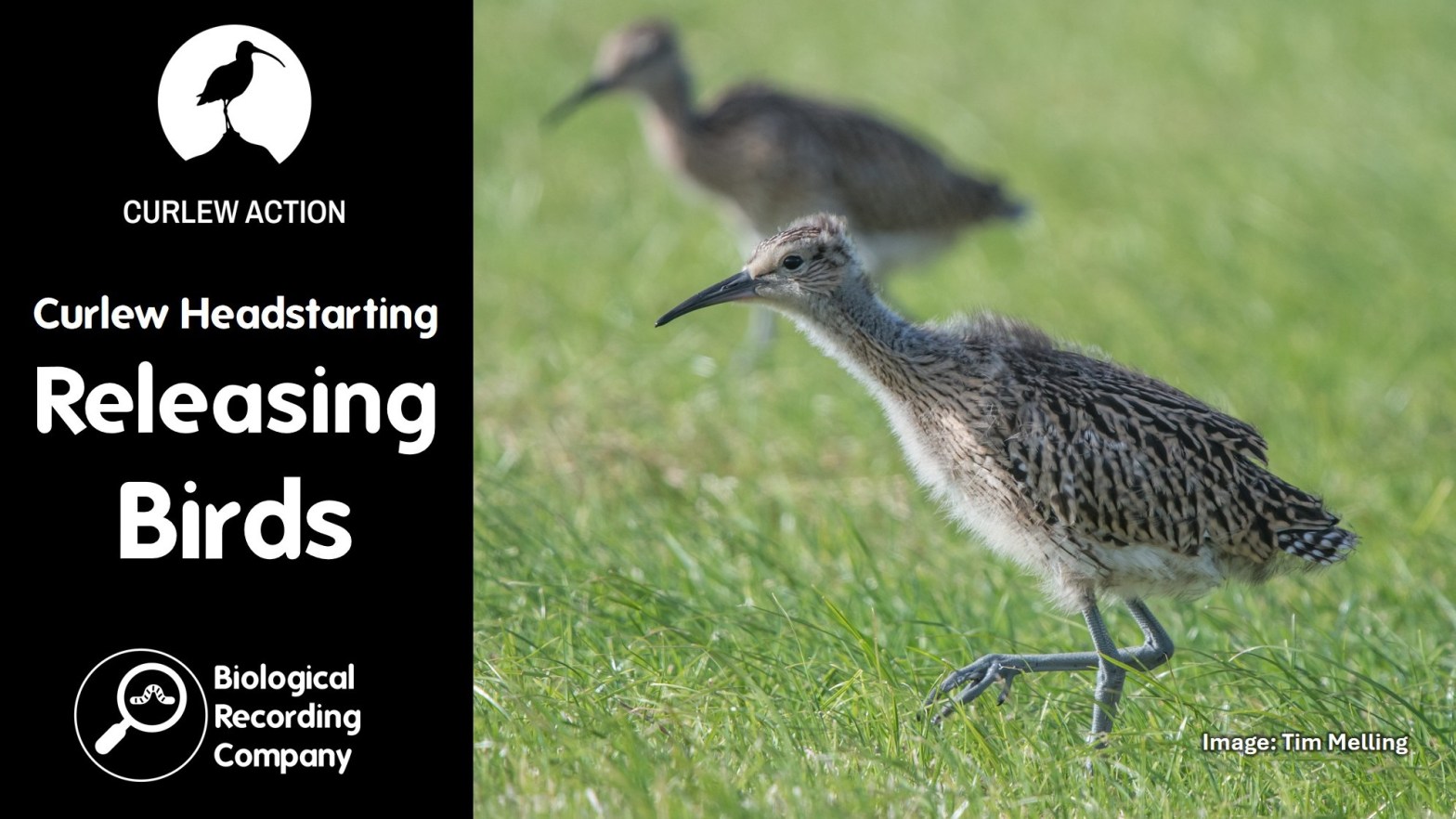
  7. Curlew Headstarting: Releasing Birds Coming soon…
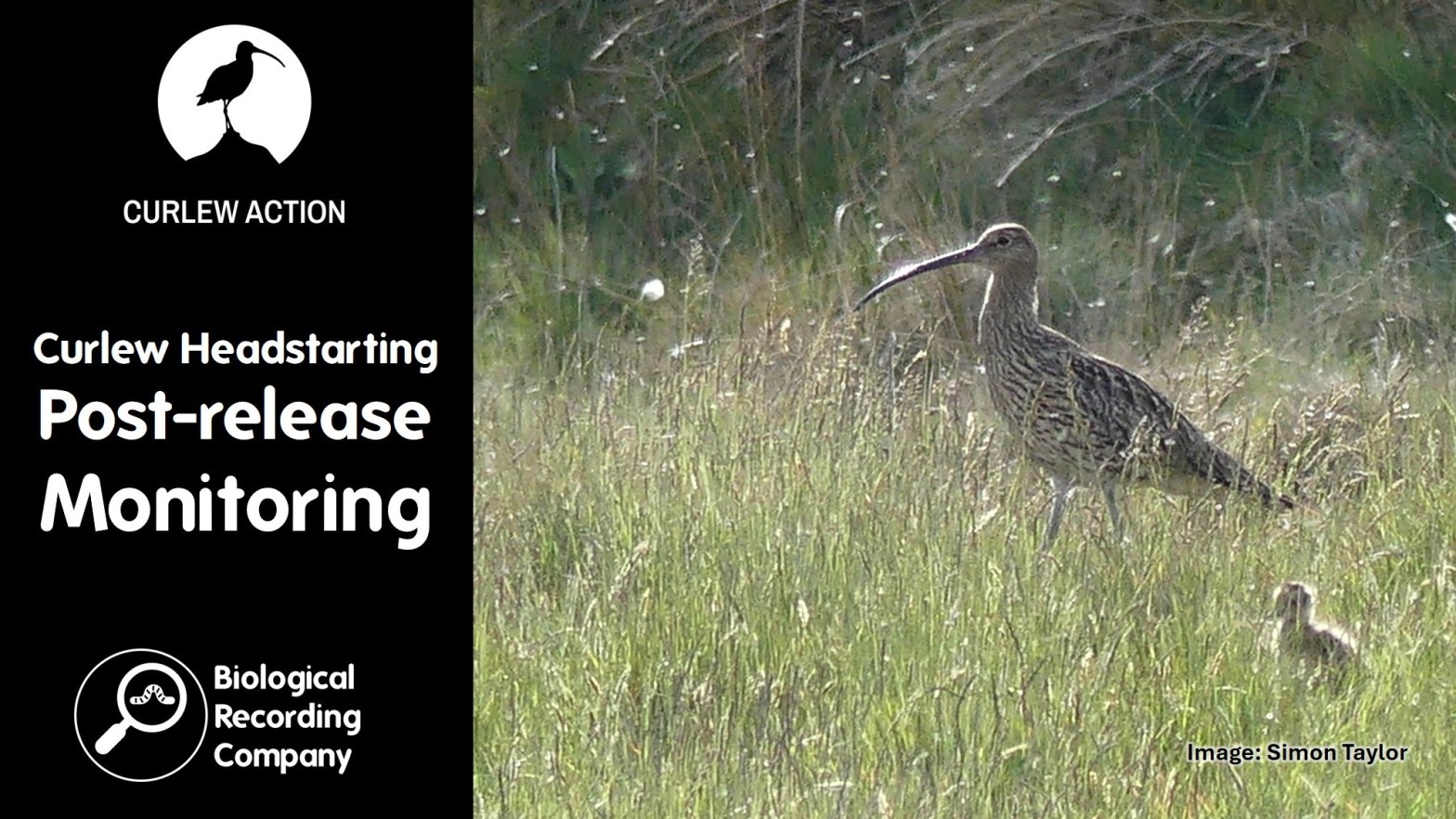
  8. Curlew Headstarting: Post-release Monitoring Coming soon…

For more information about this event, the speakers and the presentations see the event delegate pack below.

Using Bioturbation Behaviour To Create New Functional Groups for Earthworms

Earthworm ecological categories (anecic, epigeic, endogeic) based on morphology are commonly used as proxies to describe their effects on soils without validation of their actual behaviour. The first and main effects of earthworms are physical, they are physical ecosystem engineers so it makes sense to use a system where groupings are based on the physical behaviour of earthworms. This presentation will delve into an experiment that investigated the burrowing, feeding and casting behaviour of 50 species of earthworm under laboratory conditions and proposed new functional groups of earthworms based on their bioturbation behaviour.

Q&A with Yvan Capowiez

Yvan Capowiez is a researcher at INRAE (the National Research Institute for Agriculture, Food and the Environment in France). He specialises in earthworm ecology and the physical roles of earthworms in (agricultural) soils.

What is the deepest that earthworms can burrow?

Our work was done in the lab of course, so the worms could not go very deep. But if you ask archaeologists, earthworms can go very deep. For some Scherotheca species, we observe burrows at 1 to 2 metres down. However, we don’t have a lot of information, only indirect evidence, for the really deep burrowing species, so this is a very difficult question to answer.

Are the deep burrowers good for agricultural soils?

The deep burrowers are, I think, very lazy. They only do a few burrows. But they are powerful. For the farmer, it’s not that they make a lot of burrows (they don’t), but that they can go through very dense soil. I think that Lumbricus terrestris could support a bit of tillage so for farmers, these would be good earthworms. In pastures, the intense tunnellers are better because they tunnel a lot, letting in more water into the soils, which you want.

How much of the burrowing behaviour do you think was constrained by the soil cores that you used for your study?

Their behaviour was likely impacted by the soil cores. With the Scherotheca spp especially, we could see that they were burrowing a lot on the bottom and edges, trying to escape. Bigger soil mesocosms would obviously be better, but these are also more expensive. We are also looking at climate change, so the impact of soil moisture is something we do look at. We noticed that when the soil cores started to dry out, the behaviour of the anecic worms didn’t change but the behaviour of the endogeic species did – they dug deeper down to get to the moister soils.

Which of the six functional groups contributes the most to soil carbon fixation?

This is not an easy question because all groups have different roles. In terms of organic matter, I think it’s the burrowers. They’re the ones that take the most litter into the soil and bury it, more so than the intense tunnellers.

Earthworm Functional Groups taken from Capowiez et al (2024)

Literature References

Further Info

entoLIVE

entoLIVE webinars feature guest invertebrate researchers delving into their own invertebrate research. All events are free to attend and are suitable for adults of all abilities – a passion for invertebrates is all that’s required!

entoLIVE is delivered by the Biological Recording Company in partnership with the British Entomological & Natural History Society, Royal Entomological Society and Amateur Entomologists’ Society, with support from Buglife, Field Studies Council and National Biodiversity Network Trust.

Check out more invertebrate research, publications and events from the entoLIVE partner websites:


More on molluscs

Hedgehogs

The West European Hedgehog (Erinaceus europaeus) was once a common sight in British gardens and the countryside. These nocturnal mammals feed on invertebrates and have been declining in numbers, with the International Union for Conservation of Nature recently adding them to the list of near threatened species on their Red List.

This blog features presentations from two Hedgehog specialists, that will explore the biology and ecology of these fascinating animals, before highlighting the threats that our hedgehogs face and what we can do to help them.


Hedgehogs and their Ecology 

Hugh Warwick (British Hedgehog Preservation Society)

The British Hedgehog (Erinaceus europaeus) is a nocturnal mammal known for its unique spiny coat and ability to roll into a ball when threatened. This presentation explores their ecological role, focusing on their habitat preferences, foraging strategies and diet. We’ll also uncover their seasonal behaviours, including hibernation and breeding cycles, providing insight into how these small mammals interact with their environment and contribute to the UK’s ecosystems.


Hedgehog Threats and Conservation

Grace Johnson (Hedgehog Street)

British hedgehogs face threats from many angles: habitat loss, reduced connectivity between gardens, roads, pesticides, bonfires… the list goes on! There are lots of things that the general public can do to help, from linking your garden to a Hedgehog Highway to adding your sightings to the Big Hedgehog Map. Grace will take us through the various threats to hedgehogs and how we can mitigate these risks through the implementation of conservation actions and simple changes to our gardening techniques.


Q&A with Hugh Warwick and Grace Johnson

Hugh Warwick is an ecologist and writer with a particular fondness for hedgehogs. He has authored several books on hedgehogs and other British wildlife: A Prickly Affair (2010), The Beauty and the Beast (2012), Hedgehog (2014), Linescapes (2017) and The Hedgehog Book (2020). Hugh also does a lot of public speaking (from primary schools to postgraduate research groups via the WI and Wildlife Trusts) and delivers training on hedgehog conservation and creative writing. He is also the spokesperson for the British Hedgehog Preservation Society.

Grace Johnson is a Zoology graduate who is passionate about wildlife conservation. Following university, she worked in bat conservation before moving on to hedgehogs. Grace is the Hedgehog Officer for Hedgehog Street, a joint campaign by People’s Trust for Endangered Species and The British Hedgehog Preservation Society, where she works with a wide range of partners, stakeholders, volunteers and the general public.

Aside from invertebrates, what else do hedgehogs feed on?

Hugh: Hedgehogs will eat what they find in front of their inquisitive snouts – so if there are lots of invertebrates, then that is what they will eat. Other natural food includes carrion, small mammals (probably already injured ones), birds eggs and chicks. We also know that they will very happily tuck into any meaty treats we put out for them … kitten kibble is what I recommend.

Do you recommend feeding hedgehogs?

Grace: Yes! Provision of natural insect food via wildlife-friendly gardening is the best option in the first place: https://www.hedgehogstreet.org/help-hedgehogs/helpful-garden-features/. Then this can be topped up with supplementary food in the form of meaty cat or dog food: https://www.hedgehogstreet.org/help-hedgehogs/feed-hedgehogs/, just make sure to keep bowls and feeding areas clean.

Are changes to weather patterns impacting hibernation patterns of British hedgehogs?

Hugh: There is clear evidence from hedgehog rescues that youngsters are being seen in January – which implies mating taking place in November and December when we would normally expect them to be in hibernation. We do not know whether this is evidence of more people being aware of the risks hedgehogs face and therefore bringing them in – or evidence of a warning climate keeping them active for longer. There is no NEED for a hedgehog to hibernate – they do it for longer in Norway than they do in Spain for example. I think the biggest risk comes from hedgehogs being pulled out of hibernation more frequently – thus using up the fat reserves vital for their survival.

What is the best way to monitor local hedgehog populations?

Grace: We’ve launched a National Hedgehog Monitoring Programme and need your help to tag hedgehogs and other wildlife in camera trap images, more info here: https://ptes.org/campaigns/hedgehogs/nhmp/. If you spot a hedgehog out and about, logging it on the BIG Hedgehog Map also helps us understand hedgehog distribution: https://bighedgehogmap.org/.

What is the one thing you’d advise people to do to help hedgehogs?

Grace: Think hedgehog! Would a hedgehog be able to access your garden or do you need to install a hedgehog highway? Could a hedgehog be nesting in the messy area you’re about to strim? Definitely worth checking! Are there enough creepy crawlies in your garden for hedgehogs to feed on, or could you improve this with a log or leaf pile? We need to think more about sharing our gardens and greenspaces with hedgehogs and other wildlife.

Hugh: Get rid of the ‘cult of tidiness’ – embrace a bit of wildness, some might call it mess, in your garden … or accept that local parks should have areas set aside for sharing with nature rather than manicured deserts!

How did you become interested in hedgehogs?

Hugh: I started working with hedgehogs as an ecologist – doing the 3rd year project for my degree at Leicester Polytechnic. I ended up in Orkney, on the island of North Ronaldsay, seeing whether the imported hedgehogs were having a negative impact on the breeding success of the ground nesting birds. That was back in 1986 and got me hooked! Actually, what REALLY got me deep into the hedgehog world was the realisation that as people love them so much, the hedgehog then presents a way of talking about other, maybe less popular subjects – such as macro invertebrate population declines, the choices we make over what we eat, speed limits, planning law … talking about hedgehogs means we can talk about so much more!

Grace: In my first conservation role I worked with bats, which was fascinating. In this role my knowledge of mammalian ecology and hibernation grew, and so hedgehogs were a brilliant next step. Working with such a popular species is a fantastic gateway to encourage people to care about the natural world more widely, and how we can all protect it.

Useful links

Check out more of Hugh’s work

Sketch Notes by Mel North

Follow Mel on Instagram here: https://www.instagram.com/mellifera_paper/


Event Partners

This blog was produced by the by the Biological Recording Company as part of the Tayside Biodiversity Partnership Biodiversity Towns, Villages and Neighbourhoods project.


Learn more about British wildlife
Biodiversity Net Gain

Biodiversity Net Gain (BNG) is an approach to development that aims to leave nature in a measurably better state than before. This is achieved by embedding the mitigation hierarchy into development design through a biodiversity metric, highlighting impacts on, and opportunities for nature.

Each year, we host a Biodiversity Net Gain Virtual Symposium to bring together professionals from a range of sectors to discuss their experiences and lessons learned from working with BNG.

The next event will take place on Wed 18 Mar 2026. We’re currently looking for speakers for this event and are particularly interested in ecologists that would like to present case studies of offsite and onsite BNG delivery. Submit a speaker application through our short Speaker Application Form.

The presentations from our 2023 and 2024 Biodiversity Net Gain Virtual Symposium events are now available to watch below. The 2025 event presentations will be available later in the year.

Biodiversity Net Gain Virtual Symposium 2025

  1. BNG: A Big Issue for Small Sites? with Peter Massini (Future Nature Consulting)
  2. Assessing Habitat Condition for BNG: How Consistent Are Ecologists? with Ivonne Salamanca (Bangor University)
  3. Considering Bats in Biodiversity Net Gain with Jo Ferguson (Bat Conservation Trust)
  4. Mandatory BNG in Practice: Findings from an Early Research Project with Ellie Savage (Institution of Environmental Sciences)

Biodiversity Net Gain Virtual Symposium 2024

  1. Biodiversity Net Gain: March 2024 Update from Natural England with Dr Nick White (Natural England)
  2. Biodiversity Net Gain: The Warwickshire Way with David Lowe (Warwickshire County Council)
  3. Local Innovation: How LERC Services Are Shaping Up with Mandy Rudd (Association of Local Environmental Record Centres)
  4. Habitat Condition Assessment Methods for BNG with Dr Dan Carpenter (Digital Ecology)

Biodiversity Net Gain Virtual Symposium 2023

  1. Biodiversity Net Gain: A Policy and Metric Update (March 2023) with Dr Nick Ian White (Natural England)
  2. Delivering Biodiversity Net Gain for Infrastructure Projects with Dr Julia Baker CEnv MCIEEM (Mott MacDonald)
  3. Biodiversity Net Gain: The Wiltshire Council Perspective with Rachel Jones (Wiltshire Council)
  4. The Wildlife Trusts Habitat Banking Investment with Martin Varley (Cheshire Wildlife Trust)

Biodiversity Net Gain: March 2024 Update from Natural England

Dr Nick White (Natural England)

An update on the implementation of mandatory BNG for major developments under the Town and Country Planning Act and the latest about the extension of BNG to minor (small sites) developments.


Biodiversity Net Gain: The Warwickshire Way

David Lowe (Warwickshire County Council)

Warwickshire was one of the pilots of Biodiversity Net Gain and has been the first local authority to successfully implement it in practice. Warwickshire’s metric has been used to form the approved metric for national use. Bold claims indeed! So how has Warwickshire achieved BNG so far and what else is there left to do?


Local Innovation: How LERC Services Are Shaping Up

Mandy Rudd (Association of Local Environmental Record Centres)

For the past few years, the Association of Local Environmental Records Centres (ALERC) and its members have been advocating for the use of local data services to inform the design, delivery and ongoing monitoring of biodiversity net gain in England. This talk will provide an update on key developments at a national level and will provide examples of innovation at a local level.


Habitat Condition Assessment Methods for BNG

Dr Dan Carpenter (Digital Ecology)

Habitat condition is a key component of the data required to calculate BNG units in the DEFRA metric. Criteria for habitat condition are provided with the metric, but no method for condition assessments accompanies these criteria. How then do we collect robust data to support condition assessments to ensure regulators have confidence in our condition assessments? Dan will introduce an emerging method for condition assessments that takes a standardised approach to data collection to ensure condition assessments are underpinned by robust data and evidence.


Biodiversity Net Gain: A Policy and Metric Update (March 2023)

Dr Nick White, Natural England

The presentation will update the audience on the forthcoming mandatory approach to biodiversity net gain, encompassing the latest Government policy announcements and what these mean for ecologists, developers, planners and land owners. It will also provide an update about the biodiversity metric that will be used for mandatory biodiversity net gain.


Delivering Biodiversity Net Gain for Infrastructure Projects

Dr Julia Baker CEnv MCIEEM, Mott MacDonald

To design Biodiversity Net Gain, Ecologists must balance the unit calculation of the Biodiversity Metric with the Metric’s trading rules, whilst ensuring the habitat creation and enhancement of a BNG design are feasible, will endure for at least 30 years and contribute towards conservation. This presentation explores this balance, with key considerations and pitfalls to avoid for BNG to genuinely deliver long-term and meaningful outcomes on the ground.


Biodiversity Net Gain: The Wiltshire Council Perspective

Rachel Jones, Wiltshire Council

Wiltshire Council have been moving from securing no net loss to net gain and offering solutions to developers to help deliver nature recovery across Wiltshire. Rachel Jones will discuss Wiltshire Council’s approach to Biodiversity Net Gain and how they have been offering solutions to developers to help deliver nature recovery across Wiltshire. These solutions include opportunities on our own land holding, working with wider landowners and farmers for strategic sites, and securing on-site enhancements on development sites. Wiltshire Council are also looking at how to combine solutions with wider community and environmental benefits and how to address the expected resourcing implications for the Council.


The Wildlife Trusts Habitat Banking Investment

Martin Varley, Cheshire Wildlife Trust

The Wildlife Trusts Habitat Banking Investment project aims to create new financing structures to meet near-term demand for BNG credits and prepare to accelerate delivery when national policy is implemented. Their partnership has developed a new model to enable Trusts to leverage private finance and secure biodiversity unit agreements with developers to secure strategic land and create new habitats, reducing current reliance on piecemeal grant funding and offset payments.


Event Partner

Our annual Biodiversity Net Gain Virtual Symposium programme is delivered jointly by the Biological Recording Company and Digital Ecology.


More on Biodiversity Net Gain

Molluscs on the March: Engaging the Public with Mollusc Collections

Molluscs are the second largest group of animals in terms of species diversity but probably one of the most poorly understood thanks to their diversity of form, enigmatic evolutionary history and generally cryptic nature. This talk will introduce you to the marvellous mollusca as well as look at some of the ways the mollusc collections at the Oxford University Museum of Natural History have been used to inspire, enthuse and engage a wide range of audiences with the greatest animal group there ever was, is and will be.

Q&A with Mark Carnall

Mark Carnall is one of the Zoology Collections Manager at Oxford University Museum of Natural History responsible for the non-entomological invertebrate and human remains collections. His research interests are digitisation in museums, public engagement and natural history, sector-wide advocacy for collections, models, casts and replicas as well as the implications of 3D printing on museum collections.

Can you share some recent research projects that have used your museum collections?

One of the wonderful things about working at the Museum is that there’s no such things as a regular day and we welcome researchers of all kind. For the mollusc collections at Oxford University Museum of Natural History, recently I have one artist come to use the collection to illustrate poorly known UK species which are facing decline. I’ve also had a poet and researcher come through exploring how cuteness and perceived cuteness in different animal species is important (I tried to convince them that the critically endangered in the British Isles  glutinous snail, Myxas glutinosa was ‘cute’). I’ve had zooarchaeologists use the collection to sample marine molluscs that were collected before the carbon record was permanently skewed through atomic bomb testing in the 1950s in order to provide baseline carbon isotope references for the east coast of the UK. I’ve also had several archaeologists and biologists through using our UK mollusc reference collections to identify species from archaeological and soil deposits. We have a steady stream of researchers from all over the world coming through working on systematics and taxonomy- describing new species, sorting out older, enigmatic species and there are recent papers on pen shells, saltwater clams and octopuses referencing specimens in the Museum collection.  

Do molluscs feel pain?

This is an interesting question – we still struggle with working out how smart, conscious or sensitive other organisms are. There is something called taxonomic chauvinism, a kind of bias which is where, broadly, we prioritise our species, our group, and what we are good at or use well known species to make general assumptions about how larger groups behave. There’s still a kind of ‘surprise’ when we find evidence of behaviour that we think is unique to primates or specifically our species especially when it comes to things like complex behaviour, intelligence, sentience and sensitivity.

Whether or not they sense pain in a way that we would be able to understand, we can debate endlessly, but they do show a response to things that we would assume cause them pain. I’d be surprised if the list of organisms we think can feel pain doesn’t steadily grow the more we look and don’t making sweeping assumptions. Cephalopods, the octopuses, squids and nautilus already have extra protections in some countries for when they are kept in captivity on the basis of their intelligence and possibly capacity to feel pain.

Are mollusc species declining or do we not really know?

Molluscs are one of the groups with the highest numbers of described extinctions. Of all the modern organisms (excluding fossil species) documented to be extinct to date roughly a third of them are molluscs. However, the overall picture is really limited, globally there are fewer mollusc workers looking at distribution data or documenting decline and it’s really difficult to assess any marine species particularly those with wide ranges or cryptic habitats. There is a ‘classic’ conservation article: Not Knowing, Not Recording, Not Listing: Numerous Unnoticed Mollusk Extinctions’ documenting many of the issues with our understanding of how molluscs are faring globally. Although it is from 2009 much remains relevant today.

Freshwater molluscs are particularly impacted by pollution and waterway use, globally and nationally and are used as an indicator of environment health. So, they are disappearing. Molluscs have also been the ‘poster species’ for when biological control goes wrong, i.e.  deliberately introducing one mollusc species that leads to the extinction of many others in some cases introduced to control another mollusc species that was also introduced. There are concerns about the rising acidity of oceans particularly for shell growth and the impact on mollusca.

So essentially, yes, where people have looked, there is evidence of decline as well as some species which are expanding their ranges with climate change but there are big gaps in how often they are assessed. At the national level, there is a lot of great work being done but there is also patchiness, in terms of baselines of where things were versus where they are now. For example, there isn’t currently an up to date national red list for UK mollusca and there’s never been a comprehensive checklist.

How old is the longest-lived mollusc that we know of?

A very well known mollusc (well in mollusc circles) is the specimen of ‘Ming’ an ocean quahog or Icelandic cyprine clam, Artica islandica, which I think you can still see at the National Museum of Wales. From growth lines counts and subsequent isotope work it was aged at 507 years at the point it was collected, breaking the Guinness World Record as oldest animal in the world.

How do museums ensure the vibrant colours of some molluscs, such as nudibranchs, are recorded since they lose their colours when preserved?

One of the downsides of preservative liquids is that you lose those colours. These days, when people are in the field, they collect that information, while the animal is alive and, in their environment, through photography. Traditionally, lots of drawings would have been done. But it should be noted that while colour is interesting, it’s not too important in terms of diagnostic characteristics in many mollusc groups.

Further Info

entoLIVE

entoLIVE webinars feature guest invertebrate researchers delving into their own invertebrate research. All events are free to attend and are suitable for adults of all abilities – a passion for invertebrates is all that’s required!

entoLIVE is delivered by the Biological Recording Company in partnership with the British Entomological & Natural History Society, Royal Entomological Society and Amateur Entomologists’ Society, with support from Buglife, Field Studies Council and National Biodiversity Network Trust.

Check out more invertebrate research, publications and events from the entoLIVE partner websites:


More on molluscs

Swifts

Though Swifts only spend 3 or 4 months each Summer with us, while they are here they bring spectacular aerial action and excitement to our urban lives! Swifts rely on buildings for nesting sites, but post-1945 buildings are often unsuitable because the techniques and materials used in modern buildings (and refurbished buildings) deny Swifts access to breed. Add in the fact that insects are declining, and our Swifts are faced with threats to both their food source and nesting sites.

This blog features presentations from two Swift specialists, that will explore the biology and ecology of these fascinating birds, before highlighting the threats that our Swifts face and what we can do to help them.


Swifts and their Ecology

Edward Mayer (Swift Conservation)

The Common Swift (Apus apus) is an impressive bird that migrates to and from Africa each year, can fly up to 69 miles per hour and does almost everything while flying – sleep, eat, bathe and mate. This presentation explores their biology, ecological role and behaviour. We’ll also delve into their spectacular migratory journey across vast distances and discuss their seasonal strategies, including migration and breeding, providing insight into how these unique birds interact with the temperate and tropical environments and contribute to the UK’s biodiverse ecosystem.


Swift Threats and Conservation

Cally Smith (Huntly Swift Group – NES Swifts)

Between 1995 and 2016 we lost over half of all the Swifts breeding in the United Kingdom. Our swifts are under threat from both declining insect populations (aka Swift food) and a loss of nesting sites due to changes in how we seal up buildings during construction and refurbishment. Cally will take us through the threats that our Swifts face and what we can all do to provide nesting opportunities in our homes, community buildings and workplaces.


Q&A with Edward Mayer and Cally Smith

Edward Mayer first became fascinated by Swifts at the age of six when he saw these amazing birds flying above his home in Southampton. He has been in love with them ever since. In 2003 he pioneered an approach to preserving the future of the Common Swift through advice, talks and the encouragement of widespread volunteer action. He studied the efforts of Swift experts in Germany and began his work by creating “London’s Swifts” an internet-based advice service focusing on how to preserve existing nest sites and create new provisions. It was such a success that the Royal Society for the Protection of Birds asked him to make it a national service and “Swift Conservation” was born. It soon started to receive appeals for help from enthusiasts in Europe, so Edward widened its scope to cover Europe too.

Cally Smith set up the Huntly Swift Group – NES Swifts in 2017 to address the decline in Common Swift numbers. The group’s activities include engaging local communities, school visits, conducting Swift surveys and advising both local authorities and local builders.

What do Swifts do at night?

Edward: They fly at night, we still do not know if they sleep like we do, go into a sort of automatic-pilot guided trance, or stay partly or mostly awake. So far it has been impossible to put an ecephalograph onto a Swift’s head to record its electrical brain activity, but we expect to be able to do something like that quite soon. Studies with radar have shown that Swifts ascend at dusk and descend again at dawn, and spend much of the night in flocks high in the sky. Studies in Holland have shown that they can descend at night to feed on swarms of insects over freshwater bodies illuminated by moonlight. But that is pretty much all we know so far.

What insects do Swifts eat?

Edward: Briefly, anything without a sting that they can get into their beak. Typical prey items include aphids, gnats, mosquitos, small beetles, hoverflies, flies, flying ants, and mayflies. They are opportunistic feeders and go for everything flying that is available, wherever it is accessible above ground level, even up to several thousand feet up.

What can we do to help Swifts apart from installing swift boxes? 

Cally: There are a number of things that we can all do:

  1. Survey your own patch in June and July, August and find active swift nest sites.  These are precious colonies (however small) which must be protected. 
  2. Lodge your findings (check and record where YOUR local planning authority accesses environmental records so they flag up in local planning applications) Note of explanation, if i may: Sadly, not all building repairs will go through the planning process, they may be private upgrades (a man and a ladder), in which case you have a very difficult time of preventing losses once the homeowner has paid for and erected scaffolding and you realise there is a problem unless it is in the breeding season in which case you contact the WCO losing on the popularity stakes but maybe saving a colony!!!! Otherwise, your Planners should be an important ally, so RECORD.  
  3. Keep a vigilant watch for threats to known colonies.

Do droppings cause an issue where Swift boxes are installed?  

Cally: Not if used only by swifts as they consume their own droppings inside the nesting site and they don’t sit at the nest entrance and poop!  IF the box/brick is used by other species there may be some dropping (publish that if you want to!)  It is relatively easy to follow guidelines for siting boxes and still avoid directly over walkways etc if it’s a concern.  Personally, unless I am reinstating an active nest site like for like I would nearly always install nest boxes on the side or rear of a building for aesthetic reasons (following guidelines of course for exposure).

Are there any specific Swift bricks that you recommend?  

Edward: The Action for Swifts and Ibstock Swift bricks, both designed by Swift experts, both made here in the UK, and both with good records of success.

Cally: OMG too tricky!!  One size does NOT fit all.  Action for Swifts S Brick – great for brick/stone builds and retrofits.  The Vivara Pro/ Schwegler (and similar) is good for block-built new builds or rendered situations.  Action for Swifts’ half brick entrance piece is great for bespoke situations.

What is the one recommendation that you’d make to anyone who wants to help Swifts?  

Cally: Survey and record Swifts in order to protect long-standing colonies! It’s important that sitings of Swifts are fed into the system so check with your local swift group or Local Environmental Record Centre to find out the best way to record Swifts locally so that records will be considered within the planning process.

Edward: Learn all you can about them and talk about them and the wild world in general to your friends, neighbours and colleagues. The great problem with wildlife conservation is people’s ignorance. Apart from enthusiasts, people seem to see wildlife as an optional extra, nice but not essential, fun to watch on TV but otherwise not so important, just a bit sad to see it all dying out, and they think that “nature” is something that can be stuck on a “reserve” and left to get on with it, job done, rather than the essential ingredient for our continued existence here on this planet. Yes, in theory, one could live in a sterile pod on Mars and eat synthetic food for the rest of one’s days, but one would soon go stark-staring mad and probably have to be drugged up to the eyeballs to keep one from suicide. And it’s the wild world that effectively produces the air and water and conditions for growing the food that we need to live. No wildlife = realistically, no humanity.


Useful links

Recording Swifts

Swift Nest Boxes


Event Partners

This blog was produced by the by the Biological Recording Company as part of the Tayside Biodiversity Partnership Biodiversity Towns, Villages and Neighbourhoods project.


Learn more about British wildlife
Gardening for Bats and People

Hear how to create the ideal nocturnal space for bats and people! Learn what elements you can use to make gardens perfect for our bats, while also providing calm, beautiful spaces for people to enjoy connecting with nature.

Q&A with Jo Ferguson

Jo Ferguson is an urban ecologist and Principal Consultant working for the Bat Conservation Trust and Greengage Environmental. She has over 20 years of experience in both voluntary and professional sectors, from practical land management to ecological consultancy, both in the UK and abroad. She is passionate about creating a provision for biodiversity, particularly bats, within the built environment and helping people connect with nature in their own backyard!

Do different species of bats feed on different species of insects?

Yes, they are evolved to hunt in a certain way for different types of insects so they can exploit this niche as a feeding resource as much as possible. For example, slow-flying species, such as the brown long-eared bat, have big ears and quiet but detailed focused call to hunt moths. These woodland bats can even detect moths that are not in flight and pick them off leaves due to their sensitive hearing. It’s a bit of a war of attrition and bats are these fantastic hunting machines. There has also been some evidence of brown long-eared bats eating oak processionary moths from analysing their droppings.

On the other hand, faster flying species such as soprano pipistrelles and common pipistrelles hunt along the edge of habitat and dash out for really small flies, the type that hatch in waterbodies.

Because bats feed on a range of different insects, encouraging them in to your garden means bats can help with suppressing insect species attacking your plants!

Is bat box occupancy impacted by how many bird boxes are nearby?

There are a lot of bat boxes out there so it can depend on the design of the bat box. We would recommend a design that doesn’t allow bird access because some birds, such as Blue Tits, can get into small spaces and are aggressive enough to put bats off using the same area. For example, the Kent Bat Box design is open at the bottom and there’s no area to nest (bats don’t require any nest materials). Placement is also important as bats prefer positions that heat up in the sun. So if in doubt, pair your bird box on the cool side of a tree or a wall and pop a bat box on the warm side, and then the birds will go in their preferred habitat, and then you won’t get that clash.

Is a bat box for roosting in summer or only used for hibernation?

Bats will use different areas for summer roosting and hibernation. We usually recommend putting bat boxes on warm walls (or trees) for when bats are active in the summer months. We do have evidence of bats using bat boxes in winter for hibernation but they require cool, humid and constant conditions that can be difficult to achieve in an unsheltered bat box. The biggest issue we have is there’s not a lot of evidence of where some of our most common species go so it’s difficult to replicate conditions. They’ll tuck themselves away for months at a time somewhere cool and humid, traditionally places like inside a rubble filled wall of a barn or church. However this habitat has been lost in many areas, therefore there is no harm providing bat boxes on a range of elevations to give bats the best chance of finding somewhere to roost all year round.

Is it illegal to move or remove a bat box once it is installed?

Bats are protected by law so disturbing them and destroying their roosts is illegal. However, bat boxes can be moved with the right specialist advice if there is a need to, to protect the bats. For example, where bat boxes have been put up in a tree for roosting provision and then years later a tree needs to be removed for safety reasons. It’s all about making sure that bats are not harmed and that this resource is not lost, which requires getting specialist advice to for example, check boxes are empty but then the resource is relocated again nearby.

Are LED lights good for bats?

LED lights are just a type of lighting. You can get blue-rich LED lighting with UV content that is attractive to insects (and therefore harmful in the environment) and you can get warmer LEDs that don’t have this component so is less impactful. It’s important to remember though that no lighting is ‘good’ for bats, bats are nocturnal and are perfectly suited to completely dark habitats so we should be mindful any time we think about adding lighting to our gardens. The first question to ask therefore is, do we need lighting at all? If so, where should it be directed to ensure it does not disturb habitat, how long does it need to be on for and how little lighting is actually needed to do the job intended. There is loads of great guidance on our website or if in doubt, seek out specialist advice.

Where do bats roost in trees?

Bats are looking for trees that provide features for them to roost in such as splits, cracks, crevices and hollows, therefore more mature, deciduous trees tend to be better in providing these resources, species such as Ash and Oak for example.

What is the best bat detector for absolute beginners?

In terms of getting started, the Magenta Bat Detector is a nice entry-level device that is simple to use, you can often get them second hand – I’ve had mine for years. I’d recommend coupling this with a basic field guide, then it’s simply getting out there to hone your skills and enjoying connecting with nocturnal nature! 

Literature References

Further info and links


Learn more about British wildlife