Red Squirrels
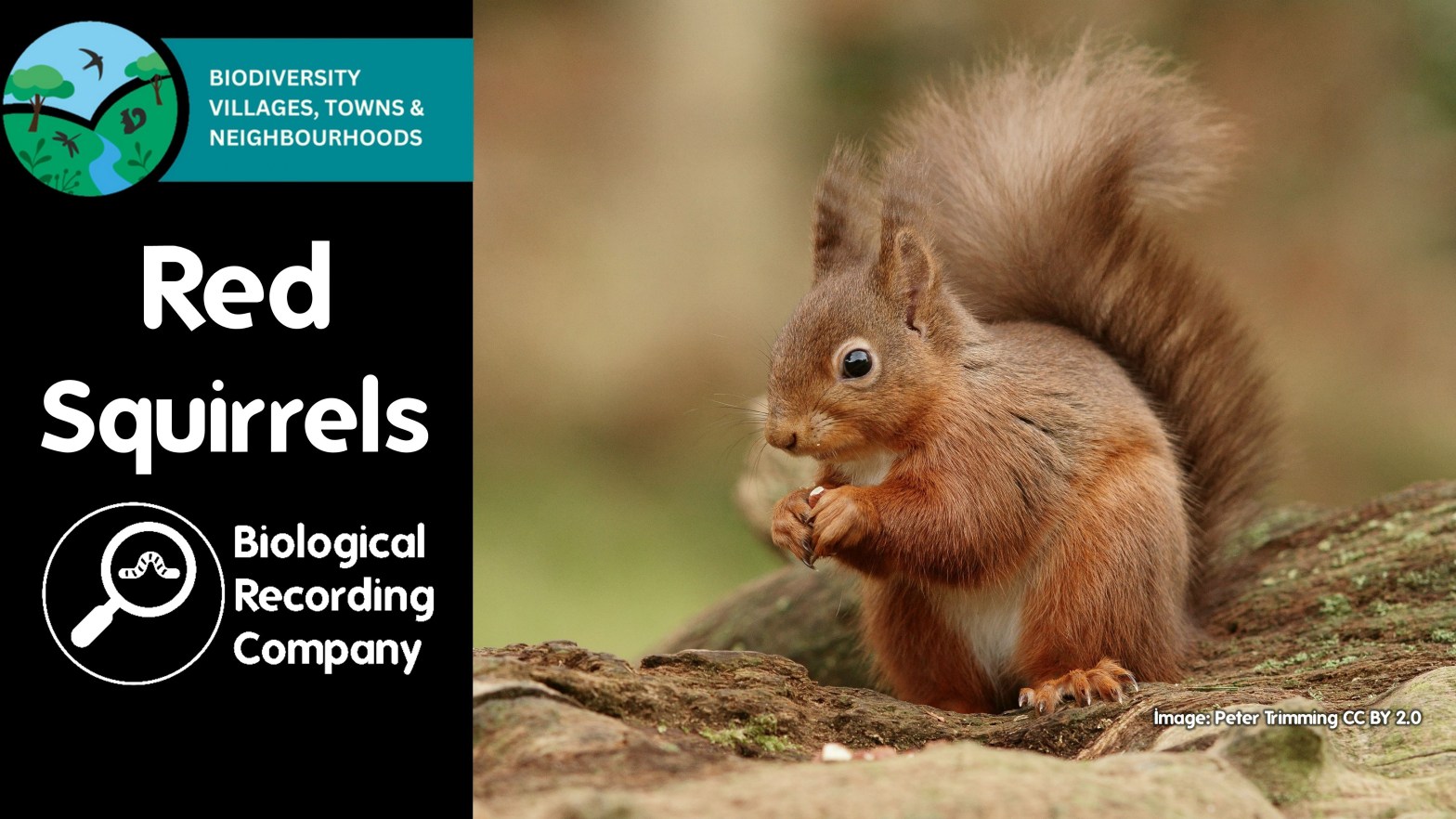
The Red Squirrel (Sciurus vulgaris) is the UK’s only native squirrel. This once widespread mammal is now limited to Scotland and a few other populations, facing challenges from the invasive Grey Squirrel (Sciurus carolinensis).
This blog features presentations from two Red Squirrel specialists from Saving Scotland’s Red Squirrels, that will explore the biology and ecology of these fascinating animals, before highlighting the threats that our Red Squirrels face and what we can do to help them.
Red Squirrels and their Ecology
David Morton (Saving Scotland’s Red Squirrels)
Easily recognisable by its reddish-brown fur, tufted ears and bushy tail, the Red Squirrel (Sciurus vulgaris) is a small, arboreal rodent native to Europe and parts of northern Asia that was once common across the British Isles. Red Squirrels primarily inhabit coniferous and mixed woodlands, where they rely on a diet of seeds, nuts, berries, fungi, and occasionally bird eggs. They are solitary and territorial, using tree cavities or dreys (nests made of twigs and leaves) for shelter. Unlike some rodent species, red squirrels do not hibernate but instead store food for the winter. They play a crucial ecological role as seed dispersers, particularly for tree species like Scots pine. Learn more about these fascinating small mammals in this presentation.
Red Squirrel Threats and Conservation
Susie McNaughton (Saving Scotland’s Red Squirrels)
Red Squirrels (Sciurus vulgaris) face several significant threats, which have led to their decline in many parts of their range. The main threat in the UK is the introduction of the invasive Grey Squirrel (Sciurus carolinensis) from North America. Grey squirrels are more adaptable, enabling them to outcompete Red Squirrels for food and habitat. They also carry the squirrelpox virus, which is harmless to them but fatal to Red Squirrels. Saving Scotland’s Red Squirrels will discuss the status of our Red Squirrel populations and how various conservation methods are being undertaken to turn the tide for the declining population, including how simply submitting your squirrel sightings can help conserve these amazing animals.
Q&A with David Morton & Susie McNaughton
David Morton is the Monitoring & Control Officer and has been with the Saving Scotland’s Red Squirrels project since 2023. He studied Zoology and Environmental Studies at university and has a lifelong interest in wildlife and Conservation.
Susie McNaughton is the Highland Line Conservation Lead at Saving Scotland’s Red Squirrels, where she works hand-in-hand with a dedicated team, landowners and volunteers to support Red Squirrel populations in Tayside, Angus & the Mearns and Argyll, Trossachs & Stirling.
Do Red Squirrels prefer coniferous or broadleaf forests where Grey Squirrels are not present?
David: A mixed woodland is best for Red Squirrels as it provides diverse food sources. Red Squirrels can survive at low densities in single species coniferous woodland where grey squirrels cannot.
Why are you not controlling Grey Squirrels in Edinburgh and other cities?
Susie: Our work is focused in priority target areas where populations of red squirrels are under threat from greys. These target areas are designated by the Scottish Squirrel Group’s 2015-2025 Scottish Strategy for Red Squirrel Conservation, convened by the government’s nature agency, NatureScot. Thus, our decisions about where we control grey squirrels is based on the proximately of greys and reds – and the specific dance between them – rather than targeting the grey species across the board. Our resources are limited so we need to ensure that they are targeted where they can make a difference to red conservation. The only Scottish city that makes the cut for grey control at present is Aberdeen, where SSRS has worked for over ten years to control the grey island population in the area with much success. You can hear more about this in the accompanying presentation, including our hope to confirm the eradication of grey squirrels in Aberdeen city in the very near future.
Do Red Squirrels behave differently in areas where they come into contact with Grey Squirrels?
David: Red Squirrels will move away where Grey Squirrel density is high. When only occasional contact is made, both species avoid close interaction.
What are the natural predators of Red Squirrels?
David: In the UK the main native predators are the Pine Marten, Goshawk and Buzzard.
Are there any successful reintroductions of Red Squirrels?
Susie: In Scotland, the organisation Trees for Life have been reintroducing red squirrels to selected suitable habitats in the North-west Highlands since 2016. So far 200 squirrels have been translocated to create 12 new communities. It’s great to see the squirrel sightings map now including reports of reds from north-west Scotland.
Are there any emerging technologies that could help save Red Squirrels from extinction in the UK?
Susie: There are two areas where new innovations are being tested, and may become practically viable in the next few years.
- Firstly, the development of a contraceptive to reduce grey squirrel numbers. The present challenge is to devise an effective delivery mechanism for the contraceptive vaccine to reach the ‘target’ squirrels, and thus test its efficacy in preventing breeding.
- Secondly, Project Red Haven is a collaborative research project designed to develop and train an AI assistant for squirrel identification. The AI technology is being developed by a company called Genysis Engine, based in Northern Ireland, and is being tested with a number of UK partners. When the AI detects specified factors (e.g. red or grey squirrel), it can trigger a pre-determined response such as providing food, closing the door to a trap, or delivering medicine. SSRS is not presently involved, but we’re very interested in the results and potentially being involved in the future.
What is the one thing that you’d recommend people can do to help Red Squirrels?
David: Without the presence of non native Grey Squirrels it is abundantly clear that Red Squirrels would thrive across the UK. Consequently the most important thing people can do is report sightings of squirrels to their local squirrel group and, in particular, Grey Squirrels close to known Red Squirrel locations.
Susie: Spread the word about their story in Britain. In my experience, when people hear about the threat to red squirrels at a species level in the UK, they are keen to support action to address the further expansion of greys. This may not be immediately relevant on the ground in, say, Birmingham, but unless we act now and keep acting in strategic areas nationwide, it will be too late.
Useful links
Scotland
- Tayside Red Squirrel Projects: https://www.taysidebiodiversity.co.uk/get-involved/projects/projects-red-squirrels/
- Report a Squirrel Sighting (Scotland): https://scottishsquirrels.org.uk/squirrel-sightings/?ssrs_sighting_add=1#BreadcrumbsAtTop
- Saving Scotland’s Red Squirrels website: https://scottishsquirrels.org.uk/
- Information about Scotland’s Red Squirrels: https://scottishsquirrels.org.uk/scotlands-red-squirrels/
- Scottish Red Squirrel news: https://scottishsquirrels.org.uk/news/
- Sightings map for Red Squirrels in Scotland: https://scottishsquirrels.org.uk/squirrel-sightings/
- Report injured/dead Red Squirrels in Scotland to the SPCA: https://www.scottishspca.org/
England & Wales
- Red Squirrel Survival Trust: https://www.rsst.org.uk/
- Brownsea Island Red Squirrels: https://www.nationaltrust.org.uk/visit/dorset/brownsea-island/the-rare-red-squirrel-on-brownsea-island
- Isle of Wight Red Squirrels: https://www.wightsquirrels.co.uk/
- Anglesey Red Squirrels: https://www.nationaltrust.org.uk/visit/wales/plas-newydd-house-and-garden/red-squirrels-at-plas-newydd
- Mid Wales Red Squirrel Project: https://www.welshwildlife.org/red-squirrel-project
- Isles of Scilly Red Squirrels: https://www.ios-wildlifetrust.org.uk/wildlife-explorer/mammals/red-squirrel
- Report injured/dead Red Squirrels in England to the RSPCA: https://www.rspca.org.uk/reportaconcern
Event Partners
This blog was produced by the by the Biological Recording Company as part of the Tayside Biodiversity Partnership Biodiversity Towns, Villages and Neighbourhoods project.

Learn more about British wildlife
Thriving on the Edge: Grey Seal Abundance and Survival on the Calf of Man
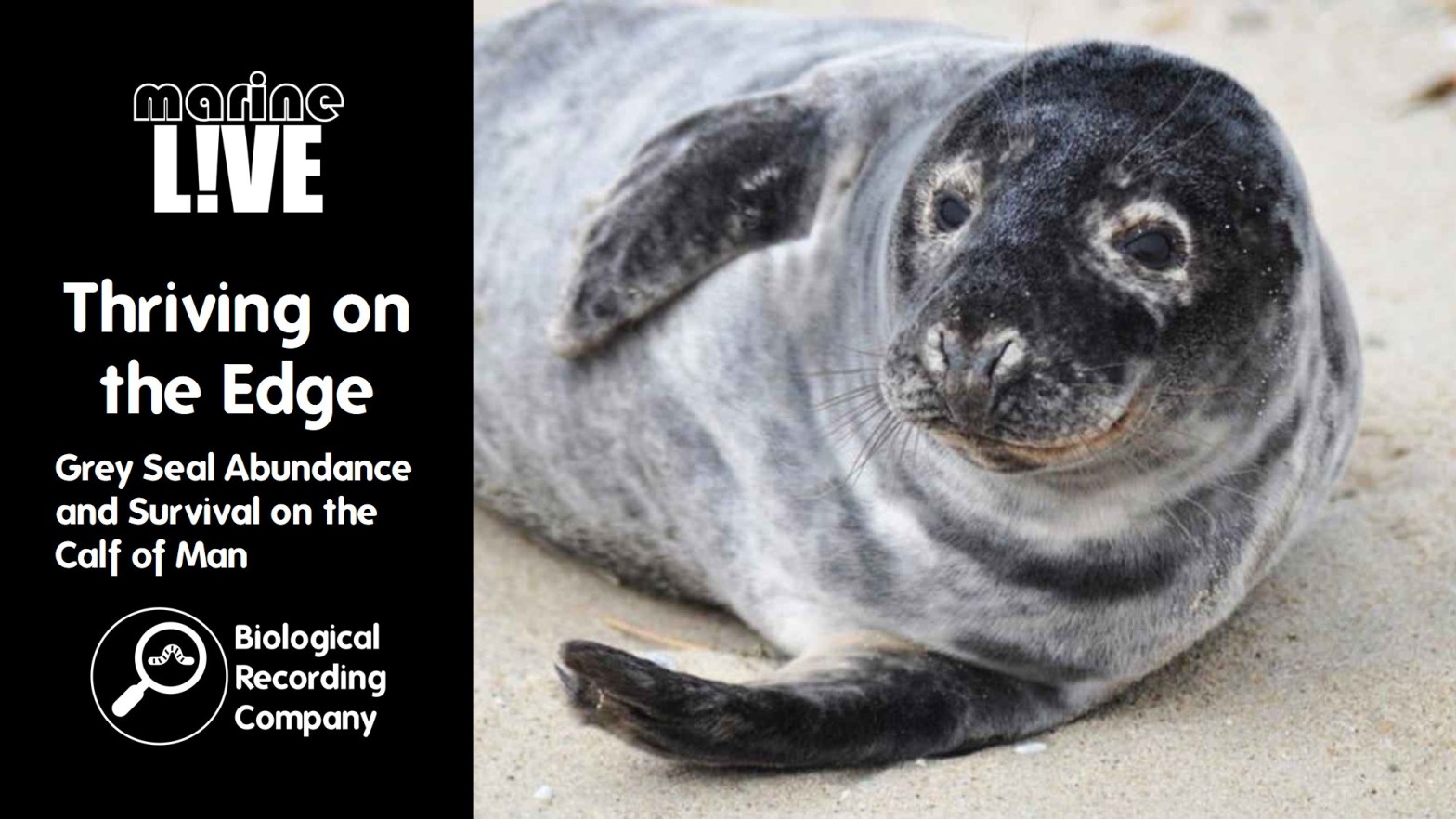
Grey Seal (Halichoerus grypus) mortality and behaviour has been studied on the Calf of Man since 2009. Pups born are followed through to weaning providing an understanding of mortality rates and what impacts them. Also, the work follows the mothers as they return to the Calf each season to breed, looking at site fidelity and behaviours encountered. Last season the Manx Wildlife Trust purchased a thermal imaging drone to help facilitate the work and this was a huge success and will be utilised much more going forward with their wider seal work.
Q&A with Dr Lara Howe
Dr Lara Howe is a marine biologist and conservationist working for Manx Wildlife Trust on various marine projects but focusing mainly on seals, seabirds, small sharks, and seagrass. Both Lara’s degree and PhD were undertaken at the University of Liverpool, studying at the Port Erin Marine Laboratory before it closed. Lara is a keen SCUBA diver and photographer, enjoying nothing more than spending time in nature, above and below the waves.
How often is the weather suitable for undertaking drone surveys?
That’s a difficult question to answer because it completely depends on the weather. It could be absolutely beautiful for the entire ten weeks or we could have back-to-back storms. However, one of the bonuses of the Calf of Man is that we have a lot of steep cliffs. Once we get the drone over the cliff and into the sheltered area, the lee of the cliff, it’s ok. The drone is a bit bigger and chunky, so it can fly in somewhat stronger wind conditions than some of the smaller ones.
Do the tags increase the chance of seals getting entangled in fishing gear?
We don’t do the tagging ourselves. We get that information from other groups. The satellite tags are glued onto the seal’s fur and fall off when the seal moults. They are also very smooth and don’t have anything that could get snagged on anything. In terms of the flipper tags, I’ve never seen any cases of entanglement. It’s usually around their necks where we see entangled ropes and hoops and other things. But potentially, yes, I suppose there could be a risk.
Why is there such a big difference between the number of males and females on the Calf?
It’s fairly typical of Grey Seal populations. Males are also harder to identify and that might skew the counts (although the males potentially can have really obvious scarring from fighting with other males), because of their big fat neck folds and the fact they tend to be darker in colour, their spot patterns aren’t as clear so there are probably a few more males that we haven’t been able to identify. The male to female ratio results from the fact that generally you don’t need as many males as females. Males can breed with a lot of females whereas females can only have one pup a year. There are also only a limited number of places for them to haul up on the Calf. If we had more areas, then we might get more males to be the ‘beach masters’ of those beaches.
What can people do to help the seals in the UK?
The first thing is related to disturbance. We all want to see seals, we all want to enjoy and appreciate them and most people are really sensible about how they approach them and how they observe them. Unfortunately, there are some who ruin it for everyone else. So one thing you can do is raise awareness that it’s not ok to go up to a seal. Appreciate them from a distance and in a suitable way, using binoculars to observe them. The other thing is about litter and disposing of your litter properly. Ensuring that animals don’t get entangled in our rubbish is entirely our responsibility as human beings. For instance, those frisbees that have a hole in the middle are really bad. Seals stick their heads in them but can’t get them out again. So don’t use those on a beach at all, in case they get lost on the beach or at sea. Rope, nets and filament line for fishing are also bad.
Literature References
- McDonald, Kenny & Howe (2024) Calf of Man Seal Survey Report 2024: https://www.mwt.im/sites/default/files/2024-11/Calf%20of%20Man%20Seal%20Survey%20Report%202024.pdf
- Bull et al (2021) Climate causes shifts in grey seal phenology by modifying age structure: https://doi.org/10.1098/rspb.2021.2284
Further Info
- The Calf of Man Bird Observatory: https://www.mwt.im/what-we-do/terrestrial/calf-man-bird-observatory
- Seal Sitters: https://www.mwt.im/citizen-science/seal-sitters
- Photography Best Practice for Seals: https://www.cornwallsealgroup.co.uk/wp-content/uploads/2024/05/Photography-Best-Practice-Poster-FINAL-scaled.jpg
marineLIVE
marineLIVE webinars feature guest marine biologists talking about their research into the various organisms that inhabit our seas and oceans, and the threats that they face. All events are free to attend and are suitable for adults of all abilities – a passion for marine life is all that’s required!
- Upcoming marineLIVE webinars: https://www.eventbrite.co.uk/cc/marinelive-webinars-3182319
- Donate to marineLIVE: https://gofund.me/fe084e0f
- marineLIVE blog: https://biologicalrecording.co.uk/category/marinelive-blog/
- marineLIVE on YouTube: https://youtube.com/playlist?list=PLuEBNUcfMmE-t2dzcoX59iR41WnEf21fg&feature=shared
marineLIVE is delivered by the Biological Recording Company with funding from the British Ecological Society.
- Explore upcoming events and training opportunities from the Biological Recording Company: https://www.eventbrite.co.uk/o/the-biological-recording-company-35982868173
- Check out the British Ecological Society website for more information on membership, events, publications and special interest groups: https://www.britishecologicalsociety.org/
More on marine biology


Earthworm Watch: Insights Into Urban Earthworm Communities
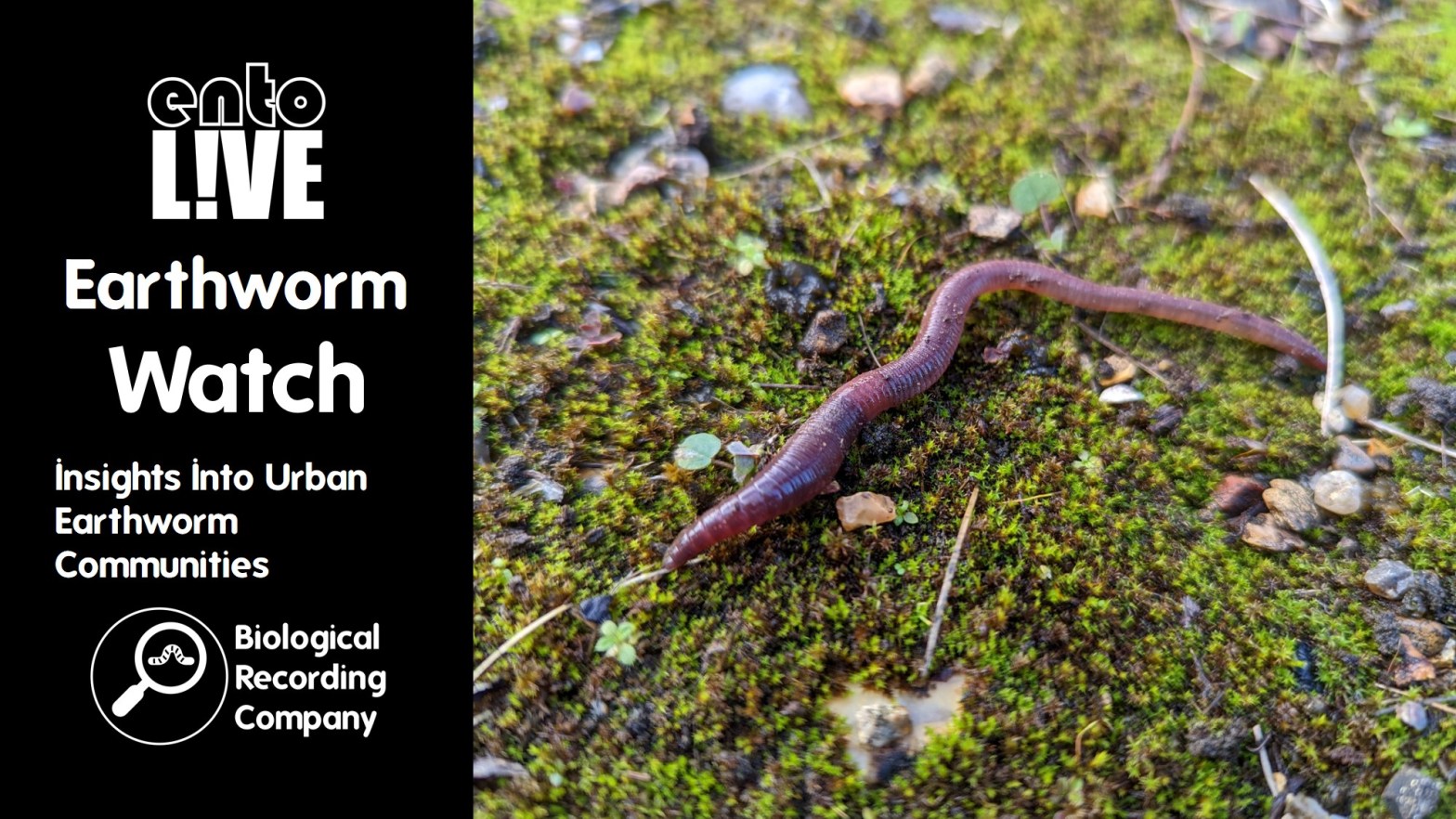
Despite the vital role of earthworms in soil ecosystems, there is still a lack of data on their distribution and diversity in the UK, especially in urban areas. To help fill this gap, over 1,500 citizen scientists participated in Earthworm Watch from 2016 to 2018. This project was run by the Natural History Museum, London, and Earthwatch Institute in association with the Earthworm Society of Britain. This talk will reveal the research results, offering insights into how we can better manage our green spaces for the benefit of earthworms.
Q&A with Dr Victoria Burton
Dr Victoria J. Burton is a postdoctoral researcher at the Natural History Museum, London, studying the effect of land use on biodiversity, particularly soil life and urban ecosystems. She is passionate about community involvement in science and led the citizen science project Earthworm Watch during her PhD.
How can people manage the impact on earthworms of digging the flowerbeds in their gardens?
We know from agricultural research that tilling and ploughing have a detrimental impact on earthworms. There is less research on gardens and flowerbed digging. There are no-dig methods that are growing in popularity. These use mulches, instead of digging – they just cover up the weeds and smother them out. The worms do the digging for you. You put the mulches on and the worms will pull them into the soil for you!
Are there any invasive non-native species of earthworms that we should be concerned about?
In the UK, there are some non-native earthworms. In fact, there were two species, Bimastos eiseni and Bimastos rubidus, that we didn’t even realise eres non-native until recently (they are originally from North America). They’ve been in the UK for quite some time and we don’t know if they’ve done any harm. There are some species of exotic earthworm that have been recorded in greenhouses but have not yet managed to establish in natural conditions. There are also a few species where we don’t really know for certain what their natural range is. One threat to our earthworms, is the introduction of invasive non-native flatworms. The New Zealand Flatworm can certainly cause harm locally, especially in Scotland. Buglife has their Potwatch survey to send sightings and there is also a UK land flatworm recording scheme.
What is the one piece of advice you can give people to help earthworms in their garden or in their local park?
Leave leaves! Use the leaves to mulch your borders if you like a really neat garden.
Literature References
- Burton and Caermon (2021) Learning More About Earthworms With Citizen Science: https://doi.org/10.3389/frym.2020.548525
- Burton et al (2024) Earthworm Watch: Insights into urban earthworm communities in the UK using citizen science. https://doi.org/10.1016/j.ejsobi.2024.103622
- Burton et al (2023) Earthworm Watch data: https://doi.org/10.5519/74ak9koz
- Martay et al (2018) Using data from schools to model variation in soil invertebrates across the UK: The importance of weather, climate, season and habitat: https://www.sciencedirect.com/science/article/pii/S0031405617301865
Further Info
- The Earthworm Society of Britain: https://www.earthwormsoc.org.uk/
- Eddie the Earthworm Saves the Day: https://shop.amentsoc.org/eddie-the-earthworm.html
- Frontiers for Young Minds: https://kids.frontiersin.org/
- OPAL Soil and Earthworm Survey: https://www.imperial.ac.uk/media/imperial-college/research-centres-and-groups/opal/SOIL-16pp-booklet_legacy.pdf
- Link to the webpage for Earthworm Watch: https://www.earthwormsoc.org.uk/earthwormwatch
- Earthworm Watch results summary and link to the news article: www.nhm.ac.uk/take-part/monitor-and-encourage-nature/project-archive/earthworm-watch.html
- Victoria’s Instagram: https://www.instagram.com/soilscholar/
- National Earthworm Recording Scheme: https://www.earthwormsoc.org.uk/ners
entoLIVE
entoLIVE webinars feature guest invertebrate researchers delving into their own invertebrate research. All events are free to attend and are suitable for adults of all abilities – a passion for invertebrates is all that’s required!
- Donate to entoLIVE: https://www.gofundme.com/f/entolive-2025
- Upcoming entoLIVE webinars: https://www.eventbrite.com/cc/entolive-webinars-74679
- entoLIVE blog: https://biologicalrecording.co.uk/category/entolive-blog/
- entoLIVE on YouTube: https://youtube.com/playlist?list=PLuEBNUcfMmE95Re19nMKQ3iX8ZFRFgUAg&feature=shared
entoLIVE is delivered by the Biological Recording Company in partnership with the British Entomological & Natural History Society, Royal Entomological Society and Amateur Entomologists’ Society, with support from Buglife.
The entoLIVE programme is delivered by Biological Recording Company and receives sponsorship from the following organisations:
- British Entomological & Natural History Society
- Royal Entomological Society
- Amateur Entomogists’ Society
Learn more about British wildlife
Protected: Dragonflies of the UK Part 2
Insect Dogfights: How Aerial Combat Shapes the Patterns of Insect Flight
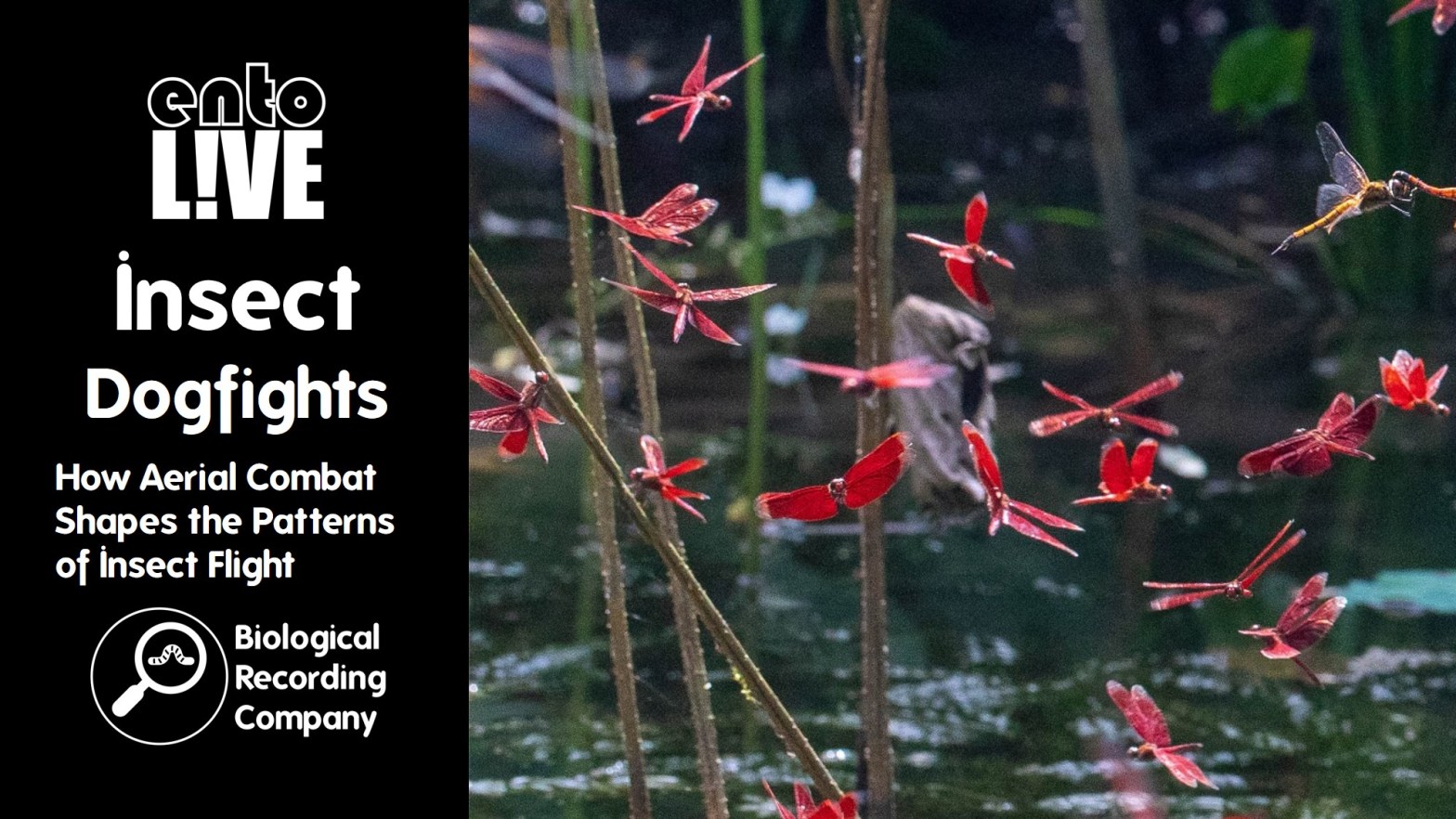
We might think insects use flight as simply a way to get form A to B. However, along the way they will fly through a congested airspace. In flight, insects battle for prey, territory, and mate, performing dramatic aerial dogfights. This presentation will discuss the patterns of insect aerial pursuit and combat, through the use of 3D reconstruction of high-speed aerial engagements.
Q&A with Dr Samuel T. Fabian
Dr Samuel T. Fabian is a research associate at Imperial College London. His work focusses on the ways in which insects are adapted to chase, fight, and capture each other in the air. The goal of his work is to understand the patterns of insect flight we see around us.
Why do the houseflies do territorial dances under lampshades?
It’s a great question that I don’t have an answer to. It’s something you see all over the world. The particular species that I spoke about, Fannia canicularis, probably started its evolutionary trajectory being in caves, specifically on bat guano or bird poo but why they are so interested in some visual fixture in the ceiling is a very good question. This behaviour, in some way, must increase their access to females. Its relatively common in nature for males to congregate and fight over areas where females are likely to occur. Hill-topping behaviour in butterflies is a good example. But why female houseflies would be likely to be interested in a lampshade is as yet, a mystery. It’s a really good question and it’s such a weird thing for males to do, to spend what days you have on earth, just travelling in circles under a lampshade.
How dangerous are flight interactions between insects of the same species?
I’ve talked about these chases as though they’re life and death situations, and for your predator/prey interactions, it is. But when we are talking about territorial conflicts, it varies. Sometimes, these insects really mess each other up. Demoiselles (Calopteryx sp.) are damselflies found in river habitats and will grab each other’s wings, bite each other and drive each other towards the water. However, in many flying insects it’s much less clear that they possess any way of damaging each other. For instance, with the dragonfly Trithemis aurora, they mostly just fly around each other. In the 500 or so recordings that I have of them dogfighting, not once do they touch. So, it’s a threat that doesn’t materialise into actual physical damage. You could think of it as being a ritualised conflict.
Do you see a lot of variation between different species of insects in how aggressive the flight interactions are?
Yes, there are a lot of differences. Another form of chasing is intraspecific conflict over territory. Some butterflies and dragonflies are aggressive not just towards members of their species but also towards any other members of their group. For instance, peacock and tortoiseshell butterflies chase and battle each other in the early spring, despite being different species. There are also very different behaviours when it comes to aggression. If you watch larger Emperor Dragonflies interacting, their behaviour is quite different to smaller dragonflies– they will actually smack into each other repeatedly. Some species of dragonflies will fly parallel to each other, holding themselves up in a vertical T-pose, defying gravity, and rising gently upwards until one loses and is chased away. There are likely many more interaction types waiting for formal recordings and descriptions, and there’s never been a better time to try and collect this data.
Literature References
- Fabian et al (2024) Fabian, S.T., Sondhi, Y., Allen, P.E. et al. Why flying insects gather at artificial light: https://doi.org/10.1038/s41467-024-44785-3
- Fabian et al (2022) Avoiding obstacles while intercepting a moving target: a miniature fly’s solution: https://doi.org/10.1242/jeb.243568
- Fabian et al (2021) Gravity and active acceleration limit the ability of killer flies (Coenosia attenuata) to steer towards prey when attacking from above: https://royalsocietypublishing.org/doi/10.1098/rsif.2021.0058
- Fabian et al (2018) Interception by two predatory fly species is explained by a proportional navigation feedback controller: https://royalsocietypublishing.org/doi/full/10.1098/rsif.2018.0466
- Supple et al (2020) Binocular Encoding in the Damselfly Pre-motor Target Tracking System: https://doi.org/10.1016/j.cub.2019.12.031
- Wardill & Fabian et al (2017) A Novel Interception Strategy in a Miniature Robber Fly with Extreme Visual Acuity: https://doi.org/10.1016/j.cub.2017.01.050
- Gonzalez-Bellido et al (2016) Target detection in insects: optical, neural and behavioral optimizations: https://doi.org/10.1016/j.conb.2016.09.001
Further Info
- Sam’s website: https://www.samueltfabian.com/
- Damselflies of the UK entoLEARN course: https://courses.biologicalrecording.co.uk/courses/damselflies
- Dragonflies of the UK entoLEARN course: https://courses.biologicalrecording.co.uk/courses/dragonflies
entoLIVE
entoLIVE webinars feature guest invertebrate researchers delving into their own invertebrate research. All events are free to attend and are suitable for adults of all abilities – a passion for invertebrates is all that’s required!
- Donate to entoLIVE: https://www.gofundme.com/f/entolive-2025
- Upcoming entoLIVE webinars: https://www.eventbrite.com/cc/entolive-webinars-74679
- entoLIVE blog: https://biologicalrecording.co.uk/category/entolive-blog/
- entoLIVE on YouTube: https://youtube.com/playlist?list=PLuEBNUcfMmE95Re19nMKQ3iX8ZFRFgUAg&feature=shared
entoLIVE is delivered by the Biological Recording Company in partnership with the British Entomological & Natural History Society, Royal Entomological Society and Amateur Entomologists’ Society, with support from Buglife.
The entoLIVE programme is delivered by Biological Recording Company and receives sponsorship from the following organisations:
- British Entomological & Natural History Society
- Royal Entomological Society
- Amateur Entomogists’ Society
Learn more about British wildlife
Guardians of our Rivers: Monitoring Rivers with Freshwater Invertebrates
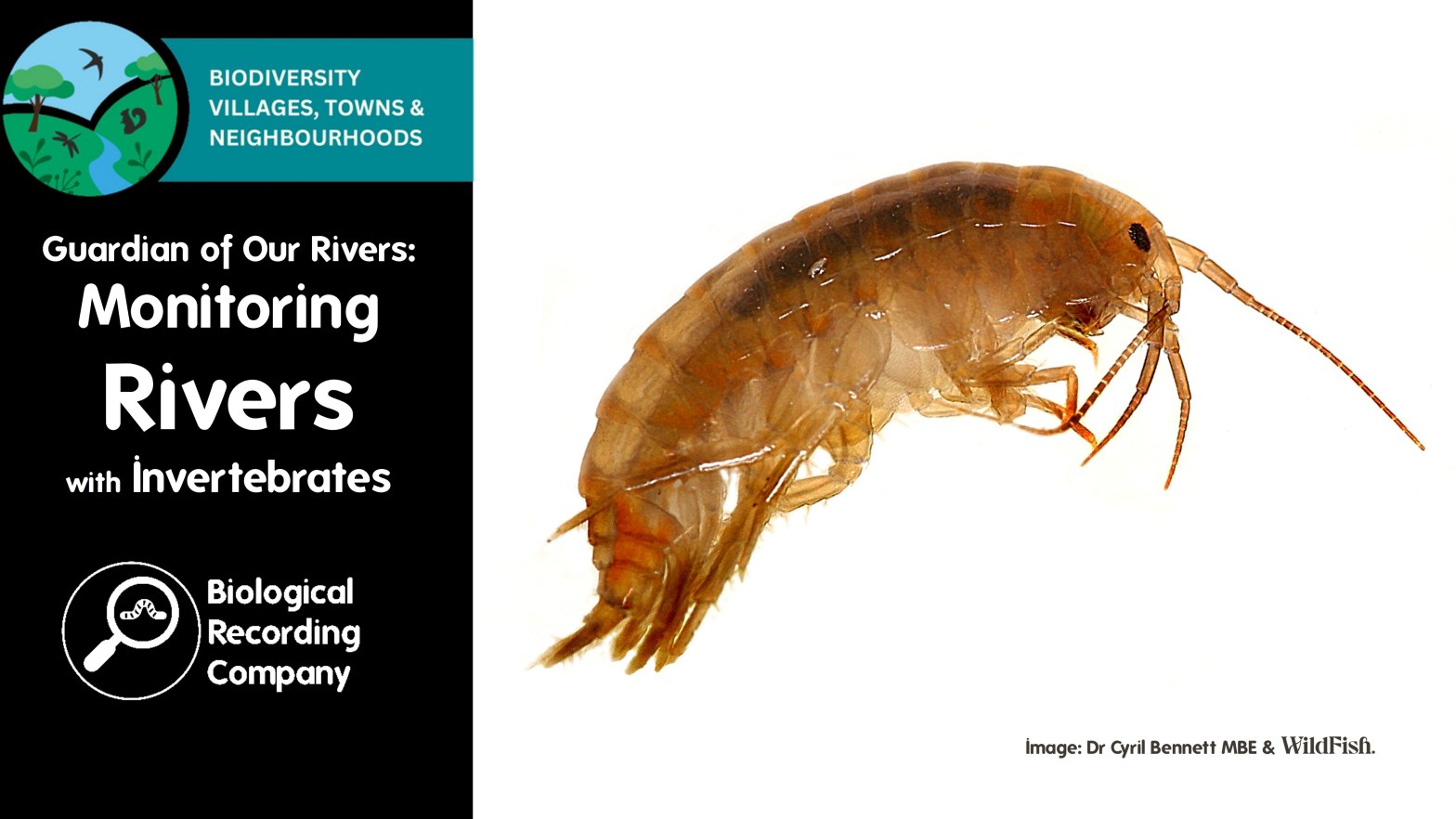
Freshwater invertebrates are powerful indicators of river health. Their presence, diversity, and sensitivity to pollution provide valuable insights into water quality and ecosystem stability. This talk will delve into the world of caddisflies, mayflies, stoneflies and freshwater shrimp – introducing these groups of invertebrate that inhabit our rivers and how they can be used to assess environmental changes, detect pollution, and guide river restoration efforts. We’ll then hear about how the Guardians of Rivers project is connecting communities with their rivers in Scotland.
Q&A with Kerry Dodd
Kerry Dodd is a Conservation Officer with Buglife Scotland and has been working on freshwater invertebrates for over 15 years. She works on the Guardian of Our Rivers project, where she enjoys surveying our rivers for invertebrates and inspiring communities to get involved in monitoring river health.
How long do the cased caddisfly larvae stay in their cases?
It depends on the family. Some make a new case at each instar (life stage), so that’s 5 cases. Some make their case larger as they grow. Glossomatidae sometimes leave their case if in still water and Microcaddis (Hydroptilidae) are caseless for the first four instars.
Do you do any chemical testing of rivers through Guardians of our Rivers?
Guardians of our Rivers monitors the health of rivers by surveying freshwater invertebrates. The freshwater invertebrates included in the survey are sensitive to water quality, stay in one place and most are found throughout the year. If there is dramatic decline in abundance across the groups, it suggests there is a problem with the water quality. It is unlikely to be due to seasonal variation or migration.
Chemical testing alone, may not pick up past pollution incidents as it gives a snapshot of the water quality at that moment. A decline in the abundance of invertebrates takes time to recover after the pollution has been washed downstream. Invertebrate surveys can pick detect past pollution incidents. However, chemical testing goes hand in hand with Guardians of our Rivers. We have groups that do the FreshWater Watch water testing (Nitrates, Phosphates and turbidity) each time they survey.
Do riverflies have any benefits to rivers aside from being prey items for other animals?
As well as being at the bottom of a complex a food chain, freshwater invertebrates help clean the watercourse. They feed by either breaking down organic matter such as plant material, detritus and algae or by filtering particles out of the water.
How can people get involved in riverfly monitoring across Great Britain?
If you are in Scotland, please email me at Kerry.dodd@buglife.org.uk to find your nearest Guardians of our Rivers group and upcoming training opportunities. In the rest of the UK, please contact The Riverfly Partnership at info@riverflies.org to find your nearest group and training opportunities.
Useful links
- Guardians of our Rivers project: https://www.buglife.org.uk/projects/guardians-of-our-rivers/
- Riverfly Partnership website: https://www.riverflies.org/
- Buglife Freshwater Hub: https://www.buglife.org.uk/resources/habitat-hub/freshwater-hub/
- The Hunt for the Northern February Red: https://www.buglife.org.uk/get-involved/surveys/the-hunt-for-the-northern-february-red/
- Guardians of our Rivers: Next Steps: https://www.buglife.org.uk/projects/guardians-of-our-rivers-next-steps/
- Riverflies: The Canary of Our Rivers entoLIVE blog: https://biologicalrecording.co.uk/2023/09/18/riverflies/
Event Partners
This blog was produced by the by the Biological Recording Company as part of the Tayside Biodiversity Partnership Biodiversity Towns, Villages and Neighbourhoods project.
Learn more about British wildlife
Beginner’s Guide to Creating a Wildlife Pond
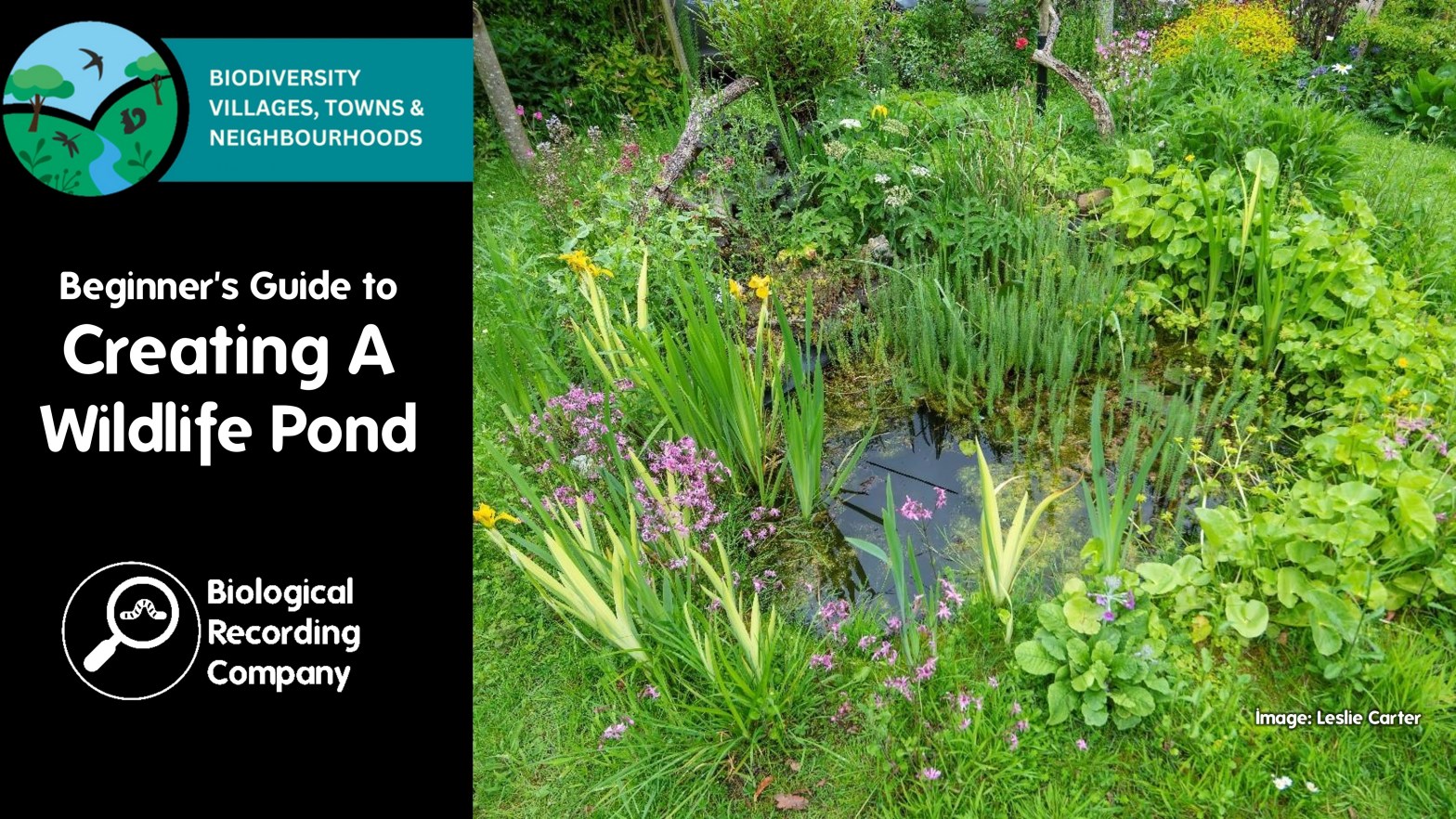
Learn about the art and science of creating a wildlife pond, so that you can establish a thriving aquatic habitat that attracts diverse species of flora and fauna. We’ll explore the essentials, from selecting the ideal location and materials to designing a pond that supports a wide variety of wildlife, including amphibians, insects, and birds. Attendees will learn how to choose native plants, create safe access points for animals, and maintain water quality without disrupting the natural ecosystem. With an emphasis on biodiversity, the talk provides actionable steps and inspiration for anyone eager to transform their outdoor space into a vibrant habitat.
Q&A with Lauren Kennedy
Lauren Kennedy is the Engagement Officer for the British Dragonfly Society and happily admits to being obsessed with invertebrates and plants. She graduated in Biology at Cardiff University before going on to study a masters in Environmental Biology at Swansea University. Lauren has previously worked for Natural England, the Field Studies Council and Bumblebee Conservation Trust, whereshe focused on public engagement, working with volunteers and creating training.
What is the ideal depth for a wildlife pond?
You want your wildlife pond to have gently sloping sides, getting gradually deeper toward the centre. If it is possible to have a depth of at least 60cm at the centre this will increase the oxygen available in the water and will also help to safe guard your pond from freezing over in the winter. Many invertebrates, including dragonfly larvae, will be overwintering in your pond so we don’t want them to freeze! Take a look at our full pond creation guide for more detailed information.
How do you avoid attracting too many mosquitoes to a garden pond?
Unfortunately, mosquitoes, to a certain extent, will be a natural part of your pond ecosystem. However, with a garden pond, when you create the ideal conditions to support a variety of wildlife you will be inviting in the natural predators of mosquitoes. Setting up your variety of plants, and structuring your pond for wildlife will bring in plenty of dragonflies and they love to feast on small insects like mosquitoes.
Why is autumn the best time to undertake pond maintenance?
Autumn and winter is the least disruptive time to undertake any pond maintenance. Wildlife is far less active at this time so you won’t be disturbing key parts of their life cycle. Dragonflies for example spend the spring and summer emerging from the water leaving their larval forms behind and emerging as adults. These adults will then go on to mate and lay eggs in your pond, thus a busy time. There will still be plenty of aquatic life in your pond during the autumn and winter so remember to leave any pond material that you are clearing out on the side of the pond for a couple of days to allow any pond life to crawl back into the water.
How can people get involved with monitoring dragonflies?
We would love to hear what species you are finding visiting your garden pond, and your sightings could help inform vital conservation work and help us map how dragonfly populations are changing in the face of climate change. For identification help you can find lots of ID resources on our website and you can submit records of dragonflies through our iRecord form.
Useful links
- British Dragonfly Society Garden and Habitat Management: https://british-dragonflies.org.uk/get-involved/resources/habitat-management-and-species-guidebooks/
- Damselflies of the UK entoLEARN course: https://courses.biologicalrecording.co.uk/courses/damselflies
- Freshwater Leeches of the UK entoLEARN course: https://courses.biologicalrecording.co.uk/courses/freshwater-leeches
- Dragonflies of the UK Part 2 entoLEARN webinar: https://www.eventbrite.co.uk/e/dragonflies-of-the-uk-part-2-tickets-1107775358919
- Dragonflies of the UK Part 3 webinar: https://www.eventbrite.co.uk/e/dragonflies-of-the-uk-part-3-tickets-1108051785719
- Dragonfly ID help: https://british-dragonflies.org.uk/odonata/species-and-identification/
- DragonflyWatch: The National Dragonfly Recording Scheme entoLIVE blog: https://biologicalrecording.co.uk/2023/04/27/dragonflywatch/
- Record dragonflies and damselflies on iRecord: https://irecord.org.uk/enter-dragonfly-list
Event Partners
This blog was produced by the by the Biological Recording Company as part of the Tayside Biodiversity Partnership Biodiversity Towns, Villages and Neighbourhoods project.
Learn more about British wildlife
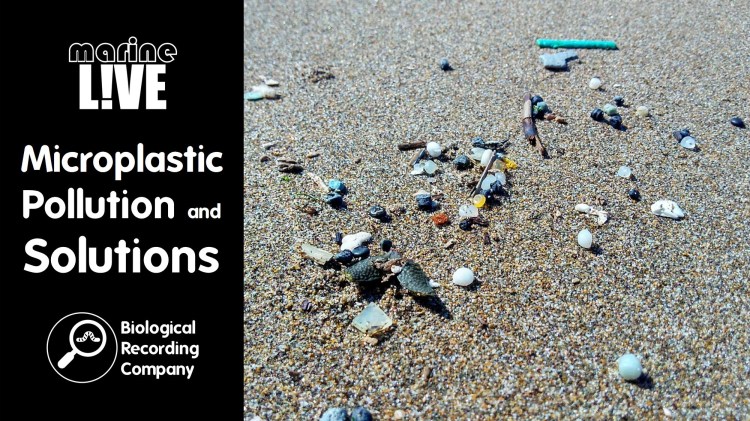
Microplastic Pollution and Solutions
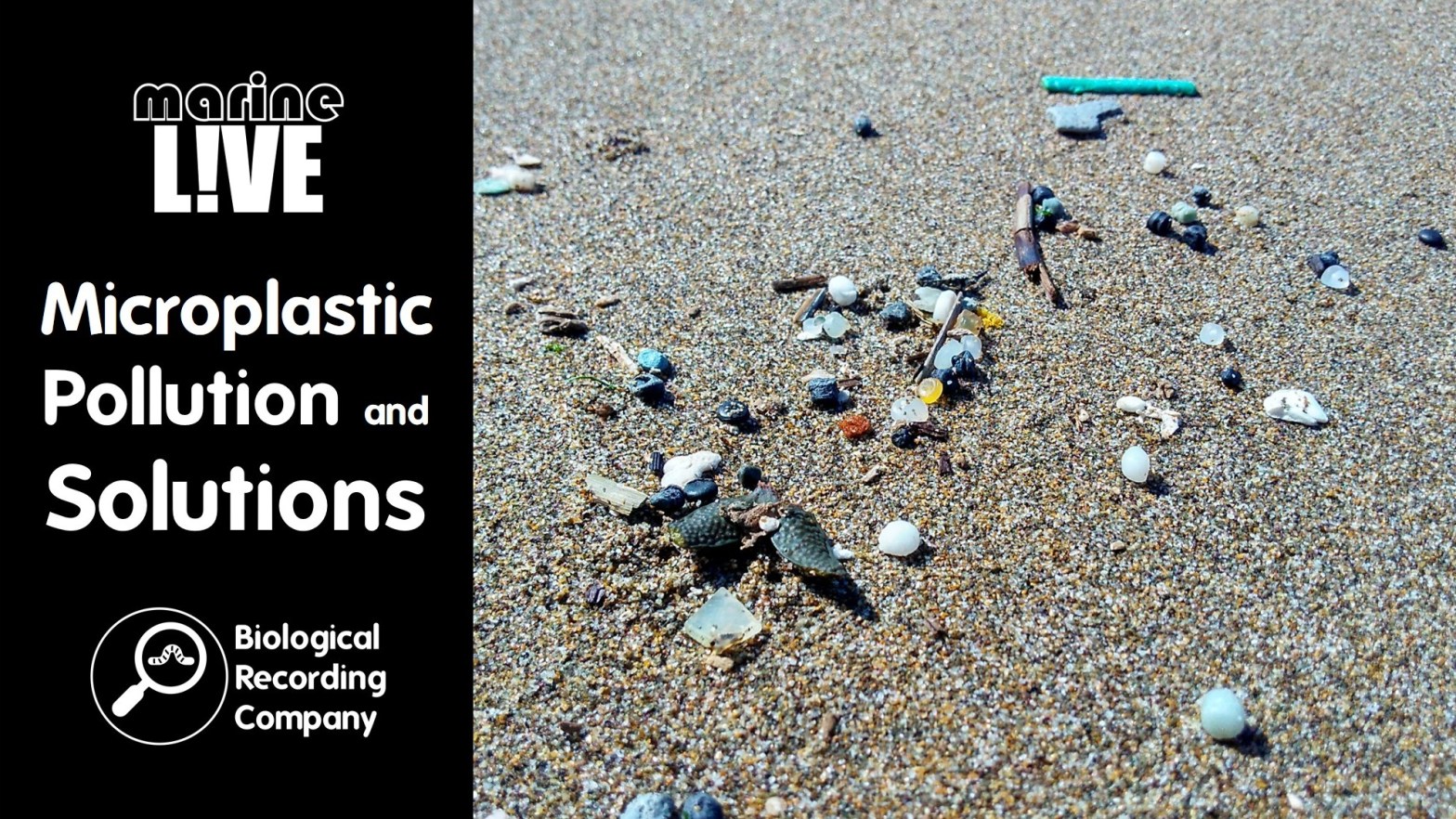
An estimated 12.7 million tonnes of microplastics enter the environment annually. Most of this pollution is emitted to land, yet we find microplastics in all parts of the environment, even in the deep ocean. How are the microplastics distributed and transported? What impacts do they have on the environment? And can alternative plastics, such as those that are biodegradable, offer solutions to the plastic crisis?
Q&A with Dr Winnie Courtene-Jones
Dr Winnie Courtene-Jones is a lecturer at Bangor University; a marine biologist and microplastic pollution expert whose research focuses on understanding the fate and impacts of (micro)plastics to support effective solutions. Her research has led her to study microplastic pollution in a variety of terrestrial and marine environments, from coastlines to some of the most remote parts of our planet including the deep sea and oceanic gyres. A passionate science communicator, Winnie has been featured on TV, radio, and podcasts. She is an active member of the Scientists’ Coalition for an Effective Plastics Treaty, supporting progress towards the development of a legally binding instrument, and has spoken at these UN negotiations, along with the British and the European Parliaments.
Is buying recycled plastic products worse for the environment than buying non-plastic products?
That is a tricky question and I don’t know if I could say better or worse because there are so many aspects to understand and evaluate. What we do have to think about is that recycled plastic might have, potentially, more chemicals added into it. Not only do you have chemical residues from the plastic itself and from the recycling process, there are also specific chemicals added by the manufacturers to form the new product. For example, there are regulations preventing recycled plastics for food contact materials.
From your initial research, do you know what the bioavailability is and how it varies between the biobased and the conventional oil-based plastics?
Bioavailability, in terms of how an organism might ingest it, is another area that requires more research. To my knowledge, there haven’t been studies into whether animals have a preference for interacting with one type of plastic over another. Small plastics (microplastics) are more readily available for organisms to ingest, than larger particle sizes.
If we think about toxicity, there is evidence that there are similar, or possibly greater, impacts with biobased materials. Some work I led examined biobased textiles and their effect on earthworms and found that biobased fibres had a greater impact (on terms of mortality) across a broad concentration range, than the traditional polyester textiles. It’s not altogether clear why this is the case, and we need further research on this. Biodegradable plastics can contain more additives because the plastic can’t biodegrade too quickly- it must carry out its full function before biodegrading. It’s quite complicated and we don’t have all the parts of the puzzle in place yet.
Are there any brands of teabags that are worse than others?
I use loose leaf tea. Again, it’s complex to say which brands are better, but generally, teabags need a certain temperature to compost properly. If you compost them at home, they will not degrade properly,.they needs a heat of at least 60 degrees Celsius for the plastic (PLA – polyactic acid) to commence deteriorating. Often, the packaging does not explain how to properly dispose of your teabags, and this might be further complicated by wether or not you have industrial composting facilities available on your county/district.
Do you think it is possible for humans to ever be plastic free?
I don’t think we will be plastic free nor do I necessarily advocate for that. plastic is a sophisticated material, with use in specific applications. Reducing plastic use, simplifying materials by reducing the number of chemicals used in plastics, implementing regulations on production and limiting single use or disposable items are all ways to reduce negative impacts, and thus an overall reduction of the quantities that we find in the environment. Let’s change that 460 million tonnes of plastics produced annually to a much lower figure for the future!
Literature References
- Thompson et al (2024) Twenty years of microplastic pollution: https://www.science.org/doi/10.1126/science.adl2746
- Courtene-Jones et al (2021) Source, sea and sink—A holistic approach to understanding plastic pollution in the Southern Caribbean: https://www.sciencedirect.com/science/article/abs/pii/S004896972104170X
- Courtene-Jones et al (2024) Are Biobased Microfibers Less Harmful than Conventional Plastic Microfibers: Evidence from Earthworms: https://pubs.acs.org/doi/10.1021/acs.est.4c05856
- Courtene-Jones et al (2024) Deterioration of bio-based polylactic acid plastic teabags under environmental conditions and their associated effects on earthworms: https://www.sciencedirect.com/science/article/pii/S004896972402953X
- Courtene-Jones e al (2024) Effect of biodegradable and conventional microplastic exposure in combination with seawater inundation on the coastal terrestrial plant Plantago coronopus: https://www.sciencedirect.com/science/article/pii/S0269749124012879
Further Info
- Info about Winnie: https://winniecourtenejones.wixsite.com/home
- Follow along with the UN Plastics Treaty: https://www.unep.org/inc-plastic-pollution
- Find out more about the Scientists Coalition for an Effective Plastics Treaty: https://ikhapp.org/scientist-about-us/
- Direct link to the free resources: https://ikhapp.org/materials/
marineLIVE
marineLIVE webinars feature guest marine biologists talking about their research into the various organisms that inhabit our seas and oceans, and the threats that they face. All events are free to attend and are suitable for adults of all abilities – a passion for marine life is all that’s required!
- Upcoming marineLIVE webinars: https://www.eventbrite.co.uk/cc/marinelive-webinars-3182319
- Donate to marineLIVE: https://gofund.me/fe084e0f
- marineLIVE blog: https://biologicalrecording.co.uk/category/marinelive-blog/
- marineLIVE on YouTube: https://youtube.com/playlist?list=PLuEBNUcfMmE-t2dzcoX59iR41WnEf21fg&feature=shared
marineLIVE is delivered by the Biological Recording Company with funding from the British Ecological Society.
- Explore upcoming events and training opportunities from the Biological Recording Company: https://www.eventbrite.co.uk/o/the-biological-recording-company-35982868173
- Check out the British Ecological Society website for more information on membership, events, publications and special interest groups: https://www.britishecologicalsociety.org/
More on marine biology
Glowing, Glowing, Gone? The Plight of the Glow-worm in Essex
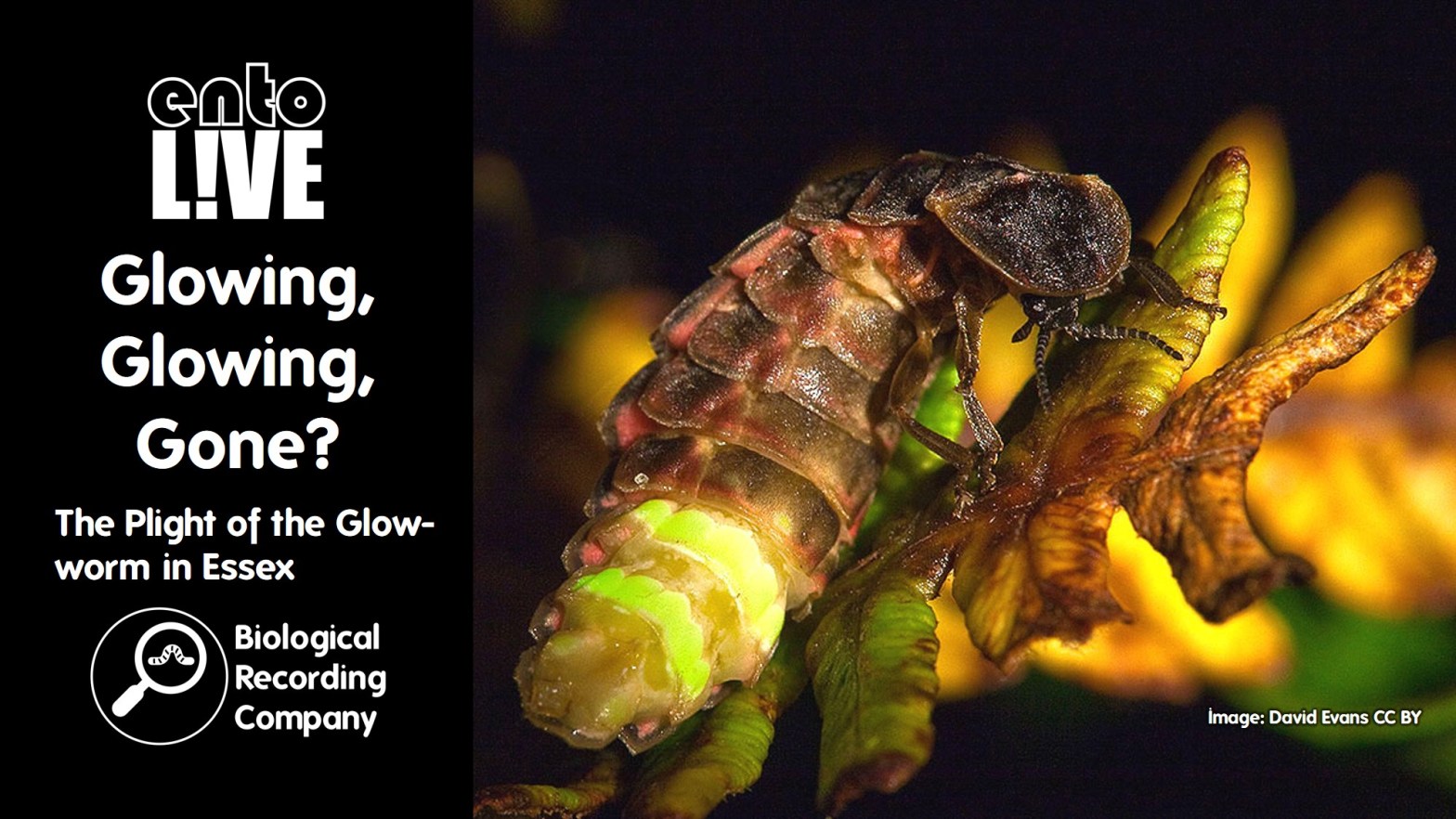
The glow-worm Lampyris noctiluca (Coleoptera: Lampyridae) is thought to be declining in the United Kingdom. Yet, much of the evidence for this is anecdotal, with a shortage of standardised long-term data to investigate temporal changes in abundance. A long-term transect study from Essex has produced statistical evidence of a decline (75%) in glow-worm abundance since 2001. There is a clear signal of climate warming and drying effects on glow-worm numbers and of local site changes due to a lack of active scrub management. Conservation strategies that mitigate local population losses could be an essential buffer against climate-driven declines in south-east England.
Q&A with Dr Tim Gardiner
Dr Tim Gardiner is a children’s author, ecologist, editor, essayist, poet, songwriter and storyteller. His scientific papers, poetry and prose have been published all over the world.
How widespread are glow worms in the UK?
They’ve been recorded in many places in the UK. As you go further north, populations become more isolated (possibly due to climate). However, there are old records from the Isle of Skye where people were seeing thousands. It’s on the west coast, so a bit milder there. You can check the distribution records on the Glow-worm (Lampyris noctiluca) NBN Atlas page. You can submit your records through the Glow-worm iRecord form. The thing with distribution maps is that they only show where the recorders are and an absence of records doesn’t necessarily mean that the species isn’t there. This is where people can make a real difference – we need more people looking in the places where there are gaps, seeing if they are there and submitting records.
What kinds of numbers would indicate a healthy and sustainable glow worm population?
If you’ve seen about 40, that’s a good population, but even 20 to 30 is a decent number. Whether that’s a viable population is another question. How big does a population need to be to be completely viable in the long term? It’s definitely double figures with at regular counts of numbers in the 30s and 40s. Counts in the 100s appear to be a thing of the past. Ideally, the individuals should also be spread out rather than concentrated in a small area, to reduce the risk of someone mowing the whole lot, unintentionally destroying the population. This is where corridor habitats are important.
How successful is Glow-worm translocation?
It really is too early to tell. I’m not aware of any post-release data, and there certainly hasn’t been enough time elapsed to get any long-term data. There was a site, in south Essex, where they were moving reptiles and they discovered larvae at the same time so they also moved the Glow-worm population. In this instance, the larvae were translocated because otherwise they too would have been doomed – it wasn’t planned and it was not part of scheme to seed an area with Glow-worms. This was at least successful for a few years and there are still some glow worms in that area, but we need the accurate scientific monitoring of these translocations to be certain they work and they don’t jeopardise the population you take insects from. The people doing the translocations need to not only monitor but also to publish their results. And we need to talk about failure as much as success.
Is it known how far males will fly?
They don’t seem to fly that far; they stay quite local. One idea is that male and female larvae aggregate in certain areas and then the males and females are all there together. It makes mating a bit easier. Again, more research is needed.
Literature References
- Gardiner & Didham (2020) Glowing, glowing, gone? Monitoring long-term trends in glow-worm numbers in south-east England: https://doi.org/10.1111/icad.12407
- Gardiner (2022) There Is a Light That Never Goes Out! Reversing the Glow-Worm’s Decline: https://doi.org/10.1016/B978-0-12-821139-7.00021-0
Further Info
- The UK Glow-worm Survey: https://www.glowworms.org.uk/
- Submit your records through the Glow-worm iRecord form: https://irecord.org.uk/enter-glow-worm-record
- Explore Glow-worm records on the NBN Atlas: https://species.nbnatlas.org/species/NBNSYS0000010994
- Reversing the Glow-Worm’s Decline article: https://www.notechmagazine.com/2021/04/reversing-the-glow-worms-decline.html
entoLIVE
entoLIVE webinars feature guest invertebrate researchers delving into their own invertebrate research. All events are free to attend and are suitable for adults of all abilities – a passion for invertebrates is all that’s required!
- Donate to entoLIVE: https://www.gofundme.com/f/entolive-2025
- Upcoming entoLIVE webinars: https://www.eventbrite.com/cc/entolive-webinars-74679
- entoLIVE blog: https://biologicalrecording.co.uk/category/entolive-blog/
- entoLIVE on YouTube: https://youtube.com/playlist?list=PLuEBNUcfMmE95Re19nMKQ3iX8ZFRFgUAg&feature=shared
entoLIVE is delivered by the Biological Recording Company in partnership with the British Entomological & Natural History Society, Royal Entomological Society and Amateur Entomologists’ Society, with support from Buglife.
The entoLIVE programme is delivered by Biological Recording Company and receives sponsorship from the following organisations:
- British Entomological & Natural History Society
- Royal Entomological Society
- Amateur Entomogists’ Society
Learn more about British wildlife
 Biological Recording
