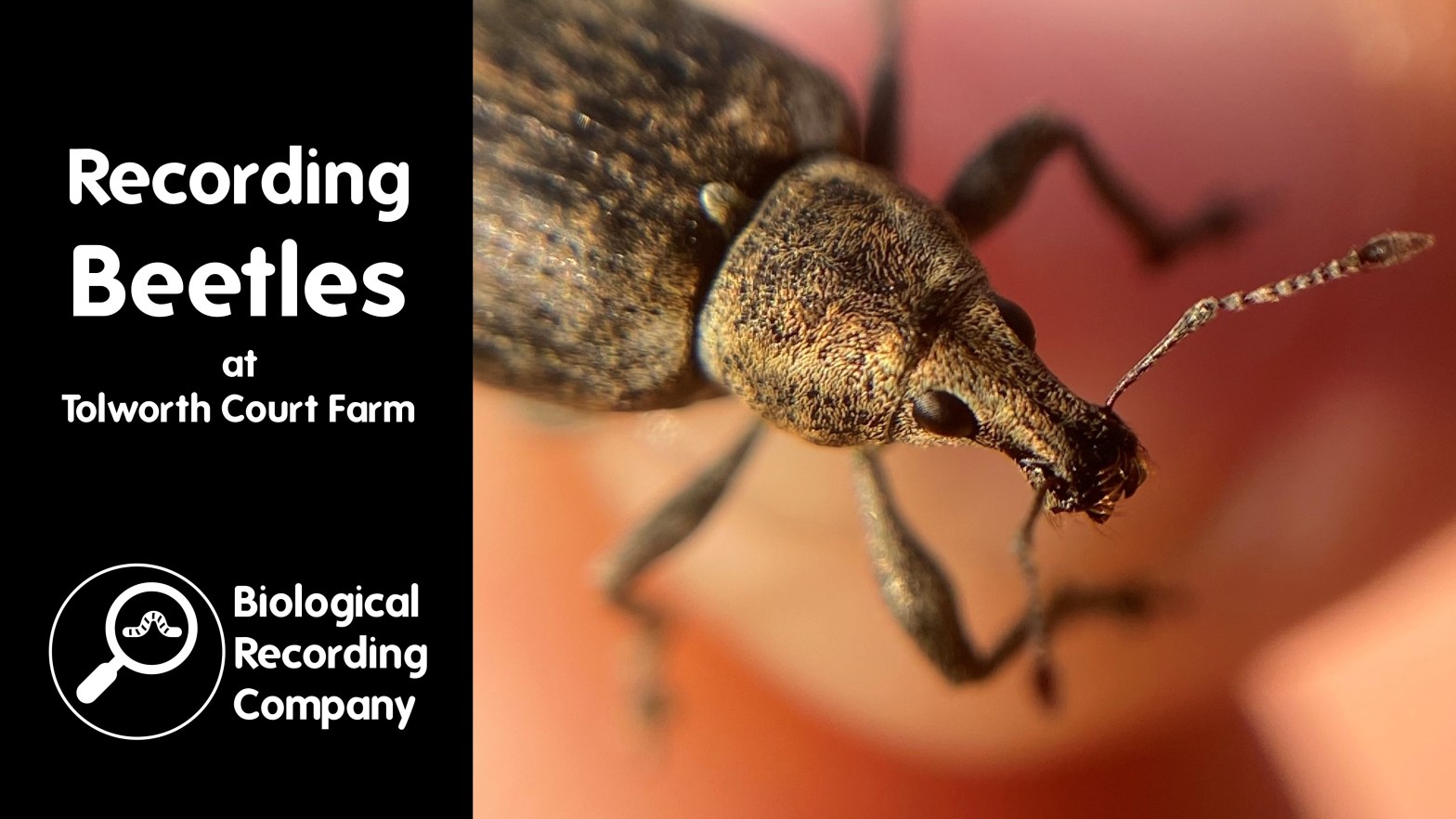
Recording Beetles at Tolworth Court Farm
Blog post by Joss Carr
This article recounts the Beetle Field Recorder Day held at Tolworth Court Farm on Friday 25th April in collaboration with Citizen Zoo and London Natural History Society.
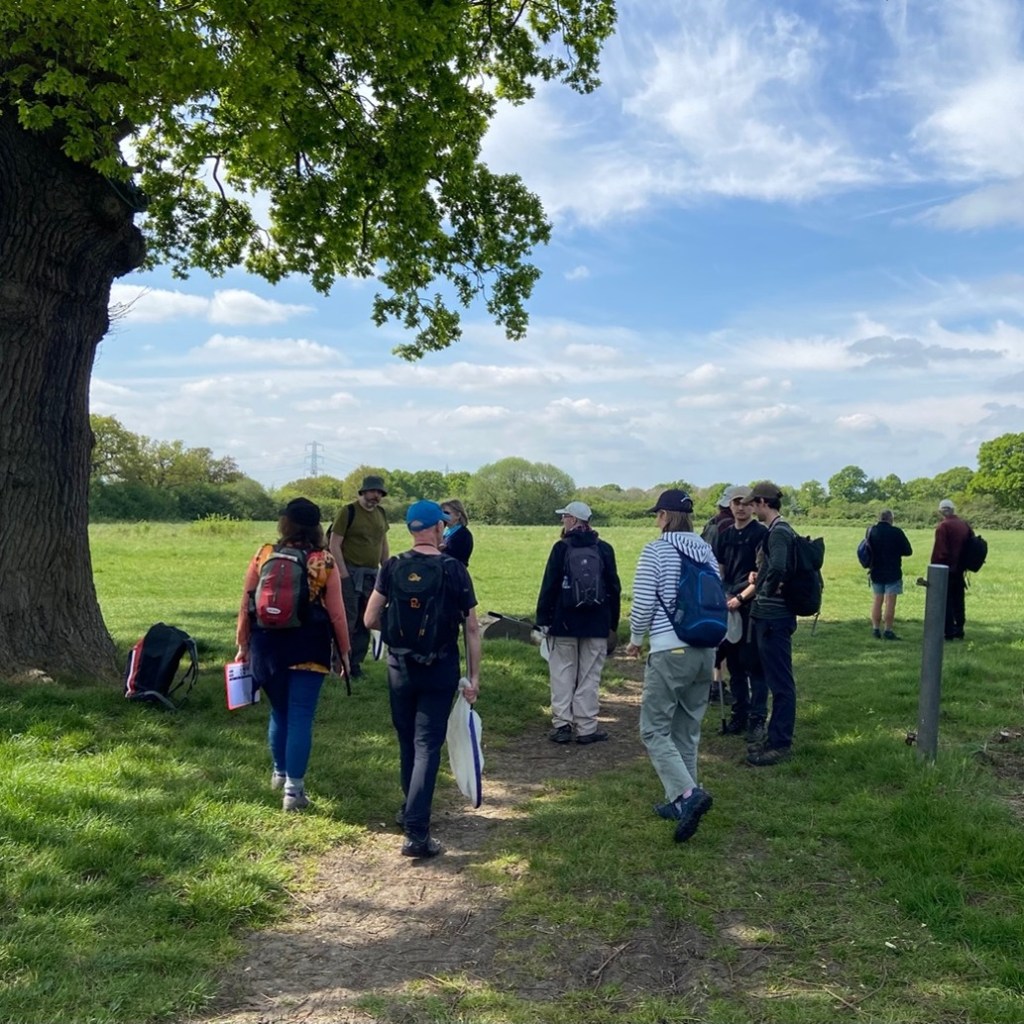
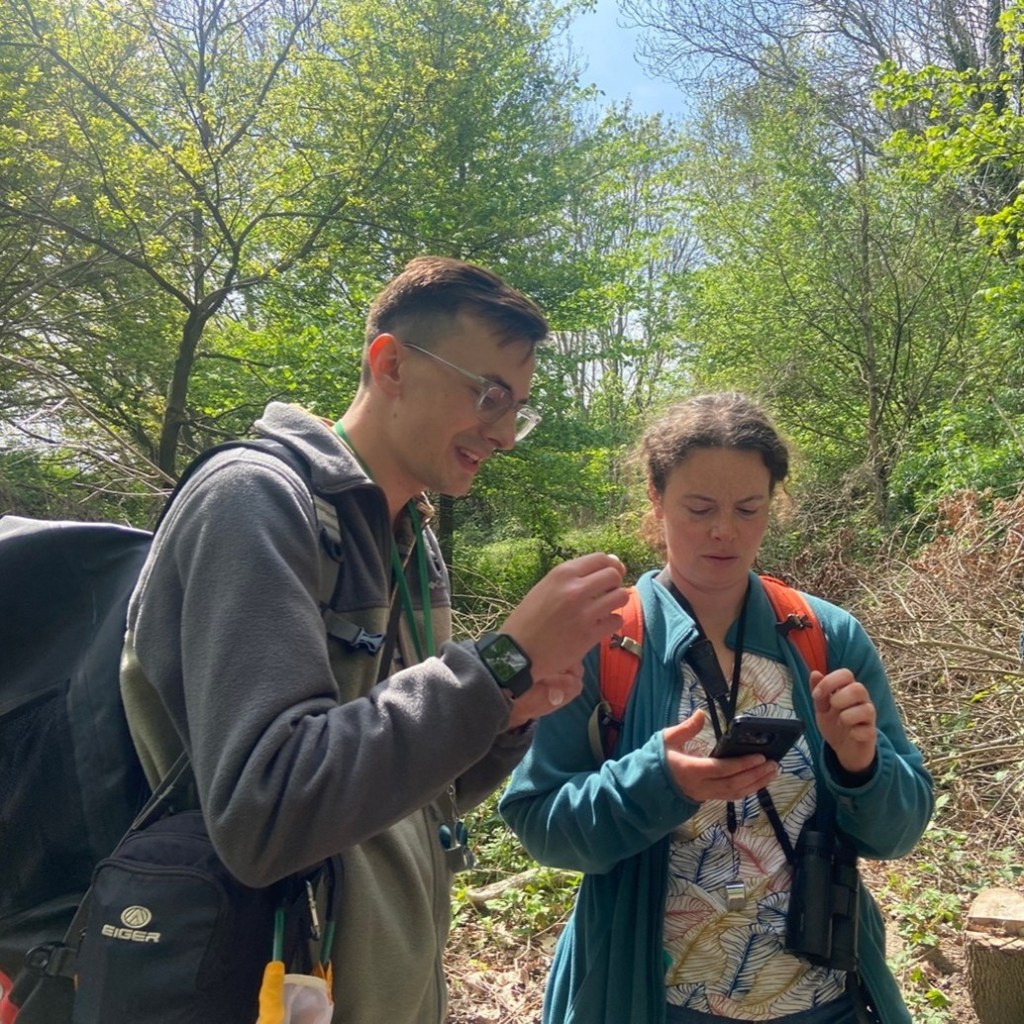
It was a gloriously sunny Friday morning when twenty-four intrepid naturalists ventured to Tolworth Court Farm in South-west London in search of beetles. We were a mixed group, including representatives from three organisations: the Biological Recording Company, Citizen Zoo and Rewilding Britain (the latter of which had sent along two photographers to capture the day). Our leader for this Field Recorder Day was beetle specialist Connor Butler.
Between the participants, a wide range of expertise was represented, with some individuals having never taken a concerted look at beetles before and others having spent years studying them.
Wild Tolworth
The site of choice – Tolworth Court Farm – is a 43-ha Local Nature Reserve (LNR) in the borough of Kingston. Managed by Citizen Zoo as a rewilding site through the ‘Wild Tolworth’ project, Tolworth Court Farm features an exciting range of habitats from open meadows with long grass, to woodland, to the chalk stream of the Hogsmill River, and a small patch of boggy marsh. It has been called one of London’s leading nature reserves, and rewilding efforts are set to include the introduction of a herd of Sussex cattle to reinstate a semi-natural grazing regime for the benefit of the site’s plant life and invertebrates and the expansion of the boggy area into a larger area of wetland.
Citizen Zoo are also incredibly keen to engage biological recorders and the local community with volunteering on the site. Such community engagement has the dual benefits of not only helping understand and better inform conservation management but also helps remedy some of the anti-social behaviour (such as fly-tipping) that the site was previously known for. Research suggests individuals responsible for such behaviour are less likely to commit such acts if there is a regularly present volunteer body on site.
The aims of the day were to:
- engage volunteers with the Wild Tolworth rewilding project and the Tolworth Court Farm Fields site.
- educate volunteers and inspire their interest in beetles.
- generate biological records which contribute to building understanding of the site to inform conservation management.
In regards specifically to biological recording, all volunteers were encouraged to record their findings, either on paper sheets which they could be later digitised through uploading to iRecord via the London Natural History Society activity, or via direct upload to the iRecord app.
Grassland Beetles
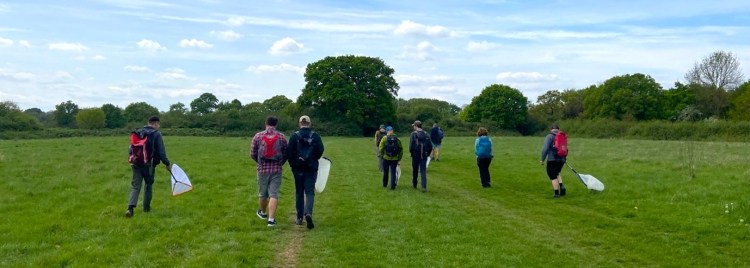
After a successful rendezvous and brief introduction to the site (from Citizen Zoo) and to the basics of beetles (from Connor), the group ventured into the main site ‘Tolworth Court Farm Fields’ where volunteers immediately got to work amongst the long grass and in the hedgerows. Armed with sweep nets, pooters and collection pots, a wide range of species – including a range of beetles – were quickly revealed. The overhead sun, mild temperature and low wind made for a perfect day for observing insects.
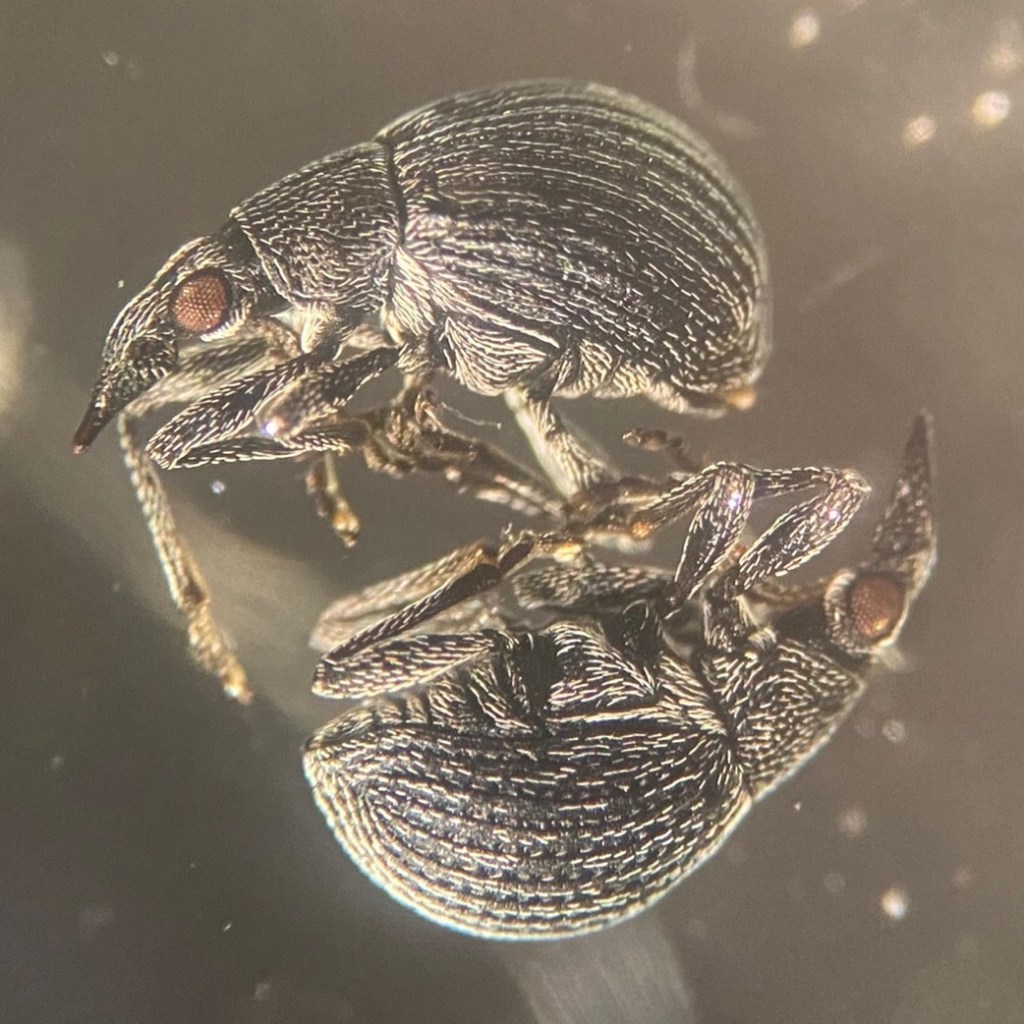
Some of the species collected from the long grass included 24- and 14-spot ladybirds (Subcoccinella vigintiquattuorpunctata and Propylea quattuordecimpunctata) as well as a nice range of Apionid weevils such as Oxystoma craccae and Oxystoma pomonae (from Common Vetch Vicia sativa) and Protapion fulvipes.
The much larger broad-nosed weevil Liophloeus tessulatus was also a delight to see. Connor was able to provide useful tips and tricks for the identification of different families and more generally help newcomers learn about some of the beetles they had collected.
The group opted for an early lunch beneath the shade of a large English Oak (Quercus robur) at the margin of the Seven Acres field. In the time-honoured fashion of naturalists – who cannot take a break much longer than 10 minutes before getting back to looking at wildlife – some volunteers soon turned to the hedges behind the lunch spot where several insects were active. The Mirid plant bug Dryophilocoris flavoquadrimaculatus was common here, having likely descended from the oak above which is its host plant.
Woodland Beetles
After finishing our lunch the party then moved on to a small area of woodland further into the site. Connor was keen to explore the deadwood habitats present, and indeed several deadwood specialist beetles were found, including the black ground beetles Nebria brevicollis and Abax parallelelepipedus, both common in this habitat.
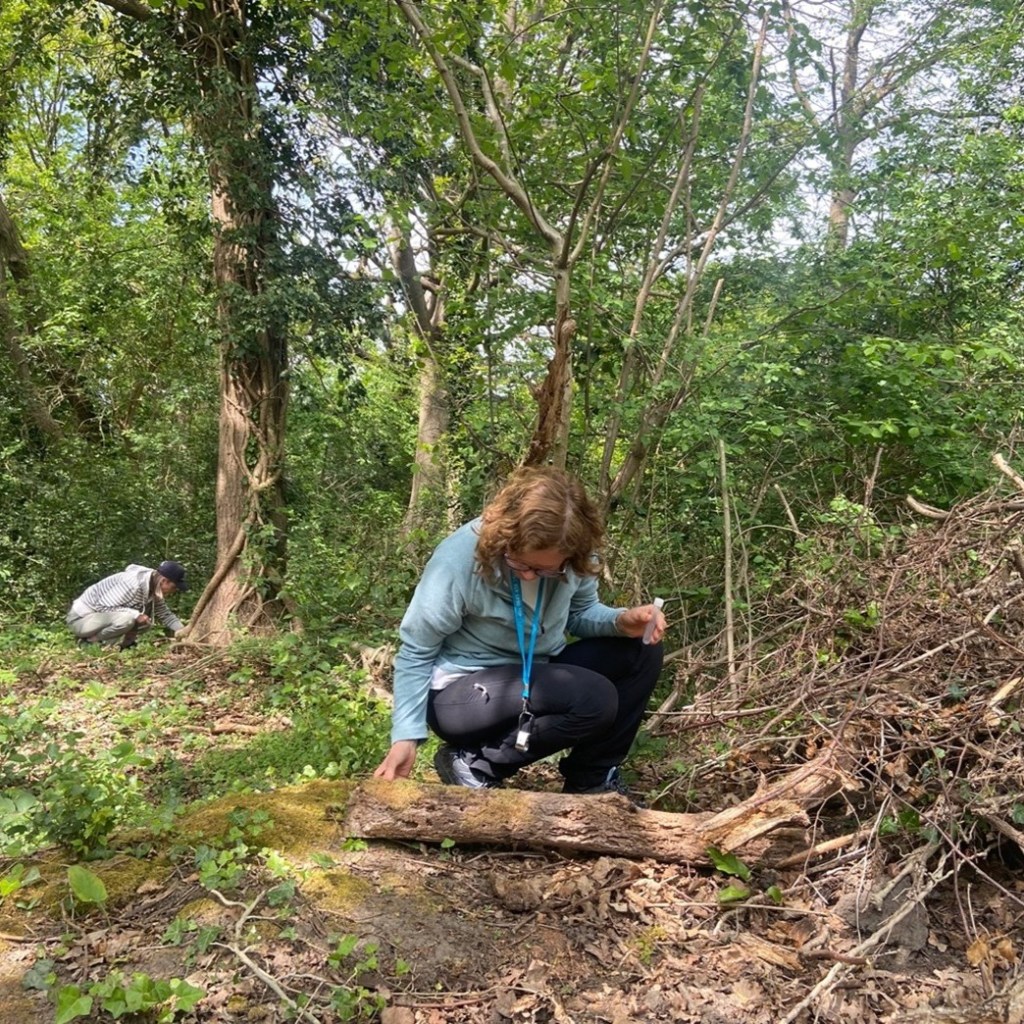
Whilst others occupied themselves in the woodland, some volunteers turned to a small but promising-looking grassy patch on the woodland margin. Excitingly this turned up the tortoise beetle Cassida vibex, which gave Elliot Newton (Citizen Zoo) the chance to delight everyone with his ‘favourite fact’ about the fecal shield produced by tortoise beetle larvae which they used to defend themselves. This grassy patch also yielded the uncommonly recorded vetch-feeding bean weevil Bruchus atomarius as well as its more common sister species Bruchus loti.
Marsh Beetles
The group then moved onwards down to the small marsh area that will be expanded into a bigger wetland through the Wild Tolworth project.
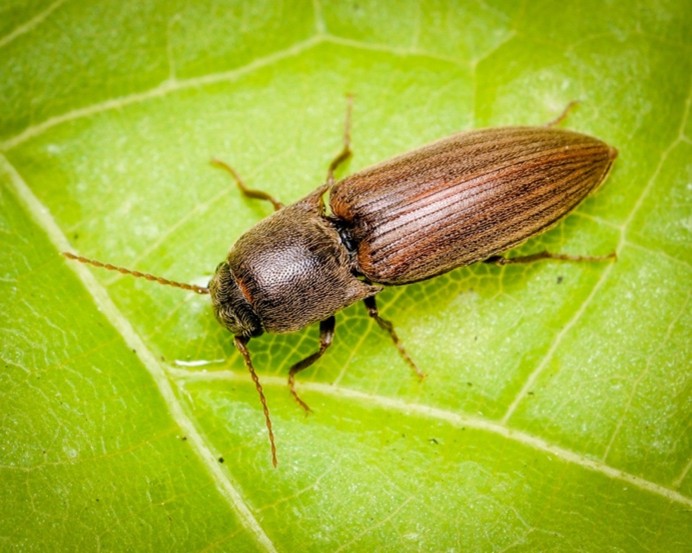
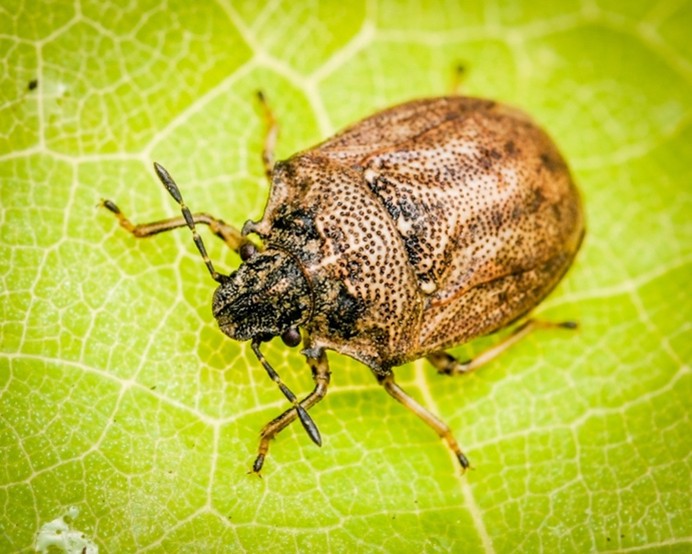
The underside of an old artificial refugium for reptile surveys revealed several individuals of the click beetle Agriotes lineatus as well as several Turtle-bugs Podops inuncta. Mick Massie took some excellent photos of these species shown below.
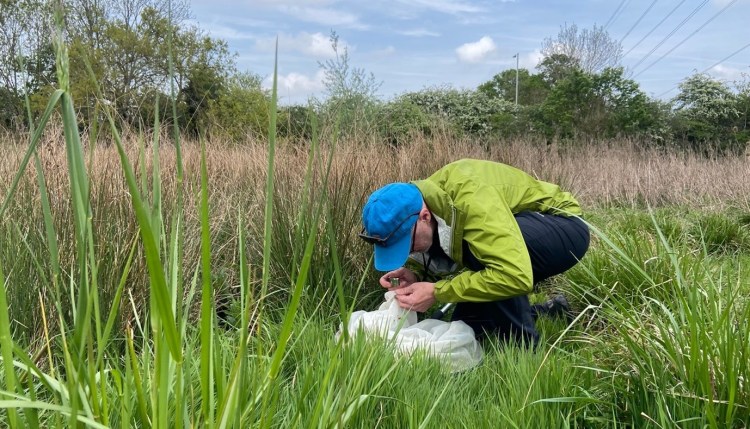
Sweep-netting of the grasses and sedges in this area also revealed some interesting marsh specialist beetles including numerous Microcara testacea (a species of marsh beetle), Coccidula rufa (the Red Marsh Ladybird) and Bembidion biguttatum (a small ground beetle which favours muddy ground near water). A definite highlight was Elaphrus riparius, a species only found at the margins of freshwater (Hackston, 2024).
Riverbank Beetles
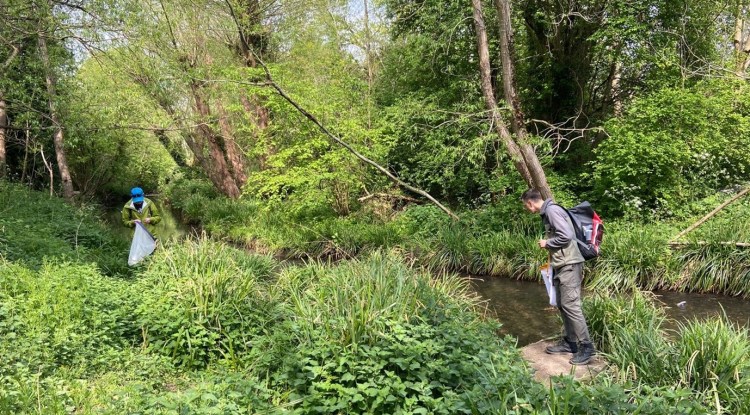
The final site of the day was down on the banks of the Hogsmill River, a lovely chalk stream that was breathtakingly clear and alive with riverflies on our visit. The river banks were cloaked in Pendulous Sedge Carex pendula and Cow Parsley Anthriscus sylvestris, the latter yielding one of the days most exciting finds of the day in the form of the longhorn beetle Phytoecia cylindrica, which feeds on Anthriscus sylvestris and other umbellifers. Numerous other insects including damselflies and hoverflies were also recorded here. Right before departing we were bid farewell by the final beetle of the day, an Orange Ladybird Halyzia sedecimguttata sitting calmly on a leaf overhanging the bridge that leads out of the site.
The Results & Next Steps
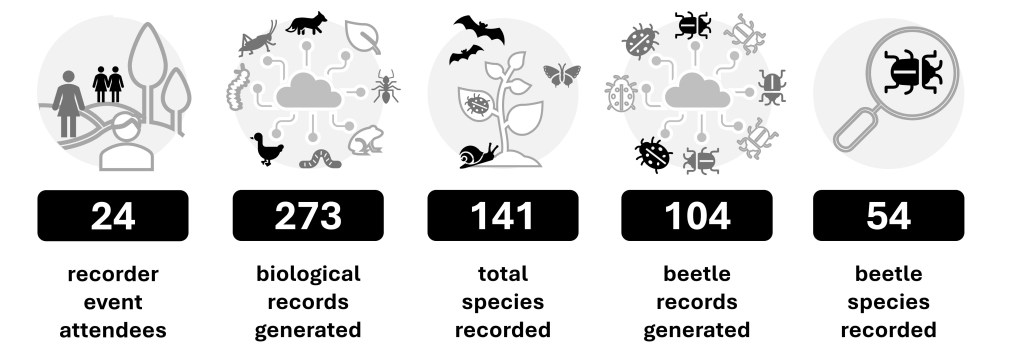
All in all it was a very productive day with 24 volunteers engaged and 273 biological records generated of 141 species in total, including 104 records of 54 species of beetle.
Several species found represent new records for the site which will continue to contribute towards building a picture of the biodiversity present in order to inform future conservation.
Thank you very much to all who attended and and contributed valuable data to the project. As always, our data is gathered through iRecord so that it is automatically accessible to Greenspace Information for Greater London (GiGL) and the relevant National Recording Schemes & Societies.
What’s next? We’ll be returning to Tolworth Court Farm in July for a Fly Field Recorder Day with Martin Harvey and in October for a Fungi Field Recorder Day with Dr Mark Spencer, plus we have other days planned at more sites across London. You could also sign up to our Longhorn Beetles of the UK online course to expand your beetle knowledge!
Learn more about British wildlife
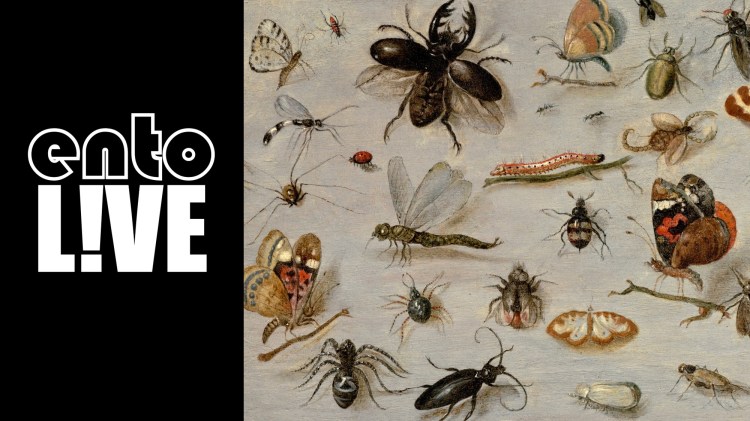
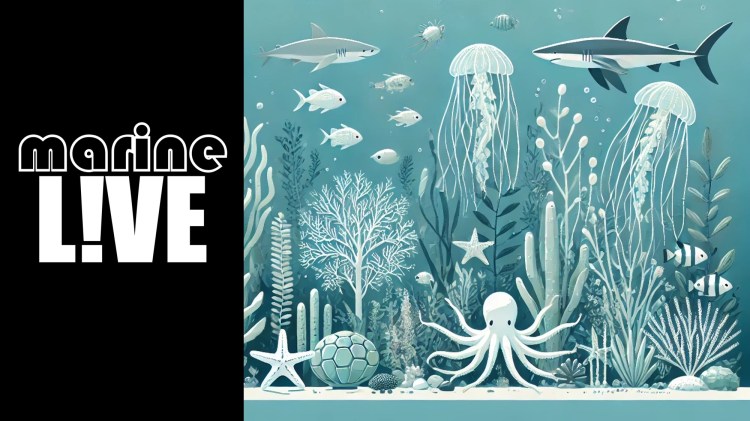
Insects That Live In The Sea: Why Are There Are So Few?
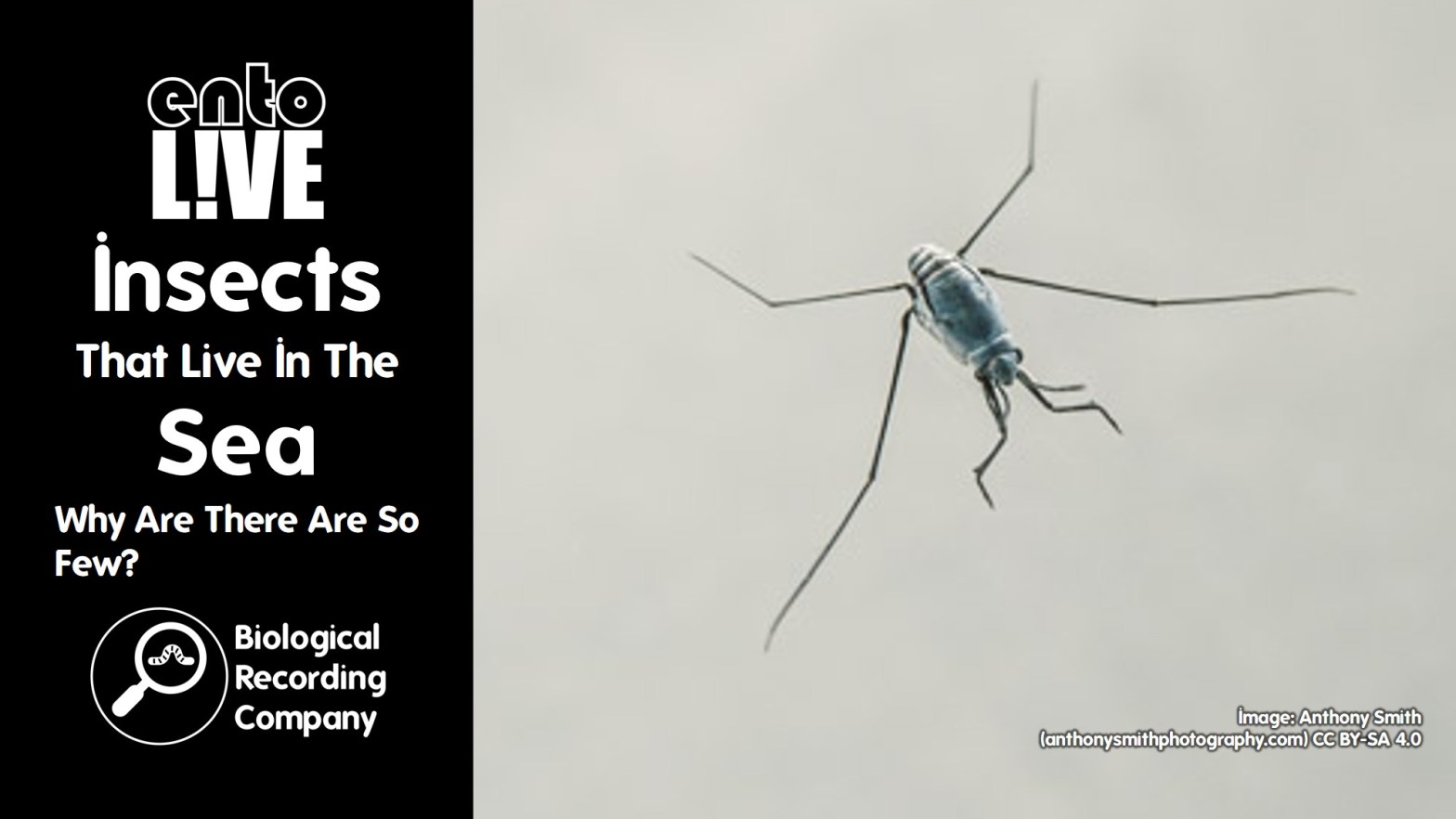
Insects are everywhere – but only on land and in freshwater. Around a million species of insect have been described, but less than 2000 live in close association with the sea, with only a handful of chironomid flies and hemipteran water skaters living fully marine lives. Even then, it can be argued that these fully ocean-going species live on top of the sea rather than in it. Why have insects been so unsuccessful at colonising the oceans? In this presentation, we will look at those few insects that have managed to make some sort of accommodation with the sea, and speculate on why they are so few of them.
Q&A with Prof Stuart Reynolds
Stuart Reynolds is an Emeritus Professor of Biology at the University of Bath, and is an Honorary Fellow and Past President of the Royal Entomological Society. He is interested in everything about insects, from ecology to immunology, and behaviour to genomes. But he is especially fascinated by the astonishing evolutionary success of insects in colonizing almost every terrestrial and freshwater habitat.
Is there a name for the semi-circle shaped tree diagram?
It’s a phylogenetic tree, specifically an arc-style or semi-circular phylogenetic tree. These diagrams visually represent the evolutionary history and relationships between different species, organisms, or genes from a common ancestor.
Are there any marine insects in land-locked seas, such as the Salton Sea in California?
There are a lot of insects that are adapted to very salty conditions like you find in the California Sierra lakes and the Dead Sea. They do well in these hypersaline conditions because there aren’t that many fish. There are, of course, inland seas that are not hypersaline, but I don’t know if there are marine insects there. People haven’t studied them yet.
How is climate change likely to affect marine insects?
Sea levels will go up with climate change, but those insects, like the Halobates spp, that live out at sea should be fine. They’ll just float. The ones that live on the shoreline, they’ll simply migrate up the shoreline. So, I don’t think I’d expect big changes.
Do you think that the crustacea and insects have a common ancestor in the sea or from land?
The macroevolutionists are pretty clear that insects and crustaceans are indeed very closely related. The ancestral hexapod is thought to have arisen from a rather obscure class of crustacea called the Remipedia. These are crustacea that live in caves with brackish water. It looks, from DNA evidence, as though all hexapods are derived from this obscure order. The Remipedia live in salty water so the question really is if the ancestor of all hexapods today migrated into fresh water and then to land, or whether the colonisation of land by insects took place directly from brackish and salty water with freshwater habitats being colonised secondarily from the land, or whether the ancestral hexapods first entered fresh water and only later crawled up onto the land.
Accompanying Antenna Article
Join the Royal Entomological Society to receive the quarterly Antenna magazine: https://www.royensoc.co.uk/membership-and-community/membership/
Literature References
- Gosse (1855) A Manual of Marine Zoology of the British Isles Part I, p 178, London, J. van Voorst: https://www.biodiversitylibrary.org/item/22491#page/7/mode/1up
- Plateau, F. (1890) Journal de l’Anatomie 26, 236–269: https://www.biodiversitylibrary.org/item/178223#page/246/mode/1up
- Cheng (1976) Marine Insects: https://escholarship.org/content/qt1pm1485b/qt1pm1485b.pdf
- Tihelka et al. (2021) The evolution of insect biodiversity: https://doi.org/10.1016/j.cub.2021.08.057
- Pak et al. (2022) The evolution of marine dwelling in Diptera: https://doi.org/10.1002/ece3.7935
- Tang et al. (2022) Maritime midge radiations in the Pacific Ocean (Diptera: Chironomidae): https://doi.org/10.1111/syen.12565
- Page et al. (2004) Phylogeny of “Philoceanus complex” seabird lice (Phthiraptera: Ischnocera) inferred from mitochondrial DNA sequences: https://doi.org/10.1016/S1055-7903(03)00227-6
- Leonardi et al. (2022) How Did Seal Lice Turn into the Only Truly Marine Insects?: https://doi.org/10.3390/insects13010046
- Edwards (1926) On Marine Chironomidae (Diptera); with Descriptions of a New Genus and four New Species from Samoa: https://zslpublications.onlinelibrary.wiley.com/doi/abs/10.1111/j.1469-7998.1926.tb07127.x
- Chang et al. (2021) Navigation in darkness: How the marine midge (Pontomyia oceana) locates hard substrates above the water level to lay eggs: https://doi.org/10.1371/journal.pone.0246060
- Templeton (1835) Description of a new hemipterous insect from the Atlantic Ocean (Halobates streatfieldiana): https://www.biodiversitylibrary.org/item/48195#page/252/mode/1up
- White (1883) Report on the pelagic Hemiptera procured during the Voyage of H.M.S. Challenger in the years 1873-1876. https://www.biodiversitylibrary.org/page/12810019#page/5/mode/1up
- Chang et al. (2024) Skimming the skaters: genome skimming improves phylogenetic resolution of Halobatinae (Hemiptera: Gerridae): https://doi.org/10.1093/isd/ixae015
- Mahadik et al. (2020) Superhydrophobicity and size reduction enabled Halobates (Insecta: Heteroptera, Gerridae) to colonize the open ocean: https://doi.org/10.1038/s41598-020-64563-7
Further Info
- WoRMS (World Register of Marine Species): https://www.marinespecies.org/
entoLIVE
entoLIVE webinars feature guest invertebrate researchers delving into their own invertebrate research. All events are free to attend and are suitable for adults of all abilities – a passion for invertebrates is all that’s required!
- Donate to entoLIVE: https://www.gofundme.com/f/entolive-2025
- Upcoming entoLIVE webinars: https://www.eventbrite.com/cc/entolive-webinars-74679
- entoLIVE blog: https://biologicalrecording.co.uk/category/entolive-blog/
- entoLIVE on YouTube: https://youtube.com/playlist?list=PLuEBNUcfMmE95Re19nMKQ3iX8ZFRFgUAg&feature=shared
entoLIVE is delivered by the Biological Recording Company in partnership with the British Entomological & Natural History Society, Royal Entomological Society and Amateur Entomologists’ Society, with support from Buglife.
The entoLIVE programme is delivered by Biological Recording Company and receives sponsorship from the following organisations:
- British Entomological & Natural History Society
- Royal Entomological Society
- Amateur Entomogists’ Society
Learn more about British wildlife
Protected: Chafer Beetles of the UK
Insect Welfare: What Benefits Bugs?
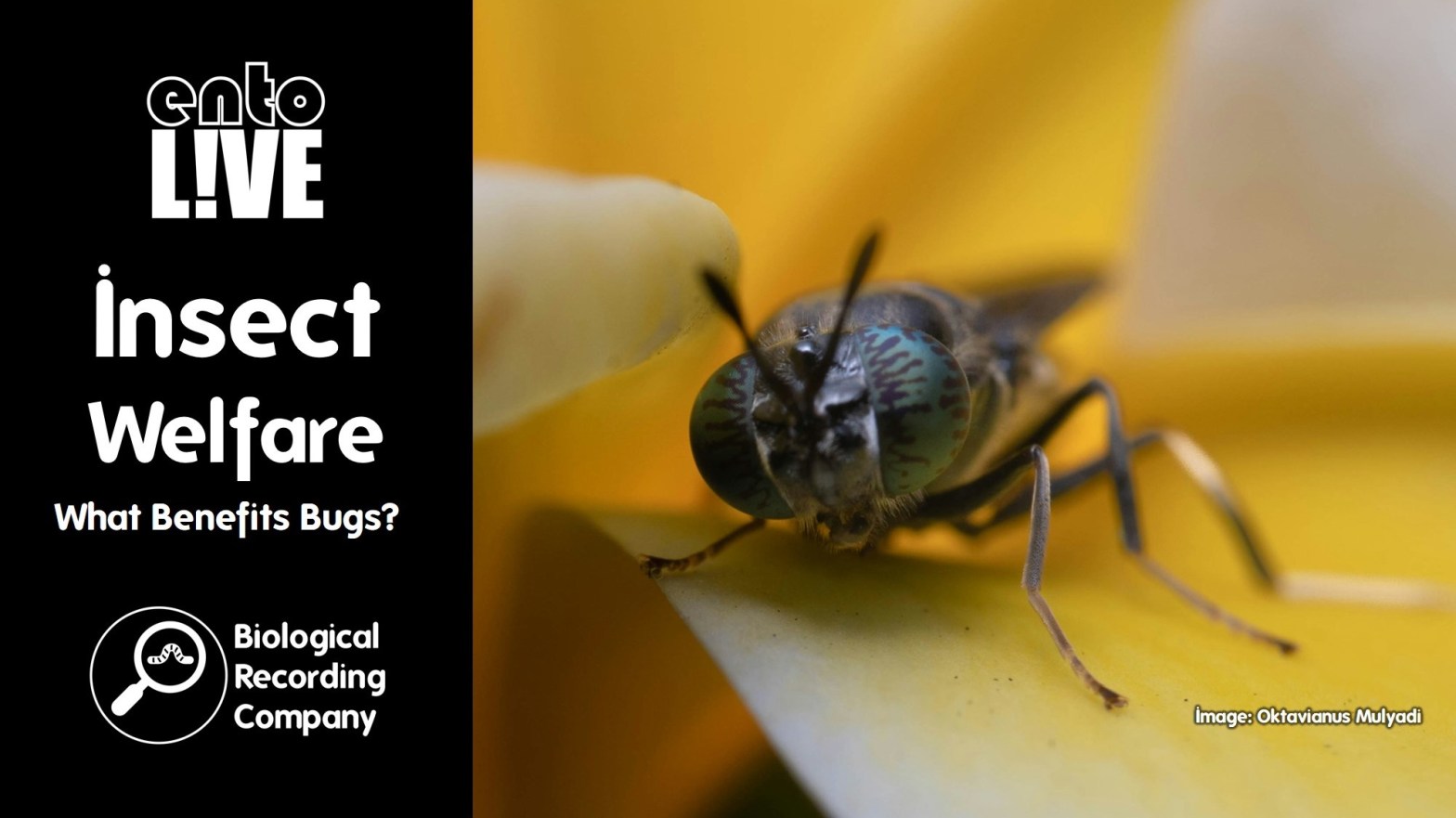
Recent progress in the research on insect sentience and pain suggests that some insects at some life stages may be sentient. But if insects are sentient, what should we do to protect and promote their welfare in the contexts where we use or manage them? The concept of individual welfare will be introduced and applied to consider strategies for improving the lives of insects.
Q&A with Dr Meghan Barrett
Dr Meghan Barrett is an Assistant Professor of Biology at Indiana University Indianapolis and Director of the Insect Welfare Research Society. Her research focuses on insect neuroscience, physiology, and welfare, particularly in the farmed context.
Does the Insect Welfare Research Society work on other groups of invertebrates besides insects, like crustaceans, molluscs etc?
We call ourselves the Insect Welfare Research Society because we are hoping to shed light on this specific, long-neglected group. But, really, our values are that we are the understudied invertebrate research society, it just isn’t as cool a name. So, for example, we do have decapod crustacean guidelines that were produced by our researchers, and we are happy to consider other invertebrates as well if there’s a researcher community to support. We have student and small meeting support grants that can go to any invertebrate group.
Has any research been done on the effects of deep freezing as a humane euthanasia strategy for insects?
Very little research has been done to demonstrate whether freezing can be considered a humane euthanasia strategy for insects. But it’s a great question because a lot of people do want to know what we recommend. There are some recommendations in the 2024 guidelines that we are refining specifically on this point for the 2026 guidelines as we try to stay on top of the best available evidence. At least some insects have unique, cold-evoked nocifensive responses that suggests cold may be, minimally, stressful for the animal to experience prior to unconsciousness (e.g., chill coma). Thus, especially for larger-bodied species or those with cold adaptations (like bumblebees, shivering) where the amount of time it will take for insects to become unconscious will be lengthened, cold euthanasia is not currently recommended.
Additionally, BIAZA (British and Irish Association for Zoos and Aquaria) have a terrestrial invertebrate group composed of insect specialists and veterinarians that’s actually looked at this issue. They also don’t recommend freezing insects as a humane method of euthanasia (Pellet et al. 2013). However, they say if you need to do it, then first put them into a fridge for four hours to let them acclimate to the cool temperature and then put them into the coldest available freezer immediately after that.
What about the use of ethanol?
Direct to ethanol killing would definitely not be recommended as it clearly results in distress. You will likely have seen the animals struggling in the tubes if they haven’t been frozen first. That’s an indication that the suffocation happening to the animal may be stress-inducing. Typically, this method would need to be justified (e.g., ethanol was the only way to preserve the specimen in a manner required for research purposes) if it were to be used instead of a more humane method. If direct-to-ethanol killing is necessary for a scientific aim, we recommend anesthetizing the animals first. If possible, employing a method of euthanasia prior to immersion in ethanol (e.g., crushing of the head capsule to destroy the brain) is preferred, where this does not stand in the way of a justified scientific objective.
Literature References
- Makarova et al. (2020) ‘Small brains for big science’: https://www.sciencedirect.com/science/article/pii/S0959438821001021
- Barrett and Fischer (in press) ‘preprint – The Era Beyond Eisemann et al. (1984): Insect pain in the 21st century’: https://osf.io/preprints/osf/ng7pu_v1
- Li et al. (2020) ‘The connectome of the adult Drosophila mushroom body provides insights into function’: https://elifesciences.org/articles/62576
- Birch et al (2021) ‘Review of the evidence of sentience in cephalopod molluscs and decapod crustaceans’: https://www.lse.ac.uk/News/News-Assets/PDFs/2021/Sentience-in-Cephalopod-Molluscs-and-Decapod-Crustaceans-Final-Report-November-2021.pdf
- Fischer et al. (2025) ‘Defending and refining the Birch et al. (2021) precautionary framework for animal sentience’: https://www.cambridge.org/core/journals/animal-welfare/article/defending-and-refining-the-birch-et-al-2021-precautionary-framework-for-animal-sentience/F60CF6102B4D2B9A5A5218ED42AEDCC6
- Gibbons et al. (2022) ‘Can insects feel pain? A review of the neural and behavioural evidence’: https://chittkalab.sbcs.qmul.ac.uk/2022/Gibbons%20et%20al%202022%20Advances%20Insect%20Physiol.pdf
- Zipple et al. (2024) ‘Animal emotions and consciousness: A preliminary assessment of researchers’ perceptions and biases and prospects for future progress’: https://pmc.ncbi.nlm.nih.gov/articles/PMC11558068/
- Barrett et al. (2024) ‘Entomologists’ knowledge of, and attitudes towards, insect welfare in research and education’: https://resjournals.onlinelibrary.wiley.com/doi/full/10.1111/een.13415
- Mellor et al. (2020) ‘The 2020 Five Domains Model: Including Human–Animal Interactions in Assessments of Animal Welfare’: https://pmc.ncbi.nlm.nih.gov/articles/PMC7602120/#sec3-animals-10-01870
- Lalander et al. (2025) ‘Working out the bugs: navigating challenges and unlocking opportunities in the insect industry’: https://brill.com/view/journals/jiff/aop/article-10.1163-23524588-20250001/article-10.1163-23524588-20250001.xml
- Shah (2024) ‘Insect farming: Investment trends and projected production capacity’: https://rethinkpriorities.org/research-area/investments-into-insect-farming/
- McKay and Shah (2025) ‘Forecasting Farmed Animal Numbers in 2033’: https://rethinkpriorities.org/research-area/forecasting-farmed-animal-numbers-in-2033/
- Dortsman et al. (2017) ‘Insect farming: investment trends and projected production capacity’: https://www.semanticscholar.org/paper/Black-soldier-fly-biowaste-processing%3A-a-guide-Dortmans-Diener/4982a69fd8dafeafab9564ca1c9c9cce65d6ab0c#citing-papers
- Shepperd et al. (2002) ‘Rearing methods for the black soldier fly (Diptera: Stratiomyidae)’: https://pubmed.ncbi.nlm.nih.gov/12144307/
- Barrett et al. (2025 preprint) ‘Dietary preferences and impacts of feeding on behavior, longevity, and reproduction in adult black soldier flies (Diptera: Stratiomyidae; Hermetia illucens)’: https://osf.io/p74xq_v1
- Perl et al. (2024 preprint) ‘Identifying trends in reporting on the ethical treatment of insects in research’: https://osf.io/preprints/osf/hs4gr
Further Info
- Insect Welfare Research Society Research Guidelines: https://www.insectwelfare.com/research-guidelines
- Invertebrate Sentience: Do Invertebrate Experiences Deserve Respect & Welfare Protection? entoLIVE: https://biologicalrecording.co.uk/2023/07/17/invertebrate-sentience/
- 80,000 hours Podcast #198 ‘Meghan Barrett on challenging our assumptions about insects’: https://80000hours.org/podcast/episodes/meghan-barrett-insect-pain-consciousness-sentience/
- The Cambridge Declaration on Consciousness (2012): https://fcmconference.org/img/CambridgeDeclarationOnConsciousness.pdf
- The New York Declaration on Animal Consciousness (2024): https://sites.google.com/nyu.edu/nydeclaration/declaration
- Royal Entomological Society Statement on the Ethical Treatment of Insects: https://www.royensoc.co.uk/news/res-statement-on-the-ethical-treatment-of-insects/#:~:text=Where%20insects%20are%20ethically%20killed%20for%20research%2C%20researchers%20should%20consider,their%20studies%20and%20research%20objectives.
- BENHS Code of Conduct for Collecting Insects and Other Invertebrates: https://www.benhs.org.uk/resources/collecting/
entoLIVE
entoLIVE webinars feature guest invertebrate researchers delving into their own invertebrate research. All events are free to attend and are suitable for adults of all abilities – a passion for invertebrates is all that’s required!
- Donate to entoLIVE: https://www.gofundme.com/f/entolive-2025
- Upcoming entoLIVE webinars: https://www.eventbrite.com/cc/entolive-webinars-74679
- entoLIVE blog: https://biologicalrecording.co.uk/category/entolive-blog/
- entoLIVE on YouTube: https://youtube.com/playlist?list=PLuEBNUcfMmE95Re19nMKQ3iX8ZFRFgUAg&feature=shared
entoLIVE is delivered by the Biological Recording Company in partnership with the British Entomological & Natural History Society, Royal Entomological Society and Amateur Entomologists’ Society, with support from Buglife.
The entoLIVE programme is delivered by Biological Recording Company and receives sponsorship from the following organisations:
- British Entomological & Natural History Society
- Royal Entomological Society
- Amateur Entomogists’ Society
Learn more about British wildlife
 Biological Recording