Insect Welfare: What Benefits Bugs?

Recent progress in the research on insect sentience and pain suggests that some insects at some life stages may be sentient. But if insects are sentient, what should we do to protect and promote their welfare in the contexts where we use or manage them? The concept of individual welfare will be introduced and applied to consider strategies for improving the lives of insects.

Q&A with Dr Meghan Barrett

Dr Meghan Barrett is an Assistant Professor of Biology at Indiana University Indianapolis and Director of the Insect Welfare Research Society. Her research focuses on insect neuroscience, physiology, and welfare, particularly in the farmed context.

Does the Insect Welfare Research Society work on other groups of invertebrates besides insects, like crustaceans, molluscs etc?

We call ourselves the Insect Welfare Research Society because we are hoping to shed light on this specific, long-neglected group. But, really, our values are that we are the understudied invertebrate research society, it just isn’t as cool a name. So, for example, we do have decapod crustacean guidelines that were produced by our researchers, and we are happy to consider other invertebrates as well if there’s a researcher community to support. We have student and small meeting support grants that can go to any invertebrate group.

Has any research been done on the effects of deep freezing as a humane euthanasia strategy for insects?

Very little research has been done to demonstrate whether freezing can be considered a humane euthanasia strategy for insects. But it’s a great question because a lot of people do want to know what we recommend. There are some recommendations in the 2024 guidelines that we are refining specifically on this point for the 2026 guidelines as we try to stay on top of the best available evidence. At least some insects have unique, cold-evoked nocifensive responses that suggests cold may be, minimally, stressful for the animal to experience prior to unconsciousness (e.g., chill coma).  Thus, especially for larger-bodied species or those with cold adaptations (like bumblebees, shivering) where the amount of time it will take for insects to become unconscious will be lengthened, cold euthanasia is not currently recommended.

Additionally, BIAZA (British and Irish Association for Zoos and Aquaria) have a terrestrial invertebrate group composed of insect specialists and veterinarians that’s actually looked at this issue. They also don’t recommend freezing insects as a humane method of euthanasia (Pellet et al. 2013). However, they say if you need to do it, then first put them into a fridge for four hours to let them acclimate to the cool temperature and then put them into the coldest available freezer immediately after that.

What about the use of ethanol?

Direct to ethanol killing would definitely not be recommended as it clearly results in distress. You will likely have seen the animals struggling in the tubes if they haven’t been frozen first. That’s an indication that the suffocation happening to the animal may be stress-inducing. Typically, this method would need to be justified (e.g., ethanol was the only way to preserve the specimen in a manner required for research purposes) if it were to be used instead of a more humane method. If direct-to-ethanol killing is necessary for a scientific aim, we recommend anesthetizing the animals first. If possible, employing a method of euthanasia prior to immersion in ethanol (e.g., crushing of the head capsule to destroy the brain) is preferred, where this does not stand in the way of a justified scientific objective.

Literature References

  1. Makarova et al. (2020) ‘Small brains for big science’: https://www.sciencedirect.com/science/article/pii/S0959438821001021
  2. Barrett and Fischer (in press) ‘preprint – The Era Beyond Eisemann et al. (1984): Insect pain in the 21st century’: https://osf.io/preprints/osf/ng7pu_v1
  3. Li et al. (2020) ‘The connectome of the adult Drosophila mushroom body provides insights into function’: https://elifesciences.org/articles/62576
  4. Birch et al (2021) ‘Review of the evidence of sentience in cephalopod molluscs and decapod crustaceans’: https://www.lse.ac.uk/News/News-Assets/PDFs/2021/Sentience-in-Cephalopod-Molluscs-and-Decapod-Crustaceans-Final-Report-November-2021.pdf
  5. Fischer et al. (2025) ‘Defending and refining the Birch et al. (2021) precautionary framework for animal sentience’: https://www.cambridge.org/core/journals/animal-welfare/article/defending-and-refining-the-birch-et-al-2021-precautionary-framework-for-animal-sentience/F60CF6102B4D2B9A5A5218ED42AEDCC6
  6. Gibbons et al. (2022) ‘Can insects feel pain? A review of the neural and behavioural evidence’: https://chittkalab.sbcs.qmul.ac.uk/2022/Gibbons%20et%20al%202022%20Advances%20Insect%20Physiol.pdf
  7. Zipple et al. (2024) ‘Animal emotions and consciousness: A preliminary assessment of researchers’ perceptions and biases and prospects for future progress’: https://pmc.ncbi.nlm.nih.gov/articles/PMC11558068/
  8. Barrett et al. (2024) ‘Entomologists’ knowledge of, and attitudes towards, insect welfare in research and education’: https://resjournals.onlinelibrary.wiley.com/doi/full/10.1111/een.13415
  9. Mellor et al. (2020) ‘The 2020 Five Domains Model: Including Human–Animal Interactions in Assessments of Animal Welfare’: https://pmc.ncbi.nlm.nih.gov/articles/PMC7602120/#sec3-animals-10-01870
  10. Lalander et al. (2025) ‘Working out the bugs: navigating challenges and unlocking opportunities in the insect industry’: https://brill.com/view/journals/jiff/aop/article-10.1163-23524588-20250001/article-10.1163-23524588-20250001.xml 
  11. Shah (2024) ‘Insect farming: Investment trends and projected production capacity’: https://rethinkpriorities.org/research-area/investments-into-insect-farming/
  12. McKay and Shah (2025) ‘Forecasting Farmed Animal Numbers in 2033’: https://rethinkpriorities.org/research-area/forecasting-farmed-animal-numbers-in-2033/
  13. Dortsman et al. (2017) ‘Insect farming: investment trends and projected production capacity’: https://www.semanticscholar.org/paper/Black-soldier-fly-biowaste-processing%3A-a-guide-Dortmans-Diener/4982a69fd8dafeafab9564ca1c9c9cce65d6ab0c#citing-papers
  14. Shepperd et al. (2002) ‘Rearing methods for the black soldier fly (Diptera: Stratiomyidae)’: https://pubmed.ncbi.nlm.nih.gov/12144307/
  15. Barrett et al. (2025 preprint) ‘Dietary preferences and impacts of feeding on behavior, longevity, and reproduction in adult black soldier flies (Diptera: Stratiomyidae; Hermetia illucens)’: https://osf.io/p74xq_v1
  16. Perl et al. (2024 preprint) ‘Identifying trends in reporting on the ethical treatment of insects in research’: https://osf.io/preprints/osf/hs4gr

Further Info

entoLIVE

entoLIVE webinars feature guest invertebrate researchers delving into their own invertebrate research. All events are free to attend and are suitable for adults of all abilities – a passion for invertebrates is all that’s required!

entoLIVE is delivered by the Biological Recording Company in partnership with the British Entomological & Natural History Society, Royal Entomological Society and Amateur Entomologists’ Society, with support from Buglife, Field Studies Council and National Biodiversity Network Trust.

Check out more invertebrate research, publications and events from the entoLIVE partner websites:


Learn more about British wildlife
Joss’ Top 10 London Finds

Joss Carr is a Junior Naturalist with the Biological Recording Company. In this blog, he discusses 10 of his most interesting records for London that he has submitted to iNaturalist. You can find Joss on iNaturalist at @josscarr.

1. An upland moss a long way from home

Buried deep in the urban jungle of Whitechapel, imposed over by towering skyscrapers and with its worn footpaths routinely traipsed by bustling commuters, lies an unassuming little patch of urban green space called Altab-Ali Park. To 99.9% of the London population, this park is unremarkable. A short turf, some ornamental bushes, a lining of the familiar London Plane, and two seemingly ever-present police officers are its only features. But to a bryologist – one who studies mosses – the park is arguably the most remarkable site in London. And that is because in the back corner of the park, in a spot only frequently graced by urinating drunks, sit five or so medium-sized boulders which, for some unknown reason, appear to have been imported to Whitechapel all the way from the uplands of Wales or Scotland.

We know this because these boulders have a moss on them called Hedwigia ciliata. This is a Nationally Scarce moss known from only a scattering of records, the majority from the mountains of southern Wales and northern Scotland. The boulders in Altab-Ali Park are the only place in the entirety of Greater London where the moss is known to grow. And saying it merely ‘grows’ is an understatement, Hedwigia is positively thriving here. This reveals something of its ecological preferences. It clearly has less of a problem with low air quality than other upland mosses and instead must be primarily limited in its distribution by geology.  

Hedwigia ciliata © Joss Carr

I was truly amazed to find and learn of this plant. All credit in that regard is due to Billy Dykes (pictured below), who informed me of the moss’ presence and with whom I went to see it in March 2025, and to Jonathan Hughes, who first found it back in November 2024. This is an excellent case study of the surprise and excitement that comes from being an urban naturalist. You truly never know what you might find.

Looking at Hedwigia ciliata in Altab-Ali Park © Joss Carr

iNaturalist link: inaturalist.org/observations/265549647

2. A very handsome hopper

Whilst not quite as rare as other entries on this list, this Stenocranus major that I found relatively recently is deserving of a spot purely because of how fond I am of it as a species. Stenocranus major is a ‘planthopper’ in the Delphacidae, a very cool family of ‘true hoppers’ (Hemiptera: Auchenorrhyncha) with 76 species currently known in the UK. Delphacidae are notable for the fact that many species exhibit both long-winged (macropterous) and short-winged (brachypterous) forms, as well as showing sexual dimorphism (morphological variation between males and females). This can make species identification quite challenging as there are effectively four forms to every species.

Stenocranus major from Denham Country Park in April 2025 © Joss Carr

Fortunately, Stenocranus are one of the few genera that don’t show such variation and are therefore some of the easiest Delphacids to get to grips with. It also helps that they are relatively easily found. Stenocranus major, in particular, seems to be relatively abundant in damp habitats where Reed Canary Grass (Phalaris arudinacea), the host plant upon which it feeds, grows.

3. The London Plane springtail

I am willing to put a considerable amount of money on something being true. That is the proposition that this small dark grey podgy springtail – by the name of Xenylla maritima – can be found under the bark of every single London Plane tree in the whole of Greater London. I regularly check under the bark of these trees because doing so is a very productive way of finding interesting invertebrates (my personal list for organisms found associated with London Planes is 55 species long and growing!). Under every tree I have checked so far, I have found these springtails. Go and see for yourself, prove me wrong. Ironically, despite finding these so often, I had no clue as to their identity until recently. I had a suspicion they were probably a Xenylla species of some sort, but without a compound microscope to my name I was unable to get to the answer.

Xenylla maritima © Joss Carr

That fortunately changed thanks to the kindness of the loan of an old vintage Sheffield University microscope from the British Myriapod and Isopod Group (BMIG), with which I was finally able to put a name to the species: they are Xenylla maritima, a species somewhat confusingly named as it is readily found inland (as well as coastally).

Xenylla maritima as seen through a compound microscope © Joss Carr

Perhaps – as James McCulloch, the national springtail recording scheme organiser, has suggested – these trees provide a slightly saline microhabitat. It remains to be properly studied; as with most things to do with springtails, a lot is unknown. The individuals pictured are from under the bark of a London Plane in Aldersbrook.

4. The urban waterfall of Bethnal Green

Urban biodiversity often has a way of surprising you with its ingenuity and creativity. In the smelly recesses of a railway bridge in Bethnal Green, where the overground line clatters above, one wall has been continuously damp – likely the result of some leaky plumbing – for several years. It is a sort of ‘urban waterfall’; a damp, smelly brick wall covered in grime and mortar. In the eyes of a water-loving fern whose natural habitat includes the cracks in continuously wet limestone sea cliffs (Merryweather, 2020), this is heaven.

The urban waterfall in Bethnal Green © Joss Carr

And so here, under the railway bridge, grows the Black Maidenhair Fern (Adiatnum capillus-veneris), alongside some other more common fern species and bryophytes. It is truly a little treasure trove of bright green foliage amongst the dark and damp.

Adiantum capillus-veneris © Joss Carr

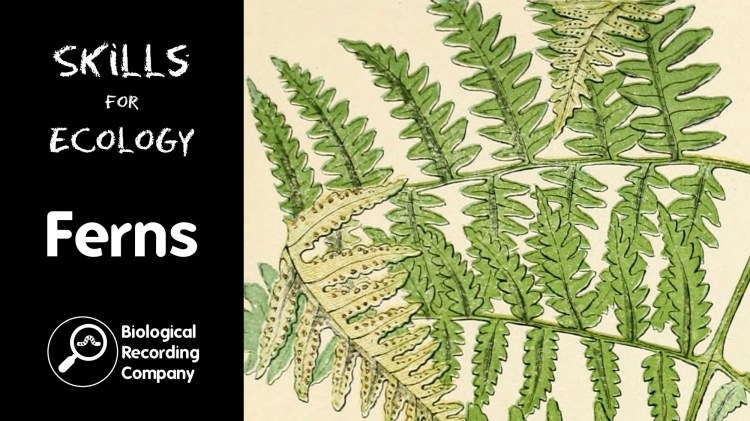
We’re lucky to have Henry Miller delving into the world of fern identification this year with three Skills For Ecology webinars focusing on general fern ID, spleenworts and male & buckler ferns for anyone that wants to learn more about these fascinating plants.

iNaturalist link: inaturalist.org/observations/255453045

5. South African scarabs

This is the rather cool non-native scarab beetle Saprosites natalensis, a South African species accidentally introduced to the UK in the 1980s. It feeds on dead wood and is quite small (~2.5 mm long).

Saprosites natalensis © Joss Carr

In the UK, this species is only known from London and only known from a handful of sites. It was first found in Chiswick House & Gardens and Richmond Park (Archer, 2021). My first time finding it was during December 2024 in Alexandra Park, in a small, wooded copse, where there were several individuals under a deadwood log. I have since found it in Mile End Park, Meath Gardens and London Fields in East London. It would appear to be becoming more common.

Saprosites natalensis habitat in Alexandra Park © Joss Carr

iNaturalist link: inaturalist.org/observations/255708489

6. Euphorbia euphoria

Tucked away in the corner of a block of flats in Bethnal Green (coincidentally not at all far from the ‘urban waterfall’ and its ferns at number 4 on the list), is a little gutter in which grows a very unusual Euphorbia species, known as Corn Spurge (Euphorbia segetalis). I stumbled upon this in February 2025 and – not knowing what it is – posted it on iNaturalist, thinking I would find out its ID later by reading the various plant guides I have and looking over photos of the various UK Euphorbia species. Imagine my surprise when I could not find a good match, not even in the gigantic 1000+ page tome that is Stace’s ‘New Flora of the British Isles’. Clearly in need of backup, I called in my go-to London botany superhero – Daniel Cahen – who provided me the ID I was after, being that he was familiar with the plant from seeing it in mainland Europe. We then roped in Mark Spencer and Henry Miller, county plant recorders for London and Biological Recording Company botany tutors, who provided some more information.

Euphorbia segetalis © Joss Carr

Turns out that this species, a not uncommon sight in Mediterranean France and Spain, occurs very infrequently in the UK when it is dropped as bird seed. It also probably escapes from gardens every now and then (which I suspect is more likely in the case of my record). This is the first record of the species growing in the wild in the UK with a known location.

iNaturalist link: www.inaturalist.org/observations/261483325

7. Bothering the Ivy

One of my new favourite winter-time hobbies is something I call ‘ivy-bothering’. It’s very simple. All you need is a tray, a stick and some ivy, ideally a nice big bushy bit growing off a wall or around a tree. Take your tray, hold it under the ivy, and give it a properly good wack with the stick. Many different creatures will fall out of the ivy into the tray. If you can get the tray onto the ground quickly enough you should have enough time to get a good look at the some of these insects before they jump/fly away.

Bothering Ivy in Mile End Park © Joss Carr

Of the various insects which are revealed through ivy-bothering, the most interesting to me are the various leafhoppers of the subfamily Typhylocybinae – which are all small, rather delicate but often exquisitely beautifully patterned bugs. I’m slightly cheating by including four different species in this entry, but it’s my list and I make the rules.

From left to right and top to bottom: Zygina flammigera, Arboridia ribauti, Zygina lunaris and Zyginella pulchra © Joss Carr

Pictured here are four different species I found by bothering the ivy in various parks around London this February: Zygina flammigera, Arboridia ribauti, Zygina lunaris and Zyginella pulchra. All of these individuals will be ‘overwintering’ in the ivy, using it as a food source whilst their main food sources (various other herbaceous plants) are absent in the cold months.

iNaturalist links:

8. Spooky spiders

Two days prior to Halloween 2024, I was exploring Tower Hamlets Cemetery Park, a lovely and very well-studied ancient cemetery in East London, when I came across this very well-timed sight. In one corner of the park, where leaf litter had been collected and piled up, huge swathes of the piles were draped in delicate spider webs. It was as if someone had put their Halloween decorations up prematurely.

Melanopygius ostearius web © Joss Carr

Looking more closely at the webs I could easily see hundreds of tiny little spiders – dark red-brown with black tips to their abdomens – scurrying about. I have seen similar things on a smaller scale (i.e. a single plant draped in a web with multiple spiders on it) but never before or since seen something at this scale.

Melanopygius ostearius © Joss Carr

I snapped a few photos of an individual that kept still and was later able to identify the spiders as Melanopygius ostearius (Black-tailed Ostearius), a species of money spider once thought to be introduced to the UK but now presumed native, and which has a known association with rubbish tips and refuse.

iNaturalist link: inaturalist.org/observations/250164331

9. A mystery rosette in the Olympic Park

In October 2024 I suffered a slightly misfortunate turn of events when the boiler in my student flat developed a leak in the ceiling which, given its proximity to the fuse box, eventually caused a minor fireball explosion which led to me and my flatmates being temporarily rehoused into another building in Stratford. On the plus side, it gave me a great excuse to spend a few mornings and afternoons exploring the weird and wacky botany of the Queen Elizabeth Olympic Park. Once a series of brownfield sites, Stratford was redeveloped for the 2012 Olympics at which point lots of non-native plants were introduced. There are gigantic mutant-looking verbascums along some of the footpaths, proliferations of Dwarf Elder (Sambucus ebulus) along the canals, and large patches of Chinese Mugwort (Artemisia verlotiorum) on remaining brownfields.

My best find of all, however, was this rather unassuming rosette (the botanical term for a more-or-less flat cluster of leaves produced by some plants during winter) on the edge of a random side road. I had no clue what it was at first, so in time-honoured fashion requested the assistance of some more botanically gifted friends on iNaturalist. After a considerable period of mystery as none of us recognised what I’d found, one user eventually chimed in with Pimpinella peregrina (Slender Burnet-Saxifrage). It was a perfect fit.

Pimpinella peregrina © Joss Carr

This is an ‘umbelliferous’ plant in the Apiaceae which is very rare in the UK, only occasionally recorded as introduced in areas seeded for grass. My record is the second known location in Britain!

10. A world of rove beetles

In the UK we have around 4,100 species of beetle. Of those, over a quarter (1,100 or so species) are rove beetles (Staphylinidae). These are mostly small, black, elongate beetles found amongst leaf litter or under dead wood. Most of them move very quickly and are therefore difficult to photograph. Being that there are over so many species, they are also infamously challenging to identify, in nearly all cases requiring one to take a specimen to view under the microscope. Even then, an ID is not guaranteed; often, you will spend hours going through a key only to arrive at a genus where only the males are identifiable through dissection. And you’ve got a female. That being the case, it took me several attempts and several specimens before I had a rove beetle I was able to successfully identify down to species and have the ID confirmed by an expert.

Tasgius melanarius (c) Joss Carr

The beetle pictured above was that exact individual, a rather attractive and relatively large Staphylinid by the name of Tasgius melanarius that I had collected from Cody Dock during December 2024. I would provide more information about the species itself but, as with many rove beetles, little is known besides some basic habitat information. In this case, the species is a generalist, but nevertheless there are relatively few records of this species in the UK. That is probably because there are relatively few with enough patience or sanity to attempt to key these out! The only other thing of note is that the hours I did spend keying this out were done in the happy company of others at one of our Invertebrate Study Day events which are held monthly at the Natural History Museum and completely free to attend!

I am sure they all found it very amusing that whilst they worked through their earthworm and bee specimens with relative speed I spent three hours on one beetle. Such is life.

iNaturalist link: inaturalist.org/observations/254803707

References

Archer, J. (2021). New beetle records in Cemetery and Mile End Parks. [online] Towerhabitats.org. Available at: https://www.towerhabitats.org/news/new-beetle-records-in-cemetery-and-mile-end-parks/ [Accessed 2 May 2025].

Merryweather, J. (2020). Ferns, clubmosses, quillworts and horsetails of Britain and Ireland. Princeton, New Jersey: Princeton University Press.


More on biological recording

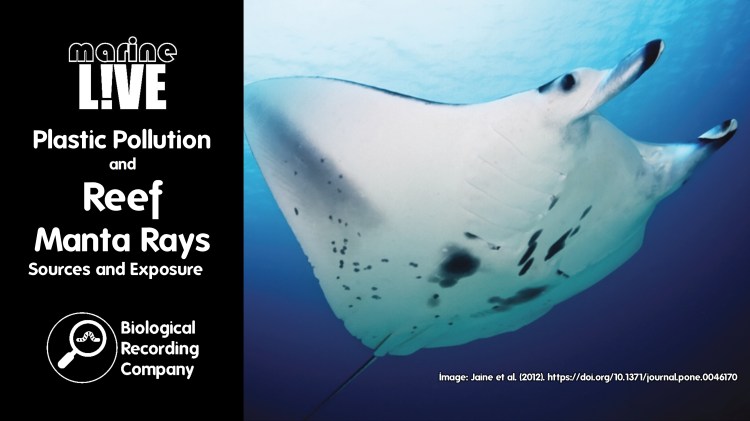
Mobulid Rays in the Chagos Archipelago: Fisheries & Conservation Management

Mobulid rays, including mantas and devil rays, are being driven to extinction due to bycatch and targeted fishing, particularly in the Indian Ocean, including within the Chagos Archipelago, a no-take marine protected area. Research indicates that mobulid catches in illegal fishing activities are underreported due to inconsistent data recording and challenges in species identification. This presentation will outline collaborative efforts by the University of Plymouth and the Manta Trust’s Chagos Manta Ray Project (funded by Darwin Plus Local) to improve catch recording and species identification through training and developing standardised data collection protocols, supporting evidence-based conservation management.

Q&A with Dr Joanna Harris

Dr Joanna Harris is a marine biologist at the University of Plymouth and the lead of the Manta Trust’s Chagos Manta Ray Project for the past five years. Her research focuses on manta and devil rays in the Chagos Archipelago, where she has tracked 79 reef manta rays using acoustic and satellite telemetry to identify key habitats and behaviors. Her work led to the designation of Egmont Atoll as an IUCN Important Shark and Ray Area and the discovery of three devil ray species in the region, extending the known ranges of these Endangered species.

What are the perceived medicinal benefits of ray gill plates?

Mobulid ray gill plates are marketed in parts of Asia as traditional medicine, claimed to treat ailments like acne, cancer, and inflammation, and are often sold in soups believed to “cleanse” the body. However, that’s just a marketing strategy; there’s no scientific evidence supporting these claims, and gill plates have only appeared in traditional medicine literature recently, suggesting the demand is driven more by modern marketing. In fact, recent studies show gill plates often contain harmful levels of heavy metals, raising serious health concerns.

How will changing sea surface temperatures impact Mobulids, particularly their foraging behaviour?

Warming sea surface temperatures can deepen the thermocline—the boundary between warm surface water and cooler, nutrient-rich layers below. This shift can reduce productivity in key feeding areas, especially for reef manta rays, by pushing plankton deeper into the water column. As a result, mobulids may need to forage at greater depths, spend more time feeding, or shift to new foraging grounds. At places like Egmont Atoll, manta rays currently benefit from local geomorphology that helps bring plankton closer to the surface, but continued warming could disrupt even these favourable conditions

Is there any evidence to suggest that plastics have an impact on manta and devil rays?

Microplastics have been found in the feeding areas of manta rays, but their specific impacts on these animals are still unclear. While it’s reasonable to assume that plastic exposure isn’t beneficial, more research is needed to understand the effects. Macroplastics pose a clearer threat, manta and devil rays are at risk of entanglement in fishing gear and other debris. Ongoing work with partners like Jessica Savage at the Zoological Society of London is helping to assess the extent of this issue.

Literature References

  1. Fernando & Stewart (2021) High bycatch rates of manta and devil rays in the “small-scale” artisanal fisheries of Sri Lanka: https://doi.org/10.7717/peerj.11994
  2. Harris et al (2024) First records of the sicklefin (Mobula tarapacana), bentfin (M. thurstoni) and spinetail (M. mobular) devil rays in the Chagos Archipelago: https://doi.org/10.1111/jfb.15678
  3. Harris et al (2023) Intraspecific differences in short- and long-term foraging strategies of reef manta ray (Mobula alfredi) in the Chagos Archipelago: https://doi.org/10.1016/j.gecco.2023.e02636
  4. Harris et al (2023) Spatial and temporal variations in reef manta ray (Mobula alfredi) meso-scale habitat use and the implications for conservation: https://doi.org/10.1002/aqc.4089
  5. Harris et al (2021) Fine-scale oceanographic drivers of reef manta ray (Mobula alfredi) visitation patterns at a feeding aggregation site: https://doi.org/10.1002/ece3.7357
  6. Harris & Stevens (2024) The illegal exploitation of threatened manta and devil rays in the Chagos Archipelago, one of the world’s largest no-take MPAs: https://doi.org/10.1016/j.marpol.2024.106110
  7. Lewis et al (2015) Assessing Indonesian manta and devil ray populations through historical landings and fishing community interviews: https://doi.org/http://dx.doi.org/10.7287/peerj.preprints.488v1
  8. Moazzam (2018) Unprecedented decline in the catches of mobulids : an important component of tuna gillnet fisheries of the Northern Arabian Sea: https://www.bmis-bycatch.org/system/files/zotero_attachments/library_1/CF7U5D5W%20-%20Moazzam%20-%20Unprecedented%20decline%20in%20the%20catches%20of%20mobulids%20.pdf
  9. Venables et al (2024) Persistent declines in sightings of manta and devil rays (Mobulidae) at a global hotspot in southern Mozambique: https://doi.org/10.1007/s10641-024-01576-5
  10. Palacios et al (2025) Global assessment of manta and devil ray gill plate and meat trade: conservation implications and opportunities:  https://doi.org/10.1007/s10641-024-01636-w

Further Info

marineLIVE

marineLIVE webinars feature guest marine biologists talking about their research into the various organisms that inhabit our seas and oceans, and the threats that they face. All events are free to attend and are suitable for adults of all abilities – a passion for marine life is all that’s required!
marineLIVE is delivered by the Biological Recording Company with funding from the British Ecological Society.


More on marine biology

Improving Bee Hotel Design: The Big Bee Hotel Experiment

Bee hotels have become very popular, but some designs are likely to be better than others. Dave will introduce the concept of bee hotels, then present results from the Buzz Club’s Big Bee Hotel Experiment, in which the public gathered data on the success of 576 bee hotels of varying design. We’ll also explore what has been learned about the optimal design and positioning of bee hotels.

Q&A with Prof Dave Goulson

Dave Goulson is a Professor of Biology at the University of Sussex, specializing in bee ecology. He has published more than 300 scientific articles on the ecology and conservation of bumblebees and other insects, and founded the Bumblebee Conservation Trust in 2006, a charity which has grown to 12,000 members and more than 50 staff.

What is The Big Bee Hotel Experiment?  

This experiment asks members of the public to try out a bee hotel in their garden and take a photograph every month of the face of the hotel for us. From these photos we can determine what species of bees are occupying your hotels. The Buzz Club also asks for information about your bee hotel e.g. what it is made out of, where you have positioned the hotel? Etc. This enables us to find out what design of bee hotel is most effective. 

From this experiment, we can investigate:  

  • The pattern of occupancy and how it changes over time  
  • The relative abundance of different species  
  • How is the above affected by hotel design and location… and more! 

We have a year’s worth of data so far. The Big Bee Hotel Experiment is open for 2025! Sign up here: https://www.thebuzzclub.uk/thebigbeehotelexperiment  

What are bee hotels and are they needed?  

Bee hotels are intended to provide homes for cavity-nesting bees. These are solitary bees, who would normally nest in hollow stems or beetle holes in deadwood.  

Because of the way we garden and keep greenspaces, these natural habitats tend to be in short supply, meaning providing artificial holes in the form of bee hotels may be a good way to help these bees. Many insect houses that are commercially sold, anecdotally, don’t reliably work. However, we can confirm that from the TBBHE 2024 data, bee hotels do work and provide an effective alternative habitat for cavity-nesting bees.  

What were the outcomes of the 2024 project?  

In the pilot year of this study, we had 594 hotels registered, and 487 of those produced useable data. Throughout the year, 7293 bee hotel holes were occupied: 83% of those were mud-capped, 7% leaf, and 9% leaf mastic. On average, a hotel had 27% of holes occupied! 

It is important to get your bee hotels out in Spring as the peak nesting season was shown to be between March and May, with rates then declining until the bee hotels began to empty due to predation and other factors in September. 

An overall summary of the key points are below:  

  • Cardboard, wood or bamboo are good to make your hotel from – avoid plastic!  
  • Put your hotel on a sunny wall or fence, facing East or South, with a range of hole sizes (4-10mm in diameter).  

What direction should your bee hotels be facing?  

A common question asked when hanging a bee hotel is just this: what direction should my bee hotel be facing? From our data it is clear that hotels facing North, North-West and West performed pretty poorly. South and East performed well, perhaps the bees enjoy the early morning sun to get them ready for the day!  

Should you clean out your bee hotel? 

Bee hotels are often home to different bee parasites and pests, such as pollen mites and Houdini flies. It is often suggested that you should clean out your hotel between years to help prevent the occurrence of such creatures. However, does cleaning out your hotel in between seasons increase the proportion of bee occupancy in a bee hotel?  

From our data, it shows that the answer to this is no! The hotels that weren’t cleaned out had more occupied holes on average than those which were cleaned. Our data also show that new hotels had fewer occupied holes, suggesting that maybe it takes a year or two for the bee population to build up in a new hotel.  We want to continue to test this out in 2025 and beyond! 

Do you investigate other kinds of bug hotels?

The Buzz Club runs many projects testing out the effectiveness of different bug hotels.

  • Air Bee ‘N’ Bee: This was our original bee hotel and you can catch up with the Refurbishing bee hotels entoLIVE with Dr Linda Birkin here.
  • Hoverfly Lagoons: Hoverfly Lagoons, designed by Dr Ellen Rotheray, are effective habitats to add to your garden. They are proven to be used as artificial breeding sites for hoverflies that have an aquatic life stage. They are easy, cheap and fun to make – a great one to survey with kids as well!  Check out the Hoverfly Lagoons entoLIVE with Ellen.
  • Bug Bunkers: Bug Bunkers is a new bug hotel experiment, which has proven to be very successful so far in housing different invertebrates over winter. Find out more here!

Literature References

Further Info

entoLIVE

entoLIVE webinars feature guest invertebrate researchers delving into their own invertebrate research. All events are free to attend and are suitable for adults of all abilities – a passion for invertebrates is all that’s required!

entoLIVE is delivered by the Biological Recording Company in partnership with the British Entomological & Natural History Society, Royal Entomological Society and Amateur Entomologists’ Society, with support from Buglife, Field Studies Council and National Biodiversity Network Trust.

Check out more invertebrate research, publications and events from the entoLIVE partner websites:


Learn more about British wildlife