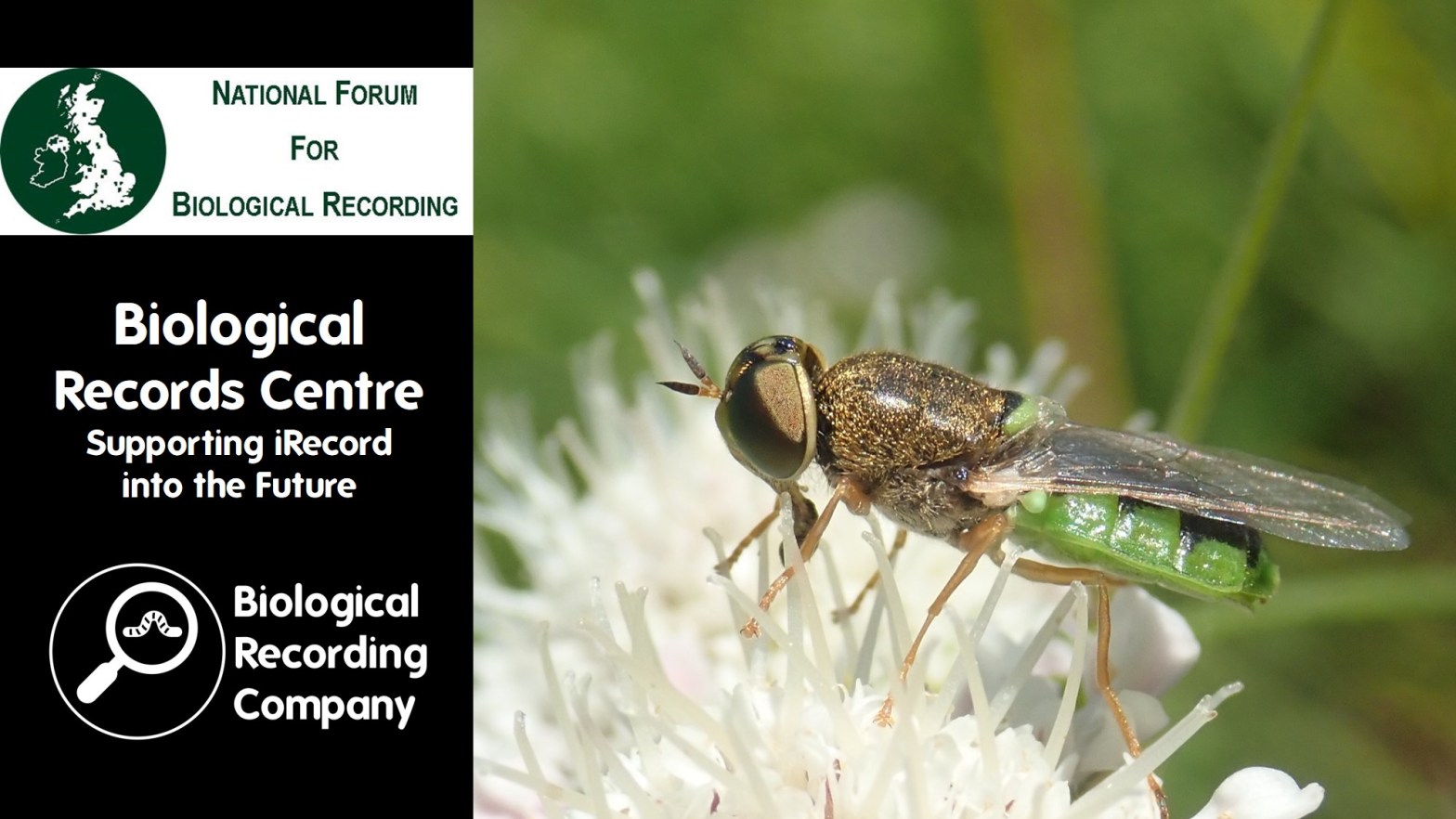
Biological Records Centre: Supporting iRecord into the Future

Where will iRecord be in five, ten or more years? The Biological Record Centre (BRC) developed the iRecord and Indicia tools to support the collation, checking and sharing of online biological records. A wide range of national and local recording schemes and centres make use of this system, and it also forms an integral part of BRC’s own data management processes, helping to make data available for research and many other uses. This talk presents some of BRC’s current and planned work on the system, and looks at what other options we should explore in the future.

Q&A with Martin Harvey

Martin Harvey works at the UKCEH Biological Records Centre as part of the team that develops and supports iRecord, and liaises with national monitoring and recording schemes. As a volunteer, he runs the national scheme for soldierflies and allies and is the county moth recorder for Berkshire.

Will the verifier survey results be made public?

We will be providing feedback to the people who took part in the survey and eventually we hope to make it available to all verifiers.

Can you tailor iRecord to a species group, such as changing the different fields which might be relevant?

It’s relatively straight-forward to set up additional recording forms on the website that can be customised, it’s a very flexible system. Making it work with the app is rather more complicated and we are more limited in what we can do with the app.

Having lots of different recording forms can make it more difficult for users, particularly those who record a lot of different species groups. The more different forms that a user has to input data into, the more difficult it can become.

Are there any places to add more species synonyms to iRecord?

The species names in iRecord all come from the UK Species Inventory which is the national database that is maintained at the National History Museum (NHM) and it is pretty comprehensive. Requests can be made to NHM to add synonyms to the dataset. And always try to import records using the scientific name, rather than the English name.

Further info


More on biological recording

Supporting Science: A New Collaborative Approach to Supporting Verification

Supporting Science is a small project with a big ambition, to smooth butterfly and moth data flow and support volunteer data verifiers. Butterfly Conservation have experimented with new approaches; iRecord training to attract and develop new verification volunteers and systems changes to support the task of verification. Hear about the successes and lessons from their collaboration with partners and volunteers.  The project was made possible by funding from DCMS and the National Lottery, distributed by The Heritage Fund as part of their Digital Skills for Heritage initiative. 

Q&A with Rachael Conway and Martha Henson

Rachael Conway has worked as a Project Officer for Butterfly Conservation for 7 years and last year played a pivotal role in the Supporting Science team, particularly on the delivery of iRecord training in partnership with the FSC. Martha Henson is the lead consultant for Tech Works For Us and joined the Supporting Science team to run the user research and support the development of the verification software.

How much time does it take to verify records?

Each county recorder approaches datasets in a different way and some counties generate more records than other. Some county recorders do need help and they have a team of verifiers doing different jobs, such as one person might deal with spreadsheets that come in and one person might deal with records coming in through iRecord.

How do you become a butterfly or moth verifier on iRecord?

You can start by just taking on the verification of one species, which can help with a county recorders workload. It has to be done on a case by case basis but if you are keen to support you can get in touch with us.

Can we not just use AI for verification, why do we need people to do it?

It is very dependant on the taxon groups that you have. The feeling is that AI could have a supporting role for the verification of some distinctive taxon groups in the future, but it is very unlikely to replace people.

Further info


More on biological recording

Shifting Ground: The Ground Beetle Recording Scheme on iRecord

The Ground Beetle Recording Scheme has migrated: over 350,000 records spanning 220 years are now hosted on iRecord. Learn how iRecord is supporting Carabidae recording and take a tour through a few notable records both old and new.

Q&A with Chris Foster

Chris Foster has been coordinating the ground beetle recording scheme since 2019. He is also a lecturer in Animal Ecology at the University of Reading.

Are you hoping to expand your verification team?

Yes. We’re two verifiers at the moment but not currently active enough, we’ve have had some other offers of help but open to more from anyone who can confidently identify at least some ground beetles (we could for example divide the family up among verifiers)

Are there any county recorders for beetles in Northern Ireland, Scotland or Wales?

There are in Scotland and Wales though lots of vacancies. The UK Coleoptera website keeps a list with contact details

Do recorders submit records to you via methods other than iRecord?

We do get records submitted by spreadsheet, which we’re happy to accept provided the recorder is happy for that data to be imported into iRecord under the recording scheme’s username. We also import data into iRecord from iNaturalist. 

How do you prioritise which records to tackle first when there is a backlog of records?

Prioritisation tends to be taxonomically biased i.e. which species are easiest to verify from photographs, occasionally also driven by requests for data on particular species of interest. Data from established reliable recorders also tends to be tackled sooner. If anyone has had ground beetle data sat waiting for verification for a long time please do get in touch. 

Do you accept records that have written descriptions of a species in place of a photo?

We’re happy to have a look at written descriptions but they would need to be pretty detailed for the majority of species and we might ask for more details about the record (and the recorder’s experience)

Further info

Useful books


More on biological recording

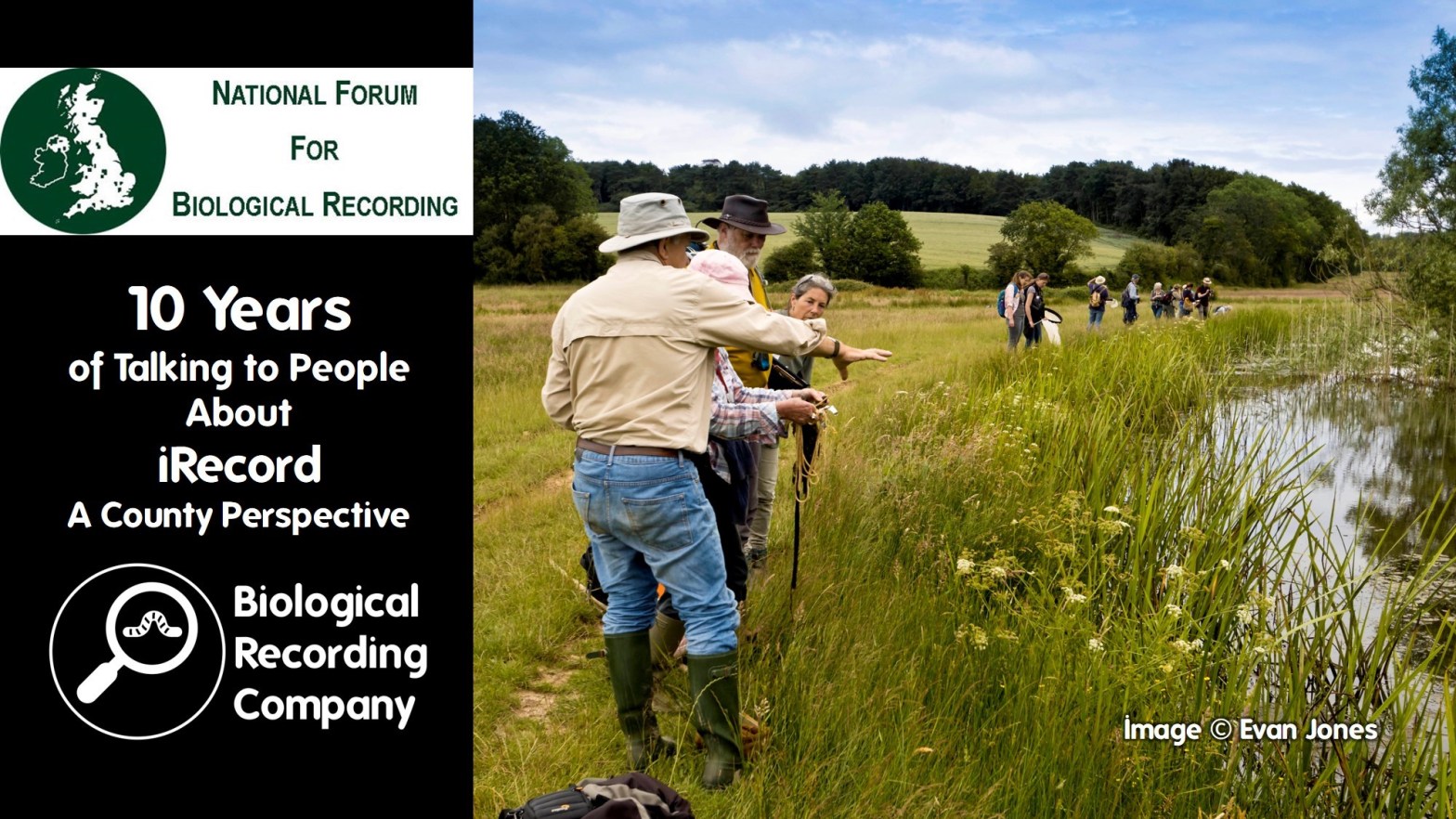
Ten Years of Talking to People About iRecord: A County Perspective on Online Recording

In 2013, Sussex Biodiversity Record Centre adopted iRecord as one of its main conduits for capturing Sussex sightings data. There have been triumphs! There have been tribulations. And along the way, they’ve learnt that online biological recording is, fundamentally, a community endeavour. In ten years, people have never stopped wanting to talk to Sussex Biodiversity Record Centre staff about iRecord. In this presentation, they share some of those local perspectives.

Q&A with Clare Blencowe

Clare Blencowe is the manager of Sussex Biodiversity Record Centre which sits at the foot of the South Downs about 10 miles from Brighton. She’s been involved with the local biological recording community for 15 years, initially as a volunteer coordinating recording for The Butterflies of Sussex, and joined SxBRC in 2015. Clare is a former Chair of the Association of Local Environmental Record Centres – which has given her a broader perspective on the important role that LERCs play in engaging with biological recorders locally. In her spare time, she enjoys studying fungi and uses iRecord to share results from her surveys of waxcap grasslands in the county, which have fed into an online ‘Sussex Waxcap Atlas’ and mapping of these important sites.

Why does Sussex BRC use just iRecord and not others (such as Living Record, iNaturalist and BirdTrack?

We have to make use of limited resources. We want to encourage people to record, and it works best if we have one system that we can turn people towards and that we can explain. We don’t actively discourage people from using other systems and we will try and access records from them, but iRecord is the one we use and promote. It is a great system, and it has a great verifier network and a great data sharing arrangement.

How does using iRecord affect your business model as an LERC given that iRecord data is public?

Our focus is on providing high quality data and information services. That quality comes from the value that we add in lots of different ways. iRecord is just one of the data sources that we are aggregating locally to make available, and we have bespoke systems and reporting that we use to generate reporting which includes summary information as well as detailed records that are presented in a user-friendly way. iRecord works for us but we add value by the way we incorporate it into the services we offer.

What one change or improvement would you like to see on iRecord that would benefit loal recording?

As an LERC, it would be great to have changes to the background workings of iRecord that provides additional transparency and logging around data sets that are going into and out of the Indicia data warehouse (i.e. some sort of change log). It would help us monitor data flows and would help us keep track of what we are getting via the LERC download facility. From a more general perspective, I would love there to be more funding for BRC and perhaps some more focus on the social and communication elements around iRecord.

Further info


More on biological recording

How iRecord Helps a Local Wildlife Group

South Stoke Wildlife Group is trying to monitor biodiversity within their village. This presentation covers their recording activities, how they identify what they’ve found, and their experiences of using iRecord. They aim to use the information they gather to monitor trends for some of the “key species” that are present in the village.

Q&A with John Lindley

John Lindley is an amateur entomologist, specialising in Butterflies, and is now on a steep learning curve with other orders. He is also a keen photographer and tries to capture images of as many local insect species as possible.

Do you record tree species and the related diseases?

We want to. We would need to either train people up in-house or externally find expertise to help us monitor things like diseases and things like leaf mines. It’s certainly something we would love to do, but as a small group, I think we’ll get up and going with the trees first and then we’ll come back to see what we can do in addition.

Do you only record the macromoths?

I’m recording every moth I see. Nearly 50% of the species that we’ve recorded would be micromoths, mostly Tortricidae and Pyralidae, but lots of other micros as well.

Are the records you generate automatically going to recording schemes through iRecord?

I believe so, yes. The British Dragonfly Society, Butterfly Conservation and Bees, Wasps and Ants Recording Society have picked some of them up, but I don’t know whether everything that we record is being picked up by the relevant recording group.

How are your records of Desmoulins Whorl Snail being checked?

Photographs were submitted with the record onto iRecord and then that was verified on iRecord. It’s worth noting that some photos can get flipped 180 degrees when taken through a microscope and with molluscs this can cause problems with verification, so be careful to only submit original (non-flipped) photos of molluscs!

Further info

ID resources


More on biological recording

Why iRecord? Virtual Symposium

iRecord is a free-to-use online training platform operated by the Biological Records Centre and is the recording platform of choice for a growing number of biological recorders. It is designed with the network of National Recording Schemes & Societies and County Recorders in mind, giving them control of record verification and granting them access to their data for their focus species group. Local Environmental Record Centres can access this data, and local wildlife groups and natural history societies can set up ‘activities’ that also enable them to use the platform to collate data.

It is for these reasons that the Biological Recording Company recommends iRecord for collating biological records, and is working with a growing number of partners to set up and improve biological recording systems for local and national recording initiatives. In April 2023, we partnered with the National Forum for Biological Recording and Biological Records Centre to put together a programme of talks that showcase how some organisations are using, and improving, iRecord to gather biodiversity data. All of the presentations were recorded and can be viewed below.

  • How iRecord Helps a Local Wildlife Group with John Lindley (South Stoke Wildlife Group)
  • Ten Years of Talking to People About iRecord: A County Perspective on Online Recording with Clare Blencowe (Sussex Biodiversity Record Centre)
  • Shifting Ground: The Ground Beetle Recording Scheme on iRecord with Chris Foster (Ground Beetle Recording Scheme)
  • Supporting Science: A New Collaborative Approach to Supporting Verification with Rachael Conway (Butterfly Conservation)
  • Biological Records Centre: Supporting iRecord into the Future with Martin Harvey (UK Centre for Ecology & Hydrology)

How iRecord Helps a Local Wildlife Group

John Lindley, South Stoke Wildlife Group

South Stoke Wildlife Group is trying to monitor biodiversity within their village. This presentation covers their recording activities, how they identify what they’ve found, and their experiences of using iRecord. They aim to use the information they gather to monitor trends for some of the “key species” that are present in the village.


Ten Years of Talking to People About iRecord: A County Perspective on Online Recording

Clare Blencowe, Sussex Biodiversity Record Centre

In 2013, Sussex Biodiversity Record Centre adopted iRecord as one of its main conduits for capturing Sussex sightings data. There have been triumphs! There have been tribulations. And along the way, they’ve learnt that online biological recording is, fundamentally, a community endeavour. In ten years, people have never stopped wanting to talk to Sussex Biodiversity Record Centre staff about iRecord. In this presentation, they share some of those local perspectives.


Shifting Ground: The Ground Beetle Recording Scheme on iRecord

Chris Foster, Ground Beetle Recording Scheme

The Ground Beetle Recording Scheme has migrated: over 350,000 records spanning 220 years are now hosted on iRecord. Learn how iRecord is supporting Carabidae recording and take a tour through a few notable records both old and new.


Supporting Science: A New Collaborative Approach to Supporting Verification

Rachael Conway, Butterfly Conservation
Martha Henson, Tech Work For Us

Supporting Science is a small project with a big ambition, to smooth butterfly and moth data flow and support volunteer data verifiers. Butterfly Conservation have experimented with new approaches; iRecord training to attract and develop new verification volunteers and systems changes to support the task of verification. Hear about the successes and lessons from their collaboration with partners and volunteers.  The project was made possible by funding from DCMS and the National Lottery, distributed by The Heritage Fund as part of their Digital Skills for Heritage initiative. 


Biological Records Centre: Supporting iRecord into the Future

Martin Harvey, UK Centre for Ecology & Hydrology

Where will iRecord be in five, ten or more years? The Biological Record Centre (BRC) developed the iRecord and Indicia tools to support the collation, checking and sharing of online biological records. A wide range of national and local recording schemes and centres make use of this system, and it also forms an integral part of BRC’s own data management processes, helping to make data available for research and many other uses. This talk presents some of BRC’s current and planned work on the system, and looks at what other options we should explore in the future.


Event partners

The Why iRecord? Virtual Symposium was delivered by the Biological Recording Company in partnership with the National Forum for Biological Recording and Biological Records Centre (part of UK Centre for Ecology and Hydrology).


More on biological recording

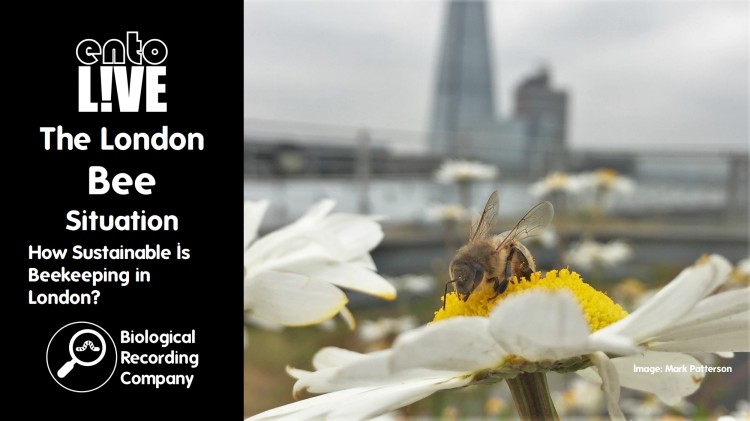
The London Bee Situation: How Sustainable Is Beekeeping in London?

For more than 10 years London has seen an unprecedented rise in beekeeping across the city’s urban landscape. This talk will look at how sustainable beekeeping is in London and how it can impact other pollinators. In recent years well-meaning intentions have led to unsustainable actions.

Mark Patterson is an ecologist and beekeeper in London and an active recorder of wild bees. Through his consultancy Apicultural he works with local authorities, London businesses and community organisations to help the capital’s pollinators.

Q&A with Mark Patterson

  1. Does 1 colony equal 1 hive?
    A colony is 1 queen and the workforce. The hive is the box that houses the colony, so we do tend to use the two words interchangeably as they both refer to 1 superorganism. A collection of hives/colonies is referred to as an apiary.
  2. Which plants benefit the most from which pollinator species?
    Some pollinators are polylectic, meaning that they are generalists that feed from many different plants. Others are oligolectic, meaning that they are ‘fussy eaters’ and will only feed from a small number of plants (for example only feeding from flowers within one family of plants). Where you have a pollinator species that will only feed on a flower (i.e. a single species), these are referred to as monolectic. The monolectic species are the ones that are most at threat from competition by honeybees because they are unable to find food if their food source has been depleted by a nearby hive. So different plant species will benefit from different species. Many of the great nectar sources for bees are actually things that are considered weeds, such as thistles. Some invasive plants, such as Himalayan Balsam, can also be rich nectar sources for bees and their popularity with pollinators can be one of the reasons that they spread so easily. You’ll find guidance on planting for pollinators on my website.
  3. What sort of monitoring is going on nationally on this issue?
    Generally speaking, the biggest increase in beekeeping is in urban centres so it is big cities that are attracting the most attention. This increase in urban hives is largely being powered by commercial outfits that run ‘Sponsor a Beehive’ initiatives to “help save the planet” – which is complete beewashing and really just lining somebody’s pockets! For example, there are very few people living within the square mile, but there are a lot of beehives as they are on commercial properties. this issue is not limited to the UK or even Europe – we’re seeing it globally. For example, there are now concerns that there are too many hives in New York, Washington and Atlanta in the USA.
  4. Is there any control on who can become a beekeeper and do you need to register?
    In some cities in Europe and the USA there are strict regulations and control of beekeeping. For example, in New York and Washington DC in the USA you would need to apply for a licence to keep bees – this would be limited to keeping a maximum of 4 hives on a residential or commercial unit and the hives would need to be a minimum distance from the boundary of your property to minimise the impact on your neighbours. You would also be required to provide a source of water for them, manage them for pests and diseases and keep them in framed hives that can be checked by inspectors. However, in the UK there are no controls (apart from on the import of bees and relating to notifiable diseases) and anyone can set up as a beekeeper without a need to register. It is as easy as ordering a beehive and a box of bees to be delivered to their house with no requirement for training or registration. I would personally support mandatory registration and restrictions on beekeeping. Some local beekeepers’ associations, like London Beekeepers Association, are very good at encouraging their members to voluntarily register their hives in the areas that they cover – but this varies greatly between different areas and regions.
  5. Has the number of hives within the UK not declined since the early 20th century?
    I have not seen any real evidence to support the rumoured million hives in the late 1800s/turn of the century. Figure 1 below was generated by Jeff Ollerton from a number of sources relating to the number of bee hives in the UK. It shows there are as many bees today in the UK as there were in the 1950s. Figure 2 from the Food and Agriculture Organisation of the United Nations clearly shows global hive numbers are increasing.
Figure 1: Number of bee hives in the UK over time (c) Jeff Ollerton
Figure 2: Number of bee hives globally over time (c) Food and Agriculture Organisation of the United Nations

Literature references

Further info


entoLIVE

entoLIVE webinars feature guest invertebrate researchers delving into their own invertebrate research. All events are free to attend and are suitable for adults of all abilities – a passion for invertebrates is all that’s required!

entoLIVE is only possible due to contributions from our partners and supporters.


More on bees
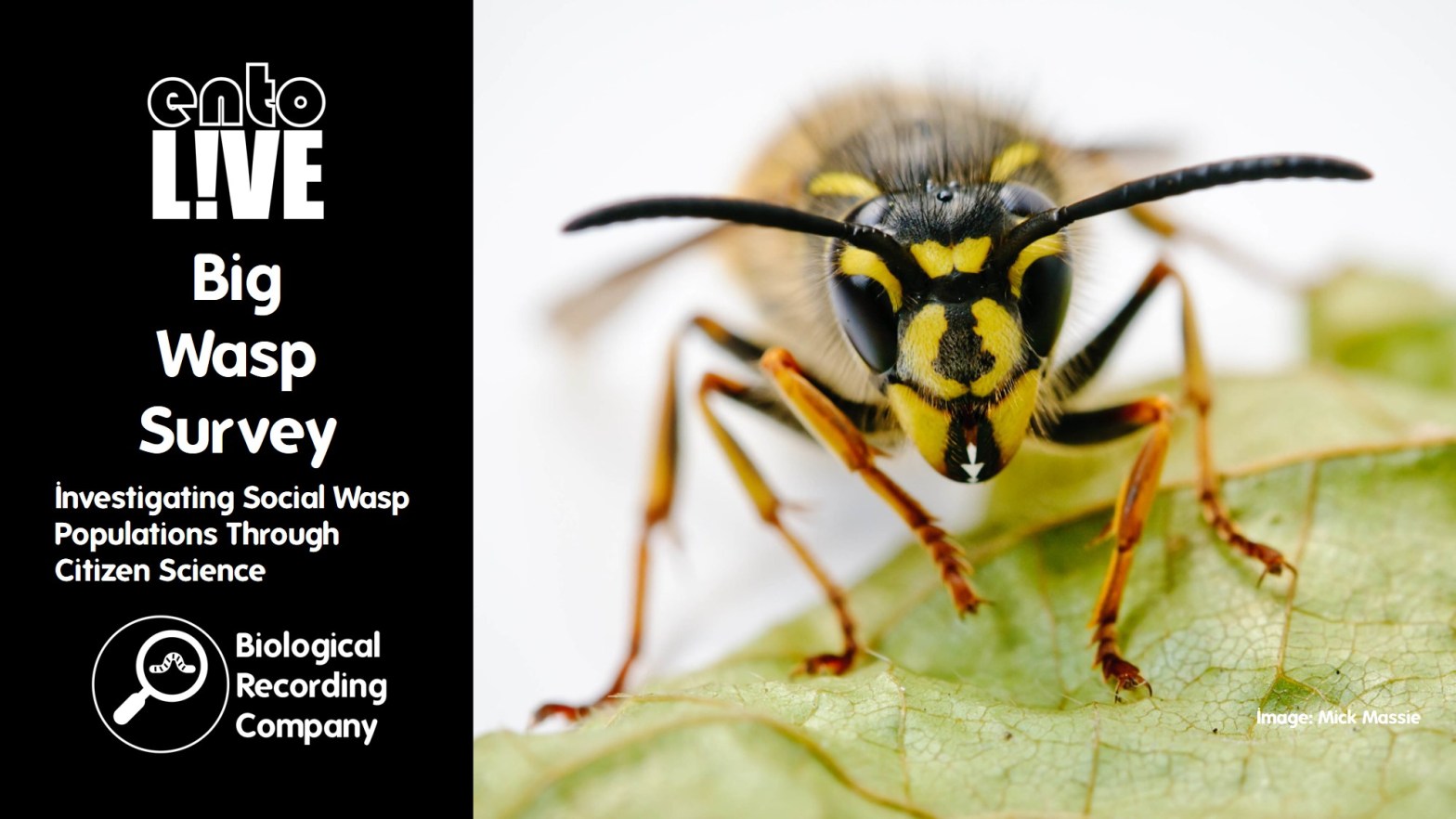
Unlocking Invertebrate Genomes: Trying to Sequence Every Species

Since the first animal genome (a nematode) was sequenced back in 1998, genomics has come a long way. This webinar will introduce the science of genomics, exploring methods such as whole genome sequencing and DNA barcoding. It will also explore current ambitious projects attempting to sequence all life and discuss some of the many applications of this knowledge. Liam will introduce the Darwin Tree of Life Project and his work with Oxford University focusing on sequencing British invertebrates.

Q&A with Liam Crowley

Dr Liam Crowley is an entomologist interested in insect diversity, taxonomy and ecology. He is currently working on the Wytham Genome Project, part of the Darwin Tree of Life project, which seeks to sequence the complete genomes of every species of animal, plant and fungi in Britain and Ireland, some 75,000+ species! His work involves the collection, identification and preservation of arthropod species from Wytham Woods for full genome sequencing, with a particular focus on species of ecological and evolutionary interest. The unprecedented quality and the large number of genomes being generated will allow us to address important scientific questions, with diverse potential applications such as species conservation and biodiscovery.

Who is funding the sequencing work of the Darwin Tree of Life Project?
It’s a very big ambitious project and was never going to all happen at once, so it was split into different phases. The first phase was funded by the Wellcome Trust and this was to sequence the first 2,000 species. The aspiration is that in subsequent phases we will scale up those operations and eventually deliver on all of the species. It’s likely that the future will involve a consortium of funders and that is something that we are developing at the moment.

Does this project cover geographic areas outside of the UK such as British Overseas Territories and the Channel Islands?
The project covers the East Atlantic archipelago so the UK and Ireland. So we don’t cover the Channel Islands or British Overseas Territories. There are other large scale biodiversity sequencing projects beginning around the world under the
umbrella of the Earth Biogenome Project, and of course some species will overlap between projects so we are coordinating our efforts.

How does DToL progress compare between marine, freshwater and terrestrial invertebrates?
Terrestrial and freshwater are some way ahead, mostly because they are the easiest environments to sample. The Marine Biological Association are coordinating a lot of the marine sampling. The marine environment is much more diverse in terms of phyla than terrestrial and both getting specimens and extracting DNA from marine specimens can be really difficult so there is still a lot of R&D when it comes to sampling and sequencing marine species.

What happens with species with legal protection or populations that are at risk?
We have a whole department that looks at permissions, legality and ethics. Everything that is collected is done so using the relevant permissions and permits. For larger species (including vertebrates and some larger invertebrates) we can take a biological sample that has a limited impact on the organism (such as a blood sample or feather for vertebrates and tarsi for larger insects). For species that require a whole specimen we try to be as minimally disruptive as possible, for example with social bees we would try to take only worker specimens and do so at the end of the season so there is no impact on the reproduction of the species. For other species they may be rare in Britain and Ireland, but common elsewhere, so we are developing protocols for using foreign material. This could allow future non-lethal sampling of our rare populations.
How do you deal with microscopic species such as harpacticoid copepods, nematodes etc.?
We have different pipelines for very small things. It’s called ultra-low input sequencing. There’s also a group working on protists which are single-celled eukaryotes. The procedure for collecting material and processing it is different depending on the group. For example, both the Natural History Museum DToL team and our team at Wytham Woods have tried different methods for dealing with earthworms as these can be tricky – check out Keiron’s blog on Sequencing British Earthworms to find out more.

Will the work of this project inform the ever-changing taxonomy of species and when will we have a complete taxonomy?
If the only focus of the project was phylogeny it would be far cheaper to just barcode all species and that is exactly what the global Barcode of Life project is doing. However, barcoding data only gives us part of the picture. This is where full genome sequencing can help us solve some of the complexities in phylogeny and will inevitably help stabilise the phylogeny even more. In theory, we could reach a point where we have sequenced the genomes of all species and have fully resolved taxonomic disputes, but in reality that will take a very long time and we may never get there. We are finding cryptic species all of the time and our understanding is improving as we go along. The species concept is quite a confusing term and the more we look at genetics the more that we see that there is gene transfer even between species.

Is there a publicly available checklist of which species you have sequenced to date and which you haven’t?
It’s really difficult to maintain a full checklist because there are so many species and our understanding of species and phylogenies is changing all the time. There is the Darwin Tree of Life Data Portal that lists all of the species that have been sent to the Wellcome Sanger Institute and where they are in the sequencing process, but we don’t currently have a publicly available checklist as this would be too time-consuming to maintain, however, this is something that might be developed in the future

What do you think the future role of Natural History Museums is that traditionally houses physical collections?
Natural History Museums often play an important role in genetic studies and although we are out sampling for fresh material to sequence the full genome, museum specimens can still be used for some genetic analysis. What is possible now is more advanced than 10 or 20 years ago and who knows what may be possible in 10 or 20 years’ time. Museum specimens help us look at changes over time and retaining and adding to these collections is important for future studies. In fact, the reference genomes produced by our project will unlock loads of exciting new ways to sequence museum specimens.

What’s been your personal highlight of the project so far? 
My favourite aspect has been working at the genomic observatory at Wytham Wood and studying this site in great detail. I’m out sampling throughout the whole year and it’s amazing how many different species we find when we’ve looked at this one site in detail. We’ve had some real surprises that are outside of a species’ known range and we’ve had some really rare things too.

Literature references

Further info


entoLIVE

entoLIVE webinars feature guest invertebrate researchers delving into their own invertebrate research. All events are free to attend and are suitable for adults of all abilities – a passion for invertebrates is all that’s required!

entoLIVE is only possible due to contributions from our partners and supporters.


More on invertebrates

Spring 2023: Earthworm Courses & Events

At the Biological Recording Company, one of our 4 primary aims is to increase our knowledge of earthworms by delivering training courses and recording events across the UK. Most of these are free to attend due to funding from partners (or just our own goodwill), and all of them are components of the Earthworm ID Training Pathway endorsed by the Earthworm Society of Britain. Keiron Derek Brown, National Recorder for Earthworms, will be delivering each and every course or event – ensuring that all earthworm records generated are submitted to the National Earthworm Recording Scheme.

This spring there is a wealth of opportunities to get involved, including courses or events in North Yorkshire, Lancashire, Wiltshire and London – so check out the programme below and why not sign up to some and help us better understand UK earthworm populations?

Spring 2023 Programme

  • 18/04/2023 Earthworm Sampling Day Barnes (London)
  • 19/04/2023 Earthworm Study Day** Kensington (London)
  • 25/04/2023 Earthworm Sampling Day Middleton Down (Wiltshire)
  • 26/04/2023 Earthworm Sampling Day* Tolworth (London)
  • 02/05/2023 Earthworm Biology & Ecology Gisburn Forest (Lancashire)
  • 10/05/2023 Earthworm Sampling Day Ealing (London)
  • 20/05/2023 Earthworm Sampling Day* Chiswick (London)
  • 22/05/2023 Earthworm Identification*** Hawes (North Yorkshire)
  • 23/05/2023 Earthworm Sampling Day Low Row (North Yorkshire)
  • 24/05/2023 Earthworm Study Day*** Hawes (North Yorkshire)
  • 17/06/2023 Earthworm Sampling Day* Hounslow (London)
  • 21/06/2023 Earthworm Study Day** Kensington (London)

* Event listed as Invertebrate Field Recorder Day – select ‘Earthworm Sampling Day ticket’ when booking.

** Event listed as Invertebrate Study Day – add a note that you’d like to focus on earthworms when booking.

*** These events are not publicly listed as spaces are reserved for local volunteers. If you would like to be added to the waiting list for these (in case local volunteers don’t take all of the spaces on offer), please email Keiron at keironderekbrown@gmail.com

Types of Courses & Events

So which type of course or event is right for your experience level? The truth is that most of them are designed to be accessible to any naturalist that wants to branch out into earthworms. Below is a description of each of the event types to help you decide which one (or ones) is right for you.

Earthworm Biology and Ecology training courses are designed for absolute beginners. They don’t teach ID or surveying, and instead focus on giving learners an understanding of earthworm biology, ecology and behaviour. This includes learning about earthworms beyond the British Isles and is designed to give you the confidence to go onto one of the Earthworm Identification courses. It’s not all indoor learning though – as we’ll go for an earthworm walk and try to find examples of each of the different ecological categories of earthworm.

Earthworm Sampling Days do exactly what it says on the tin! These involve sampling a site (such as a farm, nature reserve or park) to collect specimens so that a site species list can be created (or updated if surveyed previously). Earthworms can’t be identified in the field so no ID experience is necessary, and you’ll learn how to undertake soil pit surveying and microhabitat sampling for earthworms. Earthworm sampling is slow work so the more people that volunteer to help on these days, the better.

Earthworm Identification training courses are microscope-based training courses that teach learners with no previous experience how to use a microscope and the Key to the Earthworms of the UK & Ireland to identify preserved earthworm specimens. We don’t mess around with lengthy presentations – expect these courses to be mainly practical as you work through the specimens from our teaching collection.

Earthworm Study Days are for those that have some experience of earthworm ID using microscopes and the key (such as attendance of an Earthworm Identification course). They may involve working on specimens from a previous Earthworm Sampling Day or your own specimens from your garden – but, either way, they are a great way to practice your ID under the guidance of an earthworm specialist.

entoLEARN Webinars

As if that isn’t enough earthworm learning opportunities, the Biological Recording Company has teamed up with the Forest of Bowland AONB and Yorkshire Dales National Park to bring you 2 FREE entoLEARN webinars about earthworms this spring!

Introduction To Earthworms (27 Apr 23) will go over what makes an earthworm an earthworm and explore some of the fascinating aspects of their biology, ecology and behaviour, and discuss how not all earthworms are found below ground

Earthworms For Farmers (11 May 23) will introduce how different types of earthworms contribute to these agricultural benefits in different ways, what threats our earthworms face in agricultural landscapes and what farming practices might be better for supporting healthy earthworm populations.


More on earthworms

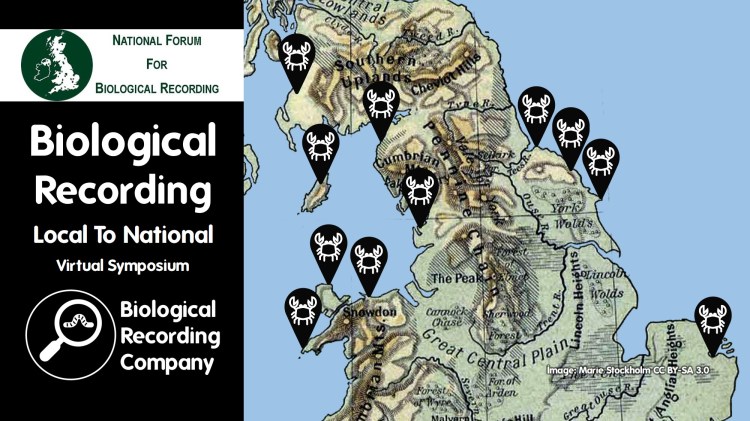
Crawfish: Trending in South-west Britain

Crawfish (Palinurus elephas) are large, colourful crustacea that inhabit rocky seabeds along the west of Britain and Ireland, also known as spiny lobster. They were fished almost to extinction in south-west England towards the end of the last century. Excitingly, this economically valuable species has undergone a remarkable recovery in Cornwall and Devon since 2014. Angus will describe how we are now able to track and analyse trends in the crawfish population using citizen science records collected for Seasearch by volunteer divers. We need to understand such trends in abundance and distribution if we are to manage this recovering population into the future.

Dr Angus Jackson is the data officer for Seasearch. He is responsible for curating Seasearch data and for doing research to make the best use of this large and remarkable dataset.

Q&A with Angus Jackson

What do you mean by ‘landings’?
The weight of Crawfish that are brought to shore to be sold at the fish market. This is different to the ‘catch’ as this is the number that is caught in the net, but some of these will be put back as they are undersized individuals or females with eggs.

How are statutory restrictions monitored and enforced?
This has been open to exploitation in the past. Lots of the fisheries recognise the valuable opportunity that they have here and don’t want to shoot themselves in the foot by over-harvesting too early on in the recovery. I’m optimistic that there is enough collaboration between commercial fishermen, fisheries, academics and conservation agencies to hopefully avoid the disaster that happened last time,

Are Crawfish fished for export from the British Isles and could stronger restrictions help with their recovery?
Most of the market for Crawfish is within Europe (such as France, Spain and Portugal) rather than the UK. Anything that reduces the number of Crawfish being caught could potentially help their recovery. Reducing catch through by-laws or national legislation (i.e. the Fisheries Act 2020) would be the mechanism for reducing how many are caught, but I’m not clear what the mechanism would be for limiting export as this lies outside of my area of expertise.

Does the catch record also indicate a similar rise in populations in other UK regions?
That’s a really interesting question for a couple of reasons. We’re seeing almost identical patterns of recovery across the Channel in northwest France. Colleagues in Mer Iroise area of France have observed increases in crawfish populations and have noted the same 2-3 year lag and a big upturn in fisheries landings of Crawfish. However, we’re not seeing a similar pattern in landings or records in southwest Wales (which was historically a stronghold) or Western Scotland. There are some suggestions that there is also recovery on the west coast of Ireland but we have much fewer data for this area. We still don’t know if the populations in England and France are being seeded by reproduction happening locally or if they were originally (or are continually) being seeded from further afield. We’d need to see the results of some population genetics studies to understand this better.

Did Crawfish populations recover because commercial fishing stopped?
We don’t have a definitive answer why they started reappearing in 2014. There had been fishing throughout so it seems unlikely to be related to fishing pressure. Likewise, I don’t believe that it has anything to do with conservation measures, such as marine protected areas as there is no management specifically for Crawfish. It could be due to climate change or even chance – we really don’t know! However, what we can do is ensure that we have measures in place that look after the population and prevent it from suffering the same fate as last time.

Can Crawfish be raised in captivity and released in areas they are struggling to recolonise?
There is a possibility and a project in north Wales has been working to try and develop the ability to raise Crawfish from the tiny plankton stage up to the release stage in the same way that lobsters have been raised in hatcheries and released along the coastline. For various physiological reasons, it is a challenging process, requiring very specialist conditions and a high level of care. I believe there is one initiative that now has the ability to get through all of the necessary stages and grow them to a size where they could be released. That doesn’t mean that we’re at the stage where this is now financially viable or at a scale that would make a difference to a stock. It’s not going to give us a quick fix as a tool to supplement fisheries landings or for conservation purposes – but who knows in 10 years or so!

Literature references

Further info


entoLIVE

entoLIVE webinars feature guest invertebrate researchers delving into their own invertebrate research. All events are free to attend and are suitable for adults of all abilities – a passion for invertebrates is all that’s required!

entoLIVE is only possible due to contributions from our partners and supporters.


More on marine biology