Spiders, Earthworms and Beetles: The Impacts of Cover Crop Frost Tolerance

Cover crops are used in arable rotations to protect the soil between cash crops (e.g. wheat, barley). Cover crops need to be removed before cash crops can be planted, and this is commonly done by spraying environmentally-harmful herbicides. Here, we conducted a large-scale field trial to test whether using cover crops that die naturally in the frost is better for earthworms, spiders, and beetles, and associated ecosystem functions (e.g. soil compaction). The aim is to design and test the ecological benefits of cover crop mixes that can be removed with minimal herbicide use. This experiment was co-designed with 15 farmers, LEAF, and Oakbank.

Dr Amelia (Millie) Hood is a postdoctoral researcher at the University of Reading. She’s interested in co-designing sustainable farming solutions with farmers in the UK, and using large ecological experiments to test them.

Q&A Dr Amelia Hood

  1. Did you use existing survey methods for the groups that you monitored?
    The methods used were not new, scientists have previously used quadrants to study plants, vortices to study beetles and spiders and soil monoliths to study earthworms. The Showcase project designed protocols using these sampling methods that were used to ensure that the way the sampling was done was consistent across all of the sampling within the Showcase project. For example, with vortice sampling this means standardising factors such as number of seconds the vortice is used, the size of the area sampled and the distance between sample points.
  2. Do you know what percentage of farms are already using cover crops?
    This is information that would be really valuable but, unfortunately, I don’t have access to this information. This would be a great project. A possible way of doing this would be to collaborate with the major cover crop suppliers and see which are their most popular mixes. You’d also need to consider the motivations behind the use of cover crops, as farmers have different motivations (including for pollination, reducing nitrate leaching or improving soil structure) and this would impact which mixes they would look to use.
  3. Are there alternatives to using chemicals to remove the cover crop?
    There are two main ways to kill off the cover rop. The first is use of herbicides. The amount of spraying can be reduced by grazing, rolling off or planting winter sensitive species. The second option is manual removal, which would be the method used by organic farms. There are disadvantages to both of these methods. Herbicides result in chemical run-off and contamination. Manual removal through tilling will lead to increased soil compaction. There is a lot of debate in the scientific and farming communities about which methods are less destructive for the environment and there is no easy answer. I’ve noticed that farmers that I’ve worked with seem to be getting more responsive, and are thinking more about interventions, for example tilling only when they feel it is needed rather than tilling at a set frequency each year.
  4. Did the farmers get paid for taking part in this research?
    No, participation in this research was voluntary and we are extremely grateful for the farmers that allowed us to undertake this research on their land!
  5. What is the next step in this research?
    Continuity is a really big issue in the world of research. Research grants are usually 3-5 years and arable rotations can be as long as 8 years. Some funding bodies do support long-term experiments, particularly as the value of these is recognised with long-term experiments contributing disproportionately to policy and practice. It can sometimes be tricky to get repeat funding for continuing or extending a project, as there can be an emphasis on supporting new and snazzy projects. I will be continuing working on co-design with farmers and will be looking at agroforestry where you plant rows of trees in arable fields.

Literature References

  1. Brennan (2014) A Comparison of Drill and Broadcast Methods for Establishing Cover Crops on Beds: https://journals.ashs.org/hortsci/view/journals/hortsci/49/4/article-p441.xml
  2. Klebl et al (2024) How values and perceptions shape farmers’ biodiversity management: Insights from ten European countries: https://www.sciencedirect.com/science/article/pii/S0006320724000570?via%3Dihub
  3. Michalko et al (2018) Habitat niches suggest that non-crop habitat types differ in quality as source habitats for Central European agrobiont spiders: https://www.sciencedirect.com/science/article/abs/pii/S0167880920304345
  4. Nivelle et al (2016) Functional response of soil microbial communities to tillage, cover crops and nitrogen fertilisation: https://www.sciencedirect.com/science/article/abs/pii/S0929139316302190?via%3Dihub
  5. Shackelford et al (2019) Effects of cover crops on multiple ecosystem services: Ten meta-analyses of data from arable farmland in California and the Mediterranean: https://www.sciencedirect.com/science/article/pii/S0264837718312584
  6. The Royal Society (2020) Soil structure and its benefits: An evidence synthesis: https://royalsociety.org/-/media/policy/projects/soil-structures/soil-structure-evidence-synthesis-report.pdf

Further Info

entoLIVE

entoLIVE webinars feature guest invertebrate researchers delving into their own invertebrate research. All events are free to attend and are suitable for adults of all abilities – a passion for invertebrates is all that’s required!

entoLIVE is delivered by the Biological Recording Company in partnership with the British Entomological & Natural History Society, Royal Entomological Society and Amateur Entomologists’ Society, with support from Buglife, Field Studies Council and National Biodiversity Network Trust.

Check out more invertebrate research, publications and events from the entoLIVE partner websites:


More on earthworms

Signal Crayfish Virtual Symposium

Invasive crayfish are one of the biggest threats to aquatic ecosystems worldwide. They can cause major adverse effects on native crayfish, invertebrates, fish and plant communities as well as bank erosion and sedimentation. The American Signal Crayfish (Pacifastacus leniusculus) has been responsible for a massive decline in the UK’s native White-clawed Crayfish (Austropotamobius pallipes) due to competition and the transmission of a deadly disease, crayfish plague. It continues to expand across Great Britain and Europe, causing major negative impacts on aquatic ecosystems.

A variety of signal crayfish control methods have been attempted with varying degrees of success. This Signal Crayfish Virtual Symposium will bring together conservationists, ecologists, freshwater biologists and more to discuss the latest in Signal Crayfish control in Europe and what more can be done.

This event featured four presentations:

  1. American Signal Crayfish: England Case Study with Dr Eleri Pritchard (Environment Agency)
  2. Can Fish Help Us Control Signal Crayfish? with Dr Nicky Green (Nicky Green Associates)
  3. Barriers to Stop the Spread of Invasive Crayfish with Armin Zenker and Raphael Krieg (University of Applied Sciences and Arts Northwestern Switzerland)
  4. Genetic ‘Immunisation’ of Invasive Species with Prof Bruce Whitelaw (University of Edinburgh)

American Signal Crayfish: England Case Study

Dr Eleri Pritchard (Environment Agency)

The American Signal Crayfish (Pacifastacus leniusculus) is classed as an invasive species in the UK, where it is known to erode riverbanks and be driving the native White-clawed Crayfish (an) towards extinction through the spread of crayfish plague and competition for resources (refuges in particular). This presentation will provide an England case study in terms of invasion history, current status, impacts, legislation and current efforts to control.

Dr Eleri Pritchard is a freshwater ecologist with a particular interest in aquatic invasive species. Eleri works as an Environmental Monitoring Officer in the Cumbria and Lancashire Area of the Environment Agency. Eleri completed her NERC-funded PhD on invasion biology and ecological impacts of signal crayfish in headwater streams.


Can Fish Help Us Control Signal Crayfish?

Dr Nicky Green (Nicky Green Associates)

Some species of fish have been shown to be valuable tools in the fight against signal crayfish. This presentation discusses how fish can influence crayfish survival and presents case studies where fish have been used as part of integrated crayfish control projects.

Dr. Nicky Green has been working with both native and non-native crayfish in the UK since 2003. Her main focus is the development of simple, cost effective ways of reducing the impacts of American signal crayfish.


Barriers to Stop the Spread of Invasive Crayfish

Armin Zenker and Raphael Krieg (University of Applied Sciences and Arts Northwestern Switzerland)

Crayfish barriers are the only way to stop the non-anthropogenic spread of non-native crayfish species. Various barriers have been installed in Switzerland in recent years. In addition, field trials have been carried out to check their effectiveness and fish passability.

Armin Zenker and Raphael Krieg, are founders of the “Swiss Coordination Office for Crayfish” on behalf of the Federal Office for the Environment in Switzerland, which campaigns for the protection of native crayfish species. As part of their activities, they have carried out various scientific projects on crayfish barriers, population genetic studies and work closely with local fisheries authorities.


Genetic ‘Immunisation’ of Invasive Species

Prof Bruce Whitelaw (University of Edinburgh)

Engineering biology technology can provide humane approaches to control invasive non-native animal populations. Within the developing toolbox, gene drive strategies offer much potential for species-specific applications, but have yet to be deployed. To become a practical option to control signal crayfish populations will require establishing embryology capability in this species, with subsequent testing of gene drive strategies.

Professor Bruce Whitelaw is an academic who develops genetic engineering applications in livestock species, aiming to mitigate the impact of disease and produce more productive animals. Recognising this technology could be applied to wild animals, he is exploring strategies to assist in maintaining biodiversity in the face of invasive, non-native species.


Event Partners

This event is delivered by the Biological Recording Company and Nicky Green Associates.


More on freshwater biology

Refurbishing the Bee Hotel: Different Bees, Different Needs

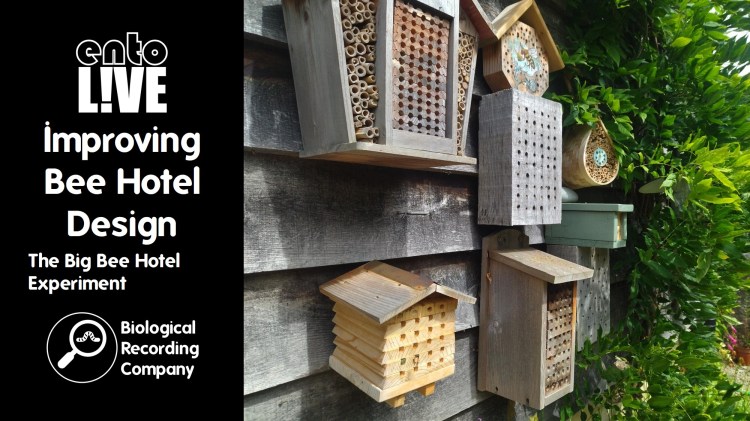
Putting up a bee hotel is a popular – and accessible – wildlife gardening activity, but typical designs are very focused on the needs of a small sub-set of solitary bees. Buzz Club projects are looking to expand the ecological value of the Hymenopteran hotel to provide support for a much wider range of insects. They also aim to identify and avoid possible pitfalls and problems when using these in real garden environments!

Dr Linda Birkin is a specialist in citizen science and urban entomology. She has a particular interest in ecological outreach and wildlife gardening.

Issy Sexton is a Research Assistant at the University of Sussex, specialising in pollinator-focused citizen science. She also has a background in community engagement and environmental policy.

Q&A Dr Linda Birkin and Isobel Sexton

  1. If and how often should you clean a bee hotel?
    Linda: That is a great question and one that we’d really like to investigate through the Buzz Club. There is discourse around how regularly you should clean a bee hotel. In nature, cavity-nesting bees would be making use of transient nesting opportunities – such as plant stems or digging burrows. It’s unlikely that these specific nesting sites would be re-used the following year as they would no longer exist. Bee hotels are not transient in nature, meaning that they can be re-used. Cleaning is a hot topic because parasites and fungi become established in nests and re-use of nesting sites could benefit these parasite populations. We really do need data in order to give evidence-based advice, but it is likely that some form of cleaning is advisable for artificial bee nesting sites.
    Issy: This is a question that we are asking as part of our Big Bee Hotel Experiment. We ask if and when the last time bee hotels were cleaned and the data that we are gathering should help us address this question in the future.
  2. What natural features will bees nest in?
    Linda: Hollow plant stems, such as brambles and anything that has left a stem over winter which has become hollow.
  3. What materials are suitable for bee hotels?
    Linda: Ideally you should avoid using glass or plastic for the tubes as these are not permeable and condensation can form, which enables fungi to grow within the bee hotel. Naturally materials are much better, but be aware of wood that has been treated with insecticides. We don’t know if these treatments have an impact on nesting bess. If you’re not sure, I’d advise leaving the wood that you plan on using in the garden for a year or so to give time for any residual chemicals to leach out.
  4. What direction should the bee hotel face?
    Linda: Bees are insects and cold-blooded… meaning that they like sun. So the best direction for your bee hotel to face is south or southeast. The warmest wall that you have is ideal! It may also be worth angling the tubes up a little bit so that rain can’t flow down the tubes. I’m not aware of any research showing that bees have a preference, in fact I’ve seen them use vertical holes, but anything that can lead to water getting in to the bee hotel may enable fungus to grow.
    Issy: There are still lots of questions that we are not certain about and require more research. This is why we’re encouraging as many people as possible to take part in the Big Bee Hotel Experiment to help us address some of the questions.
  5. What is the difference between a bee hive and bee hotel?
    Issy: A bee hive is used by honeybees, which are social bees that form a colony. Bee hotels are aimed more at solitary bees, which do not form colonies and create a nest for their own offspring only.
  6. Do different species of bee use the same bee hotels?
    Linda: You will find different species of bee using the same bee hotel and they will co-exist quite happily. They don’t tend to use the same tubes as the occupant bee will try to bully the other bee out of using the same tube.
  7. Do bees hibernate in the bee hotels?
    Linda: The adult bees that laid the eggs will not – they have a short lifespan and will be dead by the end of the season. The eggs will hatch and the larvae will eat the pollen before pupating and then waiting for spring. The males are laid at the front of the tube so they will emerge first.

Further Info

entoLIVE

entoLIVE webinars feature guest invertebrate researchers delving into their own invertebrate research. All events are free to attend and are suitable for adults of all abilities – a passion for invertebrates is all that’s required!

entoLIVE is delivered by the Biological Recording Company in partnership with the British Entomological & Natural History Society, Royal Entomological Society and Amateur Entomologists’ Society, with support from Buglife, Field Studies Council and National Biodiversity Network Trust.

Check out more invertebrate research, publications and events from the entoLIVE partner websites:


More on bees

Introduction To Earthworms

In Spring 2023, Keiron worked with the Tees-Swale: Naturally Connected (Yorkshire Dales) and Forest of Bowland AONB Hay Time Project to deliver earthworm education in the North of England, as well as surveying sites for earthworms in Lancashire and North Yorkshire.

The education programme included 3 entoLEARN education webinars that are available to view below.

Introduction To Earthworms

Known as the gardener’s best friend, it is widely recognised that earthworms are important creatures. However, few people realise that there are different kinds of earthworms doing different jobs, and the true level of their importance goes unrecognised. In the talk below talk, Keiron will take us on a journey into the weird yet wonderful world of worms. We’ll learn what makes an earthworm an earthworm and explore some of the fascinating aspects of their biology, ecology and behaviour, and discuss how not all earthworms are found below ground! We’ll look at some exotic earthworms from around the world and discover what the current status quo is with British earthworms.

Below you will find copies of the Annelid Taxonomy and Earthworm Ecosystem Services infographics used in the presentation and some useful links.

Earthworms For Farmers

The productivity of agricultural systems is heavily reliant upon the condition of the soils below. Earthworms contribute to important soil processes and provide ecosystem services such as waste recycling, carbon and nutrient regulation, water flow regulation, soil aeration and soil structure maintenance. In the presentation below, Keiron introduces how different types of earthworms contribute to these agricultural benefits in different ways, what threats our earthworms face in agricultural landscapes and what farming practices might be better for supporting healthy earthworm populations.

Below you will find the Soil Formation& Soil Processes and Earthworms & a link to more events with the Tees-Swale Naturally Connect project.

Earthworms of the UK Part 1

The UK and Ireland has 32-33 species of earthworms that can be found occurring in natural habitats that have been recorded to date. We are exploring all 32-33 species over the course of 3 webinars. Part 1 covered some of the most common species and is available to view for free below. Part 2 was delivered in September 2024 and Part 3 will cover the rare species and is due to take place on 13 January 2025 (you don’t need to have viewed either part 1 or 2 to enjoy and understand part 3).


More on earthworms

The Plight of the Bumblebee: A 12-Year Reintroduction Case Study

The Short-haired Bumblebee project was a 12-year-long landscape reintroduction and habitat restoration project in south Kent and south East Sussex. This talk will outline its aims, achievements (and what also didn’t go so well) and its legacy. This talk will also introduce a new project currently being delivered in east and southeast London called Buzzing in the East End (B.E.E).

Dr Nikki Gammans has worked for Bumblebee Conservation Trust since 2009, firstly as a project officer and more recently, as Conservation Project Manager for SE England. Prior to conservation work, she completed a PhD and Post Doc on ant behaviour and ecology.

Q&A Dr Nikki Gammans

Dr Nikki Gammans has worked for Bumblebee Conservation Trust since 2009, firstly as a project officer and more recently, as Conservation Project Manager for SE England. Prior to conservation work, she completed a PhD and Post Doc on ant behaviour and ecology.

  • If only the queens overwinter, how are the queens fertilised for next year’s brood?
    The queens mate before hibernation, so they are already fertilised before they overwinter.
  • Why are rare bees found in the East End Docklands?
    Brownfield sites are incredibly important for many of our rare species. Most of our rare species are now only found in coastal areas because of increasing urbanisation and fragmentation. The Thames Estuary has always been a hotspot for these species. On some of these brownfield sites, we’re seeing that the Brown-banded Carder Bee (Bombus humilis) and the Shrill Carder Bee (Bombus sylvarum), the UK’s rarest species, are actually doing quite well. These industrial brownfield sites often have a lot of scrubland and lots of “weed” species that are actually really good for these species. These areas are often referred to as wasteland, but they are far from that and with some small habitat improvement can be wonderful sites for our rare bees that support a sustainable life cycle.
  • What is the relationship between honey bees and our rare bumblebees in London?
    The issue that we have in London is lots of people wanting to help bees and thinking that the solution is to keep honey bees. The Western Honey Bee (Apis mellifera) is a domesticated animal (i.e. livestock) and the number of bees correlates with the number of hives that are being kept. The issue in London is hive density. We currently don’t know as hive registration is not mandatory, so we recommend that beekeepers register their hives with their local beekeepers association so that we can monitor hive density. We want to avoid honey bees competing with our rare native bees for nectar and pollen resources in areas where the rare bees are hanging on. Check out Mark Patterson’s entoLIVE on The London Bee Situation for more info on this topic.
  • Are you aware of any successful bumblebee reintroductions from elsewhere in the world?
    We were actually the first in the world to attempt a bumblebee reintroduction and I’m not aware of any other reintroductions. Bumblebees have been introduced to countries where they are not native. For example, 4 species, including the Short-haired Bumblebee (Bombus subterraneus), were introduced to New Zealand for pollination services. Moving species around the world is very risky as you are not just moving the target species, you’re also moving their pathogens and parasites. The introduction of European bee species to North America has proved devastating for some of their species due to the pathogens that were also introduced.
  • Is there anything that you would do differently if you were given the chance?
    We believe that the time in quarantine may have been the issue, but we need to ensure the bees are quarantined to avoid importing pathogens and parasites. One way around this would be to construct quarantine greenhouses where the imported queens would be held and mated for the first year, with the offspring of these being the individuals that are actually released into the wild. This would be an incredibly expensive operation and there is still no guarantee that it would be successful. The most important thing is to ensure that we are conserving and improving habitats for bumblebees, and preventing any further species extinctions.
  • Will the spread of the Asian Hornet be an issue for our bumblebees going forward?
    The Asian Hornet (Vespa velutina) is a non-native species of wasp and a threat to insect species that it preys on. It is an aerial predator that is fairly opportunistic – feeding on whatever it can find. Bumblebees appear to be more savvy with them when compared to honey bees, as they will drop when they feel threatened. However, it does mean that yet another threat to our bees is being added into the mix, so it is important that sightings are reported. I think it is inevitable that they will colonise the UK as we’ve been notified of a colony here in Kent recently and they are well established across the channel on the continent.
  • What are the best species to plant within your garden to help our bumblebees?
    It’s important to remember that different bees have different needs, so understanding what rare bees may occur in your area is always useful. What we try to do at Bumblebee Conservation Trust is provide ‘monthly menus’ on the Bee The Change website and our Bee Kind garden assessment and recommendation tool. We’re still analysing the forage data that we gathered and it won’t be published for a little while yet. It’s also worth checking out the Plants For Pollinators entoLIVE webinar with Dr Abigail Lowe for more information about this.

Literature references

Further info

entoLIVE

entoLIVE webinars feature guest invertebrate researchers delving into their own invertebrate research. All events are free to attend and are suitable for adults of all abilities – a passion for invertebrates is all that’s required!

entoLIVE is delivered by the Biological Recording Company in partnership with the British Entomological & Natural History Society, Royal Entomological Society and Amateur Entomologists’ Society, with support from Buglife, Field Studies Council and National Biodiversity Network Trust.

Check out more invertebrate research, publications and events from the entoLIVE partner websites:


More on bees

Habitat Condition Assessment Methods for BNG

Habitat condition is a key component of the data required to calculate BNG units in the DEFRA metric. Criteria for habitat condition are provided with the metric, but no method for condition assessments accompanies these criteria. How then do we collect robust data to support condition assessments to ensure regulators have confidence in our condition assessments? Dan will introduce an emerging method for condition assessments that takes a standardised approach to data collection to ensure condition assessments are underpinned by robust data and evidence.

Q&A with Dr Dan Carpenter

Dr Dan Carpenter is a Digital Ecologist working, at the interface of ecology and digital technology. He is interested in how digital tech can be harnessed to help deliver better biodiversity outcomes. He is also interested in biodiversity net gain methods and practice, working to ensure that BNG assessments are underpinned by data and evidence.

Are the  specific ‘rules’ for the criteria that you’ve set out adaptable for future iterations?

Absolutely- it is by no means a finished product. I welcome feedback to improve how it works. Ultimately I hope to have a shared agreed approach to doing condition assessments that is robust and proves us with the data and evidence to support our BNG assessments.

How much do you believe, if this is implemented, ecological consultants or BNG surveyors should be able to use their own expertise to override a score?

Absolutely always. Ecology is generally not an exact science. Surveyors will be on the ground and will be able to provide evidence as part of the condition assessment based on what they have seen. The idea is that we are, as far as possible, recording quantitative data.

If you complete a transect and no Invasive Non-Native Species have been recorded, but you do observe them elsewhere in the field, is what you’re staying that you should override those criteria in your report?

100% yes. You don’t ignore the evidence you have seen with your own eyes. The idea isn’t to be restrictive and to take away decision-making from ecologists, it’s to help support ecologists to come up with data that is robust and provides evidence.

Further info and links


More on Biodiversity Net Gain

Local Innovation: How LERC Services Are Shaping Up

For the past few years, the Association of Local Environmental Records Centres (ALERC) and its members have been advocating for the use of local data services to inform the design, delivery and ongoing monitoring of biodiversity net gain in England. This talk will provide an update on key developments at a national level and will provide examples of innovation at a local level.

Q&A with Mandy Rudd

Mandy Rudd is the chief executive of Greenspace Information for Greater London CIC, and co-chair of ALERC. Mandy has represented ALERC and its members in various groups and projects in relation to biodiversity net gain over the past few years.

What is the role of Local Environmental Record Centres in improving habitat data in England?

Some records centres already provide a service (mostly to local councils) specifically around recording habitats. In some counties that means the LERC is centralising and validating existing habitat data from national and local datasets to make a ‘best available’ version, whilst in other counties the LERC is using profit generated from charging for services to fund its own habitat survey programme. I suspect we will see a lot more of this as advocacy for LERC services from key national and local stakeholders grows.

How are LERCs set up to monitor change over time in habitats?

That will be down to local arrangements. It is really difficult to say but it will be down to a county-by-county basis due to resources available, and engagement with the LERC by its stakeholders to help them shape their services

Is there value in having fewer records centres that may be better resourced?

No! Because of the way LERCs were developed historically they tend to focus on the same administrative area as the main county council, which has some great benefits. With such a local focus, you can provide support to local community networks and professional networks in generating and getting the most out of high quality data. If we start looking at records centres that span multiple county councils then you are starting to look at complexity that perhaps you don’t really need, due to each county council having different local plans and resources strategies. You may also lose sight of the people in the networks the LERC was set up to serve, and it’s this that sets LERCs apart from the faceless data platforms.  There may be room for scaling up some of these things through collaboration through records centres for partners that span more than one record centre area.

How do we encourage more people to get involved in wildlife recording and what have record centres been doing around that?

If we look at the community-level focus of record centres, it is possibly the start of all this, as it will provide tools and training for local people who haven’t been involved in this before. We signpost to local and national recording groups, provide support in using recording apps and other ways of sharing data, and provide services free of charge to members of the public, for example to help them fight planning applications. As a sector we need to get better at engaging more people and being more inclusive.

Further info and links


More on Biodiversity Net Gain

Biodiversity Net Gain: March 2024 Update from Natural England

An update on the implementation of mandatory BNG for major developments under the Town and Country Planning Act and the latest about the extension of BNG to minor (small sites) developments.

Dr Nick White works across Government (national and local), and with developers, NGOs and academia to advance policy, practice and standards around net gain (biodiversity, natural capital and environmental). The current focus of his work is on biodiversity net gain legislation, the biodiversity metric and biodiversity net gain standards and guidance. He is also working on the evolving approach to marine net gain.

Q&A with Dr Nick White

If you don’t require an ecologist to fill in the Small Sites Metric, is there a chance Priority Habitats on a small site might be missed?

If you have Priority Habitats on your site you shouldn’t be using the Small Sites Metric. There are criteria around when the Small Sites Metric can and cannot be used, so I’d encourage people to look at these. The Small Sites Metric is designed for sites of little or no biodiversity interest.

You mention sites that need planning permission but that are delivering Biodiversity Net Gain units not being exempt from needing to do the 10%. River restoration typically needs planning permission so can you tell us more about those types of projects and how this works?

We’ve been talking to the Rivers Trust about this. There are things like fish passages and weir removal where you typically need planning permission. Things like weir removal typically generate biodiversity units so under normal circumstances they would be exempt if people wanted to use those units. Fish passages do not generate units, and they can have an impact on habitats on the riverbank as well. We’ve been talking to the Rivers Trust about potential design solutions.

The reason they are not all exempt automatically is that there was a concern that if you just exempt any project that claims to be an environmental project from the Biodiversity Net Gain requirements, you’d very quickly get lots of projects claiming to be environmental when they were not.

We are talking to DEFRA about some further guidance on this as we are aware it has generated lots of questions and confusion.

When does the game plan have to be submitted, before or after planning permission?

Biodiversity Net Gain is a post-permission requirement so once you have planning permission you cannot legally commence your development until you’ve then satisfied the mandatory gain condition.

The game plan should be submitted after planning permission has been secured, but you could reasonably expect the Local Planning Authority to regard Biodiversity Net Gain as a material consideration at the planning application stage. They would want the applicant to provide enough information (like a draft game plan) to show the project is capable of meeting this subsequent requirement.

The condition assessment methodology is considered statutory, but is it a methodology or is it a series of criteria? Is there some clarification on how you do it, is it just a need to fill in a spreadsheet or is it more than that?

The spreadsheet sets out the criteria to meet in order to describe a habitat as being at a particular state and condition and then into that instra metric. There may be different tools that you look to help with that. What you couldn’t do is say that you’ve decided yourself that what constitutes good condition for a particular habitat is radically different from what is set out in the condition assessment spreadsheet.

Do you have any idea for timescale for when we might know who the Responsible Bodies are, and when we might see Conservation Convenance being used?

The only Responsible Body listed on the gov website is Natural England. For Biodiversity Net Gain (BNG) purposes that’s not very helpful as Natural England has said it’s not going to provide Conservation Convenance for BNG. Eventually the gov website will list all Responsible Bodies but it hasn’t been updated yet with additional organisations that have been approved as Responsible Bodies.

The application process to become a Responsible Body is an ongoing process. People can apply to it at any time.

Further info and links


More on Biodiversity Net Gain

Biodiversity Net Gain: The Warwickshire Way

Warwickshire was one of the pilots of Biodiversity Net Gain and has been the first local authority to successfully implement it in practice. Warwickshire’s metric has been used to form the approved metric for national use. Bold claims indeed! So how has Warwickshire achieved BNG so far and what else is there left to do?

Q&A with David Lowe

David Lowe is the Service Manager of the Ecology, Historic Environment and Landscape Team at Warwickshire County Council which is one of the largest teams of Ecologists in any local authority in the UK. He is passionate about achieving real change to benefit the environment at a local level by leading innovative ideas that can be implemented beyond Warwickshire at a national or even international scale

How do you think your Local Nature Recovery Strategy will interact with your Green Infrastructure Strategy?

Our Green Infrastructure Strategy is a policy forming document and I see our Local Nature Recovery Strategy as a framework document. Our Green Infrastructure Strategy is evidence-based, and it also identifies where Biodiversity Net Gain wants to go and other nature markets. The Local Nature Recovery Strategy is going to set the targets, set what we want to do and sign post towards other useful documents.

Do you think the LNRS will drive offsites into the places you want them to be?

There are the local authorities decision-making processes that like to see their Biodiversity Net Gain delivered within their own boroughs or districts. The officers have been good in saying they don’t mind if it goes anywhere in the county, as long as it’s fair in the end. That’s given us some room to be flexible. Offsite numbers vary hugely between district so with the Local Nature Recovery Strategy we could buy some land in boroughs or districts with less offsite numbers to even everything out.

Do you have enough offsite sites to meet the demand locally?

Yes, as we are tackling it from many angles. Landowners have been unsure about Biodiversity Net Gain due to the 30-year agreement, but we have more people wanting to do good than are doing bad. We are flush with units probably because we have section 39 agreements, which have now been converted into Conservation Covenant, so as soon as we are designated as the responsible body it will be full steam ahead.

On the other angle, this is only a Biodiversity Net Gain market, we are not planting any woodlands in these schemes so it won’t solve our woodland crisis, but the carbon market should. We’re actually going to create a lot of different markets so the landowner, if they plant some woodland, could sell it for Biodiversity Net Gain or carbon and get the same price.

Have you had any landowners pulling out of schemes due to risk?

Yes, we had loads of people in the beginning wanting to know but only 1 in 6 went forward, though some of those who dropped out have come back now. Landowners also realised that we only wanted their marginal land, we want the flooded bits, not the arable land and that makes us more appealing. They are businessmen and they know exactly what they need to do.

Further info and links


More on Biodiversity Net Gain