Biodiversity Net Gain: What Could BNG Mean For Pollinators?

Biodiversity Net Gain (BNG) promises to transform the way that we approach nature conservation in the UK. At the moment the focus of BNG is very much on habitats, with less of an emphasis on species. However, BNG has some important implications for the insect pollinators that service the reproduction of around 75% of our native wild plants. This presentation will discuss some of these implications and suggest how BNG may change in the future to accommodate the requirements of pollinators.
🎓 Check out BNG guidance, case studies and updates here: https://courses.biologicalrecording.co.uk/courses/biodiversity-net-gain
Q&A with Prof Jeff Ollerton
Professor Jeff Ollerton is a consulting ecological scientist and author, with more than 30 years’ of experience studying pollinators and their flowers. He is the author of ‘Pollinators & Pollination: Nature and Society’ (Pelagic 2021) and ‘Birds & Flowers: A 50 Million Year Relationship’ (Pelagic 2024). Jeff is also a visiting Professor at the University of Northampton (UK) and the Kunming Institute of Botany (China).
Is there a comprehensive list of requirements for pollinators in terms of flowers?
No, because it is so diverse, we need to consider pollinators on a case-by-case basis and there are lots of species that we know relatively little about. Some pollinators can be very generalist in nature, whereas others are much more specialist in their nectar and pollen preferences. The Database of Pollinator Interactions (DoPI) is specific to the UK and is run through the University of Sussex. It is a compilation of all of the information that is available to date on which plants different pollinators interact with. We’re hoping to add more information on habitats and soil types into this database and are actively seeking funding for this currently so watch this space!
🎓 Plants for Pollinators: Using DNA to Explore Relationships in Gardens entoLIVE blog: https://biologicalrecording.co.uk/2024/12/03/plants-for-pollinators/
🎓 Beginner’s Guide to Planting For Pollinators blog: https://biologicalrecording.co.uk/2025/04/01/planting-for-pollinators/
What is the realistic potential of BNG delivered within urban environments to provide the complex habitat opportunities that pollinators require?
Very high potential, but it varies depending upon the town or city! We’ve published research showing that bees are thriving within the centre of Northampton with 50-60 different bee species present in the heart of the city, including some rare bees. The diversity within Northampton was higher than some of the nature reserves in the area surrounding the city. Most solitary bees need relatively warm and dry conditions to thrive and these microhabitats can be found in towns and cities. BNG will not provide the solution to reversing insect pollinator declines. Less than 10% of Britain is urbanised and 70% is agricultural, so the key to pollinator conservation in Britain lies in tackling threats within agricultural environments.
Will monitoring of BNG evidence if it is having a positive impact on pollinator populations?
There is nothing specific within BNG monitoring that targets pollinators. The Pollinator Monitoring Scheme is run by the UK Centre for Ecology and Hydrology and this, in theory, will help us detect changes in pollinator populations – though attributing any changes to BNG would be very difficult as you’d need to disentangle BNG from other nature recovery initiatives such as Local Nature Recovery Strategies and Sustainable Farming Initiatives.
🎓 Surveying For Pollinators online course: https://courses.biologicalrecording.co.uk/courses/surveying-for-pollinators
🎓 Local Nature Recovery Strategies: Updates and Strategies ecoTECH bog: https://biologicalrecording.co.uk/2024/02/08/local-nature-recovery-strategies/
What changes would you recommend to make BNG assessments more beneficial for supporting pollinator conservation?
It would probably be possible to go through all of the condition assessments and find criteria that are important for pollinators. A high priority would be the hedgerows as we need to have something in there about the diversity of the hedgerows and can’t really understand why this wasn’t included. Some grasslands, certainly ancient grasslands, should be regarded as irreplaceable habitat. We should also be considering the positive biodiversity gains we get from some ‘undesirable’ species within grassland habitats, but this may conflict with the advice given via agricultural policy (for example removal of creeping thistle and ragwort).
🎓 Hay Meadow Restoration online course: https://courses.biologicalrecording.co.uk/courses/hay-meadow-restoration
Literature References
- Ollerton (2023) Biodiversity Net Gain: What Are The Opportunities For Insect Pollinator Conservation?: https://jeffollerton.co.uk/wp-content/uploads/2023/10/bng-and-pollinators-ollerton-october-2023-version-1.pdf
- Ollerton, J. (2024) Birds & Flowers: An Intimate 50 Million Year Relationship. Pelagic Publishing, Exeter – https://pelagicpublishing.com/collections/jeff-ollerton/products/birds-and-flowers
- Ollerton, J. (2021) Pollinators & Pollination: Nature and Society. Pelagic Publishing, Exeter, UK – https://pelagicpublishing.com/collections/jeff-ollerton
- Ollerton et al. (2011) How many flowering plants are pollinated by animals?: https://nsojournals.onlinelibrary.wiley.com/doi/full/10.1111/j.1600-0706.2010.18644.x
- Tong et al. (2023) New calculations indicate that 90% of flowering plant species are animal-pollinated: https://academic.oup.com/nsr/article/10/10/nwad219/7241545
- Rodger et al. (2021) Widespread vulnerability of flowering plant seed production to pollinator declines: https://www.science.org/doi/full/10.1126/sciadv.abd3524
- Klein et al. (2007) Importance of pollinators in changing landscapes for world crops: https://royalsocietypublishing.org/doi/full/10.1098/rspb.2006.3721
- Siopa et al. (2024) Animal-pollinated crops and cultivars—A quantitative assessment of pollinator dependence values and evaluation of methodological approaches: https://besjournals.onlinelibrary.wiley.com/doi/full/10.1111/1365-2664.14634
- Falk (2021) A review of the pollinators associated with decaying wood, old trees and tree wounds in Great Britain: https://www.researchgate.net/publication/349319059_A_review_of_the_pollinators_associated_with_decaying_wood_old_trees_and_tree_wounds_in_Great_Britain
- Balfour & Ratnieks (2022) The disproportionate value of ‘weeds’ to pollinators and biodiversity: https://besjournals.onlinelibrary.wiley.com/doi/full/10.1111/1365-2664.14132
- Duffus et al. (preprint) Leveraging Biodiversity Net Gain to address invertebrate declines in England: https://ecoevorxiv.org/repository/view/6667/
- Duffus et al. (preprint) Metrics based on habitat area and condition are poor proxies for invertebrate biodiversity: https://www.researchgate.net/publication/384774028_Metrics_based_on_habitat_area_and_condition_are_poor_proxies_for_invertebrate_biodiversity
Further Info
- Learn about the latest BNG policy updates, case studies and research via the Biodiversity Net Gain Virtual Symposium content: https://courses.biologicalrecording.co.uk/courses/biodiversity-net-gain
- Biodiversity Net Gain and Invertebrates: Are We Getting It Right? entoLIVE: https://biologicalrecording.co.uk/2025/04/14/bng-and-invertebrates/
- Jeff’s website: www.jeffollerton.co.uk
- Irreplaceable habitats and BNG: what you need to know: https://defraenvironment.blog.gov.uk/2023/10/05/irreplaceable-habitats-and-bng-what-you-need-to-know/
- Natural England Biodiversity Net Gain brochure: https://naturalengland.blog.gov.uk/wp-content/uploads/sites/183/2022/04/BNG-Brochure_Final_Compressed-002.pdf
- Ancient grasslands in England – a summary: https://insideecology.com/2018/04/23/ancient-grasslands-in-england-a-summary/
- Patrick Barkham – Canvey Wick: https://www.theguardian.com/lifeandstyle/2017/oct/15/canvey-wick-the-essex-rainforest-that-is-home-to-britains-rarest-insects
- Global honey bee data: http://www.fao.org/faostat/en/
entoLIVE
entoLIVE webinars feature guest invertebrate researchers delving into their own invertebrate research. All events are free to attend and are suitable for adults of all abilities – a passion for invertebrates is all that’s required!
- Donate to entoLIVE: https://www.gofundme.com/f/entolive-2025
- Upcoming entoLIVE webinars: https://www.eventbrite.com/cc/entolive-webinars-74679
- entoLIVE blog: https://biologicalrecording.co.uk/category/entolive-blog/
- entoLIVE on YouTube: https://youtube.com/playlist?list=PLuEBNUcfMmE95Re19nMKQ3iX8ZFRFgUAg&feature=shared
entoLIVE is delivered by the Biological Recording Company in partnership with the British Entomological & Natural History Society, Royal Entomological Society and Amateur Entomologists’ Society, with support from Buglife.
The entoLIVE programme is delivered by Biological Recording Company and receives sponsorship from the following organisations:
- British Entomological & Natural History Society
- Royal Entomological Society
- Amateur Entomogists’ Society
More on citizen science


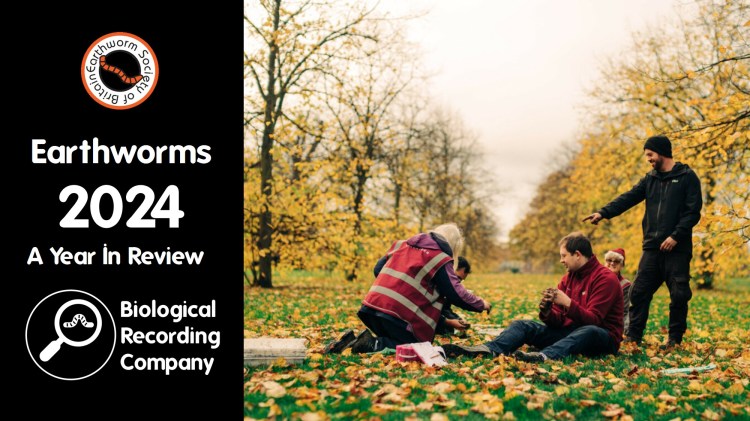
Earthworms 2024: A Year in Review
Welcome to a round-up from Keiron Derek Brown of all of the earthworm surveying and recording that has been taking place in 2024. The video below provides an overview of the various projects undertaken by Keiron via the Biological Recording Company and Earthworm Society of Britain.
National Earthworm Recording Scheme
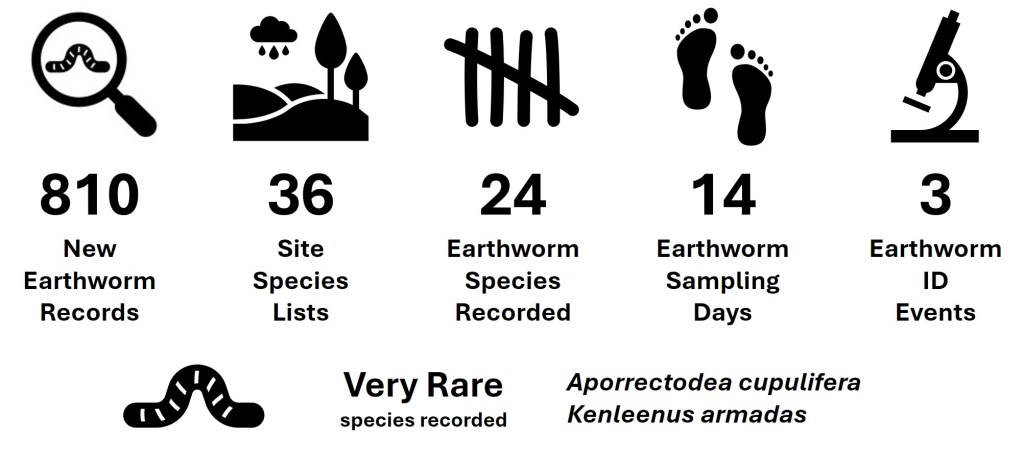
In total, we’ve added 810 new earthworm records to the database of earthworm records for the British Isles during 2024 so far. This includes some significant records for England, with Aporrectodea cupulifera being recorded in England for the very first time in West Sussex and Kenleenus armadas recorded at a second site n England (Chelsea Physic Garden in London).
We are also announcing the addition of Lumbricus friendoides to the list of species from Ireland. this is not a new record, but the result of Lumrbicus friendoides being elevated from a subspecies to a species in its own right. The only known record from the UK, Ireland, Isle of Man and the Channel Islands is a record from County Wicklow in Ireland. This brings the list of earthworms for the UK & Ireland up to 32.
Briones et al (2022) Molecular data confirms the existence of distinct lineages within Lumbricus friendi (Cognetti 1904) and related “friends”: https://www.sciencedirect.com/science/article/pii/S1164556321001187
The following events are now open for bookings:
- 29 Oct 2024 Earthworm Sampling Day University of Greenwich Avery Hill Campus (Free) SOLD OUT
- 31 Oct 2024 Earthworm Identification Natural History Museum, London (£50-£81) JUST 1 SPACE REMAINING
- 23 Nov 2024 Earthworm Sampling Day at RSPB Hesketh Out Marsh, Lancashire (Free)
- 24 Nov 2024 Earthworm Sampling Day at Longton Brickcroft Nature Reserve, Lancashire (Free)
- 13 Jan 2025 Earthworms of the UK Part 3 Onlne (£10)
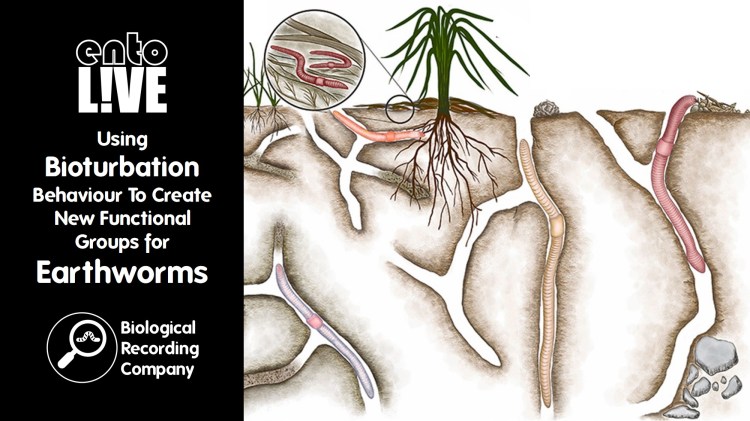
- 04 Feb 2025 Using Bioturbation Behaviour To Create New Functional Groups for Earthworms Online (Free)
- 24 Mar 2025 Earthworm Watch: Insights Into Urban Earthworm Communities Online (Free)
Earthworm Image Recognition Project
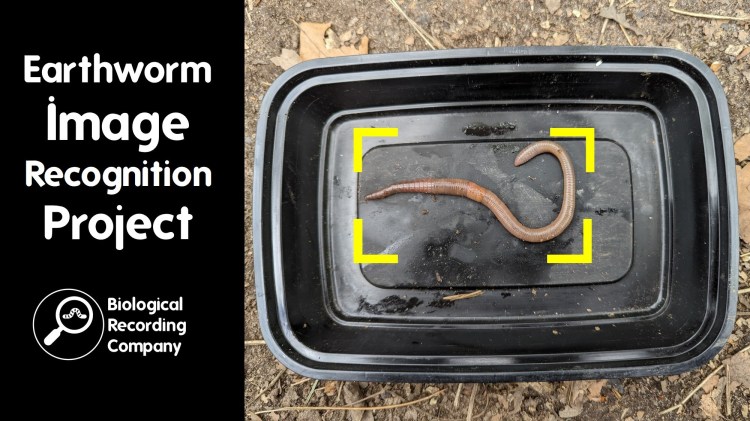
The Earthworm Image Recognition Project proof-of-concept study was wrapped up in 2024. The final sampling took place in spring 2024, the prototype algorithm was tested in summer 2024 and a virtual event disseminated the results in October 2024. You can catch up with the event presentations and the results of this project via the Earthworm Image Recognition Project blog.
Nurturing Nature Project
Over the past 2 years we have worked with the Nurturing Nature Project to undertake two earthworm surveys:
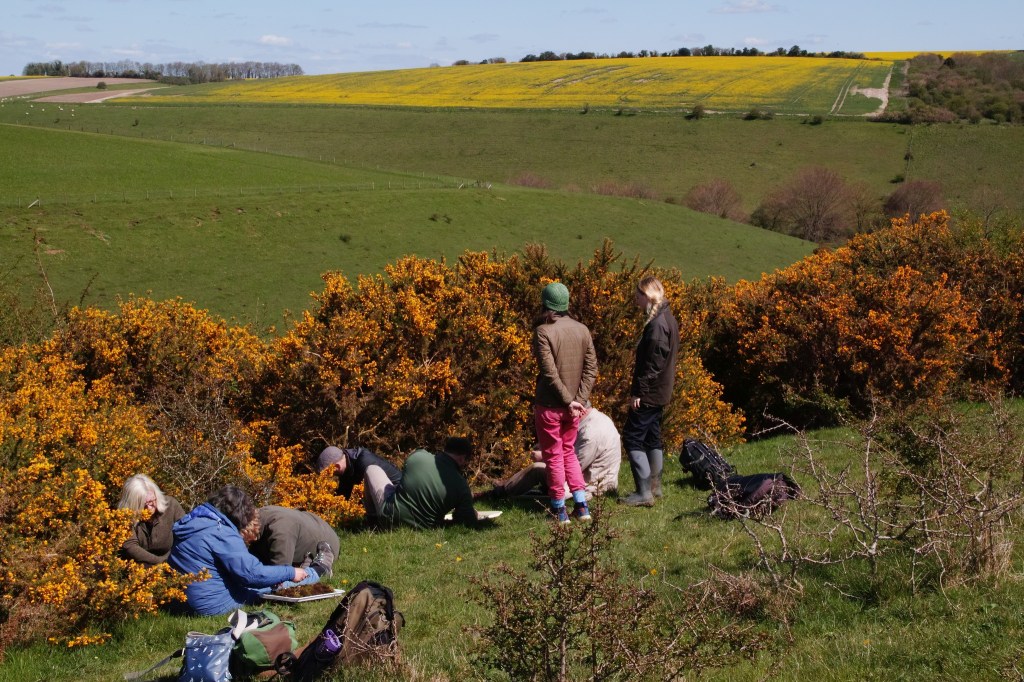
- Middleton Down Earthworm Survey: One Earthworm Sampling Day at Middleton Down on Cranborne Chase to engage local volunteers with earthworm recording and generate new earthworm records.
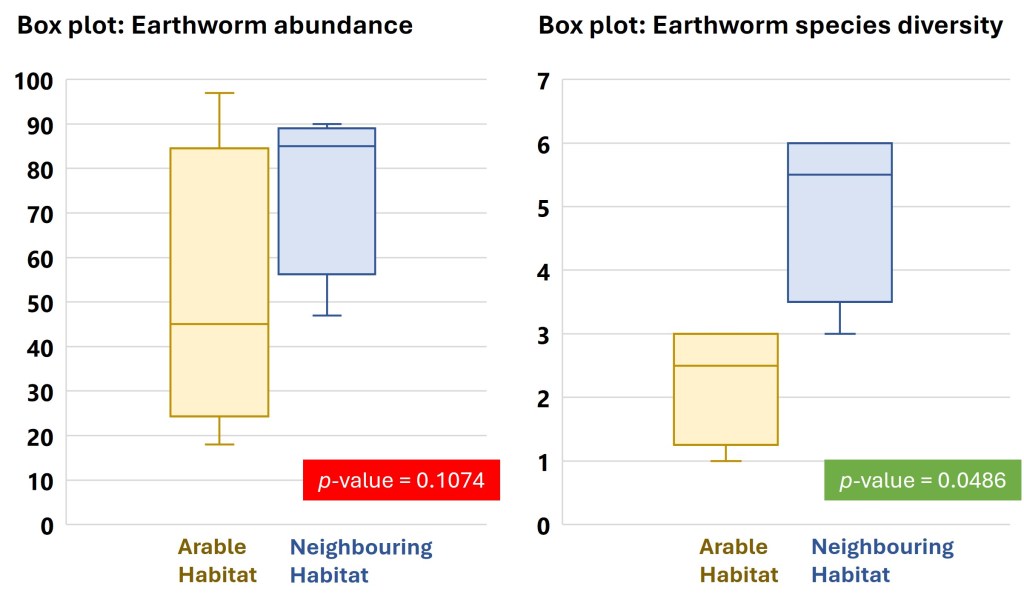
- Arable Sites Earthworm Survey: Two Earthworm Sampling Days across agricultural sites on Cranborne Chase with the aim of comparing earthworm communities in arable soils and neighbouring habitat features, such as grasslands and hedgerows.
A team of 14 new and existing earthworm recorders counted 203 individual earthworms, including 112 adults that were identified to species using microscopy at a later date. This generated 44 new earthworm records and included the first records of Dendrobaena hortensis, Lumbricus castaneus, Murchieona muldali and Octolasion cyaneum submitted to the National Earthworm Recording Scheme within Vice County 08 South Wiltshire.
Analysis of the Arable Sites Earthworm Survey data using a paired sample t-test indicated no significant difference in earthworm abundance between arable soils and the soils of neighbouring habitats (p-value = 0.1074). However, the limited surveys that were undertaken during this project indicate that there may be a significant difference in earthworm species diversity between arable soils and neighbouring habitats at the 0.05 significance level (p-value = 0.486). This should act as a word of caution to those using overall earthworm numbers as an indicator of soil health and condition without also considering species diversity.
Check out the Cranborne Chase Earthworm Survey Report below for more details.
Leave The Leaves Project
The Leave The Leaves Project was undertaken as part of the Help Nature Thrive Project with The Royal Parks. Our aim was to undertake a comparative survey of 5 sampling sites across two parks (Bushy Park and Kensington Gardens) to look at the impact of leaf litter removal on earthworm populations.
At each sample point, two linear transects were sampled adjacent to one another (each consisting of 10 soil pits spaced 2 metres apart):
- one transect in an area where leaves are cleared as part of the site management plan.
- one transect in an area where the leaves are not cleared as part of the site management.

A total of 2,441 individual earthworms were recorded across the 5 sample sites during the survey. Of these specimens, 666 were identifiable to species level which resulted in 56 new species occurrence records being submitted to the National Earthworm Recording Scheme.
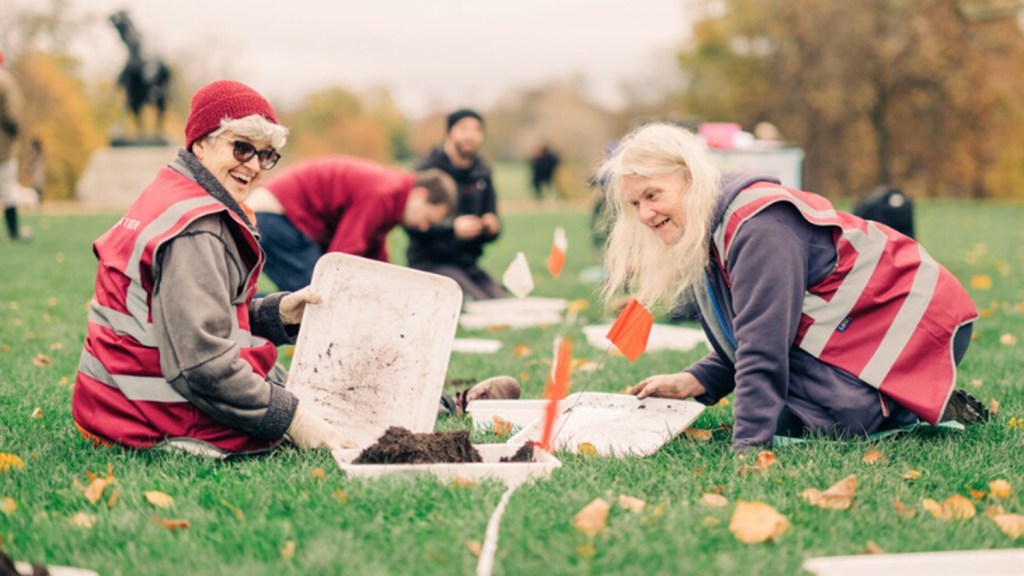
From this limited study, we found no evidence to suggest that clearance of leaves impacted on the earthworm populations in terms of earthworm abundance or species diversity. However, we recognise that a number of limitations on the survey may have impacted the results and it would be useful to time the surveys with the leaf clearance operations at the survey sites.
Sapperton Wilder Project
The Sapperton Wilder project in Gloucestershire investigates how sustainable farming practices and conservation interventions impact biodiversity on arable land.
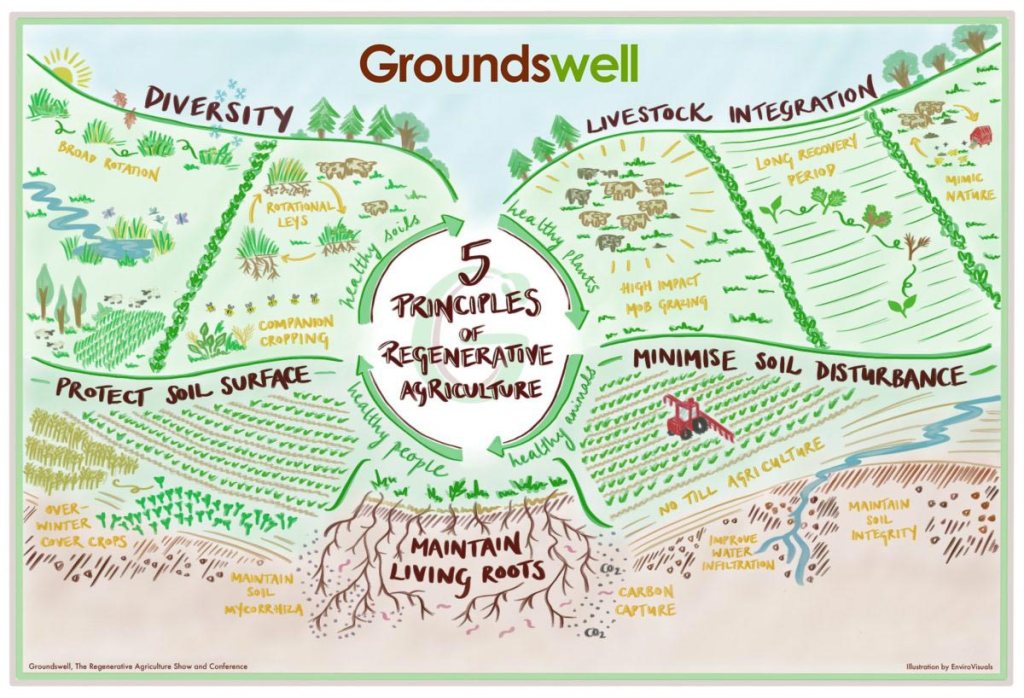
For the past two years, we have been working with them to generate some baseline earthworm data for the site. To date, the project has recorded 3,378 earthworms, including 793 adults that were collected and identified to species. This has added 125 new earthworm species occurrence records to the National Earthworm Recording Scheme.
The species diversity across the whole site was relatively low as just 9 species were recorded. All of the species that were recorded are known to have a low habitat specificity and 7 of the species are regarded as widespread and either very common or common (with just a single species regarded as rare, but with a preference for agricultural environments). This is not surprising as the site has been farmed intensively prior to the project.
Long-term monitoring will reveal how their changing management practices influence earthworm populations on site.
Check out the Sapperton Wilder Baseline Earthworm Survey Report below for more details.
Hay Time Project
The Hay Time project earthworm survey is also in year two of a long-term monitoring scheme. The Hay Time earthworm surveys aim to improve our understanding of the earthworm assemblages associated with hay meadows and how the earthworm communities change over time.
We’ve been undertaking soil pit surveys at sites with differing numbers of years in restoration to look for patterns in earthworm assemblages and to look for a link between earthworm abundance and/or species diversity with the number of years in restoration.
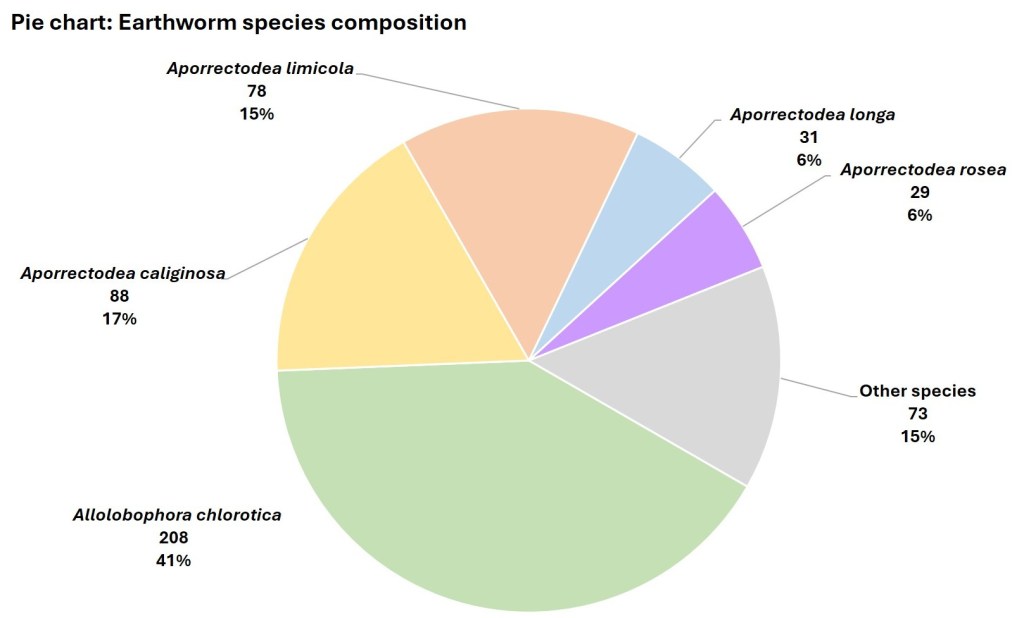
Although we are too early to report any results on these relationships, we’ve discovered that the area is home to a thriving population of the rare species, Aporrectodea limicola. This rare species was the third most commonly recorded species, with 78 adult specimens recorded across 5 different sites.
Check out the Forest of Bowland Earthworm Survey Report below for more details.
More on earthworms
Online Training For Successful Conservation Projects

WildTeam teach a suite of best practices, designed to support wildlife conservation projects across global contexts. They have moved from classroom-based teaching to online teaching, in order to reach more people. This has come with challenges and successes; they continue to adapt in order to best teach and support conservationists across the world to deliver impactful projects. Ali will share WildTeam’s learning, and vision for the future of online training in the conservation sector.
Q&A with Ali Skeats
Ali Skeats has worked in conservation project management and consultancy for 7 years, moving into the field from managing practical conservation projects. Ali is deeply invested in up-skilling others to deliver effective conservation projects and believes that teaching and supporting the people living and working closest to the conservation situation is the most impactful way to do this.
- Have you encountered differences in digital cultures with educating people from across the globe and what challenges do these present?
there can be variability in how people behave when using tech such as Zoom. For example, learners from some areas are much more willing to interact verbally via virtual meeting rooms on Zoom than learners from other areas, who might use the “hand-up” function and wait to be invited to speak. You don’t get this as much in a classroom as you are more able to read body language. We see similar variations in the way learners interact with the worksheets, emails and WildHub too. - Is this training also available for free for UK learners or do you only provide free training to developing countries?
Rather than offering free courses, we offer bursaries, which may cover partial or full costs. Our bursaries are open to all and are designed to help those who are unable to afford the full cost. We prioritise those who can demonstrate the greatest potential for increased conservation impact or career progression, as well as those who are in need of financial support. More information can be found on our Bursaries webpage. - Are the best practice manuals that your courses are based on available without signing up for the course?
Yes. All of our best practice manuals are available to download from the Conservation Best Practice webpage. We have best practice manuals for stakeholder engagement, project planning, project management, grant writing, delivering training and monitoring & evaluation. These best practice manuals come with a suite of tools such as trackers that can be used and adapted by organisations regardless of whether their staff have signed up for our training courses. - Have you got any new best practice guidelines or courses coming up in the near future?
We are currently working on leadership in conservation and wellbeing best practice manuals and their associated courses. As we are building our conservation trainers network, we are also looking to get our best practice manuals translated into other languages (starting with French) so that more people an teach using our materials.
Further info and links
- Check out WildTeam online training courses: https://www.wildteam.org.uk/conservation-courses
- Become a member of the WildTeam Conservation Trainers Network to deliver their courses to others: https://www.wildteam.org.uk/trainers-network
- WildHub: https://wildhub.community/
- WildTeam Conservation Best Practice Guidelines: https://www.wildteam.org.uk/conservation-best-practice
More for environmental professionals


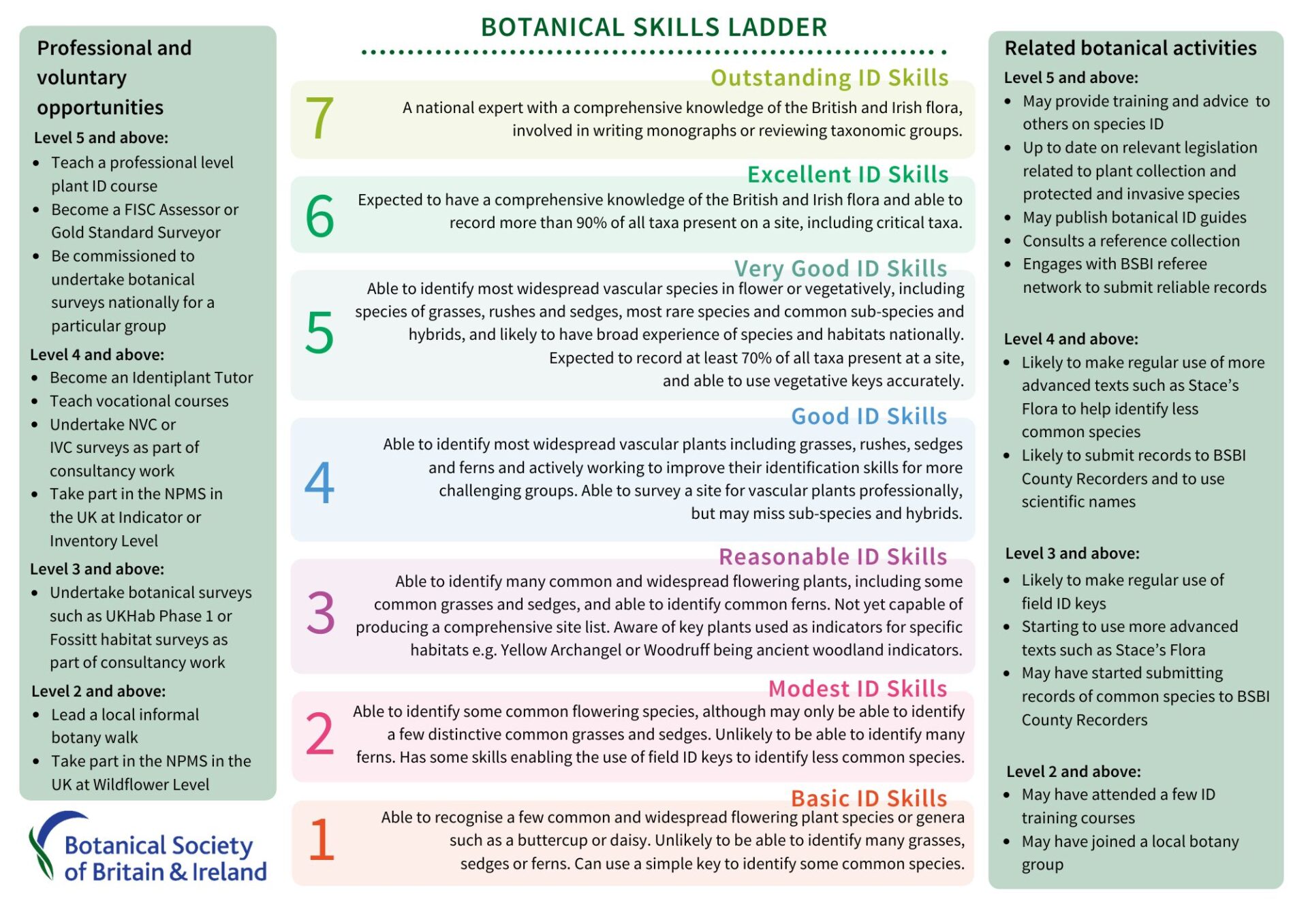
Identiplant: A Unique Tutor-led Online Botany Course
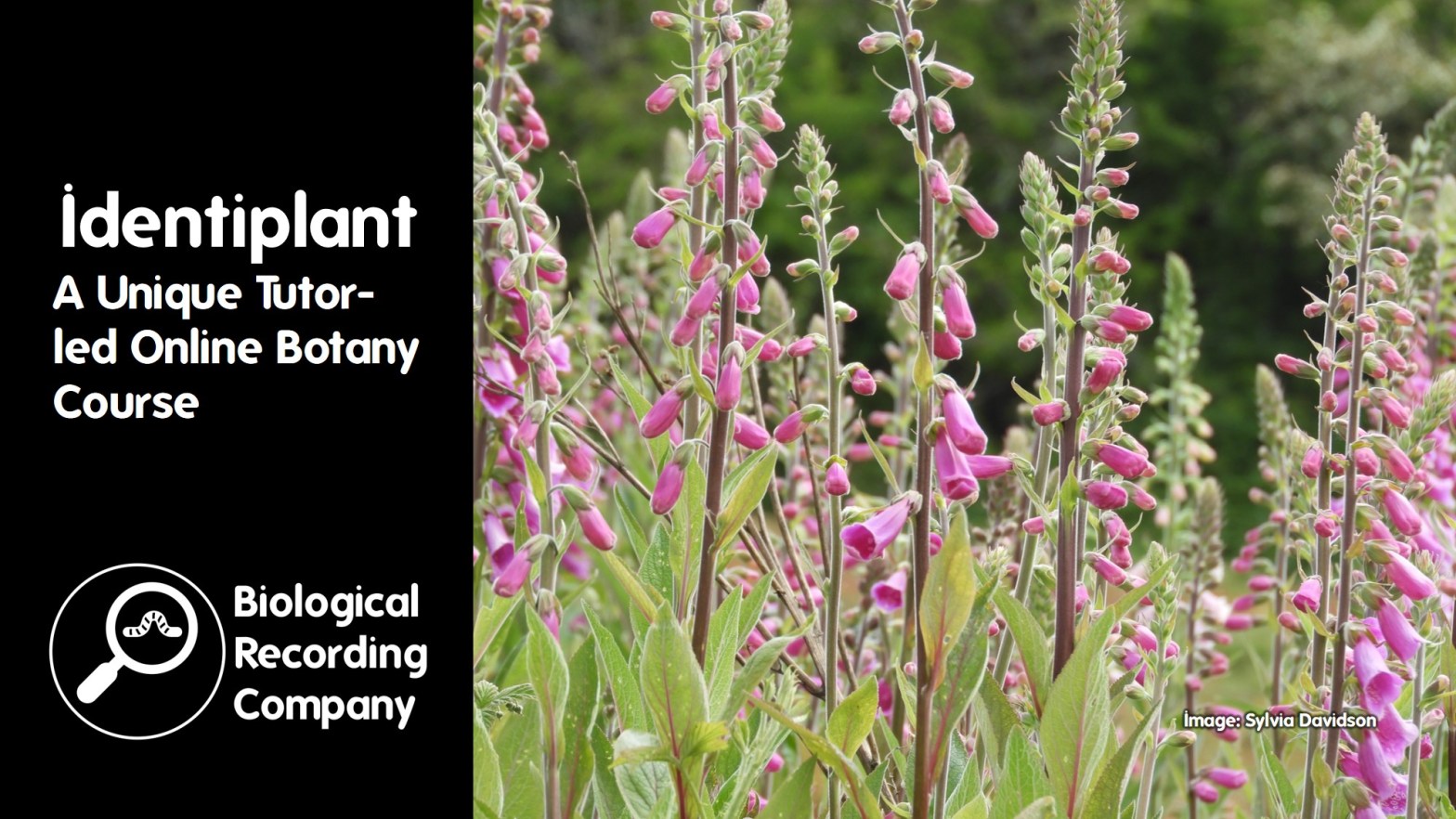
Identiplant is for those who want to get started with serious botany. It was created to take near beginners to an intermediate level with the help of an allocated Tutor, whose role is to guide students through the online course content (delivered through our in-house learning platform called Capsella) and provide feedback on submissions. Students are tasked with hunting for a number of common and widespread plant species through the seasons, in order to gain an understanding of the diagnostic features of the commonest plant families found in the UK. Students leave with a set of key skills allowing them to make further progress independently. This talk will discuss the challenges and benefits of delivering an online course to almost 300 students a year, across 5 countries, with the support of over 60 tutors.
Q&A with Dan Asaw
Dr Chantal Helm is the BSBI’s training co-ordinator responsible for FISC and Identiplant. She is also a terrestrial ecologist with field experience in South Africa and the UK, with a broad interest in natural history. After a decade in academia, Chantal now focusses on delivering local voluntary conservation projects, encouraging local biological recording, undertaking freelance bat surveys and supporting students as a visiting lecturer, alongside her part time BSBI role.
- Is this course available to people who live outside Britain & Ireland?The course is only available to people within Britain and Ireland as we don’t have tutors outside of the UK and the plants that students would come across in other regions would vary from those found in Britain and Ireland. However, there is no reason why the course couldn’t be adapted to work in other regions if local tutors were recruited and the content was adapted for the plant diversity within that region.
- Have BSBI had any discussions with other organisations about replicating this model for other taxonomic groups? We’ve not had any enquiries from other organisations about replicating the format and structure for other groups. Again, there is no reason why the course could not be adapted to work for other groups using the same methodology. The course content would need to be created from scratch and a network of tutors with the taxon-specific knowledge and skills would need to be recruited.
- Have you considered creating a self-led version of Identiplant to cater for the demand if tutor availability is a limiting factor?
Yes, we really don’t want to disappoint those who can’t secure a space every year. We are working on trialling a less intensive foundational self-led version for this very reason and hope to be able to trial this with a select group next year (though this is not yet confirmed). A self-led version wouldn’t replace the tutor version but it could help us engage more people with botany.
Further info and links
- Identiplant website: https://identiplant.bsbi.org/
- New Year Plant Hunt: https://bsbi.org/new-year-plant-hunt
(29 Dec 2024 – 01 Jan 2025) - New training webinars on Tue evenings 7pm from November: https://bsbi.org/field-meetings-and-indoor-events
- British and Irish Botanical Conference: https://bsbi.org/british-irish-botanical-conference
(23 Nov 2024 at Natural History Museum, London) - Botanical Skills Ladder: https://bsbi.org/wp-content/uploads/2024/08/BSBI-Skills-Ladder-2024.jpg
- So You Want to Know Your Plants: https://bsbi.org/wp-content/uploads/dlm_uploads/2024/08/Know-your-plants-2024-1.pdf
- The botanical education extinction: https://onlinelibrary.wiley.com/doi/full/10.1002/ece3.9019
- Field Identification Skills Certificate: https://bsbi.org/field-skills
- National Plant Monitoring Scheme: https://www.npms.org.uk/
More for environmental professionals
Exploring the Digital Wild: Teaching Natural History Using a Learning Management System
The surge in popularity of Learning Management Systems (LMS) arises from their capacity to centralise educational materials, enhance course delivery efficiency, and enable interactive learning experiences. Using the Moodle LMS, the Field Studies Council has effectively engaged thousands of participants through initiatives like the BioLinks project and ongoing Biodiversity Team training courses. Join this presentation to delve into the outcomes and challenges encountered when utilizing an LMS for teaching natural history subjects, and share valuable lessons learned.
Q&A with Dan Asaw
Dan Asaw began building and delivering invertebrate themes online courses as part of the BioLinks project in 2022. Now he oversees the Field Studies Council’s Biodiversity online course program which is responsible for hosting over 4000 course participants in 2023 over a wide range of natural history topics.
- How much funding was needed to set up the Moodle Learning Management System that is used by the Field Studies Council?
The Moodle LMS used by the Field Studies Council was developed through the FSC BioLinks project using funding from the National Lottery Heritage Fund. We were really lucky in that we had a Digital Developer working 4 days per week on FSC BioLinks project so we were able to have a digital specialist working on this for 6 months straight and then supporting the team afterwards. Considering all costs, including staff time, I would estimate that funding of around £50k was needed to get the platform up and running with the first 3 training courses. If going out to a contractor, you are probably looking at around £35k to set up the system plus in-house staff and course development costs. The alternative is to sign up to a platform such as LearnWorlds or Thinkific that enables you to create your courses on their platforms. These will operate on a subscription model, often with tiered plans, and have transaction fees. There may be limits on the number of learners you can have. The best option really depends on your organisational needs and budget. - What would you do differently if starting from scratch?
Communication! The online training was developed and delivered initially through a standalone project and it has been difficult to get the wider organisation to engage with it. Communicating with all staff about the platform and how it can be used from the very beginning would have helped educate teams how to use it and engage with the platforms for both external and internal audiences. - What other considerations may impact which LMS you use and how you implement it?
It is also important to check how the LMS will link with existing digital infrastructure. For example, can your LMS communicate with your website and customer relationship management systems? - What phrasing choices should you avoid for neurodivergent audiences?By contracting the National Autistic Society to review one of our courses we were able to get lots of feedback. the types of phrases that were pointed out were statements that were emotional and rhetorical questions. It is very easy to write content in the way that you would present it in a classroom, but we need to be aware that inflection does not translate within text and is often open to interpretation (often in ways you may not intend). Written content should be direct and factual, think of it like writing your content in the style of a textbook. Instructions should be clear and structured as numbered or bullet-pointed text where possible. It’s important to also look at other forms of accessibility considerations, and there are lots of free browser plugins which can be used alongside learning material.
- Where can I find Text to Speech Browser extensions for various browser?
Read Aloud (Chrome)
Read Aloud (FireFox)
Natural reader (Chrome) This does require setting up an account.
Helperbird (Edge) both free and pro features - Where can I find Dyslexic Font extensions for various browsers?
Dyslexia Friendly (Chrome)
Helperbird (Edge) This comes with both free and pro features
Open Dyslexic (FireFox)
Literature References
- Brown et al (2023) FSC BioLinks Project Activity Report: https://www.britishecologicalsociety.org/applied-ecology-resources/document/20230362629/
- Brown, Bell & Brignoli (2023) FSC BioLinks Audiences Engagement Report: https://www.britishecologicalsociety.org/applied-ecology-resources/document/20230081523/
- King and Smith (2023) FSC BioLinks Strategic Evaluation Report: https://www.britishecologicalsociety.org/applied-ecology-resources/document/20230082207/
Further info and links
- Natural history courses from the Field Studies Council: https://www.field-studies-council.org/courses-and-experiences/natural-history-courses/
- Biodiversity Short Webinars: https://www.field-studies-council.org/courses-and-experiences/static-courses/biodiversity-shorts-online-webinars/
- Sign up for the Biodiversity Newsletter for news and discounts from the Field Studies Council: https://www.field-studies-council.org/sign-up-to-our-biodiversity-newsletter/
More for environmental professionals
The Power of the Webinar: Engaging Large Virtual Audiences with Natural History
Since the coronavirus pandemic, the world of virtual events has grown significantly. Many natural history organisations have seized the opportunity to engage bigger and more diverse audiences and continue to do so alongside the traditional in-person training and engagement activities that have now recommenced. This presentation will explore the pros and cons of using webinars to engage with audiences and delve into case studies from the FSC BioLinks project, London Natural History Society and entoLIVE. We’ll explore some of the do’s and don’ts for delivering natural history content virtually and discuss the next steps for engaging large virtual audiences.
Q&A with Keiron Derek Brown
Keiron Derek Brown has been running the National Earthworm Recording Scheme since its launch in 2014. He has been working as a biological recording professional since 2017 when he joined the Field Studies Council to develop and deliver the FSC BioLinks invertebrate recording project. Following the completion of this project, Keiron set up the Biological Recording Company to support the environmental sector through training and consultancy.
- How much does it cost to set up and run a webinar series?
This is something that people always underestimate/ For the FSC BioLinks webinars we covered the costs through the project budget (and I’d estimate is costs 10s of thousands to run those webinars). entoLIVE has a budget of around £6,000 per year (/20 webinars) to cover all costs, including my staff time, contracting webinar assistants, paying speaker fees, marketing, Zoom and Eventbrite. What you put into a webinar series determines what you get out of it! entoLIVE gets the large numbers that I have reported because of the amount of resources that is put into running the programme. I’m always happy to discuss collaboration on webinars with other organisations and invite anyone interested to contact me at info@biologialrecording.co.uk. I’ve built up an audience that potential collaborators from benefit from if they partner with me on a webinar series. - Do you recommend Eventbrite for managing both paid and free events?
This depends on what facilities your own organisation has to list events, manage bookings and take payments. Eventbrite did introduce a tiered subscription system that added significant cost to managing your events through their platform, even if your events were free to attend. Eventbrite also charges fees on ticket sales, impacting how much of the sales go to the event organiser (I incorporate these fees into my pricing rather than using the option for the customer to pay these as an additional cost at checkout). Due to the high number of events that I organise and the marketing tools that Eventbrite offers, I find that this pricing structure still made it worthwhile for me to run my events through their platform. Furthermore, analysis of my sales indicates that around 50% of my bookings come through Eventbrite-based marketing. I’m pleased to say that Eventbrite has now gone back on this decision to charge for hosting free events and they’ve reduced their subscription rates for using the marketing tools. In my opinion, the platform is good value for money again. One thing that has disappointed me has been their customer service as I’ve experienced several technical issues that they’ve failed to resolve or communicate with me about. - Do any of your events have interactive elements aside from the speaker Q&A segments?
The interactive components of the webinars that I currently run are the speaker Q&A segments and use of the Zoom chat feature. During the FSC BioLinks webinars we actively encouraged our speakers to include interactive elements such as polls. These were good for encouraging more interaction with attendees, but caused frustration for some users who struggled to participate in them and they are not relevant to viewers of the recordings when the video is replayed. I find that the bigger the audience, the harder it is to incorporate a wider variety of interactive elements. The webinars and virtual symposiums are just one part of the overall natural history training that the Biological Recording Company provides, sitting alongside our Invertebrate Study Days, Field Recorder Days and I’ll be launching self-study training courses with a number of different interactive elements very soon. - How do you evaluate the impact of your webinars?
Monitoring and evaluation was a key component of the FSC BioLinks project and we surveyed participants, spoke to stakeholders and contracted external evaluators to assess our work. All of the documentation for the FSC BioLinks project is available via Applied Ecology Resources. For entoLIVE, I wanted to ensure that I have evidence to back up any claims that I make about the programme making a difference and I publish this via the entoLIVE Summary Report. I use a range of methods to gather the data that I need for evaluation, including logging engagement stats, surveying attendees and engaging with stakeholders.
Literature references
- Brown (2024) entoLIVE Summary Report: https://wordpress.com/page/biologicalrecording.co.uk/1147
- Brown et al (2023) FSC BioLinks Project Activity Report: https://www.britishecologicalsociety.org/applied-ecology-resources/document/20230362629/
- Brown, Bell & Brignoli (2023) FSC BioLinks Audiences Engagement Report: https://www.britishecologicalsociety.org/applied-ecology-resources/document/20230081523/
- King and Smith (2023) FSC BioLinks Strategic Evaluation Report: https://www.britishecologicalsociety.org/applied-ecology-resources/document/20230082207/
Further info and links
- FSC BioLinks: Biological Recording & Training Consultation blog: https://biologicalrecording.co.uk/2023/09/16/biolinks-consultation/
- LNHS Virtual Talks listings (free): https://www.eventbrite.co.uk/o/london-natural-history-society-30790245484
- Making Invertebrate Science Accessible blog: https://biologicalrecording.co.uk/2022/12/05/making-invertebrate-science-accessible/
- entoLIVE webpage: https://biologicalrecording.co.uk/entolive/
- entoLIVE free webinar listings: https://www.eventbrite.co.uk/cc/entolive-webinars-74679
- Skills For Ecology webinar listings: https://www.eventbrite.co.uk/cc/skills-for-ecology-webinars-3278889
- Virtual Symposium event listings: https://www.eventbrite.co.uk/cc/virtual-symposiums-1857079
- entoLEARN webinar listings: https://www.eventbrite.co.uk/cc/entolearn-webinars-1574569
More for environmental professionals
Natural History Online Training Virtual Symposium
Over the last decade, there has been a boom in online training – both for professional development and personal enjoyment. Evolving technology and software have led to a variety of innovative methods for delivering biodiversity training to virtual audiences.
The Natural History Online Training Virtual Symposium explored how virtual training is not synonymous with sitting at a screen to learn about the natural world. We heardfrom four biodiversity education specialists about different online training delivery methods, delving into the challenges and benefits they have experienced through virtual engagement with learners.
This virtual event was aimed at environmental and education professionals that engage both professional and non-professional audiences with biodiversity subjects, such as ecology, species identification, conservation and wildlife monitoring.
Speaker Programme
This event featured four presentations from invertebrate specialists:
- The Power of the Webinar: Engaging Large Virtual Audiences with Natural History with Keiron Derek Brown (Biological Recording Company)
- Exploring the Digital Wild: Teaching Natural History Using a Learning Management System with Dan Asaw (Field Studies Council)
- Identiplant: A Unique Tutor-led Online Botany Course with Dr Chantal Helm (Botanical Society of Britain & Ireland)
- Online Training For Successful Conservation Projects with Ali Skeats (WildTeam)
The Power of the Webinar: Engaging Large Virtual Audiences with Natural History
Keiron Derek Brown (Biological Recording Company)
Since the coronavirus pandemic, the world of virtual events has grown significantly. Many natural history organisations have seized the opportunity to engage bigger and more diverse audiences and continue to do so alongside the traditional in-person training and engagement activities that have now recommenced. This presentation will explore the pros and cons of using webinars to engage with audiences and delve into case studies from the FSC BioLinks project, London Natural History Society and entoLIVE. We’ll explore some of the do’s and don’ts for delivering natural history content virtually and discuss the next steps for engaging large virtual audiences.
Exploring the Digital Wild: Teaching Natural History Using a Learning Management System
Dan Asaw (Field Studies Council)
The surge in popularity of Learning Management Systems (LMS) arises from their capacity to centralise educational materials, enhance course delivery efficiency, and enable interactive learning experiences. Using the Moodle LMS, the Field Studies Council has effectively engaged thousands of participants through initiatives like the BioLinks project and ongoing Biodiversity Team training courses. Join this presentation to delve into the outcomes and challenges encountered when utilizing an LMS for teaching natural history subjects, and share valuable lessons learned.
Identiplant: A Unique Tutor-led Online Botany Course
Dr Chantal Helm (Botanical Society of Britain & Ireland)
Identiplant is for those who want to get started with serious botany. It was created to take near beginners to an intermediate level with the help of an allocated Tutor, whose role is to guide students through the online course content (delivered through our in-house learning platform called Capsella) and provide feedback on submissions. Students are tasked with hunting for a number of common and widespread plant species through the seasons, in order to gain an understanding of the diagnostic features of the commonest plant families found in the UK. Students leave with a set of key skills allowing them to make further progress independently. This talk will discuss the challenges and benefits of delivering an online course to almost 300 students a year, across 5 countries, with the support of over 60 tutors.
Online Training For Successful Conservation Projects
Ali Skeats (WildTeam)
WildTeam teach a suite of best practices, designed to support wildlife conservation projects across global contexts. They have moved from classroom-based teaching to online teaching, in order to reach more people. This has come with challenges and successes; they continue to adapt in order to best teach and support conservationists across the world to deliver impactful projects. Ali will share WildTeam’s learning, and vision for the future of online training in the conservation sector.
More for environmental professionals
Cave Spiders: Behavioural Adaptations in Webs, Foraging and Dispersal

Web-building spiders are excellent model organisms to study the behavioural adaptations to novel habitats such as the dark and food-limited subterranean cave habitat. Cave-dwelling orb spiders in the genus Meta show several potential behavioural adaptations in both their webs (which do not have the typical frame of non-cave orb spiders) and their foraging and dispersal behaviour. Thomas will explore some of the things we do know about these fascinating spiders as well as discuss some of the many things we still do not know.
Q&A with Dr Thomas Hesselberg
Dr Thomas Hesselberg is a lecturer at the Oxford University Department for Continuing Education where he directs the department’s online PgCert in Ecological Survey Techniques. His research is on the behavioural ecology of insects and spiders with a focus on web-building behaviour in orb spiders. Recently he has developed an interest in how spiders adapt their webs to different habitats including to islands, cities and caves.
- How is a lack of pigment connected to a lack of light?
The theory is that a lack of pigment is due to the species not needing to be colourful in a dark environment, and this is the same for loss of eyes in cave organisms. One hypothesis is that this is due to neutral selection, i.e. they are not needed so they will slowly disappear over generations. An alternative hypothesis, which I favour, is that production of pigment has a cost and loss of pigment is actively selected against to conserve resources. - What is the biggest cave orb web spider?
Meta menardi that we have in the UK is one of the biggest Meta species that we know of. They are relatively large compared to most species of spiders found in the UK, and just a little smaller than the largest species of house spider and the fen raft spider. - Have you noticed changes to cave spiders or cave environments during your time researching cave spiders?
There are some really interesting examples of caves being impacted by climate change. Changes are likely to be delayed in comparison to above-ground environments as caves are isolated from external environments to some degree. However, the average temperature of a cave will be linked to the average temperature outside the cave so over time changes will occur and there is likely to be an impact. I’ve only been studying cave spiders since 2018 so it is not something that I’ve personally observed within my research, but cave spiders seem to be doing ok within the UK and we’re not aware of the same declines that we are seeing in other invertebrate groups. However, we have relatively limited data for cave spiders and we’re not yet even at the point where we can assign accurate conservation statuses to them in the UK or elsewhere. - Does the inclination (how vertically-orientated they are) of the webs differ in caves?
That’s a very interesting question. We have looked at this to see if there are differences as you get further into the cave and the hunting method changes. We’ve not observed any differences, but we need to look more closely at winter versus summer webs as the numbers of crawling prey show seasonal differences. Watch this space! - Do you use a specific frequency when using tuning forks to stimulate the spider’s prey capture response?
We typically use 128 hertz to simulate a larger prey and 440 hertz to stimulate smaller prey to try and match the wingbeat frequency of prey as they attempt to free themselves from the web. However, our cave spiders to seem to react to almost all frequencies. In aboveground spiders, we have found that they are more likely to attack with higher frequencies and more hesitant with lower frequencies which would indicate a larger and more risky prey. - How should we report records of cave spiders?
We use records from the British Arachnological Society to look at the distributions of species and what habitats they are being found within. If you are interested in recording cave spiders (or any species of spider), it is worth checking out the Spider Recording Scheme website for guidance on how to record spiders and submit your records.
Literature References
- Barrentes & Eberhard (2012) Extreme behavioral adjustments by an orb-web spider to restricted space: https://doi.org/10.1111/j.1439-0310.2012.02029.x
- Buchli (1969) Hunting behaviour in the Ctenizidae: https://doi.org/10.1093/icb/9.1.175
- Culver & Pipan (2009) The Biology of Caves and Other Subterranean Habitats: https://academic.oup.com/book/34995
- Hesselberg et al (2019) Do cave orb spiders show unique behavioural adaptations to subterranean life? A review of the evidence: https://brill.com/view/journals/beh/156/10/article-p969_1.xml?language=en
- Howarth & Moldovan (2018) The ecological classification of cave animals and their adaptations: https://link.springer.com/chapter/10.1007/978-3-319-98852-8_4
- Lunghi et al (2024) Behavioural adjustments enable the colonization of subterranean environments: https://doi.org/10.1093/zoolinnean/zlad133
- Mammola (2019) Finding answers in the dark: Caves as models in ecology fifty years after Poulson and White: https://nsojournals.onlinelibrary.wiley.com/doi/abs/10.1111/ecog.03905
- Mammola & Isaia (2014) Niche differentiation in Meta bourneti and M. menardi (Aranea,Tetragnathidae) with notes on the life history: https://digitalcommons.usf.edu/ijs/vol43/iss3/11/
- Simonsen & Hesselberg (2021) Unique behavioural modifications in the web structure of the cave orb spider Meta menardi (Aranaea, Tetragnathidae): https://www.nature.com/articles/s41598-020-79868-w
- Smithers (2005)The early life history and dispersal of the cave spider Meta menardi Latreille,1804)(Araneae:Tetragnathidae): https://britishspiders.org.uk/system/files/library/130605.pdf
- Tew & Hesselberg (2017) The effect of wind exposure on the web characteristics of a tetragnathid orb spider: https://www.ncbi.nlm.nih.gov/pmc/articles/PMC5488162/
Further Info
- Ecological Survey Techniques course: https://www.conted.ox.ac.uk/about/ecological-survey-techniques
- British Arachnological Society: https://britishspiders.org.uk/
entoLIVE
entoLIVE webinars feature guest invertebrate researchers delving into their own invertebrate research. All events are free to attend and are suitable for adults of all abilities – a passion for invertebrates is all that’s required!
- Donate to entoLIVE: https://www.gofundme.com/f/entolive-2025
- Upcoming entoLIVE webinars: https://www.eventbrite.com/cc/entolive-webinars-74679
- entoLIVE blog: https://biologicalrecording.co.uk/category/entolive-blog/
- entoLIVE on YouTube: https://youtube.com/playlist?list=PLuEBNUcfMmE95Re19nMKQ3iX8ZFRFgUAg&feature=shared
entoLIVE is delivered by the Biological Recording Company in partnership with the British Entomological & Natural History Society, Royal Entomological Society and Amateur Entomologists’ Society, with support from Buglife.
The entoLIVE programme is delivered by Biological Recording Company and receives sponsorship from the following organisations:
- British Entomological & Natural History Society
- Royal Entomological Society
- Amateur Entomogists’ Society
More on citizen science
Earthworm Image Recognition Project
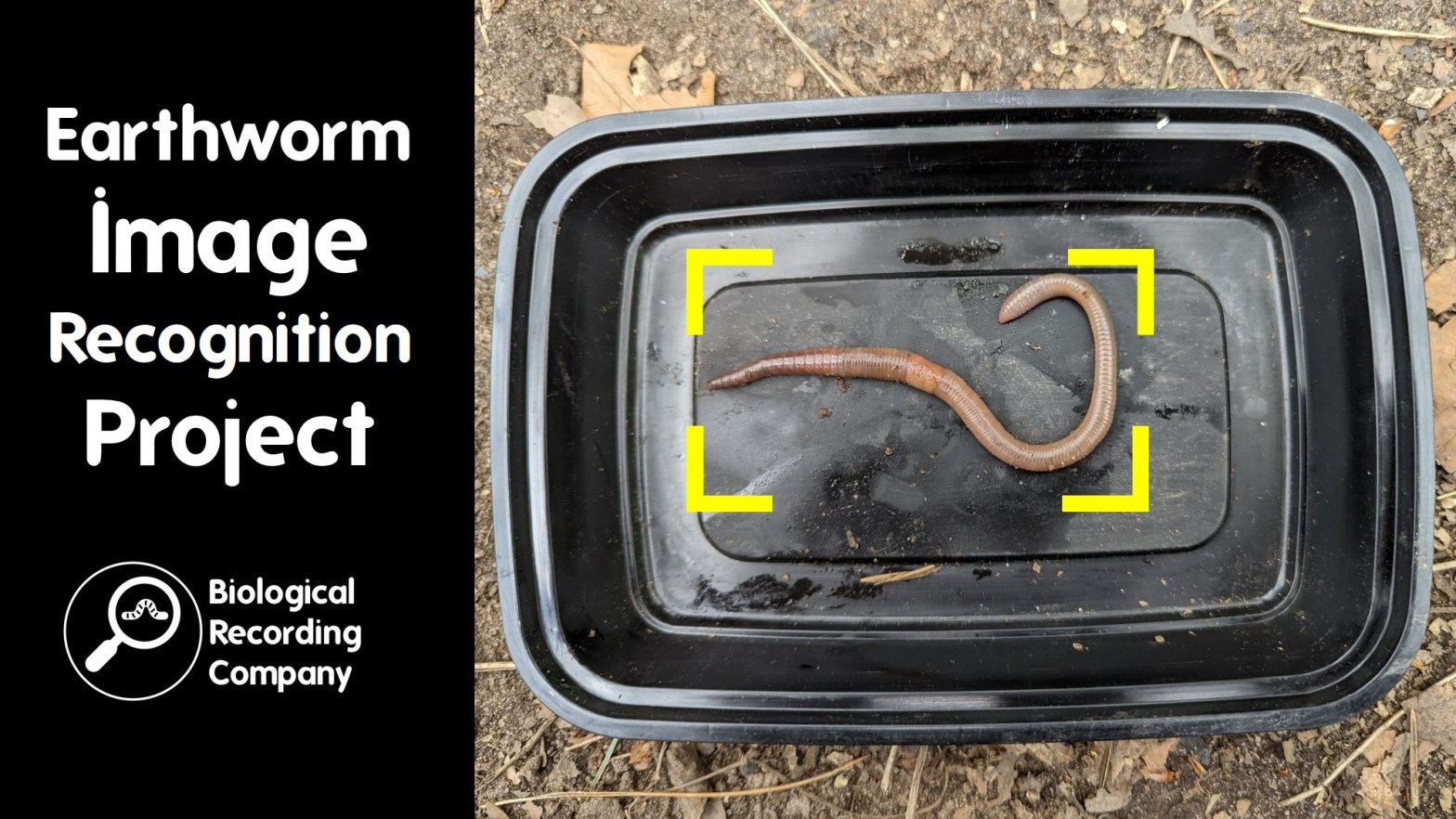
Identifying British earthworms currently requires collecting and killing specimens, to then use microscopic morphological features for identification. This is the biggest barrier to earthworm recording and limits the number of people who are willing and able to contribute earthworm species occurrence data to the National Earthworm Recording Scheme.
So, what if there was a way to identify earthworms live? So far, no live earthworm ID guide has proven accurate enough to meet the high standards of the National Earthworm Recording Scheme. This isn’t necessarily because some earthworm species couldn’t be identified live, but more likely because we simply don’t have enough data on the natural variation in live ID characters within and between species to produce a reliable guide.
The Earthworm Image Recognition Project was established to investigate the possibility of using auto-identification of earthworms from photos for use in future soil health apps.
This project received funding from the Department for Environment, Food and Rural Affairs (Defra) as part of the Natural Capital and Ecosystem Assessment (NCEA) programme. The NCEA is undertaking a nationwide survey of England’s land, coast and sea with the aim of transforming environmental decision-making by building a ‘whole system’ picture of the state of our natural environment

This proof-of-concept study was delivered by the UK Centre for Ecology and Hydrology and Biological Recording Company with guidance from the Earthworm Society of Britain, Defra and the Joint Nature Conservation Committee.

Earthworm Sampling Days
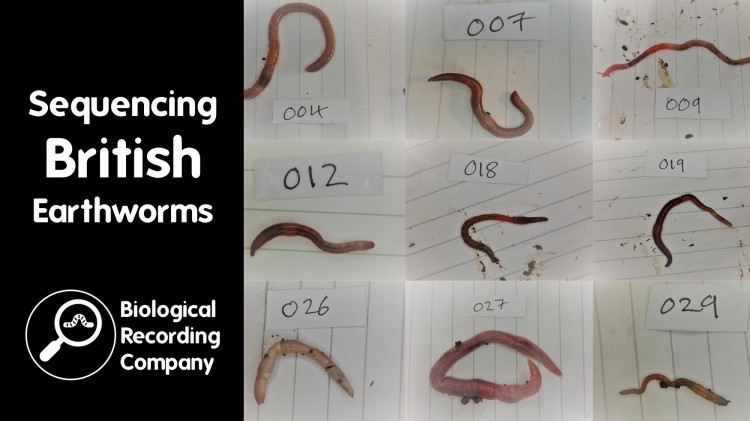
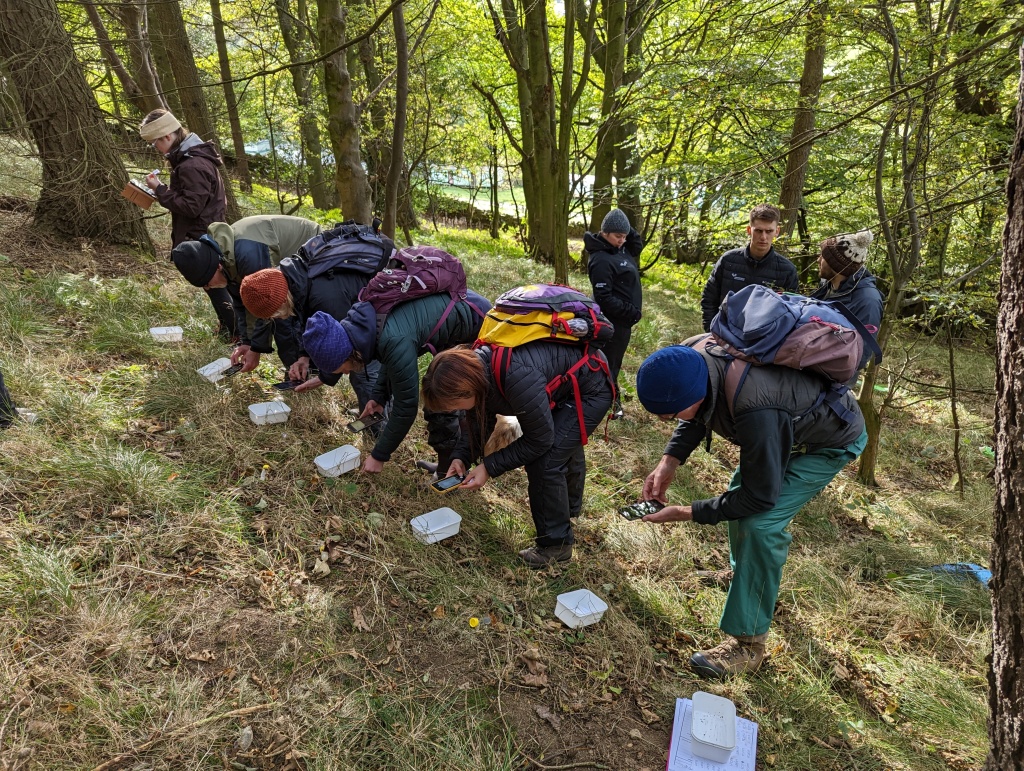
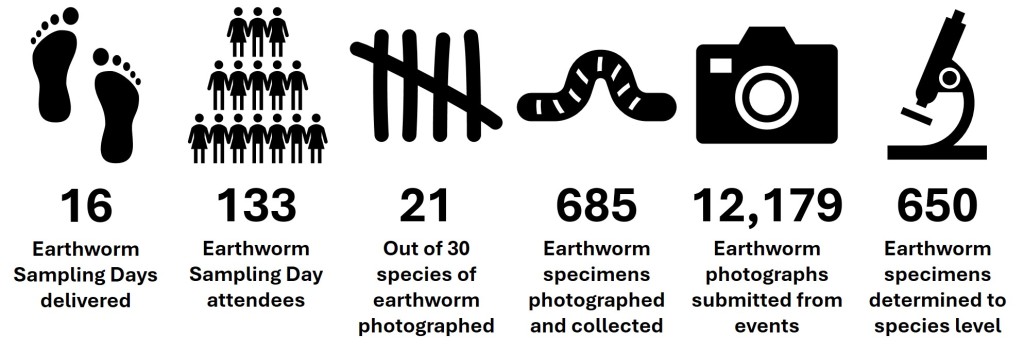
A programme of 16 Earthworm Sampling Days was delivered at sites across England and Wales. During these events, participants sampled for earthworms and used their personal smartphone devices to take photos of the specimens using a specific protocol. Following photography of the earthworms, the specimens were collected, euthanised and preserved so that they could be accurately identified by the National Recorder for Earthworms. Photos were submitted by the volunteer earthworm surveyors following the event and then added to the earthworm image training library.
No experience was necessary as all participants were trained on both earthworm sampling and the smartphone photography protocol. Furthermore, no photography skills were required – it’s important that the images used to train the AI come from a range of devices and are taken by individuals ranging in smartphone photography skill level so that the training data represents the actual data that farmers would be submitting when the app is tested.
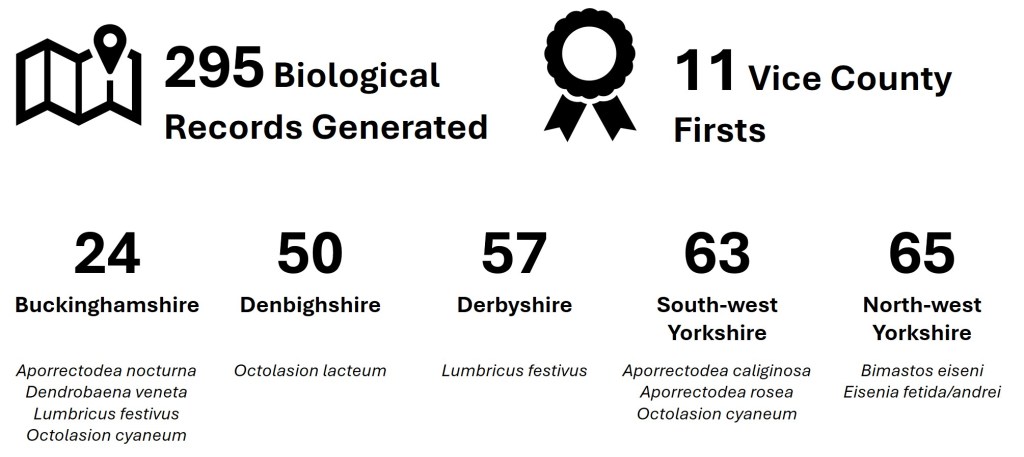
In addition to the primary of aim of generating a training image library, the Earthworm Sampling Day programme also benefited the National Earthworm Recording Scheme by generating 295 new species occurrence records, including 11 instances where species were recorded for the first time within a Watsonian vice county. It also engaged new people with earthworm recording, resulted in specimens being added to regional and national museum collections and
Developing the Algorithm
In addition to the Earthworm Sampling Days, earthworms were collected, photographed and identified by Keiron Brown and Aidan Keith. A total of 12,179 photographs were taken of 650 different earthworm specimens that were identified to species level. 21 out of 30 UK species (or species aggregates) were represented within the training image library.
The images were divided into training, validation and testing sets and the algorithm underwent 34 epochs (training steps) until it no longer showed signs of improvement, reaching an overall accuracy of 42%. The confusion matrix below illustrates how the accuracy of the algorithm to correctly identify individual species was significantly variable and ranged from 0% to 69% depending on the species. A perfect algorithm would display a strong diagonal band and significant values away from this diagonal band indicate common misclassification. Looking at the significant misclassifications helped us to recommend a number of improvements to the image collection protocol and algorithm development that can be implemented to improve the performance of the model.
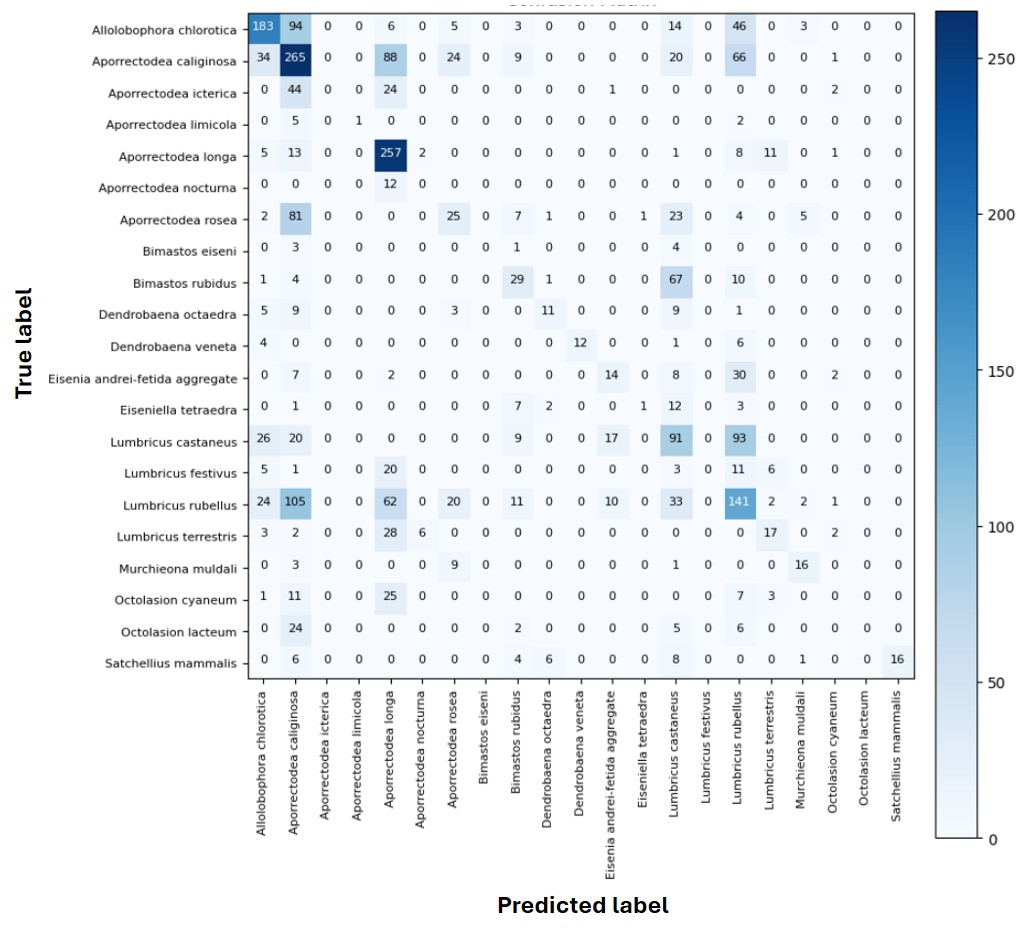
We also established issues with the algorithm using the whole image (rather than just the area with the earthworm) for species classification and recommendations were made for reducing or eliminating this issue.
Proof-of-concept Conclusions
- It is possible to recruit volunteers to collect a large number of images of earthworms using a detailed protocol.
- These images can be used as a training dataset by combining collection with laboratory identification.
- The collection protocol should be refined to avoid the over-handling of specimens, keep the collection tray clean and avoid strong shadows.
- The image set is strongly biased towards common species and more sampling effort will be required to balance the existing library.
- Using a segmentation algorithm to mask out the earthworms prior to classification may improve the performance of the algorithm.
- Species that bare proving too difficult for the algorithm to classify should be grouped into aggregates to improve the overall results.
- Computer vision models show some promise but more development is needed for a usable solution.
The Earthworm Image Recognition Project Activity Report provides a more detailed overview of this proof-of-concept study.
Acknowledgements
We’d like to say thank you to Defra and JNCC for sitting on a steering group for the project and to all the organisations that helped us to deliver this programme of events.
We’d also like to say a huge thank you to all of the volunteers who contributed to the sampling, photography and identification of earthworm specimens.
More on earthworms
 Biological Recording