Plants for Pollinators: Using DNA to Explore Relationships in Gardens

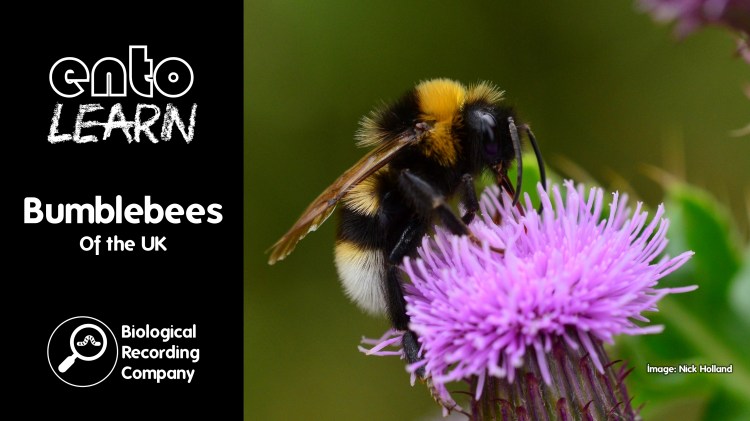
Many “plants for pollinators” recommendation lists exist; however they often rely on anecdotal evidence, show inconsistencies between lists, and cater to a limited range of pollinators. To effectively support pollinators in gardens throughout the year, a deeper understanding of foraging behaviour is crucial. In this talk, Dr Abigail Lowe takes us through her PhD research, which used DNA techniques to identify pollen collected by hoverflies, bumblebees, honeybees and solitary bees. Explore the similarities and differences in foraging behaviour within each group, and observe whether these patterns changed over two years. Discover whether native or non-native plants were preferred, and gain insights into how we can improve our gardens to provide support for these important insects.

Q&A with Dr Abigail Lowe

Dr Abigail Lowe is an Interdisciplinary Ecologist within the Biological Records Centre at the UK Centre for Ecology and Hydrology. Her research uses citizen science to understand the interaction of people, nature, and environmental data.

Is there one plant that you would recommend planting for pollinators?

I really don’t think there is one plant! However, one plant that gardeners don’t want to hear about and IS really important is bramble. Bramble often comes up in research as being great for pollinators, but obviously not a lot of people want their gardens to be full of bramble. The most important thing is making sure that you have plants in your garden from the beginning of the season right to the end. If you live in a warmer area, such as southern England, you want to make sure there is something in your garden in winter like Mahonia for bumblebees that are active through winter. Generally, make sure there’s a diversity of plants in your garden with different shapes and colours.

What percentage or proportion of pollinators are actually bees compared to all the other pollinators? 

There are about 280 species of bees in the UK and 6,000 species of pollinating insects, so the proportion of pollinators that are bees is not as large as many people would imagine based on how pollinators and bees are often synonymous in the media. However, not all pollinating insects are equal in terms of their ability to pollinate. How effective a pollinator is will depend on lots of factors, and will vary depending on the plant species being pollinated.

What is a near native plant?

With DNA, we can’t always get to species, so if we have a genus that appears in the DNA results that includes native and horticultural species, we classify it as near native – for example Quercus (oak) species can be native or non-native. Horticultural plants are genera or species that are very obviously introduced.

How do you know that your research is detecting species diversity rather than pollen abundance levels?

That’s a really good point and the technique is not perfect and has biological limitations. You’re right in that a pollinator could visit a plant and be completely covered in the one particular pollen. It is something that we acknowledge might be the case but we hope that by sampling lots of individuals throughout the year and at different times of the day, it does reduce that impact a little bit. The research shows that the same plants come up time and time again, no matter the method used, plus the meta barcoding approach that we used is found to be semi-quantitat­ive, so we assume that the abundance of pollen in the DNA is related to the actual abundance on the bodies of insects.

We do acknowledge that we don’t know how long the pollen has been on the insect’s body. We don’t know what sort of record that is – is it from the last hour, is it for a few hours? Bees will take their pollen back to feed their young and hoverflies will routinely clean themselves, so that’s another question really. The ultimate answer to any of these questions is that the more that you research, there are more questions to be asked.

What is the big research question that you think has come out in the work that you’ve done?

This might be a cop out answer, but the contribution to knowledge on individual specialisation. Not a lot of people are looking at individual specialisation and this research has bigger impacts. For instance, if insects are specialised, they are more likely to be vulnerable to environmental change, so there are big network theory questions around that. When we use observational methods to look at which plants are being used by pollinators, it’s actually quite hard to track an individual bumblebee around the landscape, whereas DNA meta barcoding can get you that broader spatial and temporal resolution which is what enabled the individual specialisation research.

Literature References

  1. Lowe et al (2022): Using DNA Metabarcoding to Identify Floral Visitation by Pollinators: https://www.mdpi.com/1424-2818/14/4/236
  2. Lowe et al (2022) Seasonal progression and differences in major floral resource use by bees and hoverflies in a diverse horticultural and agricultural landscape revealed by DNA metabarcoding: https://besjournals.onlinelibrary.wiley.com/doi/full/10.1111/1365-2664.14144
  3. Lowe et al (2022) Temporal change in floral availability leads to periods of resource limitation and affects diet specificity in a generalist pollinator: https://onlinelibrary.wiley.com/doi/full/10.1111/mec.16719
  4. Powney et al (2019) Widespread losses of pollinating insects in Britain: https://www.nature.com/articles/s41467-019-08974-9

Further Info

entoLIVE

entoLIVE webinars feature guest invertebrate researchers delving into their own invertebrate research. All events are free to attend and are suitable for adults of all abilities – a passion for invertebrates is all that’s required!

entoLIVE is delivered by the Biological Recording Company in partnership with the British Entomological & Natural History Society, Royal Entomological Society and Amateur Entomologists’ Society, with support from Buglife, Field Studies Council and National Biodiversity Network Trust.

Check out more invertebrate research, publications and events from the entoLIVE partner websites:


More on citizen science

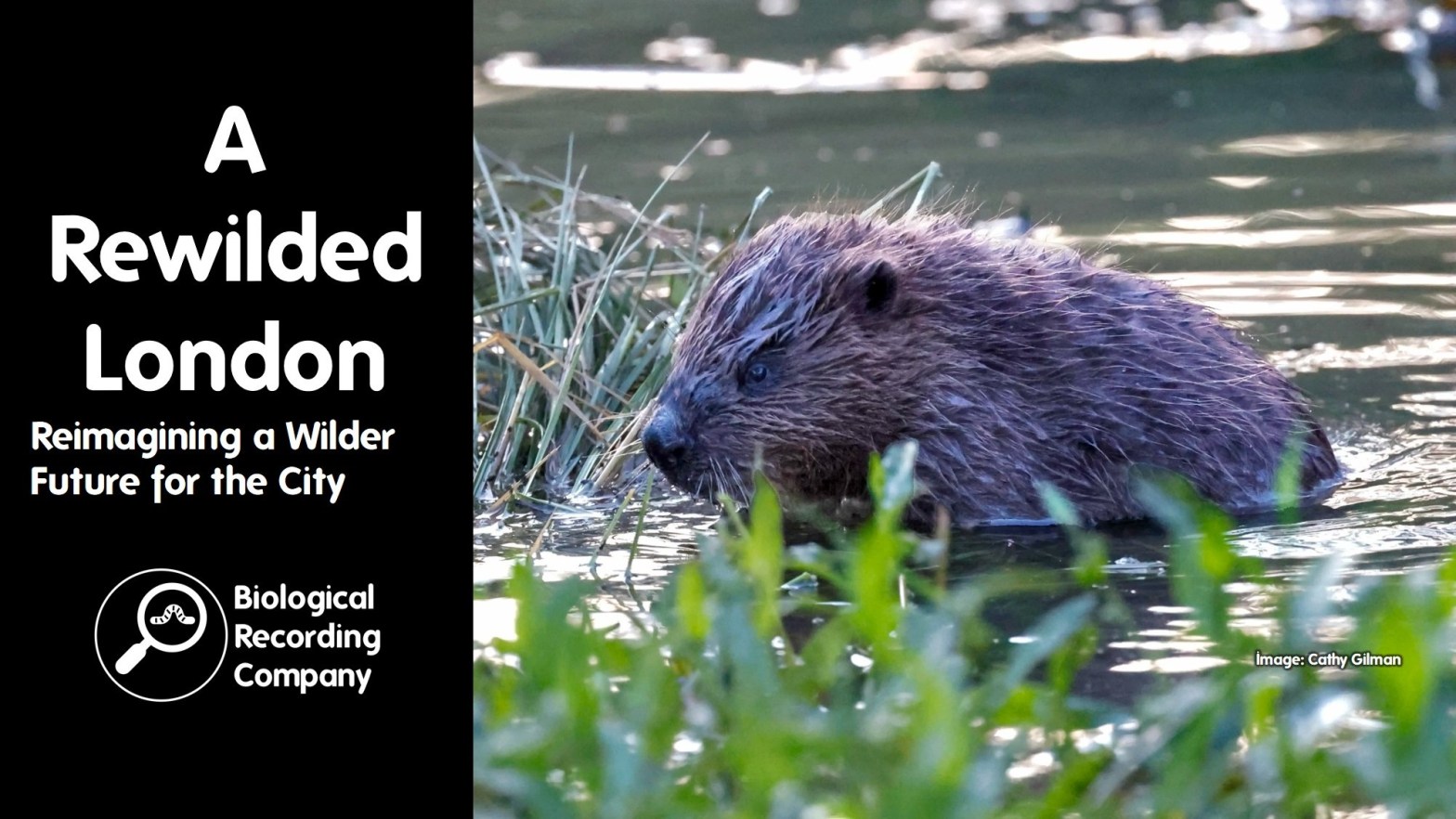
Of Mice and Beavers: Rewilding Ealing One Rodent at a Time

Dr Sean McCormack discusses his work with Ealing Wildlife Group and their ‘Rewilding Ealing’ initiative, focusing on the successful reintroduction of Britain’s smallest and largest native rodent species, the Harvest Mouse and Eurasian Beaver. He also touches on some of the group’s wider conservation efforts and future plans.

These projects harness the local community and are all volunteer-led. The Ealing Beaver Project is a collaboration between Ealing Wildlife Group, Citizen Zoo, Friends of Horsenden and Ealing Council. It is the first truly urban London beaver reintroduction and is fully accessible to the public to enter freely and immerse themselves in a beaver-shaped landscape. A family of five beavers were reintroduced here to Paradise Fields in October 2023 with support from the Mayor of London and Beaver Trust, for whom Sean is an ambassador.

Q&A with Dr Sean McCormack

Dr Sean McCormack is a conservationist, vet and occasional TV and radio presenter who has always had a passion for the natural world. In 2016 he set up Ealing Wildlife Group, a community conservation group working in partnership with the local Council and other landowners on various species-focused projects including Barn Owls, Peregrine Falcons, Great Crested Newts, Bats, Swifts, Hedgehogs and more recently reintroducing both Britain’s smallest and largest native rodents to Ealing, the Harvest Mouse and the Eurasian Beaver.

What are the predator risks to harvest mice that concern you?

The harvest mice (Micromys minutus) are not wrapped in cotton wool and we see them as part of the ecosystem, being an important part of the food chain with natural predators and one of the project aims is to put back that missing cog. We are concerned about unnatural predation of the mice causing local extinction of the reintroduced populations. We are particularly concerned about cats as they hunt for entertainment and even a single cat can cause a lot of damage if it is catching several prey items per day. The density of cats in the urban landscape makes this a particular issue. One of our sites identified for release was not used due to the fact that it was surrounded by residential areas and we felt the risk from cat predation was too high. We’ve also heard from some dog owners walking their dogs on Horsenden Hill that their dogs love to run off and catch mice so we’ve been trying to educate them that this could be damaging populations of a rare species and the response has been generally positive.

Have you had any beavers escape?

No! To reduce the temptation for the beavers (Castor fiber) to want to escape, we’ve given them a huge amount of space. The recommendation form the Beaver Trust was two hectares of good quality habitat for a family of beavers and we’ve created an enclosure with 8 hectares, particularly as we know there is a fair amount of human activity on site and we wanted the beavers to easily be able to get away from us! The pressure for a beaver to want to escape tends to happen when you get more and more beavers in a territory. The oldest offspring will then start wanting to disperse to find their own territory and start their own family. To mitigate this, the oldest offspring should be removed when the family gets too big for the enclosure. The fencing for the enclosure is a specially designed “beaver-proof” fence that has a skirt on the ground to prevent animals from digging out of the enclosure and an overhang to prevent animals from climbing over the fence. Any culverts and grates where water is coming in or out of the site have also been “beaver-proofed” where needed. We have had a team of wonderful volunteers who have been responsible for checking the fencing on a daily basis for the first year, and now check it 3-4 times per week. We have a plan for if the beavers escape and I’m confident that we could recover them quickly.

Do you expect to let the Paradise Beavers go free, either naturally or deliberately?

These beavers are at this site under a licence so it is not possible to let them naturally disperse into the surrounding area. Release of these beavers into the wild would need to be planned. Our licence is for 5 years. Natural England may suggest that the licence is continued but we need to consider the amount of work and effort that goes into maintaining this population and, as the licence holder, I can’t commit to looking after a family of beavers for the rest of my life. The aim of this project was never to restore beavers to Greater London at a population level, it is more of a demonstration and engagement project to see how we can live alongside one family of beavers. Paradise Fields would not be the best place to release beavers from as it has a busy road on one boundary and a very urban landscape (a retail park) on another. We’re in a strange situation politically at this current point in time where beavers are classed as a native protected species but the only way that they can be released is behind an expensive fence. There are signs that this may change with the new government, and I hope to see the kits born this year to be released at a suitable wetland environment site within Greater London without an enclosure!

Are you seeing an increase in the wider biodiversity from the beaver project?

Building up robust and statistically significant data to evidence this takes time, so we’re not quite there yet with evidencing this scientifically. However, we are definitely starting to see positive changes. We’re seeing more bats and new bat species on site, which are a good indicator for insect populations. We can see on a macro level that the number of invertebrates within the water is much improved, and we’ve recorded new species of Gammarus (freshwater shrimp), cased caddisflies. We’ve seen water rail (Rallus aquaticus) and snipe (Gallinago gallinago) on site for the first time. Remember we are only one year in and I can’t wait to see how transformed the site is by the end of the project.

Further Info


More for environmental professionals

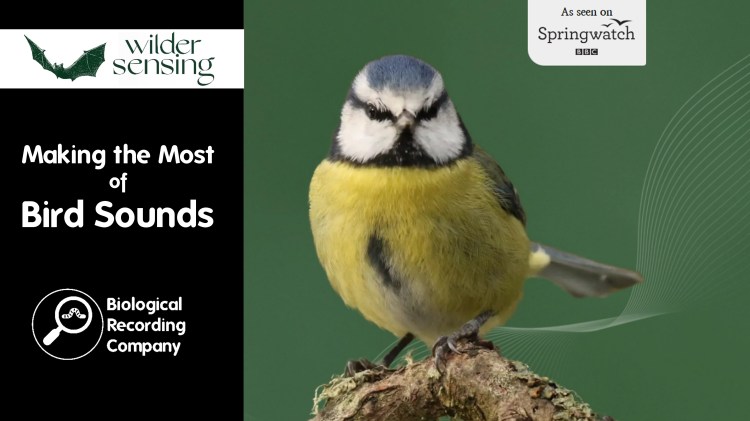
The Wilder Sensing Guide to Mastering Bioacoustic Bird Surveys

Learn how to effectively plan and conduct bird surveys using bioacoustic methods, utilising sound recorders and cutting-edge AI tools for data analysis and interpretation.

Bioacoustics is revolutionising bird monitoring, offering a non-invasive method to record bird activity continuously, even over extended periods, and generating valuable species occurrence, richness and distribution data.

In this blog, you’ll learn how bioacoustics can reveal critical insights, such as tracking when species arrive at and depart from a site, as well as behavioural patterns through different call types. The presentations will provide practical guidance on setting up sound recorders, tailoring your survey design based on the size of your site and survey objectives, and harnessing the power of AI to process and analyse large volumes of sound data.

Key topics include:

  • Setting up and managing passive audio recorders for bioacoustics surveys
  • Designing surveys that fit your needs, budget and site characteristics
  • Interpreting AI-processed sound data to uncover species behaviour, distribution and richness

Bioacoustics Recorders 101

Paul Howden-Leach (Wildlife Acoustics)

Bioacoustics recorders are a cost-effective and reliable solution for the periodic, seasonal, or ongoing long-term acoustic monitoring of birds and other wildlife in any field conditions. Understanding how the device settings and the best place to position it can make all the difference to what wildlife is captured, and what is missed. In this presentation, Wildlife Acoustics share some of their top tips for getting the most out of your recorder.


Designing Bioacoustics Surveys

Geoff Carss (Wilder Sensing)

Designing a bioacoustics survey involves several key considerations, including defining your monitoring objectives, understanding the habitat types or changes you aim to study, selecting appropriate control locations, and addressing practical factors like site access and health and safety. This presentation delves into these aspects, providing guidance to help you create an effective survey tailored to your needs.


Understanding and Interpreting Your Bioacoustics Data

Cat Scutts (Wilder Sensing)

Bioacoustic surveys can produce millions of species-level records during long-term monitoring, offering opportunities to explore new questions and gain deeper insights into biodiversity. But how do you design an effective survey? How does this align with traditional survey methods? What stories is the data telling us about the biodiversity recorded on site? This presentation and demo demonstrate strategies for designing surveys and interpreting bioacoustic data to maximise its potential.


Useful links


What evidence base have you used to set detection confidence at 0.85 and location probability at 0.1?

Cat: At the moment there isn’t an evidence base. It’s through use and inspection that we’ve come to those levels. What species or metric you’re looking at will really influence the settings you use. For instance, if you want a really solid baseline that you don’t have to go away and validate, then put the confidence up very high (i.e. 0.9 or 0.95). That will likely remove species that are present too, but it’s a balance between your time and the resources that you have [available for validation].

The location probability is based on eBird data. We are looking at refining and changing it so that it doesn’t cut out so many of the under-reported species. Again, 0.1 is a rule of thumb for what seemed to make the most sense when looking through species lists. Looking at your species list is a really good starting point to asking validation questions. Are these the species that you’d expect to see at this location? Does this match with any seasonal surveys previously undertaken? Are there any unexpected species?

Geoff: We‘ve started thinking about species-specific thresholding, to try to get the balance a bit more. For example, some birds vocalise more than others and they have different ranges. This gets into some quite serious research [which is] outside of the scope of our work at Wilder Sensing. [But] there are PhD students and post docs looking at this. When evidenced we can adopt [the results of] some of this research and bring it into the platform.

Can bioacoustics data be linked to functional diversity of sites?

Functional diversity is the diversity of [species fulfilling] different ecological functions on sites, i.e., different traits and different roles in the ecosystem.

Cat: Our tool allows you to look at assemblages from your species list and [investigate] what [the community] tells you about the habitat and the site. If you have different sets of species [present] that represent those different niches and habitat types, [you can infer results related to functional diversity]. What I didn’t show in my presentation is that when you choose individual species to view them in the dashboard, you can choose more than one. If you’ve got a set of ground feeders, or wading birds [for example] that you want to look at, you can [select and view them] together [to investigate the results]; and maybe contrast with other functionalities as well.

Geoff: Work by Ecosulis and CreditNature is probably more advanced in relation to this than what we’re doing at Wilder Sensing. Our focus is [on facilitating] monitoring species assemblages over time. Based on research that I’ve looked at, the bird assemblage is more sensitive as an indicator of change than the plant assemblage.

Is the Wilder Sensing subscription package flexible?

Geoff: Absolutely. We recognise that people have very different requirements, from doing annual or multi-year surveys through to a two- or three-week survey, and we support all of these different use cases. Just contact us via info@wildersensing.com or our website contact form and we can have a discussion on what’s right for you.

Is there a good method for using bioacoustics for wider baseline monitoring such as assessing a habitat creation scheme?

Geoff: We’ve only been doing this 2-2.5 years, so we’ve only got a limited amount of data to date. I think there’s a really good argument for creating habitat indices, to help us understand aspects such as how habitat changes over time as it moves from grassland to scrub, how a site is developing over that time, and how it compares to other sites. Is your assemblage changing in line with other interventions that might be similar? What can you identify as ‘good’ practice – ‘good’ is a very loaded word in that context – so what’s a better practice than others, if you’re trying to achieve an outcome of species richness or target species recovery, etc?

For long-term surveys of 30+ years, then there are a few factors to consider. One is making sure your recordings are really good quality because in 20 to 30 years’ time, who knows how technology will have advanced? Make sure your recordings are well backed up and protected. Anyone using our platform will have their recordings archived into deep storage so we don’t lose them. Then in five to ten years, [when] there are better models and algorithms, we can go back and reprocess all [of] that data [if requested]. Control as many of the variables as you can: use the same recorders over a long period of time and make sure they are maintained. You’re trying to remove the variability from the recorders themselves. That can be really important.

Cat: Looking at the overall scope and scale of your survey will inform the resolution that you need to sample at. You might want to survey on a rotation, depending on the overall length of your project and the size of your site. For example, surveying every 5 years if your [project] period is 30-40 years. If it’s a ten-year project over a really vast area, then you might move those recorders on a two- or three-yearly basis. It will depend on your resources and the number of recorders that you have available, as well as the number of people you have to sort out battery and SD card [changes]. So, looking at the overall scope and scale [of your project will indicate] the kind of resolution that you want to be sampling.

Is there a list of species that can’t be differentiated, such as the hawfinch and robin?

Geoff: There are, and it’s not just birds. I’ve heard a recording of a Mole Cricket that I could have sworn was a Nightjar!

We are building up a list of confusion species and working on fixing these issues. For example, we started picking a lot of Short-toed Tree Creepers. Tree creepers are not the easiest to spot at the best of times, are very rare and I’ve never found one when ringing. One of the volunteers then suggested that the confusion was with a Dunnock!

The tool [analyses for detections in] three second sound clips so we can also look at the pattern that is being registered. For example, if we’ve picked up a single Hawfinch call, and we look at the species detection tags registered before and after the call we can make assumptions based on this. If the data states ‘Robin, Robin, Robin, Robin, Robin, Hawfinch, Robin, Robin, Robin, Robin, Robin’, it is most likely that the Hawfinch-tagged call is actually a Robin.

We are looking at ways of solving these issues, but it should be noted that not all fixes will come from machine learning.


Wilder Sensing ecoTECH blogs

  1. How Can We Use Sound to Measure Biodiversity: https://biologicalrecording.co.uk/2024/07/09/bioacoustics-1/
  2. Can Passive Acoustic Monitoring of Birds Replace Site Surveys blog: https://biologicalrecording.co.uk/2024/09/17/bioacoustics-2/
  3. The Wilder Sensing Guide to Mastering Bioacoustic Bird Surveys: https://biologicalrecording.co.uk/2024/11/26/bioacoustics-3/
  4. Bioacoustics for Regenerative Agriculture: https://biologicalrecording.co.uk/2025/03/31/bioacoustics-for-regen-ag/
  5. AI-powered Bioacoustics with BirdNET: https://biologicalrecording.co.uk/2025/07/08/birdnet/

Event partners

This blog was produced by the Biological Recording Company in partnership with Wilder Sensing, Wildlife Acoustics and NHBS.


More for environmental professionals

Climate Change, Biodiversity & Natural Capital: Building Resilience in the Environment

As climate change accelerates, the impact on biodiversity and natural capital becomes more profound, with ecosystems, species, and natural resources under increasing threat.

The webinar will focus on the impact of climate change on biodiversity and will discuss the necessary steps to enhance ecosystem resilience.

This blog explores how these changes can be addressed through nature-based solutions, innovative policy frameworks, and sustainable planning, ensuring a balance between human development and the health of natural ecosystems.

This blog features presentations from climate, biodiversity and technology specialists:

  • Conservation & Restoration in a Changing Climate: Complexity, Resilience & Restoring Forwards with Professor Jim Harris (Cranfield University)
  • Integrating Climate Resilience with Biodiversity Net Gain with Julia Baker (Mott MacDonald)
  • Climate Resilience: Understanding and Empowering Change with Chris Burnett (Map Impact)
  • Panel discussion facilitated by Dr Dan Carpenter (Digital Ecology)

Conservation & Restoration in a Changing Climate: Complexity, Resilience & Restoring Forwards

Professor Jim Harris (Cranfield University)

Climate change is moving the biophysical envelope all over the planet – and some species cannot keep up, being deeply embedded in those systems – we are moving swiftly from Red Queen to Court Jester environments, and we need to adapt management to suit. Current approaches, such as management for one or a few species in a SSSI, or as part of a landscape character designation, may appear to produce resistant communities in a location for now, but in the longer term are more likely to induce fragility and potential collapse.

We should consider the role of diversity and complexity in all ecosystem components (abiotic and biotic) to sustain system function and provide emergent properties, particularly resilience. We may have to consider that for some systems we accept shifting community structures in terms of which species flourish where, producing novel assemblages with the same ecosystem interdependencies – “same play, different actors”.

We can ask:

  • Is the system maturing, or capable of maturing, along a stable trajectory?
  • Is the system resistant and resilient?
  • Is the system providing ecosystem goods and services?
  • Is it providing a safe space for species to thrive in response to climate change?
  • Is it time to consider an ecosystems protection policy?
  • Should we be engaged in a triage process due to limited resources?

In this rapidly changing environment we need to bring flexibility to bear, adopting a “Principles and Guidelines” approach, rather than an adherence to rigid Standards and species lists.

  1. Restoring Resilient Ecosystems: https://restreco.com/
  2. Benetkova et al (2022) Soil fauna development during heathland restoration from arable land: Role of soil modification and material transplant. https://www.sciencedirect.com/science/article/abs/pii/S0925857421003864
  3. Bullock et al (2022) Future restoration should enhance ecological complexity and emergent properties at multiple scales: https://nsojournals.onlinelibrary.wiley.com/doi/pdfdirect/10.1111/ecog.05780
  4. Harris et al (2006) Ecological Restoration and Global Climate Change: https://shorturl.at/72AiH
  5. Higgs (2017) Novel and designed ecosystems: https://www.erichiggs.ca/uploads/4/5/2/9/45292581/higgs2016.pdf
  6. Higgs et al (2014) The Changing Role of History in Restoration Ecology: https://esajournals.onlinelibrary.wiley.com/doi/abs/10.1890/110267
  7. Higgs et al (2018) Keep ecological restoration open and flexible: https://www.nature.com/articles/s41559-018-0483-9
  8. Higgs et al (2018) On principles and standards in ecological restoration: https://research.ed.ac.uk/en/publications/on-principles-and-standards-in-ecological-restoration
  9. Higgs et al (2018) The evolution of Society for Ecological Restoration’s principles and standards—counter-response to Gann et al: https://doi.org/10.1111/rec.12821
  10. Hobbs et al (2014) Managing the whole landscape: historical, hybrid and novel ecosystems: https://doi.org/10.1890/130300
  11. Hobbs et al (2009) Novel ecosystems: implications for conservation and restoration: https://cmapspublic3.ihmc.us/rid=1K7PBR9LC-1318ZTM-2J2/Hobbs%25202009%2520novel%2520ecosystems.pdf
  12. Keane et al (2018) Use of landscape simulation modelling to quantify resilience for ecological applications: https://esajournals.onlinelibrary.wiley.com/doi/pdfdirect/10.1002/ecs2.2414
  13. Liu et al (2018) Tree species richness increases ecosystem carbon storage in subtropical forests: https://royalsocietypublishing.org/doi/pdf/10.1098/rspb.2018.1240
  14. Radujković et al (2020) Initial soil community drives heathland fungal community trajectory over multiple years through altered plant-soil interactions: https://doi.org/10.1111/nph.16226
  15. Sanczuk et al (2024) Unexpected westward range shifts in European forest plants link to nitrogen deposition. https://nora.nerc.ac.uk/id/eprint/538254/1/N538254PP.pdf
  16. Standish et al  (2014) Resilience in ecology: Abstraction, distraction, or where the action is?: https://escholarship.org/content/qt6sx3893f/qt6sx3893f.pdf
  17. Weise et al (2020) Resilience trinity: safeguarding ecosystem functioning and services across three different time horizons and decision contexts: https://doi.org/10.1111/oik.07213

Integrating Climate Resilience with Biodiversity Net Gain

Julia Baker (Mott MacDonald)

Biodiversity Net Gain (BNG) is achieved by following the Biodiversity Gain Hierarchy and creating wildlife-rich habitats. These BNG habitats are secured for at least 30 years but, during that time, more extreme weather events and changes in climatic trends will threaten the viability of BNG habitats. Designing-in resilience is critical for BNG to be successful and, in this presentation, Julia describes an approach to integrate climate resilience into the design, management and monitoring of BNG habitats.

  1. Local Authority Climate Service: https://climatedataportal.metoffice.gov.uk/pages/lacs
  2. UK Climate Projections (UKCP): https://www.metoffice.gov.uk/research/approach/collaboration/ukcp
  3. Forest Research Ecological Site Classification (ESC): https://www.forestresearch.gov.uk/tools-and-resources/fthr/ecological-site-classification/

Climate Resilience Understanding and Empowering Change

Chris Burnett (Map Impact)

Chris Burnett (Chief Operating Officer at Map Impact) will discuss a recent report that indicates that trees and land absorbed almost no CO2 in 2023, and that climate change is impacting on our ability to protect biodiversity to aid in reversing these trends. Remote sensing techniques have the ability to measure the success of nature recovery schemes over long time periods through repeat monitoring, while simultaneously providing an indication of climate change risk that can dictate the success or failure of proposed strategies. This presentation will explore use cases and techniques to determine how multiple datasets can provide insights to support successful strategies to combat climate change.

  1. Sign up to the Map Impact Newsletter: https://www.mapimpact.io/fiind-out-more/
  2. Trees and land absorbed almost no CO2 last year. Is nature’s carbon sink failing? (The Guardian, 14th October 2024): https://www.theguardian.com/environment/2024/oct/14/nature-carbon-sink-collapse-global-heating-models-emissions-targets-evidence-aoe
  3. Ke et al (2023) Low latency carbon budget analysis reveals a large decline of the land carbon sink in 2023: https://arxiv.org/pdf/2407.12447
  4. Ruehr et al (2023) Evidence and attribution of the enhanced land carbon sink: https://www.nature.com/articles/s43017-023-00456-3
  5. European Space Agency – Canada Wildfires: https://www.esa.int/ESA_Multimedia/Images/2023/06/Carbon_monoxide_from_fires_in_Canada
  6. NOAA – Amazon Drought, Feb 7th 2024: https://www.climate.gov/news-features/event-tracker/preliminary-analysis-says-global-warming-more-blame-el-nino-amazons
  7. 2023 Surface Air Temperature Anomaly: https://climate.copernicus.eu/global-climate-highlights-2023
  8. UK Climate Change Risk Assessment 2022: https://assets.publishing.service.gov.uk/media/61e54d8f8fa8f505985ef3c7/climate-change-risk-assessment-2022.pdf
  9. Law Society Climate Risk and Conveyancing Practice Note: https://www.lawsociety.org.uk/topics/climate-change
  10. Climate Change Committee- tree planting   – slide 10
  11. Map Impact HeatView: https://www.mapimpact.io/product/heatview/
  12. Map Impact BiodiversityView: https://www.mapimpact.io/product/biodiversityview/
  13. Saddleworth Moor Wildfire: https://community.rspb.org.uk/ourwork/b/martinharper/posts/the-saddleworth-fire-and-the-importance-of-restoring-our-peatland-habitats-in-tackling-climate-change
  14. Saddleworth Moor WIldfire – Rewilding reduces risk (Rewilding Britain): https://www.rewildingbritain.org.uk/why-rewild/benefits-of-rewilding/how-rewilding-reduces-wildfire-risk#:~:text=Wetlands%20in%20a%20wildfire%20at%20Saddleworth%20Moor&text=The%20RSPB%2C%20which%20is%20managing,in%20the%20heather-dominated%20areas.
  15. Wiltshire Local Nature Recovery Strategy: https://www.wiltshire.gov.uk/article/8288/Wiltshire-and-Swindon-Local-Nature-Recovery-Strategy

Panel Discussion

Hosted by Dr Dan Carpenter (Digital Ecology)

How can practitioners apply some of these principles in our design and management practices in the ecology sector?

Jim: That’s the big question. At the moment, what’s emerging is very clearly pointing that in some cases we’re going to be have to looking at non-natives from more southerly and perhaps easterly parts of Europe to retain ecosystem resilience. Consideration needs to be given to what can safely be brought in, what the legislation allows and how organisms fit within trophic webs. We know there’s a history of organisms that have been introduced in the past that actually have repaired holes in trophic webs and we’ve got an astonishing, almost accidental resource, at our disposal. There’s a large number of parklands across the UK that have been planted with lots of exotic species over the last 200-300 years. Has anyone surveyed those exotics to see what ecological functions they are providing? Would it be possible to use some of those species to help the transition of ecosystems to different kinds of configurations? I think how exotics connect to the whole system and ecosystem functions whilst not driving out native species is an area where we need to be looking very hard what the latitude is in legislation and regulation. I’m not advocating abandoning the conservation of native species or habitats in any way, just highlighting that we will need to consider introducing species too, in specific circumstances.

Julia: There’s really interesting research coming from Germany that shows their native woodlands are already starting to adapt to climate change. The approach to integrate climate resilience with BNG that we developed at Mott MacDonald is to buffer the severity of impacts from climate on BNG habitats. But also to monitor how native species are adapting to a changing climate.

What role does natural regeneration play in habitat restoration or even creation of something new?

Jim: Natural regeneration has got a big part to play in this but you’ve got to be able to get over the hump of things arriving too slowly in a system. The point that jumps out time and time again is the critical importance of moisture and water within ecosystems. Look at the success of some of the beaver introductions that we’ve seen, with biodiversity going through the roof. We need to think about the whole system. We need to be thinking about the kind of metrics that we use to enable us to manage this. It’s a long-term project. The majority of non-native species aren’t invasive, so we can manage those. We just got to really be alert for the invasive ones. I would have thought a good first pass at that, anything you’re moving from south to north is a potential contender for introduction in the system. I think there’s a lot to be said for natural regeneration in places, but we’ve got a mismatch between things like the woodland carbon code and BNG, with those sometimes pulling in opposite directions.

Julia: We must consider the wealth of climate change data that is freely accessible. For example, using climate projection data such as the projections that are freely available from the UK Met Office. Then we can use the projections to consider and mitigate climate risks when designing BNG and especially to understand what a natural regeneration approach might be.

How do satellite and environmental datasets fit into the monitoring of BNG in a changing climate?

Chris: The data that we provide enables ecologists to get a landscape view of condition and is important for understanding climate risk. Are we seeing climate risk change in parallel with the introduction of new habitats that are hopefully mitigating against that? Are BNG and Local Nature Recovery Strategies meeting the KPIs that they are intended to meet at a site, local or national level? Monitoring is crucial to understand all of that. Spatial data helps us understand this across a larger area. Aligning different datasets spatially into a common spatial framework, such as the heat, biodiversity, wildfire and drought layers that I referenced in my talk, enables ecologists to look at how these various factors overlap and can help them put together a Habitat Management and Monitoring Plan (HMMP) that is more robust.

Is it worth unifying the various metrics into a single grand unifying metric?

Jim: The best solution is to have both detailed specific metrics and a single grand unifying metric. A single grand metric is something that we’ve not had in the past and could be used as an overview. We can’t examine all the components at once as it is just not feasible, and we’re not even sure what the interactions for some components. I think that a grand overview of what’s going on and what the response is to factors such as drought and wildlife is going to be critically important. We also need to remember that the UK has an incredibly impoverished fauna post the last glaciation. I think we need to have a bit more of an experimental open approach regarding the colonisation of non-invasive non-natives, in conservation management and ecosystem restoration.

Julia: Designing BNG with climate resilience draws together BNG and climate projection data, and it is critical  to display these datasets in an accessible and easy-to-understand way. Then we can  enable  good design for BNG.


Questions About HeatView and BiodiversityView

What does HeatView provide?

Chris: HeatView is a dataset that utilizes multiple sources to indicate how susceptible specific locations are to heat stress following periods of extreme climatic heat. By integrating both day and night satellite data, the dataset is particularly valuable for assessing the effects of nighttime heat, which is frequently neglected.

Does HeatView consider drought?

Chris: HeatView considers heat itself, using thermal infrared from satellites. We’re planning to release a separate product that will focus on drought (by considering heat, vegetative characteristics and NDV) and hope to launch in January 2025. Sign up to the Map Impact Newsletter to hear more about this when it is released.

Is there technical documentation available for these products?

Chris: There is and we’ll start to release this as and when the related products become available. Again, it’s worth signing up the Map Impact Newsletter for the latest releases.

What scale are the data at?

Chris: Much like our BiodiversityView dataset, these tools are using a H3 hexagonal grid. So each grid is about 50 meters wide. They cover the whole county so you can get an understanding of risk every 50 metres.

Can ecologists add these spatial datasets into their own GIS systems?

Chris: Absolutely. There’s a number of ways that the data can be provided, but normally it would be through an API and it is very easy to integrate into your GIS. We can also provide this both offline and in the form of reports. Get in touch to find out how you can integrate it into your workflow.


Event Partners

This webinar will be delivered by the Biological Recording Company in partnership with Map Impact.


More for environmental professionals

Biodiversity Net Gain: What Could BNG Mean For Pollinators?

Biodiversity Net Gain (BNG) promises to transform the way that we approach nature conservation in the UK. At the moment the focus of BNG is very much on habitats, with less of an emphasis on species. However, BNG has some important implications for the insect pollinators that service the reproduction of around 75% of our native wild plants. This presentation will discuss some of these implications and suggest how BNG may change in the future to accommodate the requirements of pollinators.

Q&A with Prof Jeff Ollerton

Professor Jeff Ollerton is a consulting ecological scientist and author, with more than 30 years’ of experience studying pollinators and their flowers. He is the author of ‘Pollinators & Pollination: Nature and Society’ (Pelagic 2021) and ‘Birds & Flowers: A 50 Million Year Relationship’ (Pelagic 2024). Jeff is also a visiting Professor at the University of Northampton (UK) and the Kunming Institute of Botany (China).

  1. Is there a comprehensive list of requirements for pollinators in terms of flowers?
    No, because it is so diverse, we need to consider pollinators on a case-by-case basis and there are lots of species that we know relatively little about. Some pollinators can be very generalist in nature, whereas others are much more specialist in their nectar and pollen preferences. The Database of Pollinator Interactions (DoPI) is specific to the UK and is run through the University of Sussex. It is a compilation of all of the information that is available to date on which plants different pollinators interact with. We’re hoping to add more information on habitats and soil types into this database and are actively seeking funding for this currently so watch this space!
    Book on the free Plants For Pollinators entoLIVE to hear about more research in this area.
  2. What is the realistic potential of BNG delivered within urban environments to provide the complex habitat opportunities that pollinators require?
    Very high potential, but it varies depending upon the town or city! We’ve published research showing that bees are thriving within the centre of Northampton with 50-60 different bee species present in the heart of the city, including some rare bees. The diversity within Northampton was higher than some of the nature reserves in the area surrounding the city. Most solitary bees need relatively warm and dry conditions to thrive and these microhabitats can be found in towns and cities. BNG will not provide the solution to reversing insect pollinator declines. Less than 10% of Britain is urbanised and 70% is agricultural, so the key to pollinator conservation in Britain lies in tackling threats within agricultural environments.
  3. Will monitoring of BNG evidence if it is having a positive impact on pollinator populations?
    There is nothing specific within BNG monitoring that targets pollinators. the Pollinator Monitoring Scheme is run by the UK Centre for Ecology and Hydrology and this, in theory, will help us detect changes in pollinator populations – though attributing any changes to BNG would be very difficult as you’d need to disentangle BNG from other nature recovery initiatives such as Local Nature Recovery Strategies and Sustainable Farming Initiatives.
  4. What changes would you recommend to make BNG assessments more beneficial for supporting pollinator conservation?
    It would probably be possible to go through all of the condition assessments and find criteria that are important for pollinators. A high priority would be the hedgerows as we need to have something in there about the diversity of the hedgerows and can’t really understand why this wasn’t included. Some grasslands, certainly ancient grasslands, should be regarded as irreplaceable habitat. We should also be considering the positive biodiversity gains we get from some ‘undesirable’ species within grassland habitats, but this may conflict with the advice given via agricultural policy (for example removal of creeping thistle and ragwort).

Literature References

  1. Ollerton (2023) Biodiversity Net Gain: What Are The Opportunities For Insect Pollinator Conservation?: https://jeffollerton.co.uk/wp-content/uploads/2023/10/bng-and-pollinators-ollerton-october-2023-version-1.pdf
  2. Ollerton, J. (2024) Birds & Flowers: An Intimate 50 Million Year Relationship. Pelagic Publishing, Exeter – https://pelagicpublishing.com/collections/jeff-ollerton/products/birds-and-flowers
  3. Ollerton, J. (2021) Pollinators & Pollination: Nature and Society. Pelagic Publishing, Exeter, UK – https://pelagicpublishing.com/collections/jeff-ollerton
  4. Ollerton et al. (2011) How many flowering plants are pollinated by animals?: https://nsojournals.onlinelibrary.wiley.com/doi/full/10.1111/j.1600-0706.2010.18644.x
  5. Tong et al. (2023) New calculations indicate that 90% of flowering plant species are animal-pollinated: https://academic.oup.com/nsr/article/10/10/nwad219/7241545
  6. Rodger et al. (2021) Widespread vulnerability of flowering plant seed production to pollinator declines: https://www.science.org/doi/full/10.1126/sciadv.abd3524
  7. Klein et al. (2007) Importance of pollinators in changing landscapes for world crops: https://royalsocietypublishing.org/doi/full/10.1098/rspb.2006.3721
  8. Siopa et al. (2024)  Animal-pollinated crops and cultivars—A quantitative assessment of pollinator dependence values and evaluation of methodological approaches: https://besjournals.onlinelibrary.wiley.com/doi/full/10.1111/1365-2664.14634
  9. Falk (2021) A review of the pollinators associated with decaying wood, old trees and tree wounds in Great Britain: https://www.researchgate.net/publication/349319059_A_review_of_the_pollinators_associated_with_decaying_wood_old_trees_and_tree_wounds_in_Great_Britain
  10. Balfour & Ratnieks (2022) The disproportionate value of ‘weeds’ to pollinators and biodiversity: https://besjournals.onlinelibrary.wiley.com/doi/full/10.1111/1365-2664.14132
  11. Duffus et al. (preprint) Leveraging Biodiversity Net Gain to address invertebrate declines in England: https://ecoevorxiv.org/repository/view/6667/
  12. Duffus et al. (preprint) Metrics based on habitat area and condition are poor proxies for invertebrate biodiversity: https://www.researchgate.net/publication/384774028_Metrics_based_on_habitat_area_and_condition_are_poor_proxies_for_invertebrate_biodiversity

Further Info

entoLIVE

entoLIVE webinars feature guest invertebrate researchers delving into their own invertebrate research. All events are free to attend and are suitable for adults of all abilities – a passion for invertebrates is all that’s required!

entoLIVE is delivered by the Biological Recording Company in partnership with the British Entomological & Natural History Society, Royal Entomological Society and Amateur Entomologists’ Society, with support from Buglife, Field Studies Council and National Biodiversity Network Trust.

Check out more invertebrate research, publications and events from the entoLIVE partner websites:


More on citizen science