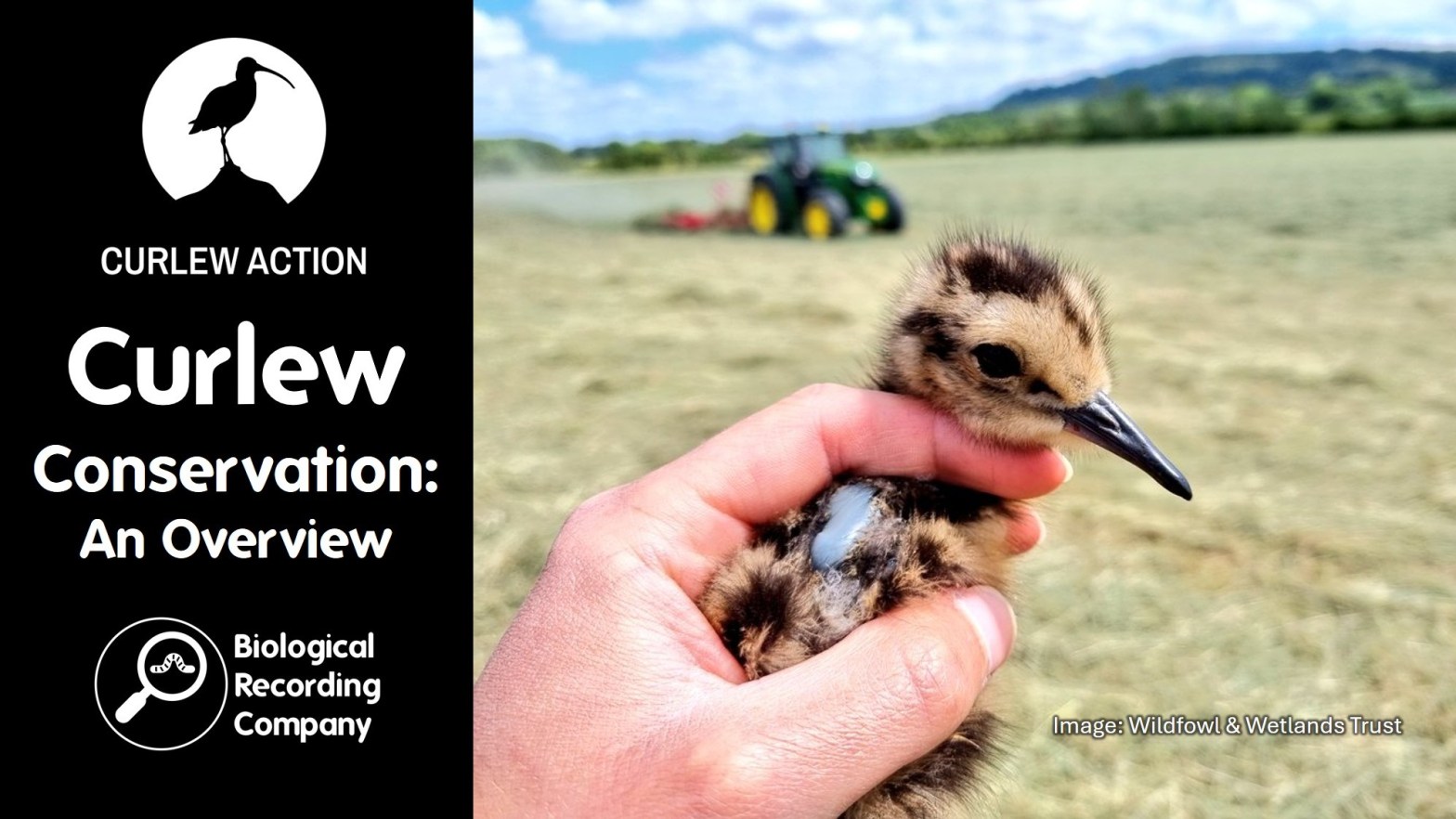
Curlews are among the UK’s most recognisable and well-loved birds, but sadly their numbers are falling fast. The main problem is that too few chicks are making it to adulthood – but the reasons behind that are complex. As ground-nesting birds, Curlews are especially vulnerable to the changing pressures shaping our countryside today, including intensive farming, predation, habitat loss and climate change.
In this introductory webinar, Mary Colwell (Curlew Action) explores why Curlews are in trouble, what their decline tells us about the wider state of our countryside, and how practical, evidence-led conservation can help secure these iconic birds their future.
Mary covers the following challenges that face Curlews:
Climate Change: Climate instability is not a distant threat; it is already compounding the challenges Curlews face on the ground through flooding, drought, extreme temperatures and seasonal disruption.
Why Curlews Are Declining: An overview of Curlew ecology and why poor breeding success lies at the heart of their decline, with insight into the pressures facing nests and chicks on the ground.
Agriculture: Since WW2, the intensification of farming practices has created unsustainable pressures on ground-nesting birds. We’ll investigate how practices such as frequent silage cutting, over-stocking, drainage and the spread of monocultures are contributing to curlew declines.
Predation: We’ll look at how young Curlews are easy prey, and how the UK has some of the highest densities of generalist predators, such as foxes and crows, in Europe.
Forestry: Forestry, especially plantations, are not always compatible with breeding Curlews, which need big, open spaces free of predators. Mary will discuss how trees close in the landscape, remove nesting habitat and can also provide shelter for a variety of predators such as badgers, foxes and crows.
Habitat Loss and Fragmentation: In a small, crowded country, land is pulled in many directions: housing, roads and infrastructure, recreational access, dog walking, and large-scale renewable energy developments all compete for space with Curlews.
Q&A with Mary Colwell
Mary Colwell is an award-winning author, producer and campaigner for nature. Her articles have appeared in the Guardian, BBC Wildlife Magazine, The Tablet, Country Life and many other publications. She has made documentaries for the BBC Natural History Unit in both TV and radio, and has published three books: John Muir – the Scotsman Who Saved America’s Wild Places, Curlew Moon and Beak Tooth and Claw. Her fourth book, The Gathering Place, was published by Bloomsbury in 2023 and was shortlisted on the Stanford’s best travel book of 2024.
In 2009 she won a Sony Radio Academy Gold award and in October 2017 she was awarded the Dilys Breese Medal by the BTO for outstanding science communication, in 2018, the David Bellamy Award from the Gamekeepers Association for her conservation work on curlews and in 2019, the WWT Marsh Award for Conservation.
In March 2021 she was appointed Chair of the government-supported Curlew Recovery Partnership England, a roundtable of organisations charged with restoring Curlews, their habitats and associated wildlife across England. In 2020 she set up the charity, Curlew Action. She spearheaded the successful campaign to establish a GCSE in Natural History, announced by the government in April 2023.
How can we manage different land uses better for curlews?
Curlews need space, quiet, and the right kind of habitat to breed successfully. They favour open landscapes with a varied sward which offers longer grass to conceal nests and provide cover from predators, alongside shorter, insect-rich areas where chicks can feed and grow. Much of our countryside no longer offers this balance. Land has been drained, simplified, and is frequently disturbed by machinery, people, and dogs. Increasingly, it is also planted with commercial forestry, such as Sitka spruce, often for timber production or carbon mitigation. These altered landscapes tend to favour generalist predators like foxes and crows, adding further pressure to already struggling curlew populations. Supporting curlews means restoring the habitats they depend on, working with farmers and the forestry sector to ensure that some areas are managed specifically with ground-nesting birds in mind.
Grouse moors (upland heather landscapes managed for Red Grouse shooting) offer a different picture. Like curlews, grouse nest on the ground, and the conditions created on well-managed moors can also benefit curlews. This management is intensive and not something that can – or should – be applied across the wider countryside. There are also serious concerns, particularly the illegal persecution of birds of prey, which is totally unacceptable. Yet, in a landscape where curlews are finding it increasingly hard to survive in modern lowland systems, well-run moors can act as a refuge, buying time while efforts are made to restore more nature-friendly conditions elsewhere.
Regenerative farming and other forms of nature-friendly farming systems hold out hope that we can grow food and support wildlife, and we look forward to seeing this become more widespread in the future.
Does the release of pheasants impact local curlew populations?
Large-scale pheasant releases in the UK, amounting to tens of millions of birds each year, introduce a substantial, artificial food supply into the countryside. Research suggests this can attract and support higher numbers or activity of some generalist predators, particularly avian species such as crows and other corvids, and may increase predation pressure on other ground-nesting birds like curlew.
🧪 Pringle et al (2019). Associations between gamebird releases and general predators: https://besjournals.onlinelibrary.wiley.com/doi/10.1111/1365-2664.13451
However, the evidence is less clear for mammals such as foxes, with studies showing mixed or inconclusive results, partly due to the confounding effects of predator control on shooting estates. Overall, while pheasant releases are very likely to influence local predator–prey dynamics, especially through food subsidy effects, the extent to which they drive broader increases in predator populations remains uncertain and contested.
There are also landscapes where pheasant shooting is minimal or absent, yet generalist predators remain abundant, for example, in parts of Ireland. This suggests that high predator numbers are not solely driven by gamebird releases, but are also shaped by wider factors such as land use, habitat structure, food availability, and broader ecological changes such as climate change.
More studies are now underway to untangle this relationship, but the evidence remains patchy and contested, despite it appearing, at first glance, to be obvious and straightforward.
🎓 Sign up to our free Nature-friendly Farming webinar: https://www.eventbrite.co.uk/e/nature-friendly-farming-tickets-1986764341628
Can rewilding be used as an alternative to managed grouse moors for supporting curlew recovery?
Yes, rewilding (which is a very broad term with many different meanings) can support curlew recovery, but only if it includes, and actively maintains, open landscapes.
Curlews are part of a much broader web of wildlife, and rewilding is rightly about restoring complexity, processes and diversity at scale. But not all species respond in the same way. Curlews are birds of open country. They evolved in landscapes where visibility is high, vegetation structure is varied, and predator pressure is relatively low. If rewilding leads to widespread scrub encroachment, woodland expansion, or unchecked increases in generalist predators, it can quickly become unsuitable for breeding waders.
So, the question is not whether rewilding works, but what kind of rewilding. Done well, it can recreate dynamic mosaics of wet grasslands, rough pasture, patches of longer and shorter sward, seasonal flooding, etc, all of which benefit a wide range of species, including curlews. But it must also include keeping some areas open, limiting tree growth in key breeding zones, and addressing predator impacts where necessary.
Curlews do not need a return to the past so much as have a place in the future vision for a rewilded UK. If we want them to remain part of our lives, then open landscapes that are rich, varied, and with manageable levels of predation, have to be part of the plan.
🎓 Sign up to our free Curlews and Grouse Moors webinar: https://https//www.eventbrite.co.uk/e/curlews-and-grouse-moors-tickets-1987186150269
How can members of the public help our curlews?
The public can play a real and meaningful role in helping curlews, often in ways that are simple but powerful when taken together.
It begins with awareness by understanding the pressures curlews face and sharing that story with others. These birds are slipping quietly from our landscapes, and the more people who notice and care, the harder that becomes. Passing that awareness on to younger generations is especially important, it is essential to help children learn to recognise, value and feel connected to the natural world and to name and record the wildlife around them.
There are also practical ways to help. Many local groups do vital work on the ground, from monitoring nests to working with farmers, and they often need volunteers. Getting trained up and supporting these efforts can make a direct difference to breeding success.
And then there is the cultural side, which is just as important. Curlews have always stirred something in people through their beautiful call and their uplifting presence in across fields and moors. Through poetry, art, dance, music and writing, people can help keep that connection alive, reaching audiences that science alone cannot.
Everyone has a part to play. Whether through learning, sharing, creating or getting involved locally, each action helps build the wider movement needed to secure a future for curlews.
🌍 Learn about World Curlew Day: https://www.curlewaction.org/world-curlew-day/
How are different species of curlew doing worldwide?
Curlews of the world, spanning Eurasia, Africa, Asia and the Americas, are, almost without exception, in trouble. From the steep declines of the Eurasian Curlew in Europe to the perilous status of species like the Far Eastern and Bristle-thighed Curlew, their shared story is one of habitat loss, changing land use, and rising pressures from predation and disturbance. In many places, hunting is also a major problem. These are birds that depend on healthy, functioning landscapes, and their decline is a signal of wider ecological imbalance. Curlew Action is planning a global Curlew Symposium in the next couple of years – so watch this space – which will bring attention to the plight of all curlew species and help focus minds on the broader environmental challenges they reveal. The curlew, wherever it is found, is a powerful ambassador for planetary health; when curlews struggle, it is a sign that something deeper is out of balance in the natural world.
🌍 Learn more about Curlews of the World here: https://www.curlewaction.org/curlews-of-the-world/
European Curlew Headstarting Online Workshop
This blog was produced as an output of the European Curlew Headstarting Online Workshop, a virtual event delivered by Curlew Action and the Biological Recording Company. Check out the other presentations and outputs in the other blogs resulting from this event.
- An Overview of Headstarting Curlews
- Curlew Headstarting Projects: Europe
- Curlew Headstarting Projects: England
- Curlew Headstarting: Eggs, Incubation and Hatching
- Curlew Headstarting: Rearing Chicks
- Curlew Headstarting: Health & Disease
- Curlew Headstarting: Releasing Birds
- Curlew Headstarting: Post-release Monitoring
For more information about this event, the speakers and the presentations see the event delegate pack below.
 Biological Recording