The marineLIVE programme consists of interactive marineLIVE webinars that link marine biologists with non-academic audiences – including citizen scientists, amateur naturalists, conservation practitioners and scuba divers. Each 1-hour webinar is delivered over Zoom, with an interactive presentation of around 40 minutes followed by a live Q&A where the participants can put their questions to the guest speaker. The presentations are recorded and published as marineLIVE YouTube videos, as well as written up as marineLIVE blogs alongside a transcript of the live Q&A and any useful links and references.
marineLIVE webinars take place throughout the year, during either a lunchtime (13:00 – 14:00) or evening (19:00 – 20:00) slot. All marineLIVE webinars are completely free to attend and the blogs and videos are all publicly available.
What is marineLIVE trying to achieve?
marineLIVE is following in the footsteps of our highly successful entoLIVE series, with the aim of making scientific research more accessible by raising awareness of research outputs, such as scientific papers, technical reports and biodiversity datasets. marineLIVE will focus on marine biology subjects and we believe that by breaking down the barriers (such as cost and language) for non-academic audiences (including naturalists and conservation practitioners) to access scientific outputs, it will lead to research being used more widely and enable more biodiversity sector volunteers and professionals to undertake evidence-based actions.
As of 10th October 2024, over 30,000 bookings have been received for entoLIVE webinars, and we hope to shine a spotlight on marine biology in the same way with marineLVE!
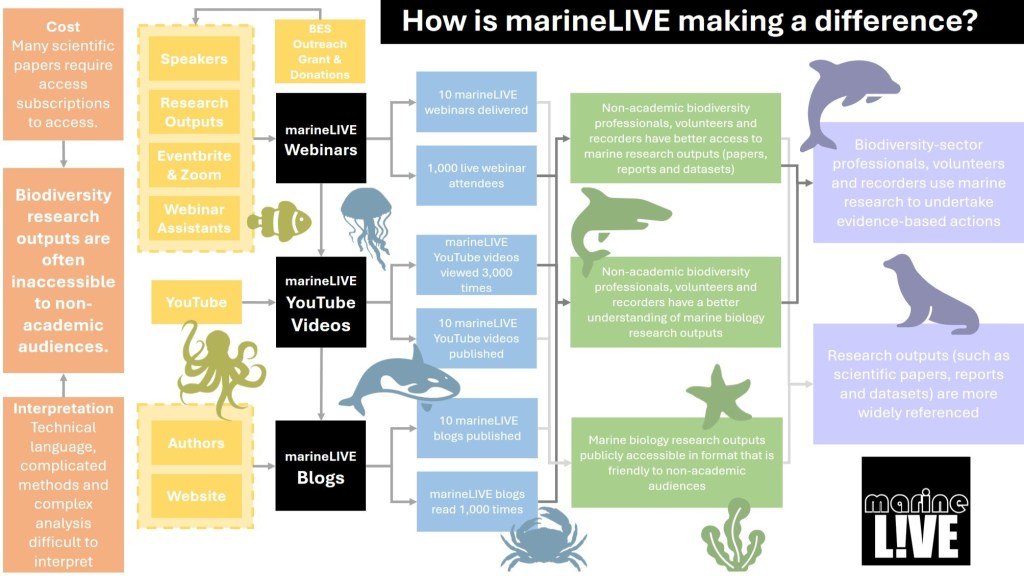
What subjects does marineLIVE cover?
The marineLIVE webinar programme is about shining a light on marine biology. Talks from any scientific field are welcome – ecology, taxonomy, genomics, anatomy, ethology… the list goes on! Each talk should interpret a scientific output, such as a research paper, technical report or dataset. The programme should be mutually beneficial for the speakers and the audience, with the audience expanding their marine biology knowledge and the speaker increasing engagement with their work (and hopefully leading to more use of their scientific output).
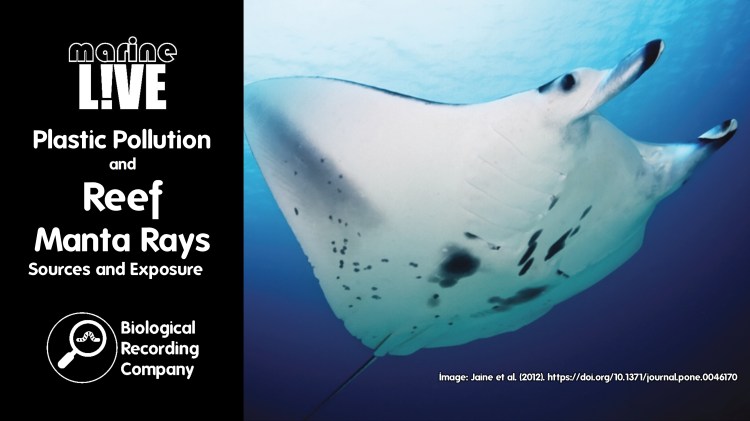
Plastic Pollution and Reef Manta Rays: Sources and Exposure
Dr Jessica Savage (Zoological Society of London) discusses how plastic pollution is impacting Reef Manta Rays in the Chagos Archipelago.
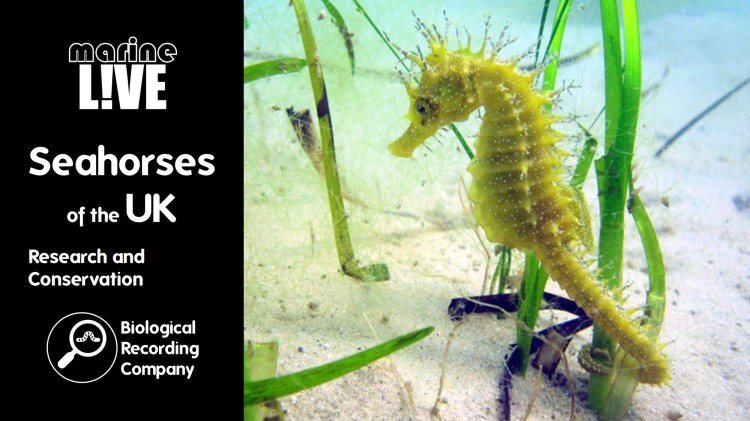
Seahorses of the UK: Conservation and Research
Delve into the mysterious realm of the seahorse with Beccy MacDonald-Lofts to hear about seahorse research and conservation in the UK.
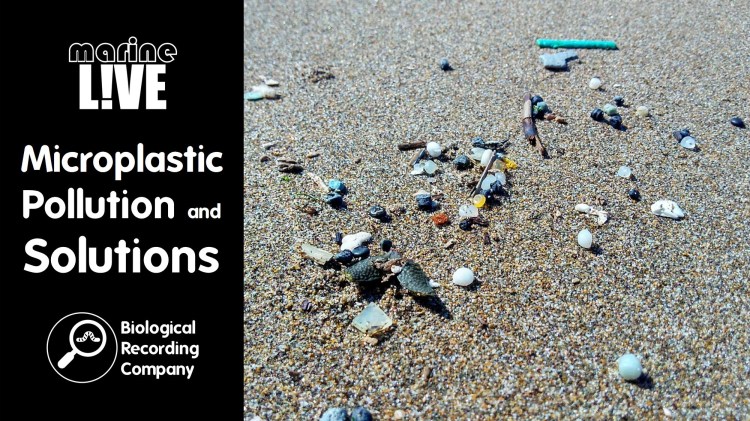
Microplastic Pollution and Solutions
Twenty years after the term “microplastics” was first used, what do we know about their presence in the environment? Dr Winnie Courtene-Jones (Bangor University) presents the latest research.
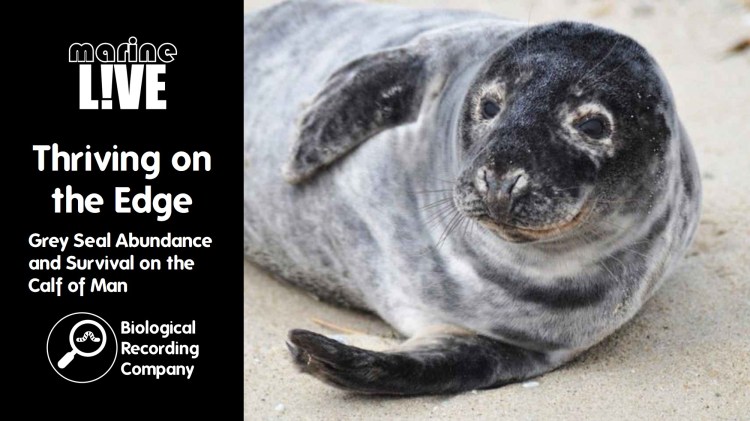
Thriving on the Edge: Grey Seal Abundance and Survival on the Calf of Man
Dr Lara Howe (Manx Wildlife Trust) explains how work to monitor the breeding population of Grey seals on the Calf of Man is helping us understand this population and making the most of new technologies.
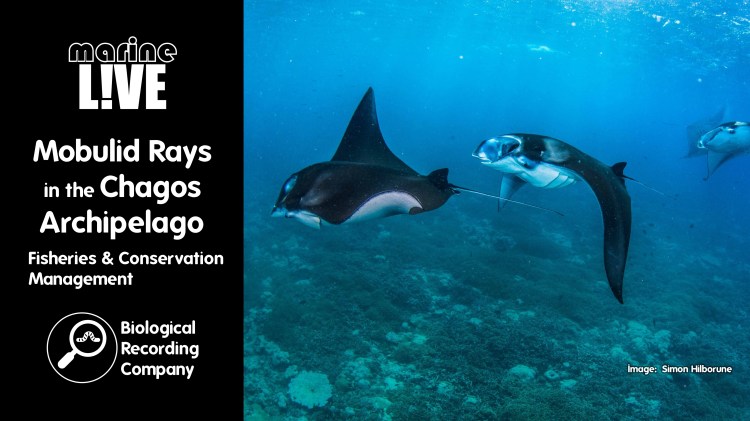
Mobulid Rays in the Chagos Archipelago: Fisheries & Conservation Management
Dr Joanna Harris (Manta Trust) presents research looking at the impact of fisheries and conservation management techniques on manta and devil rays in the Chagos Islands.
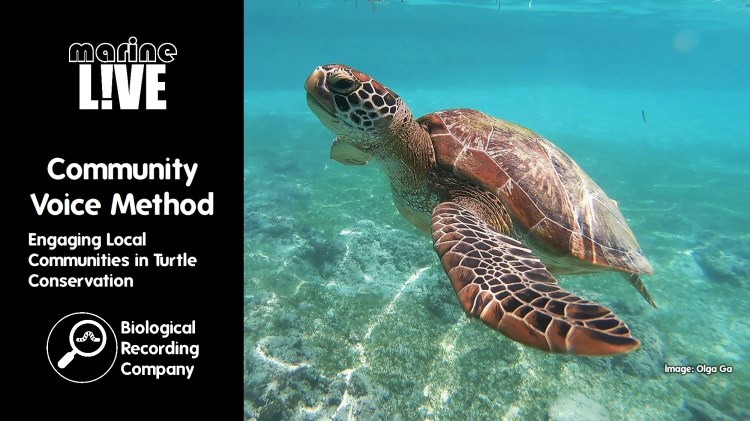
Community Voice Method: Engaging Local Communities in Turtle Conservation
Amdeep Sanghera (Marine Conservation Society) explains how Caribbean island fishing communities are being engaged in the development of turtle conservation policy.
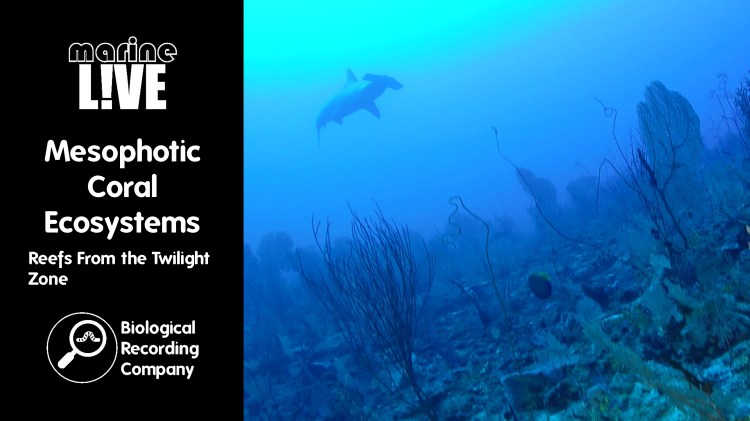
Mesophotic Coral Ecosystems: Reefs From the Twilight Zone
Dr Clara Diaz (University of Plymouth) takes us on a journey into the mysterious world of mesophotic coral ecosystems and the work going on to study them in the Indian Ocean.
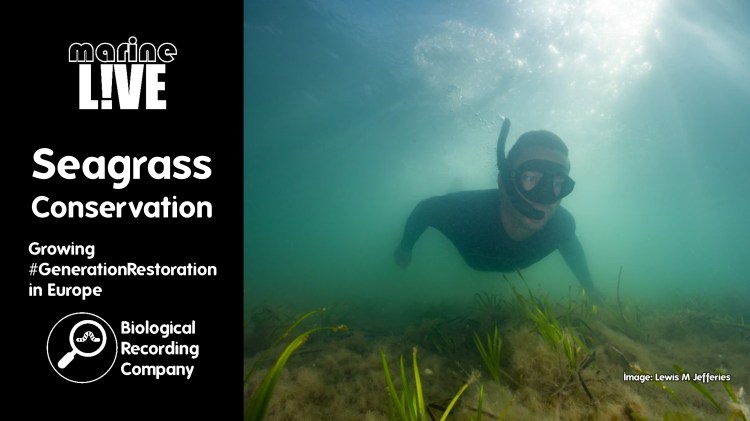
Seagrass Conservation: Growing #GenerationRestoration in Europe
Dr Richard Lilley discusses how seagrass conservationists are fostering community collaborations, innovation and knowledge exchange.
How is all of this free?
The truth is that it isn’t! There are costs associated with running the programme, including costs for our website, Eventbrite and Zoom. We also strongly believe that those involved in science communication should be paid appropriately for their time. We ensure that the invertebrate conservationists hosting the webinars are renumerated for their time and all of our invertebrate researchers are offered a speaker fee of £60 for each presentation.
The marineLIVE programme is only possible due to the financial support we receive from our partners and the donations that have been generously given by webinar attendees.
The 2025 marineLIVE webinar programme is part-funded through an Outreach Grant from the British Ecological Society.

Information for speakers
marineLIVE webinars are a great way to engage with the ecology and conservation community, bringing together amateur naturalists and students with experts and sector professionals. We deal with all the admin, technology and hosting so that speakers can focus on their presentations and answer any questions during the live Q&A. Speakers are able to claim a £60 speaker fee following delivery of their webinar. The webinars are 1-hour long and the general format can be found below.
- 5-minute intro by marineLIVE host
- 40-minute presentation by guest speaker
- 15-minute guest speaker Q&A session hosted by marineLIVE host
Our audiences are interested in a wide range of topics, including (but not limited to) ecology, identification, recording and conservation so we will organise talks on a variety of taxa and projects.
More information is available for potential speakers in our Information for Speakers pack below. Applications are open all year round and can be submitted via the online entoLIVE and marineLIVE Speaker Application Form.
 Biological Recording