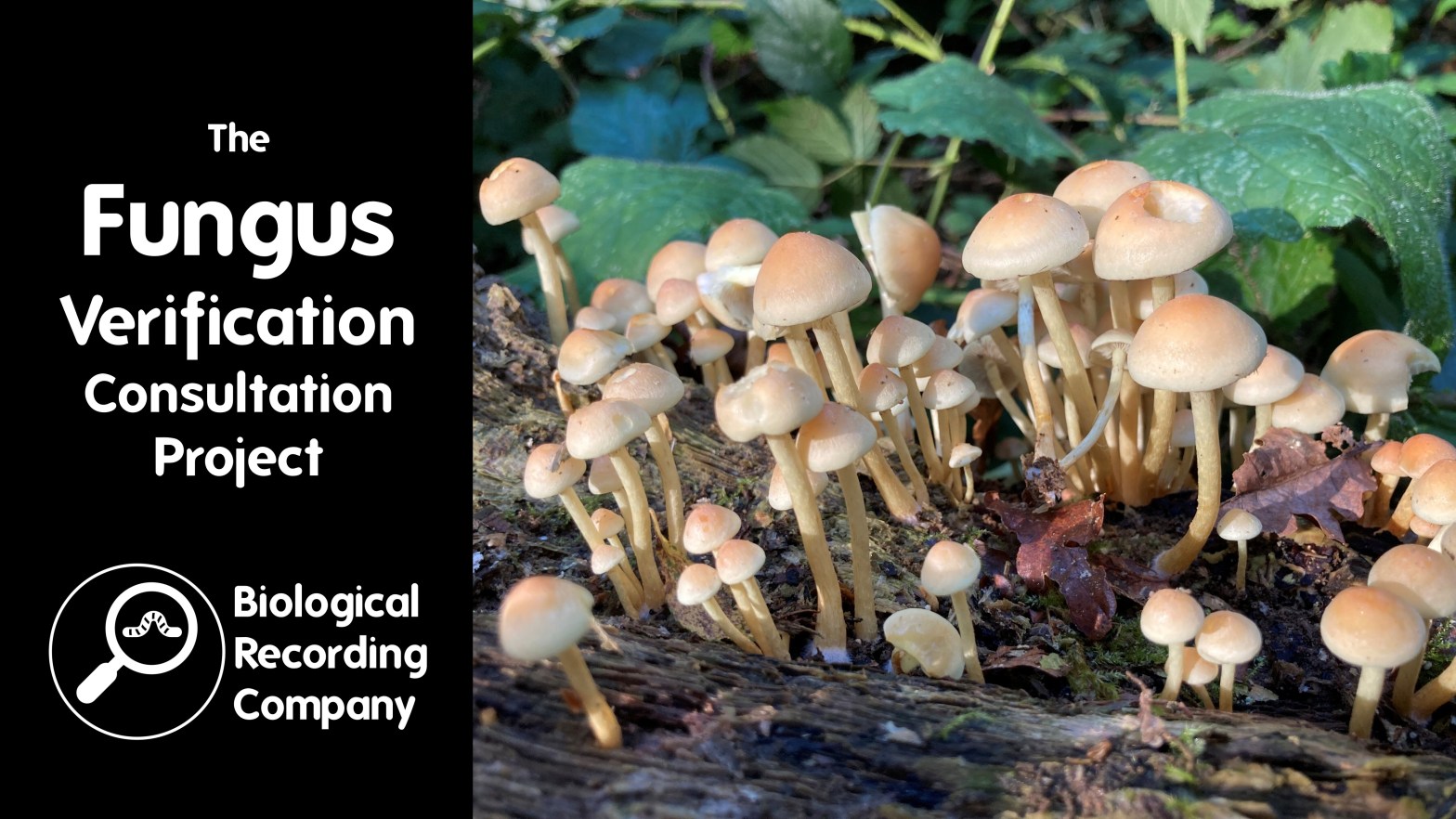
The Biological Recording Company is collaborating with the British Mycological Society (BMS) to assess how fungal records submitted to The Fungal Records Database of Britain and Ireland (FRDBI) are verified and shared going forward. We will be consulting widely with fungus recorders via an open-to-all online survey, followed by a consultation workshop with BMS members. Following this, we plan to publish our findings in a consultation report and draft a verification protocol for verifying FRDBI records.
A bit of background
In September 2025, the NECR650 Edition 1: Data Flows of UK Fungal Data Records, commissioned by Natural England and produced by the UK Centre for Ecology and Hydrology (UKCEH), was published. This report examines how fungal records are currently collected, verified, stored, and shared across the UK. The report’s function is to clarify how fungal data flows between recorders, databases, and users to improve access, quality, and conservation outcomes.
Key findings included:
- Complex Data Landscape: Fungal data collection involves two national recording schemes (British Mycological Society – BMS, and Fungus Conservation Trust – FCT), local fungus groups, environmental records centres, and online platforms (e.g. iRecord, iNaturalist, Observation.org). This fragmented landscape causes duplication, inconsistent verification, and restricted sharing.
- Identification of Major Data Sources:
- BMS – Fungal Records Database of Britain and Ireland (FRDBI): The largest dataset but not fully open access nor verified.
- FCT – CATE2 Database: Contains substantial data, but recorder and geographic fields are restricted for public or cross-database use.
- National Biodiversity Network (NBN) Atlas and GBIF: Provide national and international data access but contain limited fungi records due to sharing restrictions.
- Local and Online Sources: Local fungus groups and online citizen science platforms contribute valuable data but vary in quality and verification standards.
- Verification Challenges: Fungal identification is complex, requiring expert review. Current verification systems vary across databases, leading to uneven data quality and confidence levels.
- Data Sharing Barriers: Closed databases, inconsistent licensing, and differing standards limit access for conservation, Red List assessments, and ecological research.
- Stakeholder Insights: Surveys of recorders and database managers revealed concerns about data fragmentation, complexity of submission processes, and insufficient collaboration between recorders, data managers, and end users.
To improve fungal data management and conservation outcomes, the report recommends:
- Adopting FAIR Data Principles – ensuring data is Findable, Accessible, Interoperable, and Reusable.
- Standardising Verification Protocols – establishing shared quality assurance processes.
- Enhancing Accessibility – expanding data sharing to national repositories such as NBN Atlas and GBIF.
- Improving Interoperability – aligning taxonomies and metadata standards across systems.
- Encouraging Data Use in Conservation and Research – supporting Red List assessments, land management, and ecological monitoring.
- Supporting Recorders – through training, technical tools, and national coordination.
The full report can be found here: https://publications.naturalengland.org.uk/publication/6376073955377152
Fungus Recorder Online Survey
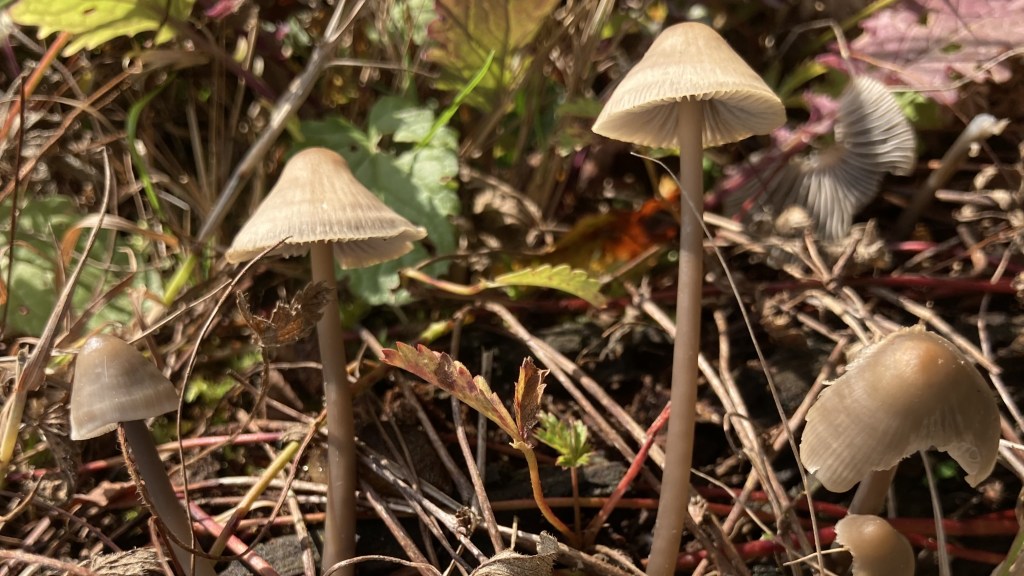
The first stage of the project is the Fungus Recorder Online Survey, now open to recorders nationwide. This short survey invites participants to share their experiences with fungi recording, from the platforms they use to their thoughts on data quality and verification. We want to understand what motivates recorders, the challenges they face, and their views on how verification should work. Your input will help build a clear picture of current practices across the UK and directly inform the development of the Draft BMS Verification Protocol. Take the survey here.
The survey should take roughly 5 to 10 minutes to complete. Responses are welcome from all fungus recorders, regardless of how many records one submits and where one submits their records to.
Questions centre around:
- The platform(s) used to submit or manage fungal records
- How often recorders submit records
- What verification steps recorders see as appropriate (e.g. is expert review needed?)
- Which organisations should be able to access records
- The use of tools such as automated rules and AI
These questions are designed to help us build a clear picture of current practices and preferences in the fungi recording community.
BMS Consultation Workshop
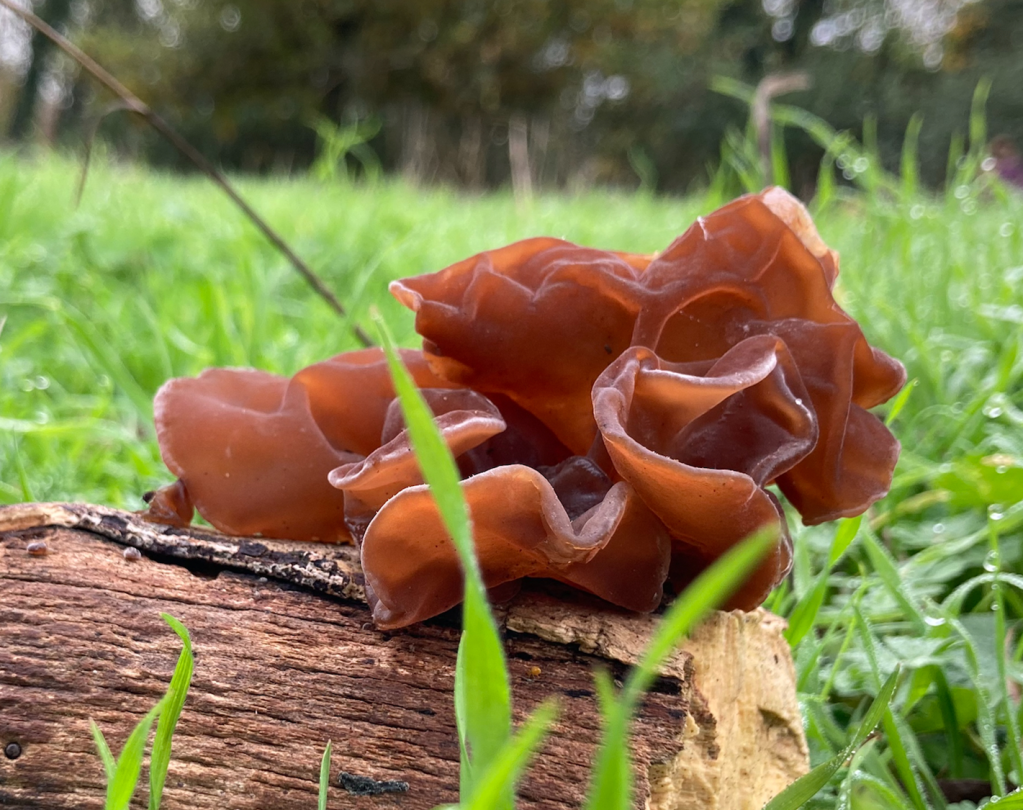
The conversation continues in person at the BMS Consultation Workshop, which will take place at Kew Gardens on Saturday 29th November 2025 as part of the BMS Annual Meeting. This half-day workshop will bring recorders and verifiers together to explore key topics such as data flow, validation and verification, verification statuses, and communication between recorders. The session will combine presentations with interactive group activities, encouraging open discussion and collaborative thinking. The insights gathered will form the foundation for refining and testing ideas within the draft verification protocol.
Fungus Recording and Verification Consultation Report
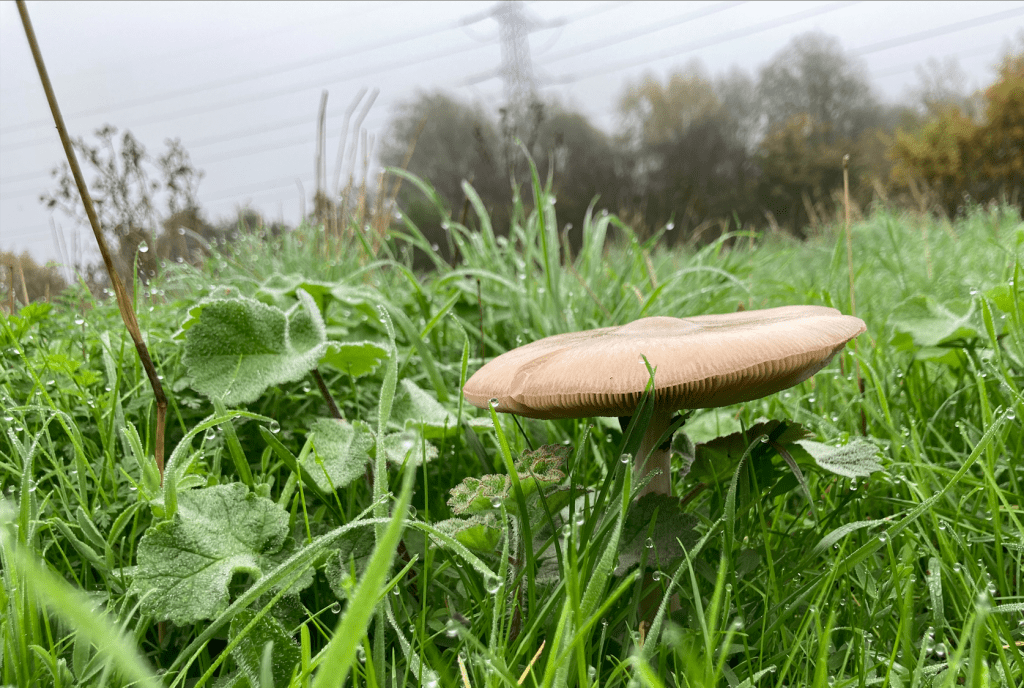
Once the survey and workshop are complete, we will produce the Fungus Recording and Verification Consultation Report. This report will summarise the feedback, findings, and recommendations collected throughout the project. It will highlight key themes raised by participants and provide a transparent overview of how their input has informed the development of the Draft BMS Verification Protocol. Everyone who contributes to the consultation will receive access to the published report, ensuring that the process remains open, inclusive, and collaborative.
Draft BMS Verification Protocol
The final output of the project will be the Draft BMS Verification Protocol: a concise, two-page document outlining proposed standards and processes for the verification of fungal records in the UK. It will include a summary of next steps and a visual data flow diagram showing how fungal biological records are managed within the BMS framework. The protocol will serve as a working draft for further discussion and refinement, moving the recording community forward towards a shared and consistent approach to fungi verification.
 Biological Recording
One thought on “The Fungus Verification Consultation Project”