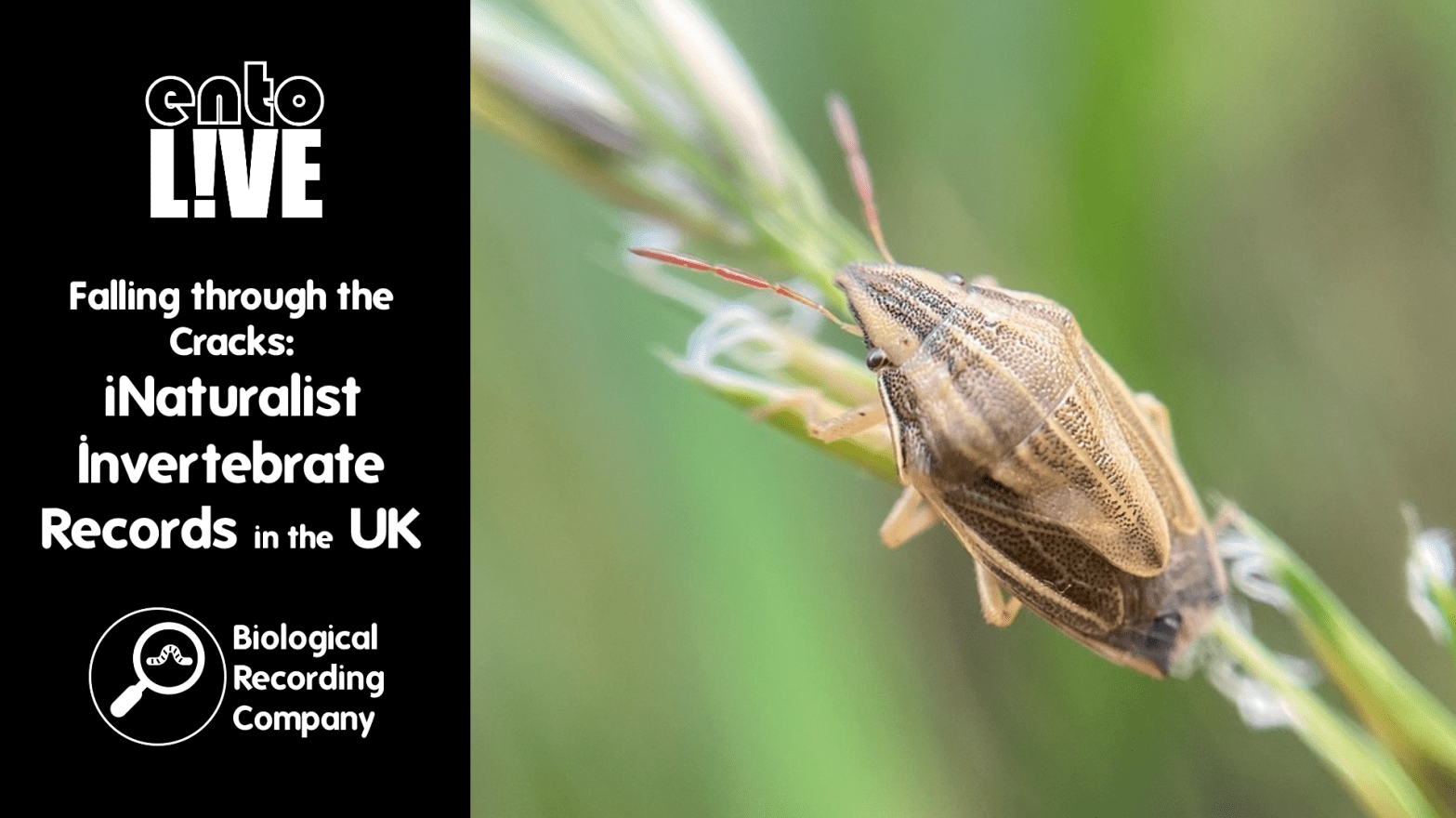
iNaturalist is a rapidly growing source of biological records in the UK: In 2024, over 44,000 users generated more than 1.6 million records using the platform. With the number of records generated set to increase into the future, integrating iNaturalist into UK recording systems is essential. As of 2020, iNaturalist records meeting certain criteria have been exported into iRecord, where it is hoped they will be reviewed by verifiers.
For some groups of invertebrates, however, it would appear a large proportion of iNaturalist records are not being reviewed. One explanation for this is that concerns with the data quality of records are leading verifiers to deprioritise iNaturalist as a source. All iRecord verifiers are volunteers with large workloads and limited time, so this may be justified if the data quality of iNaturalist records is indeed lower. However, this has never been quantified.
This research sought to address this, quantifying for the first time the extent of data quality concerns across taxonomic groups of UK non-marine invertebrates. Results suggest that there are indeed systemic data quality issues with iNaturalist records, though the greatest issues in reality are not always the same issues people perceive to be greatest. Many such issues will be fixable through education and outreach to iNaturalist users.
Q&A with Joss Carr
Joss Carr is an entomologist, naturalist and biological recorder who, having just finished his MSc in Biodiversity and Conservation at Queen Mary University of London and the Royal Botanic Gardens at Kew, is now working for the Biological Recording Company as a Junior Naturalist. Joss is also a prolific user of the citizen science biodiversity platform iNaturalist. His MSc Research Project, the subject of this talk, focused on quantifying data quality concerns with biological records of invertebrates derived from iNaturalist.
How do I change my record licenses?
One of the key points I touched on in the webinar is the importance of iNaturalist users setting up their licenses in a way that permits unrestricted sharing of their observations with biodiversity data aggregators and conservation organisations in the UK. In practice, this means setting your licenses to CC-0 (public domain) or CC-BY (attribution). The default license (CC-BY-NC, an attribution non-commercial license) is not recommended, as this license greatly restricts data use. Indeed, many data users will wholesale ignore all records with this license as it would be technically illegal for them to use them. Fortunately, iNaturalist makes changing your licenses straightforward. The easiest way to do it is in the website (i.e. not the app), by going to Account Settings -> Content & Display -> Licensing, and then changing the default licenses for your observations, photos and sounds to CC-0 or CC-BY. Note that these three aspects are licensed separately. The most important one to change is your record license, but ideally change your photo and sound license too. The choice between CC-0 and CC-BY is a lot less important, instead simply reflecting whether you wish users of your data to credit you by name when they do so (CC-BY) or not (CC-0).
How do I change the name associated with my iNaturalist account?
Another key thing for iNaturalist users to do, which I stressed in my talk, is to change your display name on iNaturalist. The reason why this is important is because many users of iNaturalist data require a ‘proper’ name of the recorder to be associated with the record, primarily so they can learn to recognise and trust competent recorders. A ‘proper’ name is in the format [forename] + [surname]. Records associated with usernames or initials are far less likely to be accepted or used (although see my answer to the next question below). Changing your display name is, again, easiest within the iNaturalist website. Go to ‘Account Settings’ -> ‘Profile’ -> ‘Display Name’ and change this to your first name and surname.
What is the debate about recorder names?
A hot topic! Before the advent of photography-based biological recording, the name of the recorder responsible for the biological record was an essential part of each record because it allowed for the trustworthiness of the record to be assessed based on the known competence of that recorder. This legacy of traditional biological recording continues today; many data aggregators continue to value recorder names as crucial parts of biological records. Recently, however, some have begin to question the necessity of providing this piece of information if a unique user ID and photo are already provided. Providing one’s real name comes with privacy and security concerns, not least given individual’s records tend to be associated with sites they frequent, or even their homes and gardens. With a verifiable photo and unique user ID, and a means through which to contact the recorder, everything needed to assess the correctness of the record is arguably already provided. Necessitating the provision a recorder’s true name may not provide any supplementary value, but rather may instead put privacy-conscious recorders off from submitting records.
What happens to observations that never reach Research Grade on iNaturalist?
Short answer – almost certainly nothing. By which I mean these records are unlikely to be used to inform biodiversity science and conservation in the UK. That is unless, of course, a researcher or conservationist specifically goes to iNaturalist in search of these ‘unverified’ records. For many taxonomic groups on iNaturalist, a very large proportion of observations fall into this box; i.e. they have not made it to Research Grade. This phenomenon occurs for two main reasons: either (1) in most cases the photos provided are insufficient to confirm a species-level identification, and/or (2) there are not enough people actively reviewing and identifying incoming observations for the group on iNaturalist. This latter explanation emphasises a key call to arms – we need more taxonomic specialists on iNaturalist! If you have detailed knowledge of a group of organisms and know how to separate similar species from one another, please, contribute to iNaturalist! Your efforts will be greatly appreciated by the community.
What is being done to redress the data quality issues identified in your research?
It’s a work-in-progress area. My research represents the first time data quality concerns with iNaturalist records in the UK have been quantified. So we now have a clear demonstration of the scale of the problem. It’s now time to turn towards finding solutions. I personally believe this is primarily an awareness problem, i.e., that the main issue is that most iNaturalist users are unaware of the importance of data quality. It’s also partly going to be an effort of changing perceptions, although hopefully that should naturally follow once data quality begins to be cleaned up. I personally advocate for a dual bottom-up/top-down approach whereby simultaneously (1) iNaturalist users take responsibility for cleaning up their own data quality and spreading the word to others to do the same and (2) the organisations responsible for biodiversity data management in the UK provide assistance and guidance to support this process as much as possible. The National Biodiversity Network (NBN) have been leading this work so far within the iNaturalistUK ‘node’, and I hope to contribute to their work over the coming years through outreach campaigns and further research.
You can read Joss’ MSc Research Project final report here: https://drive.google.com/file/d/1CjWjprMYHAUkSsxgv9h1bu4UHXsAULJa/view?usp=sharing
Literature References
- Mesaglio (2024) ‘A Guide to iNaturalist: An Australian Perspective’: https://ala.org.au/app/uploads/2024/04/A_Guide_to_iNaturalist_Apr2024-1.pdf (N.B. the majority of the guidance here is internationally applicable)
Further Info
- iNaturalist: https://www.inaturalist.org/home
- FAQs about iNaturalist in the UK: https://nbn.org.uk/inaturalistuk/inaturalistuk-questions-answers/
- iNaturalist 2024 global stats: https://www.inaturalist.org/stats/2024
- GBIF: https://www.gbif.org/
- GBIF’s biggest species occurrence datasets: https://www.gbif.org/dataset/search?type=OCCURRENCE
- iNaturalist 2024 UK stats: https://uk.inaturalist.org/stats/2024
- iNaturalist’s place in the UK biological recording data flow: https://nbn.org.uk/inaturalistuk/inaturalistuk-and-its-place-in-biological-recording-data-flow/
- iRecord: https://irecord.org.uk/
- iNaturalist guidance on licenses: https://help.inaturalist.org/en/support/solutions/articles/151000175695-what-are-licenses-how-can-i-update-the-licenses-on-my-content-
- NBN guidance on iNaturalist licenses: https://nbn.org.uk/news/licences-on-inaturalistuk/
- National Forum for Biological Recording Facebook page: https://www.facebook.com/groups/NatForumBioRecording/
- Guidance for UK iNaturalist users: https://nbn.org.uk/inaturalistuk/inaturalistuk-hints-and-tips/
- Joss’ guidance for making high quality iNaturalist observations: https://www.inaturalist.org/journal/josscarr/100039
- Parataxonomy: https://en.wikipedia.org/wiki/Parataxonomy
entoLIVE
entoLIVE webinars feature guest invertebrate researchers delving into their own invertebrate research. All events are free to attend and are suitable for adults of all abilities – a passion for invertebrates is all that’s required!
- Donate to entoLIVE: https://www.gofundme.com/f/entolive-2025
- Upcoming entoLIVE webinars: https://www.eventbrite.com/cc/entolive-webinars-74679
- entoLIVE blog: https://biologicalrecording.co.uk/category/entolive-blog/
- entoLIVE on YouTube: https://youtube.com/playlist?list=PLuEBNUcfMmE95Re19nMKQ3iX8ZFRFgUAg&feature=shared
entoLIVE is delivered by the Biological Recording Company in partnership with the British Entomological & Natural History Society, Royal Entomological Society and Amateur Entomologists’ Society, with support from Buglife.
The entoLIVE programme is delivered by Biological Recording Company and receives sponsorship from the following organisations:
- British Entomological & Natural History Society
- Royal Entomological Society
- Amateur Entomogists’ Society
Learn more about British wildlife
 Biological Recording
Thank you for the article, Joss Carr. I appreciate your focus on improving iNaturalist data quality through awareness.
LikeLike