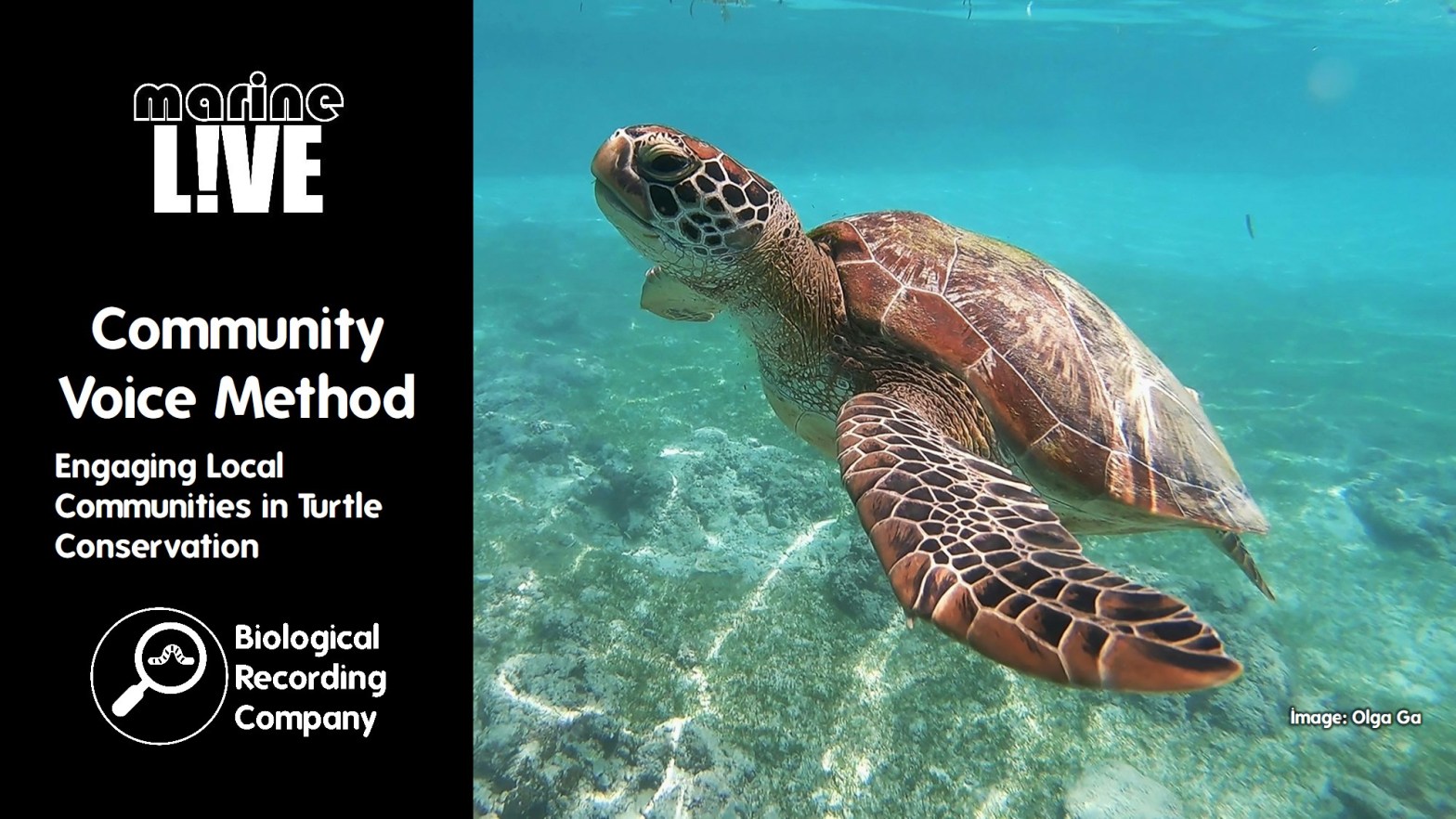
Hear about how the documentary film-based Community Voice Method (CVM) has been used to engage Caribbean Island communities in developing marine turtle conservation policy. The methodology will be discussed along with experiences of its applications in various communities across the Caribbean UK Overseas Territories. We’ll explore the challenges and opportunities of using this method, and provide case studies on the application of CVM in supporting population recovery.
Q&A with Amdeep Sanghera
Amdeep Sanghera is the UK Overseas Territories Conservation Manager at the Marine Conservation Society. He is a trained social scientist with experience in marine turtle conservation, tropical fisheries research and community-based conservation. Amdeep initially joined MCS in 2008 as the Turks and Caicos Islands Turtle Project Officer, and was based out in the Caribbean, helping to deliver conservation measures for the island’s marine turtle populations. As part of a team, Amdeep enabled the island’s fishing communities to shape these laws through the Community Voice Method (CVM) documentary film tool. Building on this, Amdeep is now focusing on the Caribbean UK Overseas Territories, employing the CVM as part of partnership projects to work with communities to improve the management of turtle populations.
How were the participants chosen for the consultations and workshops?
Because we wanted to develop resilient solutions that reflected community values, the workshops were open to everyone. This wasn’t just about just turtle conservation and so we wanted to nestle this within the wider issues that were happening on these islands. By having wider participation, we could get solutions that would be more widely accepted. We did, however, target some groups, like the fishing community and local conservationists, to make sure that their voices were heard.
Why was the Community Voice Method used?
We’d heard about this method through academic research and that it had some very good results. We spoke to the stakeholders about it and they were very keen to try it. It worked really well because not only did the fishermen that I spoke to feel that they had a voice, it also helped to bring a lot of trust. Now that the territory partners are seeing the results, they want training in this method.
Has the Community Voice Method had a direct impact on protecting turtles and turtle conservation?
Community Voice Method is a long-term process for developing trust with communities and looking to work with them to create conservation solutions. Community Voice Method has given the communities a voice, a platform, and really does empower them. We’ve been going back to the Turks and Caicos to speak to the fishermen and they’ve been telling us that they’re no longer catching the large turtles, that they understand that they are the breeders and should be protected. We can triangulate that with community perceptions and the fact that compliance has really risen. And we are now seeing turtle nesting happen in places where the project has never detected it before. We think the nesting turtle population could be in the early stages of recovery, and I think this is due to fishers and enforcement officers working with the new laws. I think CVM has had a significant role in bringing about this shift, and resulting turtle conservation.
Literature References
- Cumming et al. (2021) Putting stakeholder engagement in its place: How situating public participation in community improves natural resource management outcomes: https://link.springer.com/article/10.1007/s10708-020-10367-1
Further Info
- Marine Conservation Society: https://www.mcsuk.org/
- Community Voice Method: http://communityvoicemethod.org/
- Community Voice Method Explained video: https://vimeo.com/150885111
- Turtles in Montserrat – Listening to Local Voices video: https://vimeo.com/778198665
- MCS Community Voice Method videos: https://www.mcsuk.org/ocean-emergency/people-and-the-sea/community-voice-method/
marineLIVE
marineLIVE webinars feature guest marine biologists talking about their research into the various organisms that inhabit our seas and oceans, and the threats that they face. All events are free to attend and are suitable for adults of all abilities – a passion for marine life is all that’s required!
- Upcoming marineLIVE webinars: https://www.eventbrite.co.uk/cc/marinelive-webinars-3182319
- Donate to marineLIVE: https://gofund.me/fe084e0f
- marineLIVE blog: https://biologicalrecording.co.uk/category/marinelive-blog/
- marineLIVE on YouTube: https://youtube.com/playlist?list=PLuEBNUcfMmE-t2dzcoX59iR41WnEf21fg&feature=shared
marineLIVE is delivered by the Biological Recording Company with funding from the British Ecological Society.
- Explore upcoming events and training opportunities from the Biological Recording Company: https://www.eventbrite.co.uk/o/the-biological-recording-company-35982868173
- Check out the British Ecological Society website for more information on membership, events, publications and special interest groups: https://www.britishecologicalsociety.org/
More on marine biology


 Biological Recording