Blog post by Joss Carr
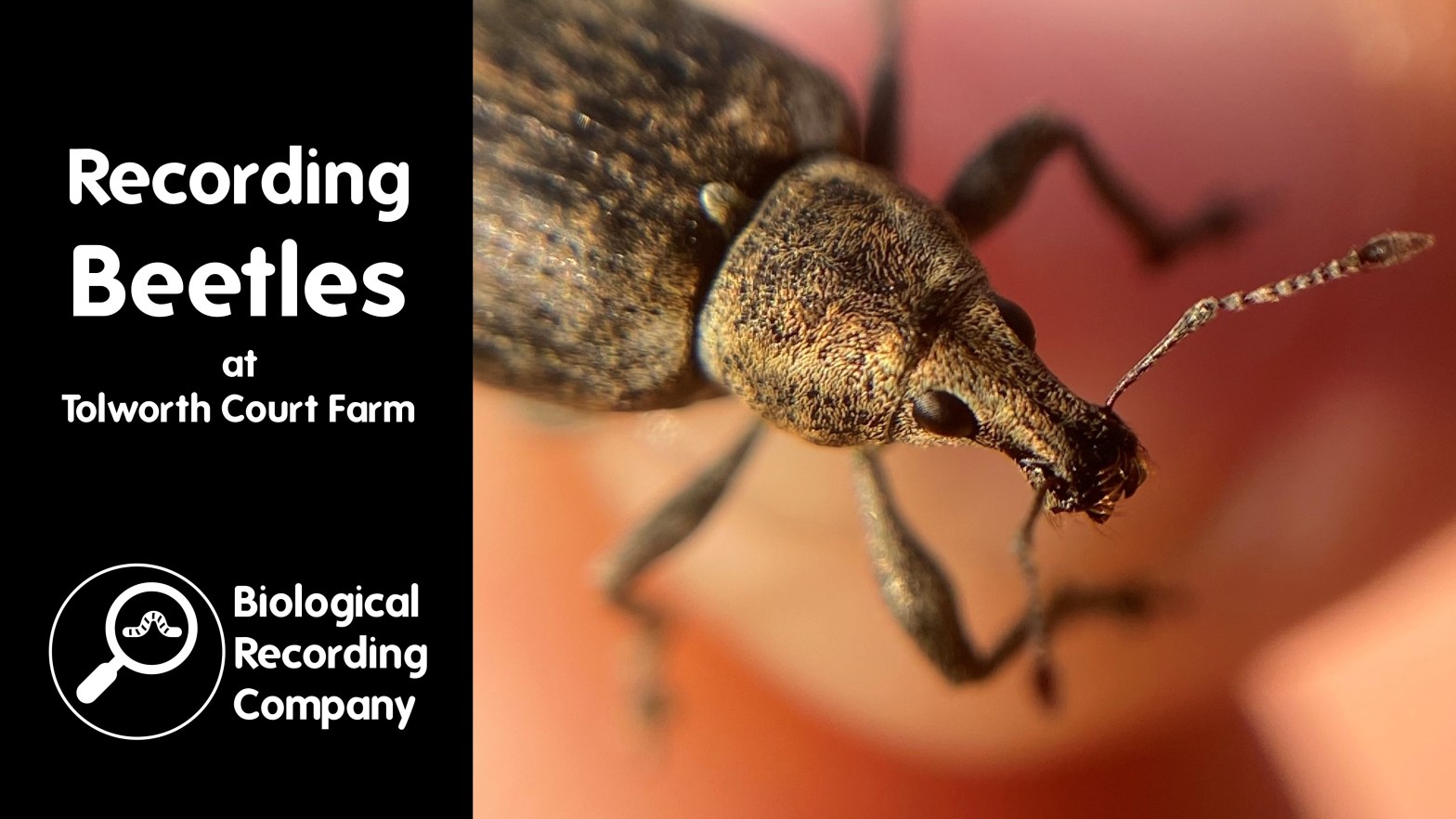
This article recounts the Beetle Field Recorder Day held at Tolworth Court Farm on Friday 25th April in collaboration with Citizen Zoo and London Natural History Society.
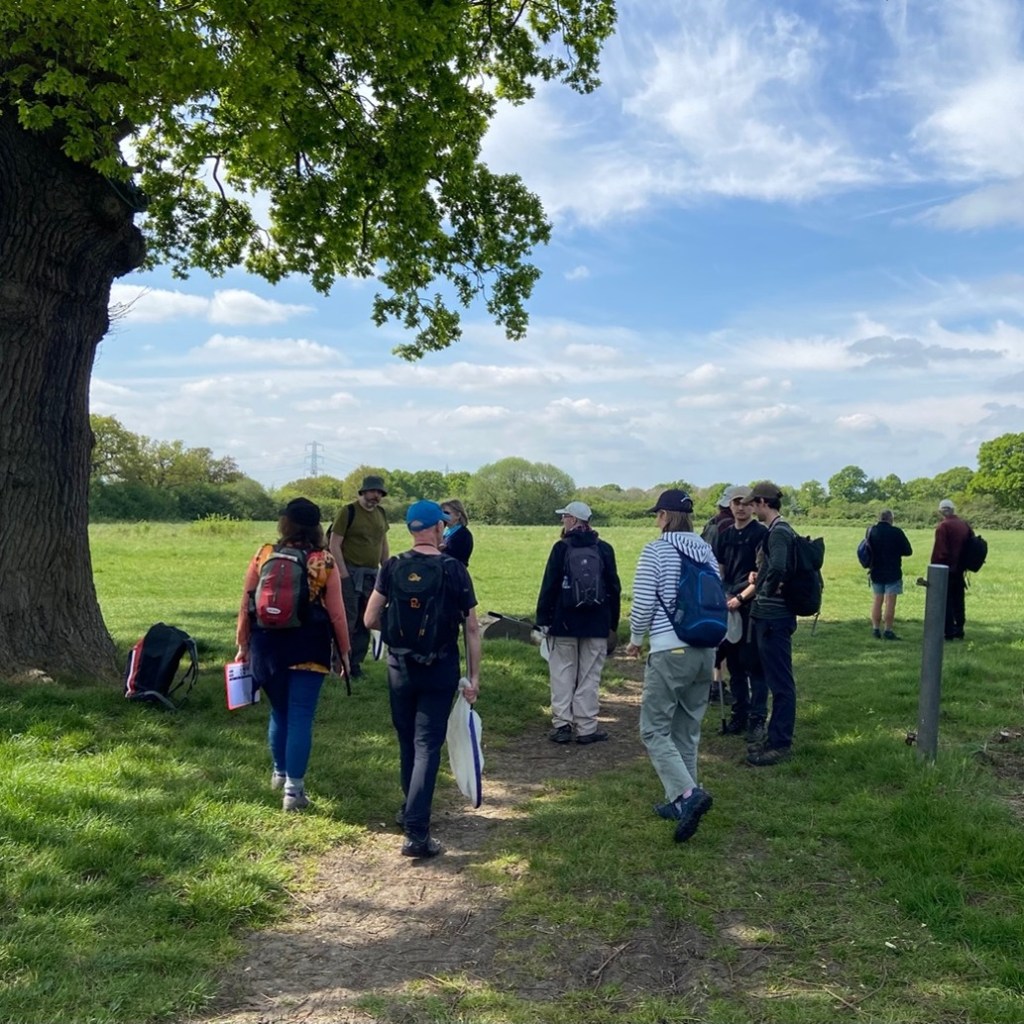
It was a gloriously sunny Friday morning when twenty-four intrepid naturalists ventured to Tolworth Court Farm in South-west London in search of beetles. We were a mixed group, including representatives from three organisations: the Biological Recording Company, Citizen Zoo and Rewilding Britain (the latter of which had sent along two photographers to capture the day). Our leader for this Field Recorder Day was beetle specialist Connor Butler.
Between the participants, a wide range of expertise was represented, with some individuals having never taken a concerted look at beetles before and others having spent years studying them.
Wild Tolworth
The site of choice – Tolworth Court Farm – is a 43-ha Local Nature Reserve (LNR) in the borough of Kingston. Managed by Citizen Zoo as a rewilding site through the ‘Wild Tolworth’ project, Tolworth Court Farm features an exciting range of habitats from open meadows with long grass, to woodland, to the chalk stream of the Hogsmill River, and a small patch of boggy marsh. It has been called one of London’s leading nature reserves, and rewilding efforts are set to include the introduction of a herd of Sussex cattle to reinstate a semi-natural grazing regime for the benefit of the site’s plant life and invertebrates and the expansion of the boggy area into a larger area of wetland.
Citizen Zoo are also incredibly keen to engage biological recorders and the local community with volunteering on the site. Such community engagement has the dual benefits of not only helping understand and better inform conservation management but also helps remedy some of the anti-social behaviour (such as fly-tipping) that the site was previously known for. Research suggests individuals responsible for such behaviour are less likely to commit such acts if there is a regularly present volunteer body on site.
The aims of the day were to:
- engage volunteers with the Wild Tolworth rewilding project and the Tolworth Court Farm Fields site.
- educate volunteers and inspire their interest in beetles.
- generate biological records which contribute to building understanding of the site to inform conservation management.
In regards specifically to biological recording, all volunteers were encouraged to record their findings, either on paper sheets which they could be later digitised through uploading to iRecord via the London Natural History Society activity, or via direct upload to the iRecord app.
Grassland Beetles
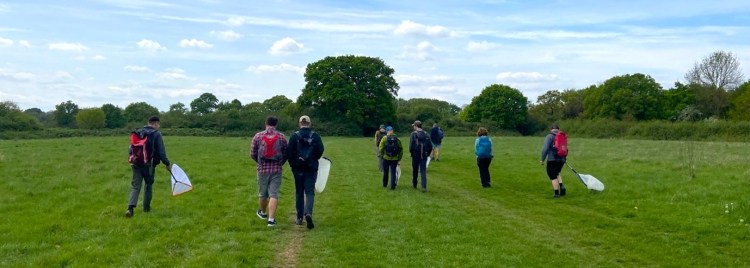
After a successful rendezvous and brief introduction to the site (from Citizen Zoo) and to the basics of beetles (from Connor), the group ventured into the main site ‘Tolworth Court Farm Fields’ where volunteers immediately got to work amongst the long grass and in the hedgerows. Armed with sweep nets, pooters and collection pots, a wide range of species – including a range of beetles – were quickly revealed. The overhead sun, mild temperature and low wind made for a perfect day for observing insects.
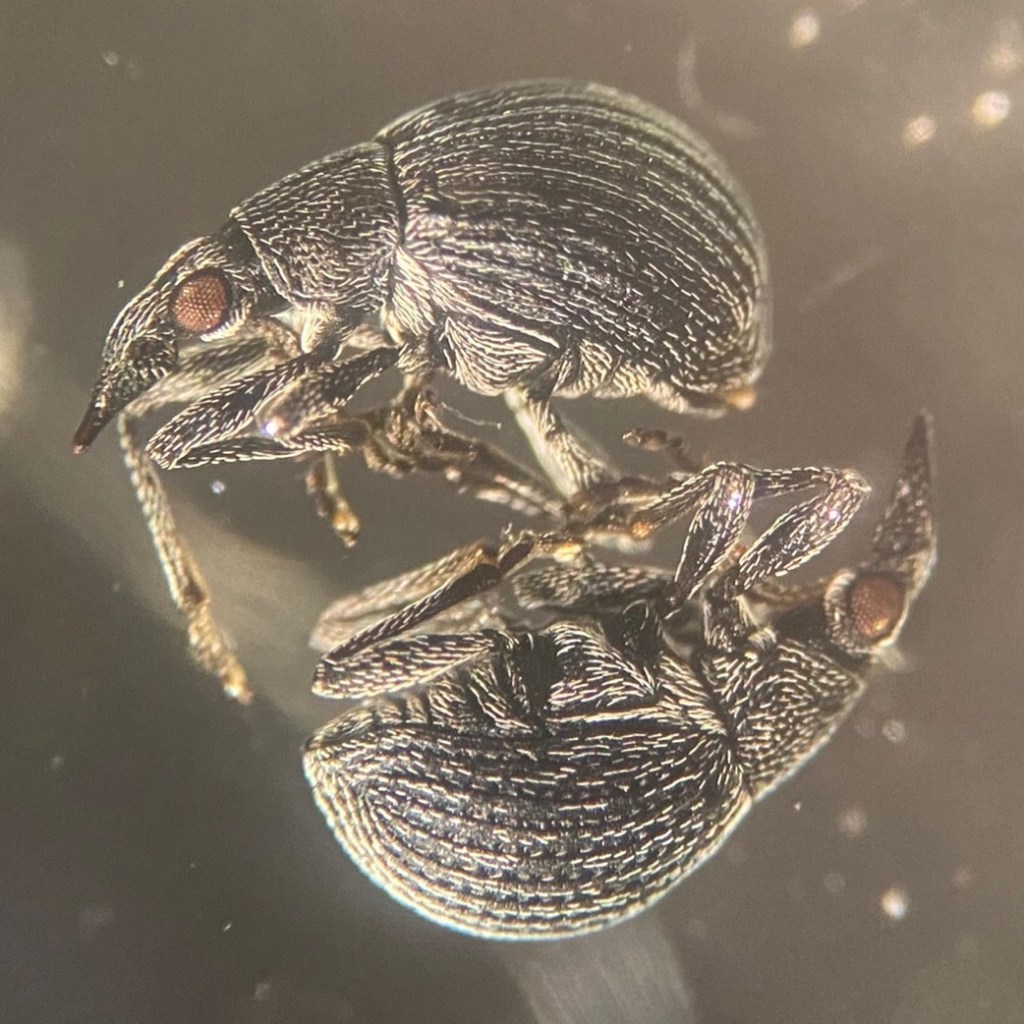
Some of the species collected from the long grass included 24- and 14-spot ladybirds (Subcoccinella vigintiquattuorpunctata and Propylea quattuordecimpunctata) as well as a nice range of Apionid weevils such as Oxystoma craccae and Oxystoma pomonae (from Common Vetch Vicia sativa) and Protapion fulvipes.
The much larger broad-nosed weevil Liophloeus tessulatus was also a delight to see. Connor was able to provide useful tips and tricks for the identification of different families and more generally help newcomers learn about some of the beetles they had collected.
The group opted for an early lunch beneath the shade of a large English Oak (Quercus robur) at the margin of the Seven Acres field. In the time-honoured fashion of naturalists – who cannot take a break much longer than 10 minutes before getting back to looking at wildlife – some volunteers soon turned to the hedges behind the lunch spot where several insects were active. The Mirid plant bug Dryophilocoris flavoquadrimaculatus was common here, having likely descended from the oak above which is its host plant.
Woodland Beetles
After finishing our lunch the party then moved on to a small area of woodland further into the site. Connor was keen to explore the deadwood habitats present, and indeed several deadwood specialist beetles were found, including the black ground beetles Nebria brevicollis and Abax parallelelepipedus, both common in this habitat.
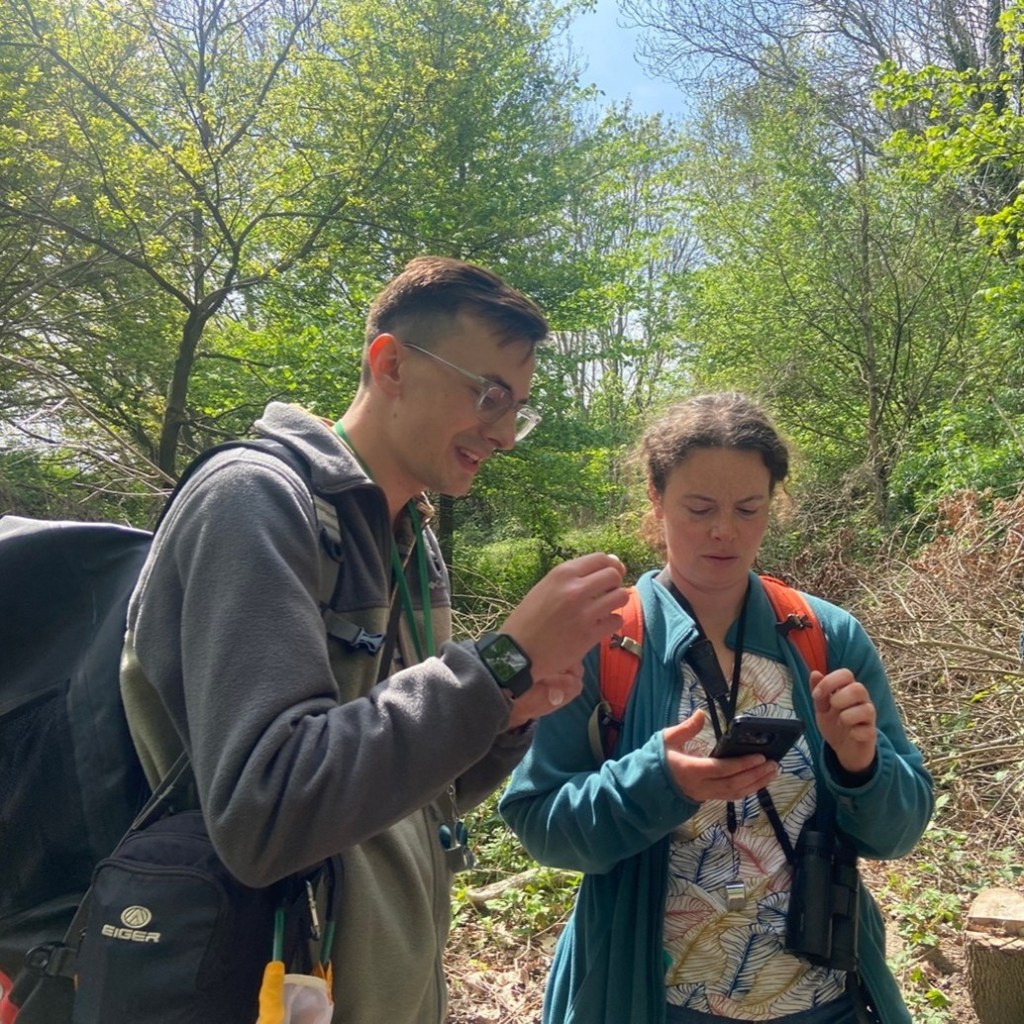
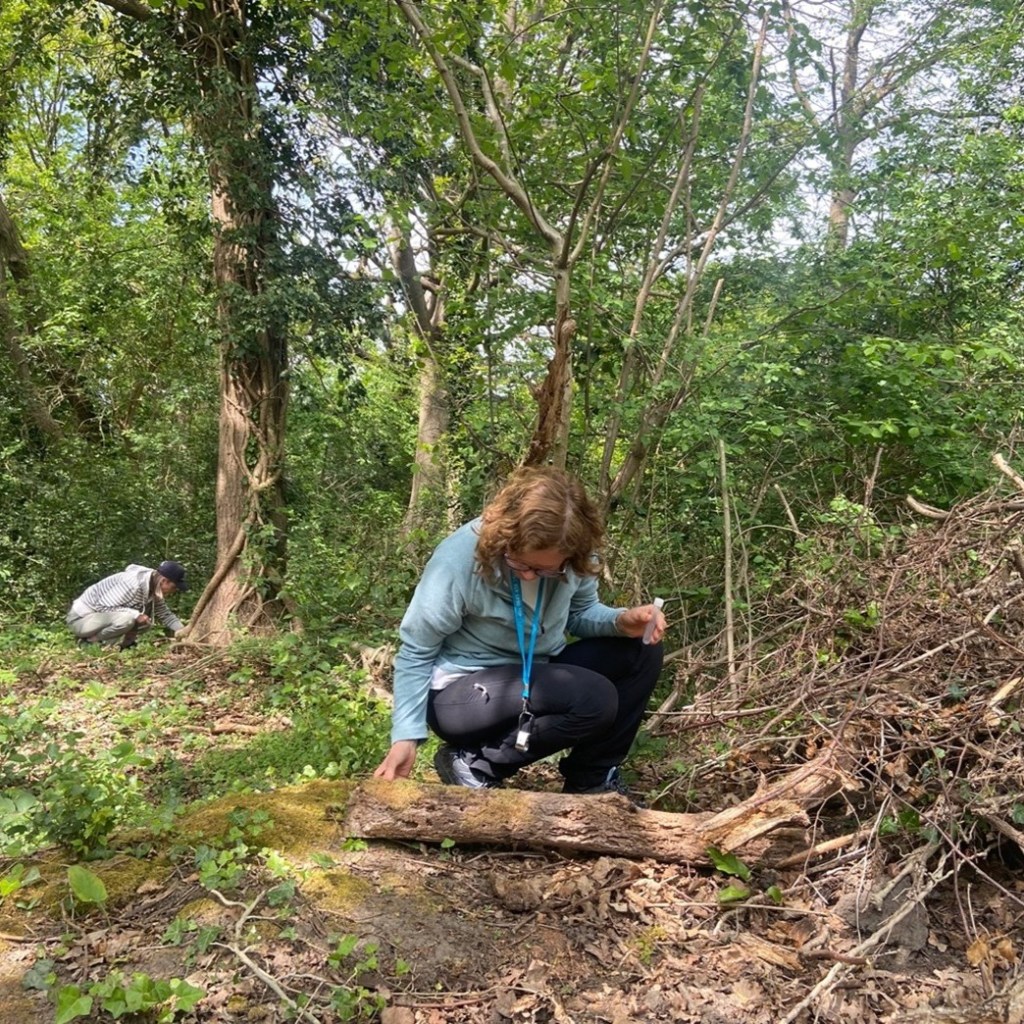
Whilst others occupied themselves in the woodland, some volunteers turned to a small but promising-looking grassy patch on the woodland margin. Excitingly this turned up the tortoise beetle Cassida vibex, which gave Elliot Newton (Citizen Zoo) the chance to delight everyone with his ‘favourite fact’ about the fecal shield produced by tortoise beetle larvae which they used to defend themselves. This grassy patch also yielded the uncommonly recorded vetch-feeding bean weevil Bruchus atomarius as well as its more common sister species Bruchus loti.
Marsh Beetles
The group then moved onwards down to the small marsh area that will be expanded into a bigger wetland through the Wild Tolworth project.
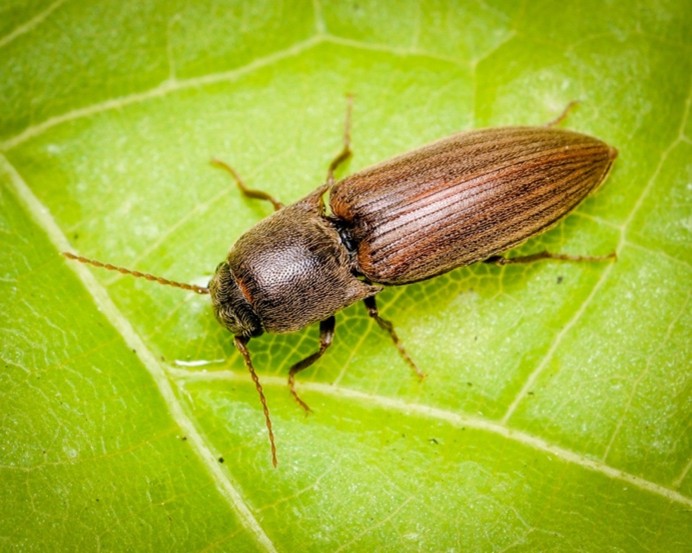
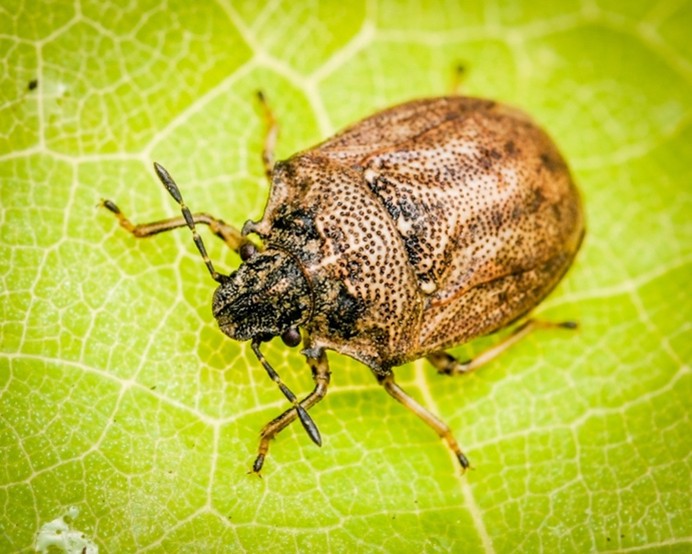
The underside of an old artificial refugium for reptile surveys revealed several individuals of the click beetle Agriotes lineatus as well as several Turtle-bugs Podops inuncta. Mick Massie took some excellent photos of these species shown below.
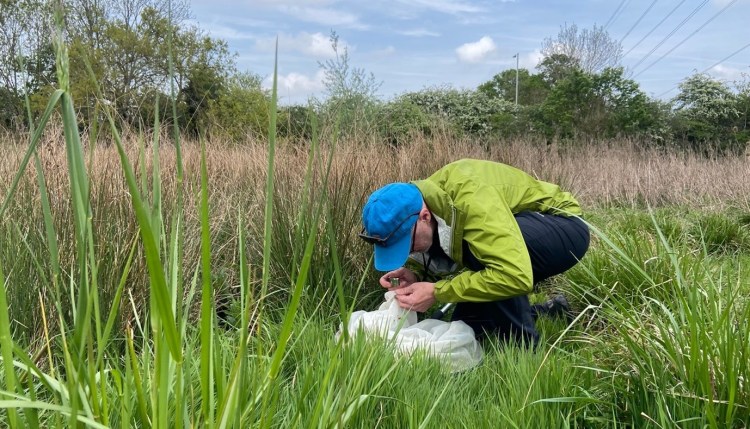
Sweep-netting of the grasses and sedges in this area also revealed some interesting marsh specialist beetles including numerous Microcara testacea (a species of marsh beetle), Coccidula rufa (the Red Marsh Ladybird) and Bembidion biguttatum (a small ground beetle which favours muddy ground near water). A definite highlight was Elaphrus riparius, a species only found at the margins of freshwater (Hackston, 2024).
Riverbank Beetles
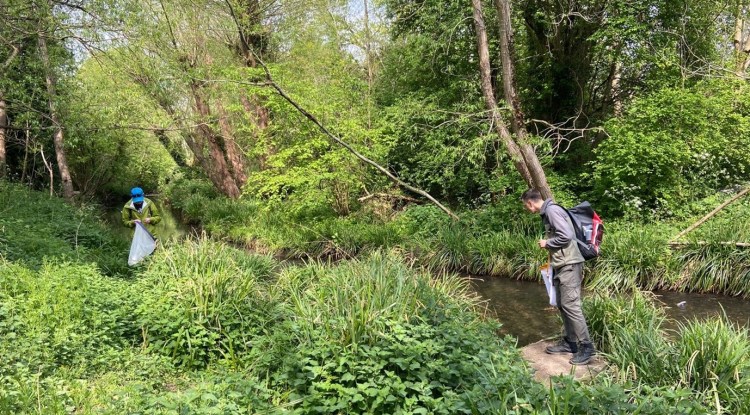
The final site of the day was down on the banks of the Hogsmill River, a lovely chalk stream that was breathtakingly clear and alive with riverflies on our visit. The river banks were cloaked in Pendulous Sedge Carex pendula and Cow Parsley Anthriscus sylvestris, the latter yielding one of the days most exciting finds of the day in the form of the longhorn beetle Phytoecia cylindrica, which feeds on Anthriscus sylvestris and other umbellifers. Numerous other insects including damselflies and hoverflies were also recorded here. Right before departing we were bid farewell by the final beetle of the day, an Orange Ladybird Halyzia sedecimguttata sitting calmly on a leaf overhanging the bridge that leads out of the site.
The Results & Next Steps
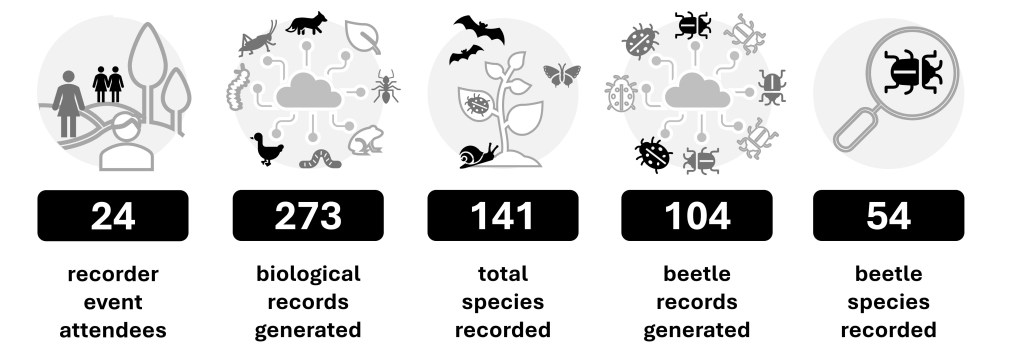
All in all it was a very productive day with 24 volunteers engaged and 273 biological records generated of 141 species in total, including 104 records of 54 species of beetle.
Several species found represent new records for the site which will continue to contribute towards building a picture of the biodiversity present in order to inform future conservation.
Thank you very much to all who attended and and contributed valuable data to the project. As always, our data is gathered through iRecord so that it is automatically accessible to Greenspace Information for Greater London (GiGL) and the relevant National Recording Schemes & Societies.
What’s next? We’ll be returning to Tolworth Court Farm in July for a Fly Field Recorder Day with Martin Harvey and in October for a Fungi Field Recorder Day with Dr Mark Spencer, plus we have other days planned at more sites across London. You could also sign up to our Longhorn Beetles of the UK online course to expand your beetle knowledge!
Learn more about British wildlife



 Biological Recording
One thought on “Recording Beetles at Tolworth Court Farm”