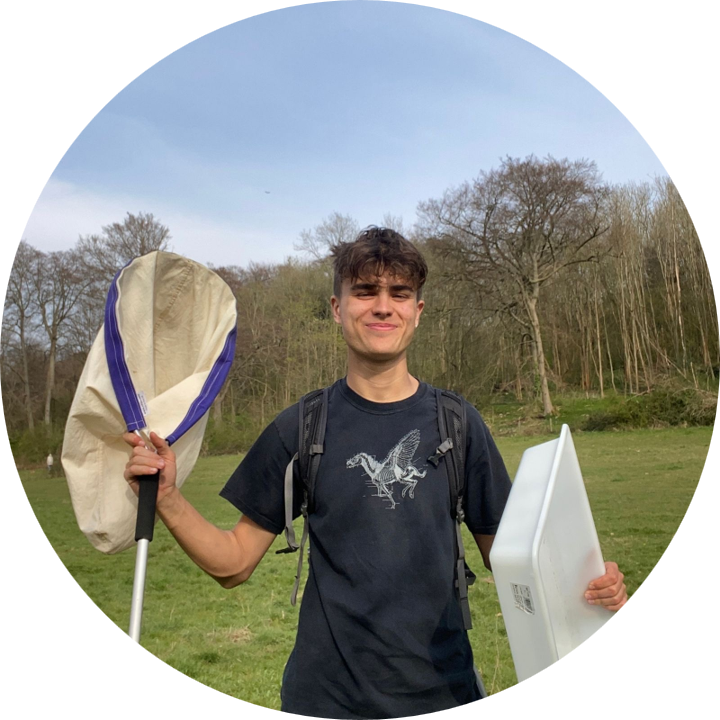
Joss Carr is a Junior Naturalist with the Biological Recording Company. In this blog, he discusses 10 of his most interesting records for London that he has submitted to iNaturalist. You can find Joss on iNaturalist at @josscarr.
1. An upland moss a long way from home
Buried deep in the urban jungle of Whitechapel, imposed over by towering skyscrapers and with its worn footpaths routinely traipsed by bustling commuters, lies an unassuming little patch of urban green space called Altab-Ali Park. To 99.9% of the London population, this park is unremarkable. A short turf, some ornamental bushes, a lining of the familiar London Plane, and two seemingly ever-present police officers are its only features. But to a bryologist – one who studies mosses – the park is arguably the most remarkable site in London. And that is because in the back corner of the park, in a spot only frequently graced by urinating drunks, sit five or so medium-sized boulders which, for some unknown reason, appear to have been imported to Whitechapel all the way from the uplands of Wales or Scotland.
We know this because these boulders have a moss on them called Hedwigia ciliata. This is a Nationally Scarce moss known from only a scattering of records, the majority from the mountains of southern Wales and northern Scotland. The boulders in Altab-Ali Park are the only place in the entirety of Greater London where the moss is known to grow. And saying it merely ‘grows’ is an understatement, Hedwigia is positively thriving here. This reveals something of its ecological preferences. It clearly has less of a problem with low air quality than other upland mosses and instead must be primarily limited in its distribution by geology.

I was truly amazed to find and learn of this plant. All credit in that regard is due to Billy Dykes (pictured below), who informed me of the moss’ presence and with whom I went to see it in March 2025, and to Jonathan Hughes, who first found it back in November 2024. This is an excellent case study of the surprise and excitement that comes from being an urban naturalist. You truly never know what you might find.

iNaturalist link: inaturalist.org/observations/265549647
2. A very handsome hopper
Whilst not quite as rare as other entries on this list, this Stenocranus major that I found relatively recently is deserving of a spot purely because of how fond I am of it as a species. Stenocranus major is a ‘planthopper’ in the Delphacidae, a very cool family of ‘true hoppers’ (Hemiptera: Auchenorrhyncha) with 76 species currently known in the UK. Delphacidae are notable for the fact that many species exhibit both long-winged (macropterous) and short-winged (brachypterous) forms, as well as showing sexual dimorphism (morphological variation between males and females). This can make species identification quite challenging as there are effectively four forms to every species.
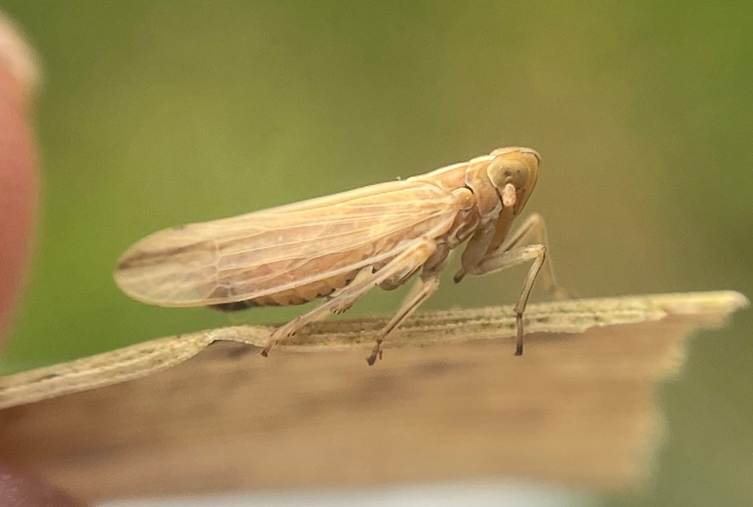
Fortunately, Stenocranus are one of the few genera that don’t show such variation and are therefore some of the easiest Delphacids to get to grips with. It also helps that they are relatively easily found. Stenocranus major, in particular, seems to be relatively abundant in damp habitats where Reed Canary Grass (Phalaris arudinacea), the host plant upon which it feeds, grows.
3. The London Plane springtail
I am willing to put a considerable amount of money on something being true. That is the proposition that this small dark grey podgy springtail – by the name of Xenylla maritima – can be found under the bark of every single London Plane tree in the whole of Greater London. I regularly check under the bark of these trees because doing so is a very productive way of finding interesting invertebrates (my personal list for organisms found associated with London Planes is 55 species long and growing!). Under every tree I have checked so far, I have found these springtails. Go and see for yourself, prove me wrong. Ironically, despite finding these so often, I had no clue as to their identity until recently. I had a suspicion they were probably a Xenylla species of some sort, but without a compound microscope to my name I was unable to get to the answer.

That fortunately changed thanks to the kindness of the loan of an old vintage Sheffield University microscope from the British Myriapod and Isopod Group (BMIG), with which I was finally able to put a name to the species: they are Xenylla maritima, a species somewhat confusingly named as it is readily found inland (as well as coastally).
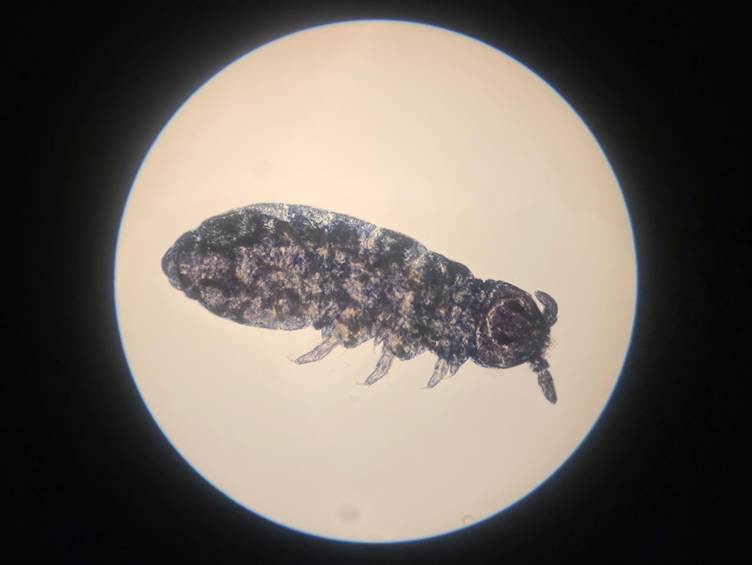
Perhaps – as James McCulloch, the national springtail recording scheme organiser, has suggested – these trees provide a slightly saline microhabitat. It remains to be properly studied; as with most things to do with springtails, a lot is unknown. The individuals pictured are from under the bark of a London Plane in Aldersbrook.
4. The urban waterfall of Bethnal Green
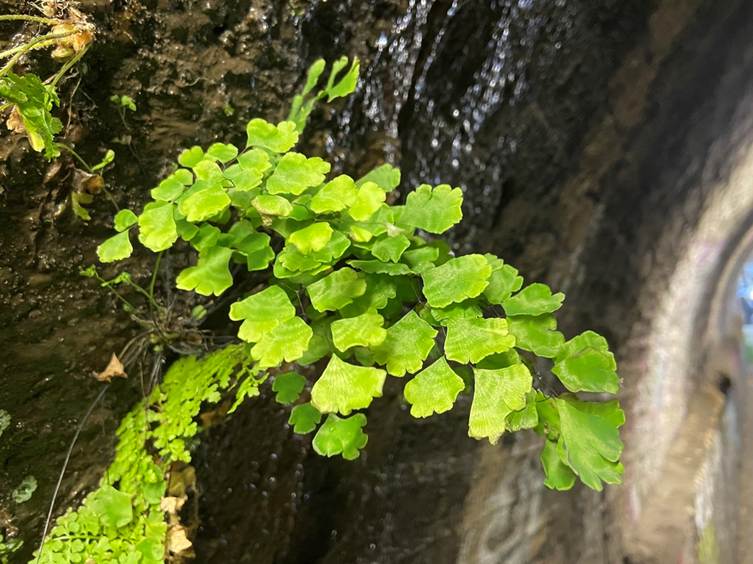
Urban biodiversity often has a way of surprising you with its ingenuity and creativity. In the smelly recesses of a railway bridge in Bethnal Green, where the overground line clatters above, one wall has been continuously damp – likely the result of some leaky plumbing – for several years. It is a sort of ‘urban waterfall’; a damp, smelly brick wall covered in grime and mortar. In the eyes of a water-loving fern whose natural habitat includes the cracks in continuously wet limestone sea cliffs (Merryweather, 2020), this is heaven.

And so here, under the railway bridge, grows the Black Maidenhair Fern (Adiatnum capillus-veneris), alongside some other more common fern species and bryophytes. It is truly a little treasure trove of bright green foliage amongst the dark and damp.
We’re lucky to have Henry Miller delving into the world of fern identification this year with three Skills For Ecology webinars focusing on general fern ID, spleenworts and male & buckler ferns for anyone that wants to learn more about these fascinating plants.
iNaturalist link: inaturalist.org/observations/255453045
5. South African scarabs
This is the rather cool non-native scarab beetle Saprosites natalensis, a South African species accidentally introduced to the UK in the 1980s. It feeds on dead wood and is quite small (~2.5 mm long).
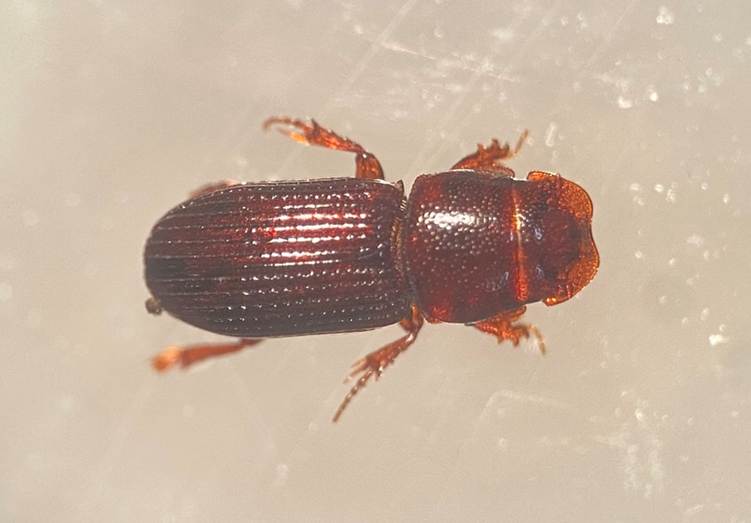
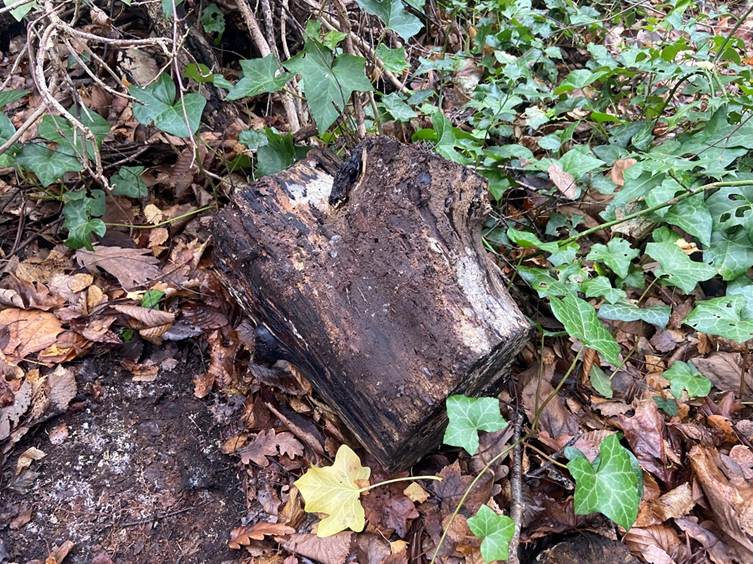
In the UK, this species is only known from London and only known from a handful of sites. It was first found in Chiswick House & Gardens and Richmond Park (Archer, 2021). My first time finding it was during December 2024 in Alexandra Park, in a small, wooded copse, where there were several individuals under a deadwood log. I have since found it in Mile End Park, Meath Gardens and London Fields in East London. It would appear to be becoming more common.
iNaturalist link: inaturalist.org/observations/255708489
6. Euphorbia euphoria
Tucked away in the corner of a block of flats in Bethnal Green (coincidentally not at all far from the ‘urban waterfall’ and its ferns at number 4 on the list), is a little gutter in which grows a very unusual Euphorbia species, known as Corn Spurge (Euphorbia segetalis). I stumbled upon this in February 2025 and – not knowing what it is – posted it on iNaturalist, thinking I would find out its ID later by reading the various plant guides I have and looking over photos of the various UK Euphorbia species. Imagine my surprise when I could not find a good match, not even in the gigantic 1000+ page tome that is Stace’s ‘New Flora of the British Isles’. Clearly in need of backup, I called in my go-to London botany superhero – Daniel Cahen – who provided me the ID I was after, being that he was familiar with the plant from seeing it in mainland Europe. We then roped in Mark Spencer and Henry Miller, county plant recorders for London and Biological Recording Company botany tutors, who provided some more information.

Turns out that this species, a not uncommon sight in Mediterranean France and Spain, occurs very infrequently in the UK when it is dropped as bird seed. It also probably escapes from gardens every now and then (which I suspect is more likely in the case of my record). This is the first record of the species growing in the wild in the UK with a known location.
iNaturalist link: www.inaturalist.org/observations/261483325
7. Bothering the Ivy
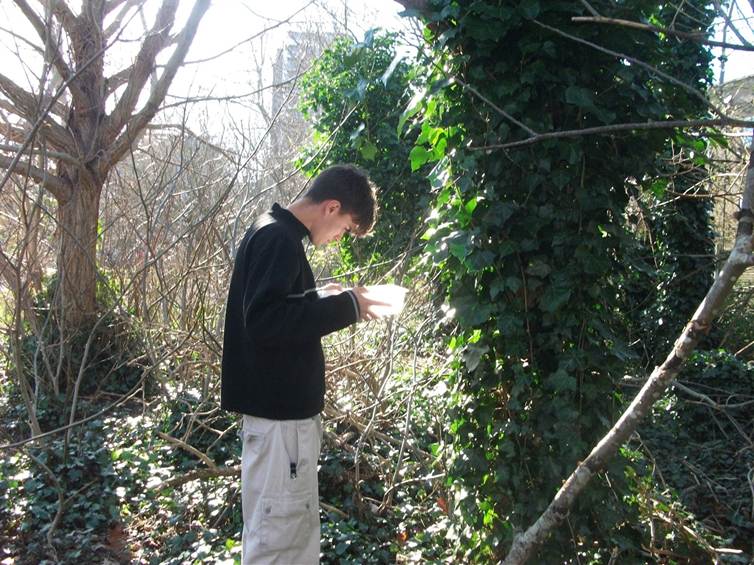
One of my new favourite winter-time hobbies is something I call ‘ivy-bothering’. It’s very simple. All you need is a tray, a stick and some ivy, ideally a nice big bushy bit growing off a wall or around a tree. Take your tray, hold it under the ivy, and give it a properly good wack with the stick. Many different creatures will fall out of the ivy into the tray. If you can get the tray onto the ground quickly enough you should have enough time to get a good look at the some of these insects before they jump/fly away.
Of the various insects which are revealed through ivy-bothering, the most interesting to me are the various leafhoppers of the subfamily Typhylocybinae – which are all small, rather delicate but often exquisitely beautifully patterned bugs. I’m slightly cheating by including four different species in this entry, but it’s my list and I make the rules.
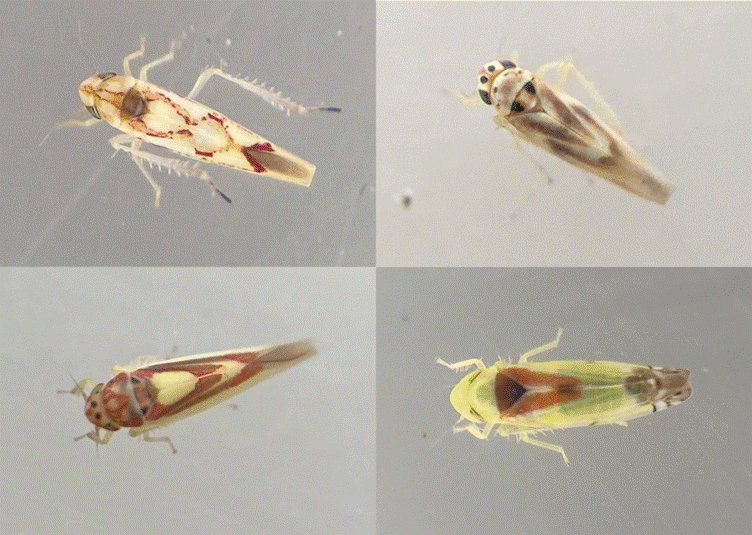
Pictured here are four different species I found by bothering the ivy in various parks around London this February: Zygina flammigera, Arboridia ribauti, Zygina lunaris and Zyginella pulchra. All of these individuals will be ‘overwintering’ in the ivy, using it as a food source whilst their main food sources (various other herbaceous plants) are absent in the cold months.
iNaturalist links:
- inaturalist.org/observations/261180303
- inaturalist.org/observations/261464649
- inaturalist.org/observations/260546613
- inaturalist.org/observations/260645657
8. Spooky spiders
Two days prior to Halloween 2024, I was exploring Tower Hamlets Cemetery Park, a lovely and very well-studied ancient cemetery in East London, when I came across this very well-timed sight. In one corner of the park, where leaf litter had been collected and piled up, huge swathes of the piles were draped in delicate spider webs. It was as if someone had put their Halloween decorations up prematurely.
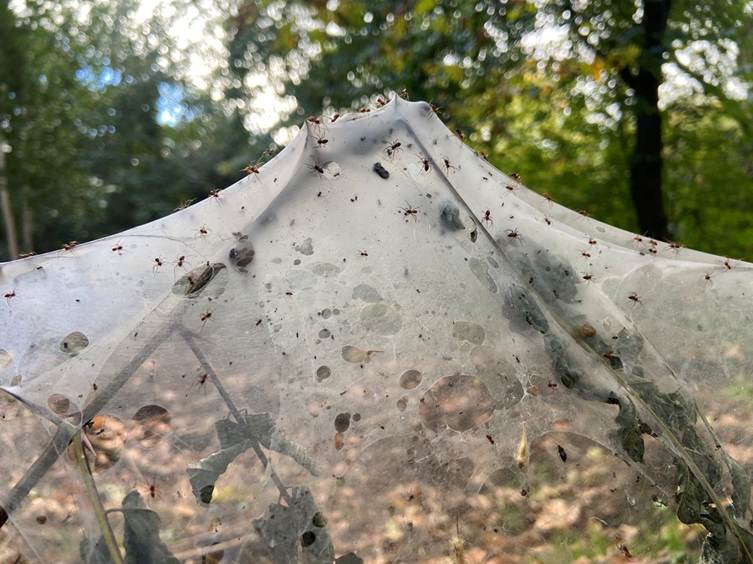
Looking more closely at the webs I could easily see hundreds of tiny little spiders – dark red-brown with black tips to their abdomens – scurrying about. I have seen similar things on a smaller scale (i.e. a single plant draped in a web with multiple spiders on it) but never before or since seen something at this scale.

I snapped a few photos of an individual that kept still and was later able to identify the spiders as Melanopygius ostearius (Black-tailed Ostearius), a species of money spider once thought to be introduced to the UK but now presumed native, and which has a known association with rubbish tips and refuse.
iNaturalist link: inaturalist.org/observations/250164331
9. A mystery rosette in the Olympic Park
In October 2024 I suffered a slightly misfortunate turn of events when the boiler in my student flat developed a leak in the ceiling which, given its proximity to the fuse box, eventually caused a minor fireball explosion which led to me and my flatmates being temporarily rehoused into another building in Stratford. On the plus side, it gave me a great excuse to spend a few mornings and afternoons exploring the weird and wacky botany of the Queen Elizabeth Olympic Park. Once a series of brownfield sites, Stratford was redeveloped for the 2012 Olympics at which point lots of non-native plants were introduced. There are gigantic mutant-looking verbascums along some of the footpaths, proliferations of Dwarf Elder (Sambucus ebulus) along the canals, and large patches of Chinese Mugwort (Artemisia verlotiorum) on remaining brownfields.
My best find of all, however, was this rather unassuming rosette (the botanical term for a more-or-less flat cluster of leaves produced by some plants during winter) on the edge of a random side road. I had no clue what it was at first, so in time-honoured fashion requested the assistance of some more botanically gifted friends on iNaturalist. After a considerable period of mystery as none of us recognised what I’d found, one user eventually chimed in with Pimpinella peregrina (Slender Burnet-Saxifrage). It was a perfect fit.

This is an ‘umbelliferous’ plant in the Apiaceae which is very rare in the UK, only occasionally recorded as introduced in areas seeded for grass. My record is the second known location in Britain!
10. A world of rove beetles
In the UK we have around 4,100 species of beetle. Of those, over a quarter (1,100 or so species) are rove beetles (Staphylinidae). These are mostly small, black, elongate beetles found amongst leaf litter or under dead wood. Most of them move very quickly and are therefore difficult to photograph. Being that there are over so many species, they are also infamously challenging to identify, in nearly all cases requiring one to take a specimen to view under the microscope. Even then, an ID is not guaranteed; often, you will spend hours going through a key only to arrive at a genus where only the males are identifiable through dissection. And you’ve got a female. That being the case, it took me several attempts and several specimens before I had a rove beetle I was able to successfully identify down to species and have the ID confirmed by an expert.

The beetle pictured above was that exact individual, a rather attractive and relatively large Staphylinid by the name of Tasgius melanarius that I had collected from Cody Dock during December 2024. I would provide more information about the species itself but, as with many rove beetles, little is known besides some basic habitat information. In this case, the species is a generalist, but nevertheless there are relatively few records of this species in the UK. That is probably because there are relatively few with enough patience or sanity to attempt to key these out! The only other thing of note is that the hours I did spend keying this out were done in the happy company of others at one of our Invertebrate Study Day events which are held monthly at the Natural History Museum and completely free to attend!
I am sure they all found it very amusing that whilst they worked through their earthworm and bee specimens with relative speed I spent three hours on one beetle. Such is life.
iNaturalist link: inaturalist.org/observations/254803707
References
Archer, J. (2021). New beetle records in Cemetery and Mile End Parks. [online] Towerhabitats.org. Available at: https://www.towerhabitats.org/news/new-beetle-records-in-cemetery-and-mile-end-parks/ [Accessed 2 May 2025].
Merryweather, J. (2020). Ferns, clubmosses, quillworts and horsetails of Britain and Ireland. Princeton, New Jersey: Princeton University Press.
More on biological recording




 Biological Recording
Dear Joss
I am holidaying on the Isles of Scilly with your great uncle’s wife and she showed me this amazing account of your London finds, jolly well done! I am involved with the British Lichen Society so should you ever want to slide into lichenology, do get in touch. We have fortnightly free zoom sessions where beginners and experts can show photos of frilly grey thalli or fascinating yellow jam tarts and it is all very friendly.
With admiration and best wishes
Eluded H. Smith FLS
Secretary of the BLS
Worcestershire and Anglesey
LikeLike
Amazing work Joss – you have made your Grandma Freda (my oldest and BEST friend) very proud. Yours
Carole
LikeLike