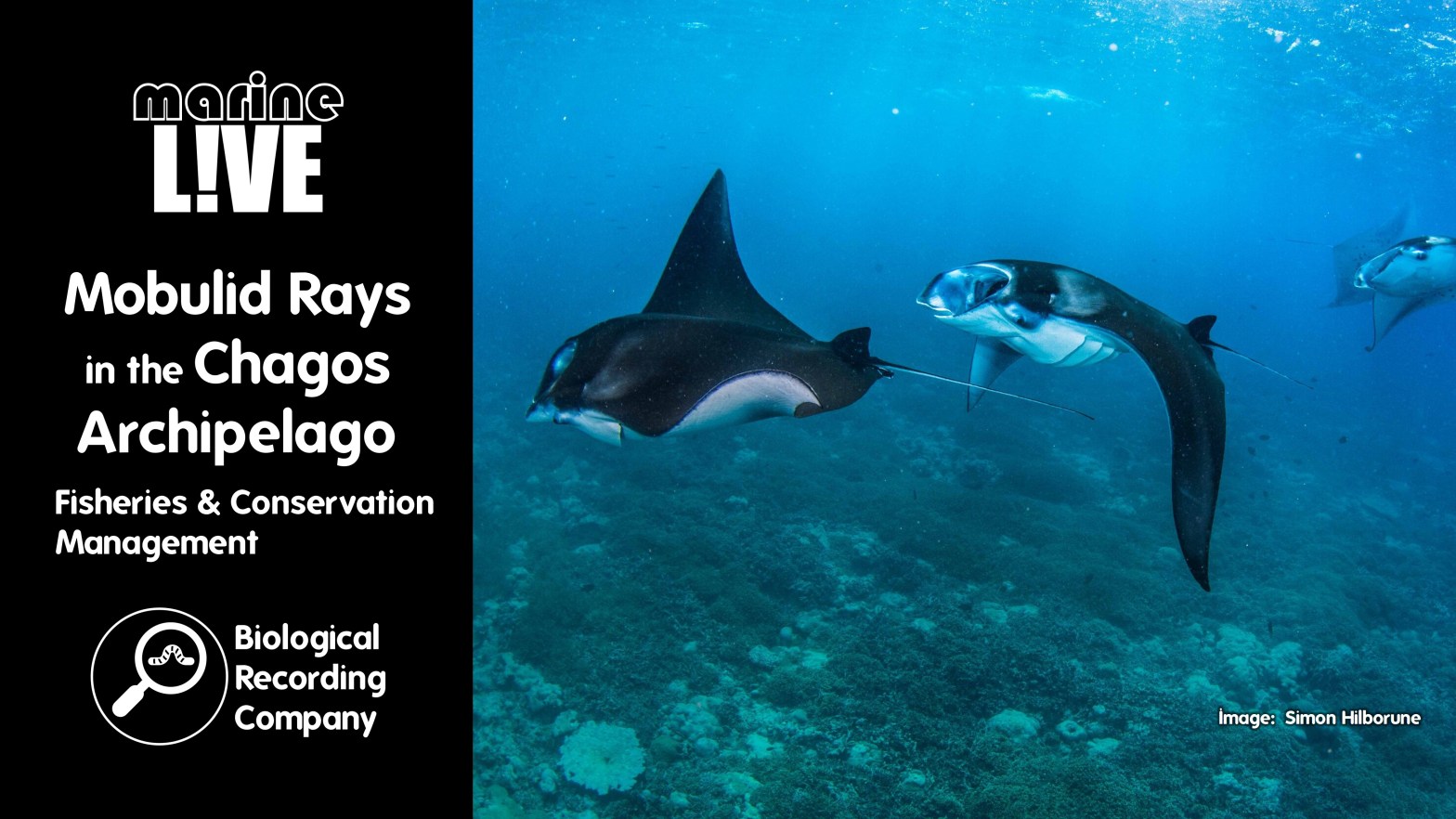
Mobulid rays, including mantas and devil rays, are being driven to extinction due to bycatch and targeted fishing, particularly in the Indian Ocean, including within the Chagos Archipelago, a no-take marine protected area. Research indicates that mobulid catches in illegal fishing activities are underreported due to inconsistent data recording and challenges in species identification. This presentation will outline collaborative efforts by the University of Plymouth and the Manta Trust’s Chagos Manta Ray Project (funded by Darwin Plus Local) to improve catch recording and species identification through training and developing standardised data collection protocols, supporting evidence-based conservation management.
Q&A with Dr Joanna Harris
Dr Joanna Harris is a marine biologist at the University of Plymouth and the lead of the Manta Trust’s Chagos Manta Ray Project for the past five years. Her research focuses on manta and devil rays in the Chagos Archipelago, where she has tracked 79 reef manta rays using acoustic and satellite telemetry to identify key habitats and behaviors. Her work led to the designation of Egmont Atoll as an IUCN Important Shark and Ray Area and the discovery of three devil ray species in the region, extending the known ranges of these Endangered species.
What are the perceived medicinal benefits of ray gill plates?
Mobulid ray gill plates are marketed in parts of Asia as traditional medicine, claimed to treat ailments like acne, cancer, and inflammation, and are often sold in soups believed to “cleanse” the body. However, that’s just a marketing strategy; there’s no scientific evidence supporting these claims, and gill plates have only appeared in traditional medicine literature recently, suggesting the demand is driven more by modern marketing. In fact, recent studies show gill plates often contain harmful levels of heavy metals, raising serious health concerns.
How will changing sea surface temperatures impact Mobulids, particularly their foraging behaviour?
Warming sea surface temperatures can deepen the thermocline—the boundary between warm surface water and cooler, nutrient-rich layers below. This shift can reduce productivity in key feeding areas, especially for reef manta rays, by pushing plankton deeper into the water column. As a result, mobulids may need to forage at greater depths, spend more time feeding, or shift to new foraging grounds. At places like Egmont Atoll, manta rays currently benefit from local geomorphology that helps bring plankton closer to the surface, but continued warming could disrupt even these favourable conditions
Is there any evidence to suggest that plastics have an impact on manta and devil rays?
Microplastics have been found in the feeding areas of manta rays, but their specific impacts on these animals are still unclear. While it’s reasonable to assume that plastic exposure isn’t beneficial, more research is needed to understand the effects. Macroplastics pose a clearer threat, manta and devil rays are at risk of entanglement in fishing gear and other debris. Ongoing work with partners like Jessica Savage at the Zoological Society of London is helping to assess the extent of this issue.
Literature References
- Fernando & Stewart (2021) High bycatch rates of manta and devil rays in the “small-scale” artisanal fisheries of Sri Lanka: https://doi.org/10.7717/peerj.11994
- Harris et al (2024) First records of the sicklefin (Mobula tarapacana), bentfin (M. thurstoni) and spinetail (M. mobular) devil rays in the Chagos Archipelago: https://doi.org/10.1111/jfb.15678
- Harris et al (2023) Intraspecific differences in short- and long-term foraging strategies of reef manta ray (Mobula alfredi) in the Chagos Archipelago: https://doi.org/10.1016/j.gecco.2023.e02636
- Harris et al (2023) Spatial and temporal variations in reef manta ray (Mobula alfredi) meso-scale habitat use and the implications for conservation: https://doi.org/10.1002/aqc.4089
- Harris et al (2021) Fine-scale oceanographic drivers of reef manta ray (Mobula alfredi) visitation patterns at a feeding aggregation site: https://doi.org/10.1002/ece3.7357
- Harris & Stevens (2024) The illegal exploitation of threatened manta and devil rays in the Chagos Archipelago, one of the world’s largest no-take MPAs: https://doi.org/10.1016/j.marpol.2024.106110
- Lewis et al (2015) Assessing Indonesian manta and devil ray populations through historical landings and fishing community interviews: https://doi.org/http://dx.doi.org/10.7287/peerj.preprints.488v1
- Moazzam (2018) Unprecedented decline in the catches of mobulids : an important component of tuna gillnet fisheries of the Northern Arabian Sea: https://www.bmis-bycatch.org/system/files/zotero_attachments/library_1/CF7U5D5W%20-%20Moazzam%20-%20Unprecedented%20decline%20in%20the%20catches%20of%20mobulids%20.pdf
- Venables et al (2024) Persistent declines in sightings of manta and devil rays (Mobulidae) at a global hotspot in southern Mozambique: https://doi.org/10.1007/s10641-024-01576-5
- Palacios et al (2025) Global assessment of manta and devil ray gill plate and meat trade: conservation implications and opportunities: https://doi.org/10.1007/s10641-024-01636-w
Further Info
- Field Guide to the Manta and Devil Rays of the World: https://press.princeton.edu/books/paperback/9780691183329/guide-to-the-manta-and-devil-rays-of-the-world?_gl=1*jlueti*_up*MQ..*_ga*MTg2NDY1ODY1MS4xNzIyODUwMjgz*_ga_N1W9JWKLY3*MTcyMjg1MDI4Mi4xLjEuMTcyMjg1MDI5NC40OC4wLjUyOTY1MjQ3Mw
- Chagos Manta Ray Project: www.mantatrust.org/chagos
- Facebook: Chagos Manta Ray Project Facebook group: https://www.facebook.com/groups/2918973631605196
- Please note, due to the political sensitivity of working in Chagos, this is a private Facebook group for which you will need permission to join.
- Chagos Manta Ray Project YouTube Channel: https://www.youtube.com/@ChagosMantaRayProject
- Satellite tagging project video: https://youtu.be/EElj0dZ7dPE
- Mobulid Ambassador Project: https://youtube.com/playlist?list=PLfyc9ZyjJAqatlItN7WBighC-XIueBvmG&si=bV1Dg6eshI6C7jUU
- Egmont Atoll Important Shark and Ray Area (ISRA): https://sharkrayareas.org/portfolio-item/egmont-atoll-isra/
- CITES appendices: https://cites.org/eng/app/appendices.php
marineLIVE
marineLIVE webinars feature guest marine biologists talking about their research into the various organisms that inhabit our seas and oceans, and the threats that they face. All events are free to attend and are suitable for adults of all abilities – a passion for marine life is all that’s required!
- Upcoming marineLIVE webinars: https://www.eventbrite.co.uk/cc/marinelive-webinars-3182319
- Donate to marineLIVE: https://gofund.me/fe084e0f
- marineLIVE blog: https://biologicalrecording.co.uk/category/marinelive-blog/
- marineLIVE on YouTube: https://youtube.com/playlist?list=PLuEBNUcfMmE-t2dzcoX59iR41WnEf21fg&feature=shared
marineLIVE is delivered by the Biological Recording Company with funding from the British Ecological Society.
- Explore upcoming events and training opportunities from the Biological Recording Company: https://www.eventbrite.co.uk/o/the-biological-recording-company-35982868173
- Check out the British Ecological Society website for more information on membership, events, publications and special interest groups: https://www.britishecologicalsociety.org/
More on marine biology


 Biological Recording
One thought on “Mobulid Rays in the Chagos Archipelago: Fisheries & Conservation Management”