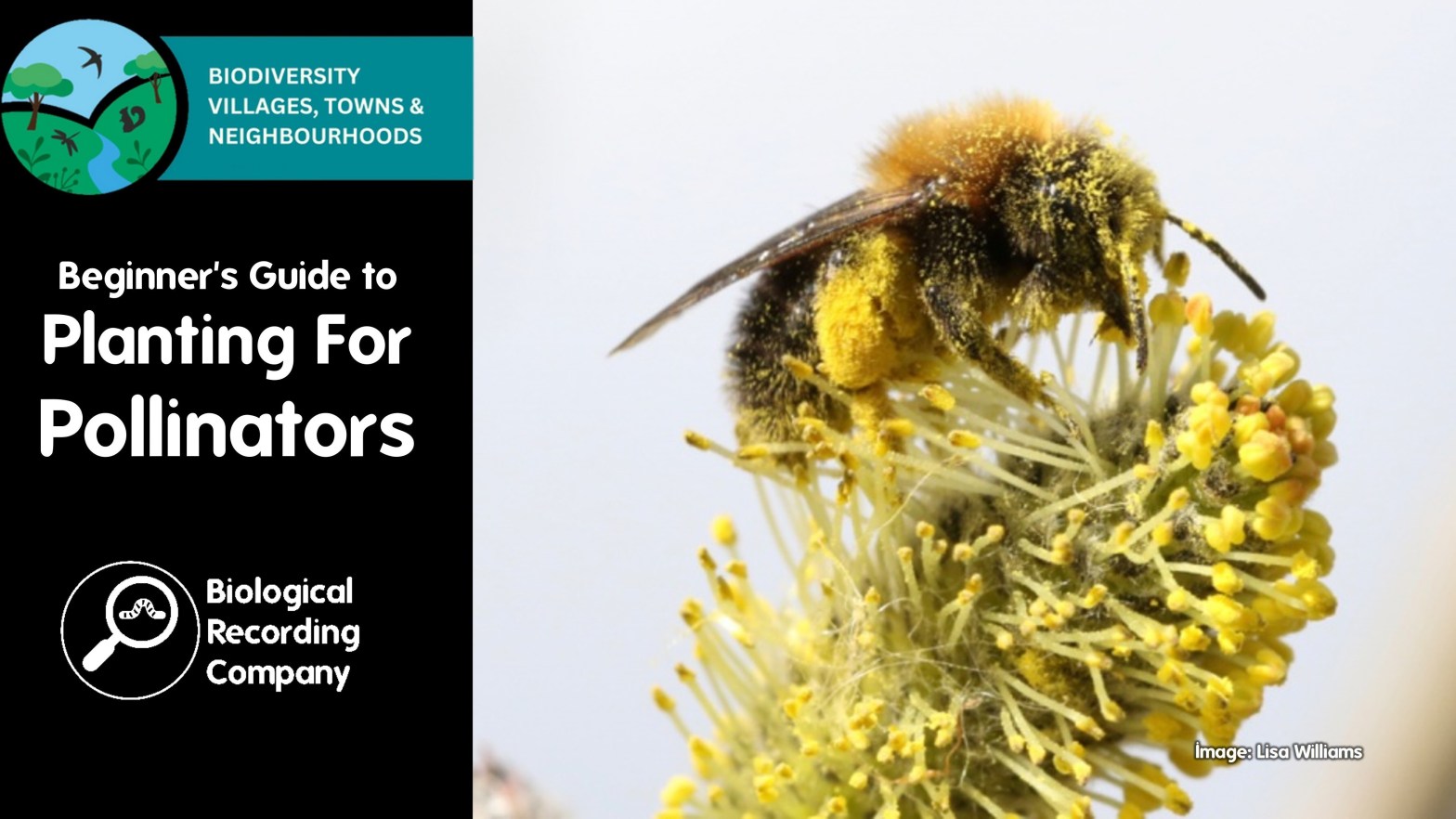
Gardens can be an oasis for our pollinators as they often contain a diverse mix of plants, supporting a wide range of species. Learn about how you can support your local pollinators by planting the best range of plants, based on the latest research.
Q&A with Rosi Rollings
Rosi Rollings has spent her career in business, with experience in Customer Service, Marketing, and Financial Services consultancy. A passionate gardener for over 30 years, she developed a love for plant propagation, which eventually led her to beekeeping in 2009. Now, she has combined her expertise and passions into a business, focusing on researching and growing plants that best support pollinators.
Are native plants more important than non-naive plants for the larval stage of pollinators?
The ‘larval stage’ in the question implies certainly pollen or perhaps moths and butterflies. I’m not an expert in this area as I monitor pollinators once they are flying and freely choosing their foods rather than either crawling or having food provided by parents. Certainly, once pollinators are flying, there seems to be little preference between their choice of native or non-native plants, except for a few specialists, e.g. campanula bees choosing campanulas. My understanding is that the larval food plants for butterflies are much more specific and almost exclusively native. Having said that mullein moth caterpillars are quite happy to munch on any of the verbascums, native or otherwise.
Check out our Plants For Pollinators entoLIVE for more info
How and why is it important to plant organic/pesticide-free plants?
If you are aiming to feed pollinators then it’s important to make sure that the pollen and nectar on their chosen food plant is not laced with something that might kill them. Sadly, many commercially grown garden plants available through garden centres are treated with pesticides to deal with aphids and other pests. This pesticide with make its way through all parts of the plant and so will be within the nectar in the plants you buy. Over time the pesticides – which are water soluble – will be diluted and go but may be harmful to pollinators when first planted
Are native bees outcompeted by honeybees?
I believe so and although not conclusively proven, a growing number of studies do indicate this is likely. Certainly in areas with high densities of honeybees, such as the city of London, wild bee populations are very low.
Check out our entoLIVE on The London Bee Situation for more info.
Useful links
- Rosybee website: https://www.rosybee.com/
- Monitoring, Modelling and Mitigating UK Insect Declines: 20 Years of Research at UKCEH: https://biologicalrecording.co.uk/2024/07/19/insect-declines/
- Rosybee research pages: https://www.rosybee.com/research
- Quantifying the attractiveness of plants for pollinators: https://www.rosybee.com/research-study
- Pesticides in “Bee-Friendly” flowers blog article by Prof Dave Goulson: http://www.sussex.ac.uk/lifesci/goulsonlab/blog/bee-friendly-flowers
- Rollings & Goulson (2019) Quantifying the attractiveness of garden flowers for pollinators: https://doi.org/10.1007/s10841-019-00177-3
- Plants for Pollinators: Using DNA to Explore Relationships in Gardens entoLIVE blog: https://biologicalrecording.co.uk/2024/12/03/plants-for-pollinators/
- Tayside Orchards Projects: https://www.taysidebiodiversity.co.uk/get-involved/projects/projects-orchards-2/
- Tayside Bumblebees Projects: https://www.taysidebiodiversity.co.uk/get-involved/projects/projects-bumblebees-2/
- Tayside Butterfly Projects: https://www.taysidebiodiversity.co.uk/get-involved/projects/projects-butterflies/
Event Partners
This blog was produced by the by the Biological Recording Company as part of the Tayside Biodiversity Partnership Biodiversity Towns, Villages and Neighbourhoods project.

Learn more about British wildlife
 Biological Recording
One thought on “Beginner’s Guide to Planting For Pollinators”