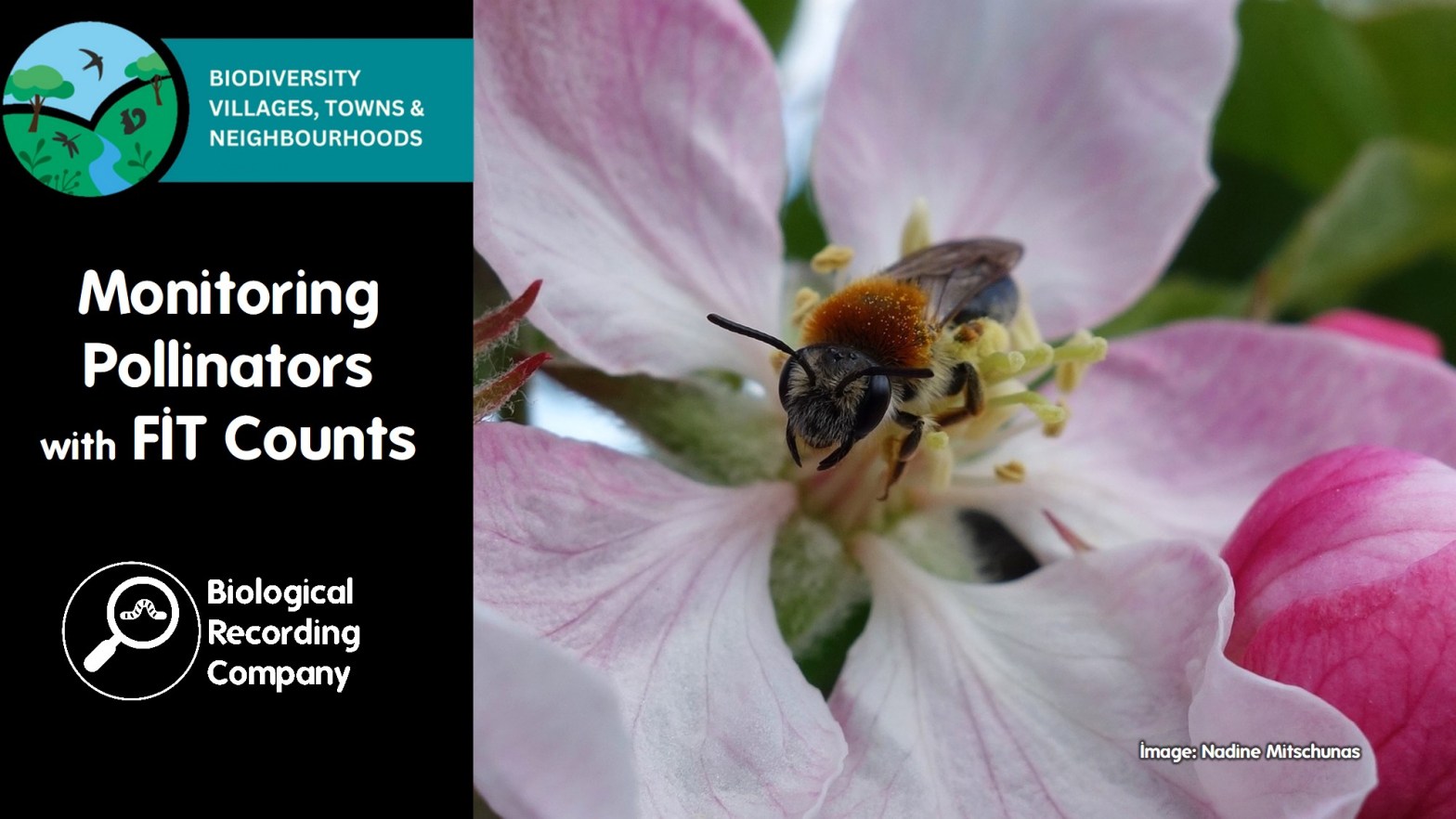
Learn how a simple 10-minute survey can help track pollinators and support vital research! This session will guide you through the FIT Count process, from selecting flowers to identifying insect visitors. Whether in a garden or park, your observations contribute to understanding pollinator health.
Q&A with Dr Miranda Bane
Miranda Bane is a pollinator ecologist specialising in the interactions between plants, pollinators, and people. Miranda works as an independent researcher, collaborating with the UK Centre for Ecology and Hydrology, focusing on citizen science and urban biodiversity. She is part of the Scotland Team for The UK Pollinator Monitoring Scheme (POMS).
How much training is required before somebody can undertake a FIT count?
Not too much! All of the information needed to carry out your first FIT count is available on the PoMS website and through the PoMS app. We have printable guides and videos to help you identify pollinators to group level (you don’t need to know the species). If it’s your first time observing pollinators, try doing it with a friend so you can help each other and compare results. If you want more support, you can contact PoMS about an online or in-person training session.
How often should a surveyor repeat their FIT Count at a site?
As often as you like! The more surveys, the more data, the better for PoMS. You might just do a count as a one-off (and that’s still valuable) but if you want to survey more often, you can count at the same location (or different sites) as often as you like. It can be enjoyable and satisfying to survey regularly as you may start to notice patterns and trends, and become an expert in your own patch.
Are the FIT Count results available to view?
Yes. All of the results are made publicly available. You can check out our interactive map on the PoMS website and download our annual reports to see what’s happening across the UK. If you have an account, you will be able to view all the data you upload on your POMS profile. As we collect more data, we can carry out more thorough analyses, so there is always more information and new insights to come.
Useful links
- UK Pollinator Monitoring Scheme (PoMS): https://ukpoms.org.uk/
- Monitoring, Modelling and Mitigating UK Insect Declines: 20 Years of Research at UKCEH: https://biologicalrecording.co.uk/2024/07/19/insect-declines/
- PoMS Research: https://ukpoms.org.uk/research
- PoMS Annual Reports: https://ukpoms.org.uk/reports
- FIT Counts: https://ukpoms.org.uk/fit-counts
- How To Carry Out a FIT Count instructions: https://ukpoms.org.uk/sites/default/files/pdf/FIT%20Count%20survey%20guidance%20v6.pdf
- Target Flower Guide: https://ukpoms.org.uk/sites/default/files/pdf/FIT%20Count%20flower%20guide%20v6.pdf
- Identifying Insects: https://ukpoms.org.uk/sites/default/files/pdf/FIT%20Count%20insect%20guide%20v6.pdf
- FIT Count Recording Form: https://ukpoms.org.uk/sites/default/files/pdf/FIT%20Count%20survey%20form%20v6.pdf
- FIT Count App: https://ukpoms.org.uk/fit-count-app
- PoMS email (for all general PoMS enquiries):
- Email for Dr Miranda Bane (independent pollination and citizen science consultant based in Glasgow, part of the PoMS Scotland Team):
- PoMS on BlueSky: @pomscheme.bsky.social
Event Partners
This blog was produced by the by the Biological Recording Company as part of the Tayside Biodiversity Partnership Biodiversity Towns, Villages and Neighbourhoods project.

Learn more about British wildlife

 Biological Recording