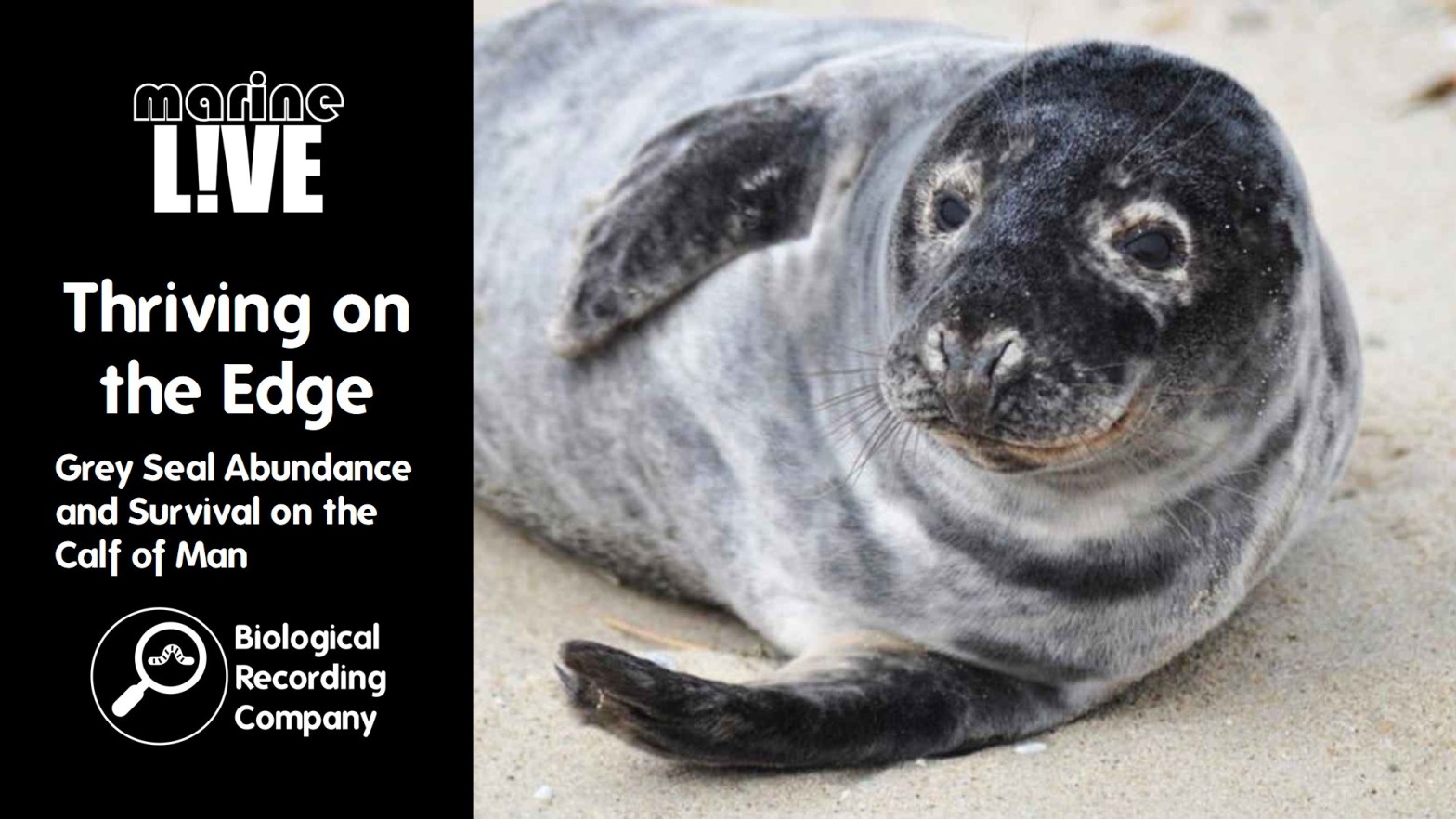
Grey Seal (Halichoerus grypus) mortality and behaviour has been studied on the Calf of Man since 2009. Pups born are followed through to weaning providing an understanding of mortality rates and what impacts them. Also, the work follows the mothers as they return to the Calf each season to breed, looking at site fidelity and behaviours encountered. Last season the Manx Wildlife Trust purchased a thermal imaging drone to help facilitate the work and this was a huge success and will be utilised much more going forward with their wider seal work.
Q&A with Dr Lara Howe
Dr Lara Howe is a marine biologist and conservationist working for Manx Wildlife Trust on various marine projects but focusing mainly on seals, seabirds, small sharks, and seagrass. Both Lara’s degree and PhD were undertaken at the University of Liverpool, studying at the Port Erin Marine Laboratory before it closed. Lara is a keen SCUBA diver and photographer, enjoying nothing more than spending time in nature, above and below the waves.
How often is the weather suitable for undertaking drone surveys?
That’s a difficult question to answer because it completely depends on the weather. It could be absolutely beautiful for the entire ten weeks or we could have back-to-back storms. However, one of the bonuses of the Calf of Man is that we have a lot of steep cliffs. Once we get the drone over the cliff and into the sheltered area, the lee of the cliff, it’s ok. The drone is a bit bigger and chunky, so it can fly in somewhat stronger wind conditions than some of the smaller ones.
Do the tags increase the chance of seals getting entangled in fishing gear?
We don’t do the tagging ourselves. We get that information from other groups. The satellite tags are glued onto the seal’s fur and fall off when the seal moults. They are also very smooth and don’t have anything that could get snagged on anything. In terms of the flipper tags, I’ve never seen any cases of entanglement. It’s usually around their necks where we see entangled ropes and hoops and other things. But potentially, yes, I suppose there could be a risk.
Why is there such a big difference between the number of males and females on the Calf?
It’s fairly typical of Grey Seal populations. Males are also harder to identify and that might skew the counts (although the males potentially can have really obvious scarring from fighting with other males), because of their big fat neck folds and the fact they tend to be darker in colour, their spot patterns aren’t as clear so there are probably a few more males that we haven’t been able to identify. The male to female ratio results from the fact that generally you don’t need as many males as females. Males can breed with a lot of females whereas females can only have one pup a year. There are also only a limited number of places for them to haul up on the Calf. If we had more areas, then we might get more males to be the ‘beach masters’ of those beaches.
What can people do to help the seals in the UK?
The first thing is related to disturbance. We all want to see seals, we all want to enjoy and appreciate them and most people are really sensible about how they approach them and how they observe them. Unfortunately, there are some who ruin it for everyone else. So one thing you can do is raise awareness that it’s not ok to go up to a seal. Appreciate them from a distance and in a suitable way, using binoculars to observe them. The other thing is about litter and disposing of your litter properly. Ensuring that animals don’t get entangled in our rubbish is entirely our responsibility as human beings. For instance, those frisbees that have a hole in the middle are really bad. Seals stick their heads in them but can’t get them out again. So don’t use those on a beach at all, in case they get lost on the beach or at sea. Rope, nets and filament line for fishing are also bad.
Literature References
- McDonald, Kenny & Howe (2024) Calf of Man Seal Survey Report 2024: https://www.mwt.im/sites/default/files/2024-11/Calf%20of%20Man%20Seal%20Survey%20Report%202024.pdf
- Bull et al (2021) Climate causes shifts in grey seal phenology by modifying age structure: https://doi.org/10.1098/rspb.2021.2284
Further Info
- The Calf of Man Bird Observatory: https://www.mwt.im/what-we-do/terrestrial/calf-man-bird-observatory
- Seal Sitters: https://www.mwt.im/citizen-science/seal-sitters
- Photography Best Practice for Seals: https://www.cornwallsealgroup.co.uk/wp-content/uploads/2024/05/Photography-Best-Practice-Poster-FINAL-scaled.jpg
marineLIVE
marineLIVE webinars feature guest marine biologists talking about their research into the various organisms that inhabit our seas and oceans, and the threats that they face. All events are free to attend and are suitable for adults of all abilities – a passion for marine life is all that’s required!
- Upcoming marineLIVE webinars: https://www.eventbrite.co.uk/cc/marinelive-webinars-3182319
- Donate to marineLIVE: https://gofund.me/fe084e0f
- marineLIVE blog: https://biologicalrecording.co.uk/category/marinelive-blog/
- marineLIVE on YouTube: https://youtube.com/playlist?list=PLuEBNUcfMmE-t2dzcoX59iR41WnEf21fg&feature=shared
marineLIVE is delivered by the Biological Recording Company with funding from the British Ecological Society.
- Explore upcoming events and training opportunities from the Biological Recording Company: https://www.eventbrite.co.uk/o/the-biological-recording-company-35982868173
- Check out the British Ecological Society website for more information on membership, events, publications and special interest groups: https://www.britishecologicalsociety.org/
More on marine biology


 Biological Recording
