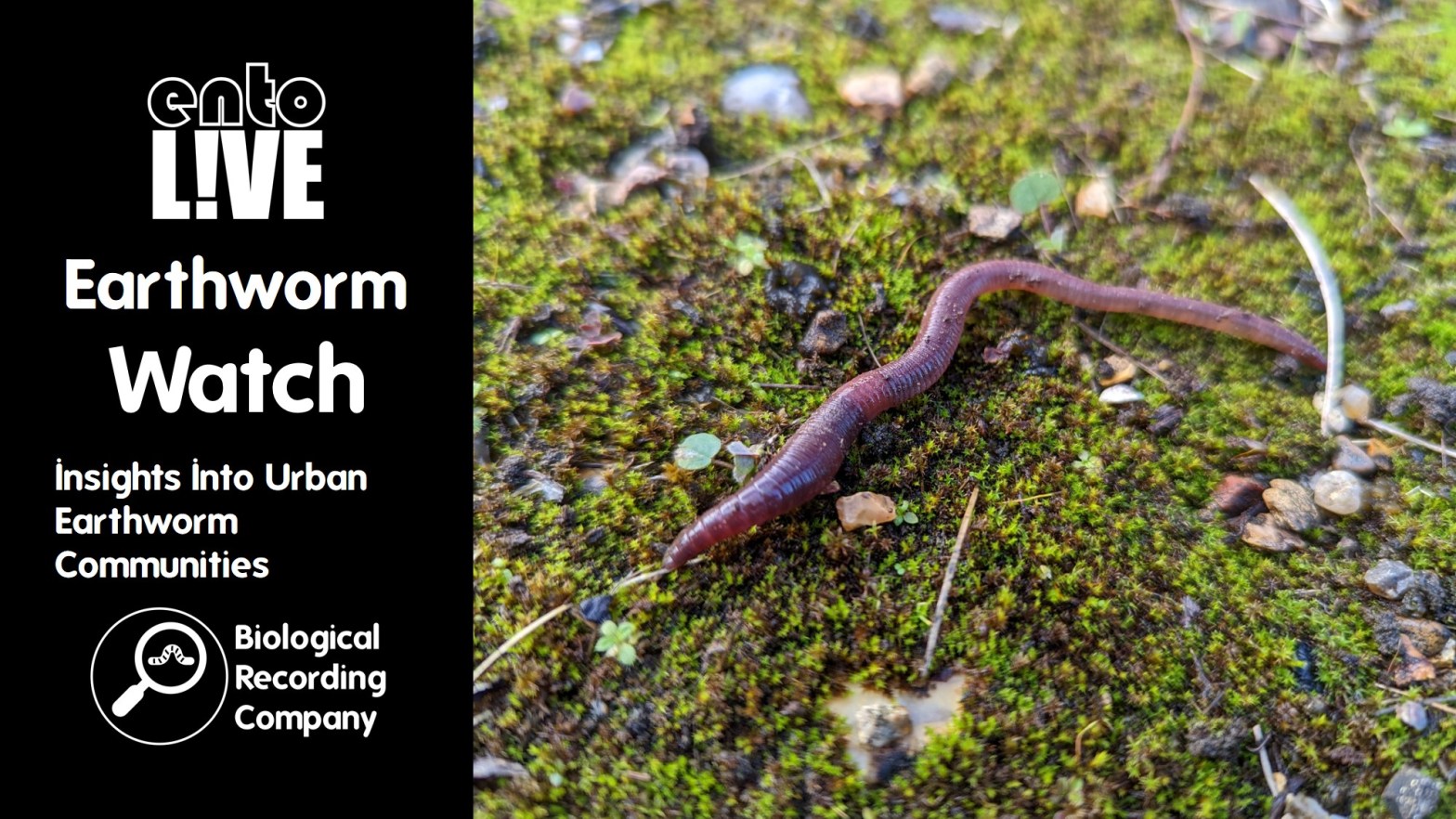
Despite the vital role of earthworms in soil ecosystems, there is still a lack of data on their distribution and diversity in the UK, especially in urban areas. To help fill this gap, over 1,500 citizen scientists participated in Earthworm Watch from 2016 to 2018. This project was run by the Natural History Museum, London, and Earthwatch Institute in association with the Earthworm Society of Britain. This talk will reveal the research results, offering insights into how we can better manage our green spaces for the benefit of earthworms.
Q&A with Dr Victoria Burton
Dr Victoria J. Burton is a postdoctoral researcher at the Natural History Museum, London, studying the effect of land use on biodiversity, particularly soil life and urban ecosystems. She is passionate about community involvement in science and led the citizen science project Earthworm Watch during her PhD.
How can people manage the impact on earthworms of digging the flowerbeds in their gardens?
We know from agricultural research that tilling and ploughing have a detrimental impact on earthworms. There is less research on gardens and flowerbed digging. There are no-dig methods that are growing in popularity. These use mulches, instead of digging – they just cover up the weeds and smother them out. The worms do the digging for you. You put the mulches on and the worms will pull them into the soil for you!
Are there any invasive non-native species of earthworms that we should be concerned about?
In the UK, there are some non-native earthworms. In fact, there were two species, Bimastos eiseni and Bimastos rubidus, that we didn’t even realise eres non-native until recently (they are originally from North America). They’ve been in the UK for quite some time and we don’t know if they’ve done any harm. There are some species of exotic earthworm that have been recorded in greenhouses but have not yet managed to establish in natural conditions. There are also a few species where we don’t really know for certain what their natural range is. One threat to our earthworms, is the introduction of invasive non-native flatworms. The New Zealand Flatworm can certainly cause harm locally, especially in Scotland. Buglife has their Potwatch survey to send sightings and there is also a UK land flatworm recording scheme.
What is the one piece of advice you can give people to help earthworms in their garden or in their local park?
Leave leaves! Use the leaves to mulch your borders if you like a really neat garden.
Literature References
- Burton and Caermon (2021) Learning More About Earthworms With Citizen Science: https://doi.org/10.3389/frym.2020.548525
- Burton et al (2024) Earthworm Watch: Insights into urban earthworm communities in the UK using citizen science. https://doi.org/10.1016/j.ejsobi.2024.103622
- Burton et al (2023) Earthworm Watch data: https://doi.org/10.5519/74ak9koz
- Martay et al (2018) Using data from schools to model variation in soil invertebrates across the UK: The importance of weather, climate, season and habitat: https://www.sciencedirect.com/science/article/pii/S0031405617301865
Further Info
- The Earthworm Society of Britain: https://www.earthwormsoc.org.uk/
- Eddie the Earthworm Saves the Day: https://shop.amentsoc.org/eddie-the-earthworm.html
- Frontiers for Young Minds: https://kids.frontiersin.org/
- OPAL Soil and Earthworm Survey: https://www.imperial.ac.uk/media/imperial-college/research-centres-and-groups/opal/SOIL-16pp-booklet_legacy.pdf
- Link to the webpage for Earthworm Watch: https://www.earthwormsoc.org.uk/earthwormwatch
- Earthworm Watch results summary and link to the news article: www.nhm.ac.uk/take-part/monitor-and-encourage-nature/project-archive/earthworm-watch.html
- Victoria’s Instagram: https://www.instagram.com/soilscholar/
- National Earthworm Recording Scheme: https://www.earthwormsoc.org.uk/ners
entoLIVE
entoLIVE webinars feature guest invertebrate researchers delving into their own invertebrate research. All events are free to attend and are suitable for adults of all abilities – a passion for invertebrates is all that’s required!
- Donate to entoLIVE: https://www.gofundme.com/f/entolive-2025
- Upcoming entoLIVE webinars: https://www.eventbrite.com/cc/entolive-webinars-74679
- entoLIVE blog: https://biologicalrecording.co.uk/category/entolive-blog/
- entoLIVE on YouTube: https://youtube.com/playlist?list=PLuEBNUcfMmE95Re19nMKQ3iX8ZFRFgUAg&feature=shared
entoLIVE is delivered by the Biological Recording Company in partnership with the British Entomological & Natural History Society, Royal Entomological Society and Amateur Entomologists’ Society, with support from Buglife, Field Studies Council and National Biodiversity Network Trust.
The entoLIVE programme is delivered by Biological Recording Company and receives sponsorship from the following organisations:
- British Entomological & Natural History Society
- Royal Entomological Society
- Amateur Entomogists’ Society
Learn more about British wildlife

 Biological Recording