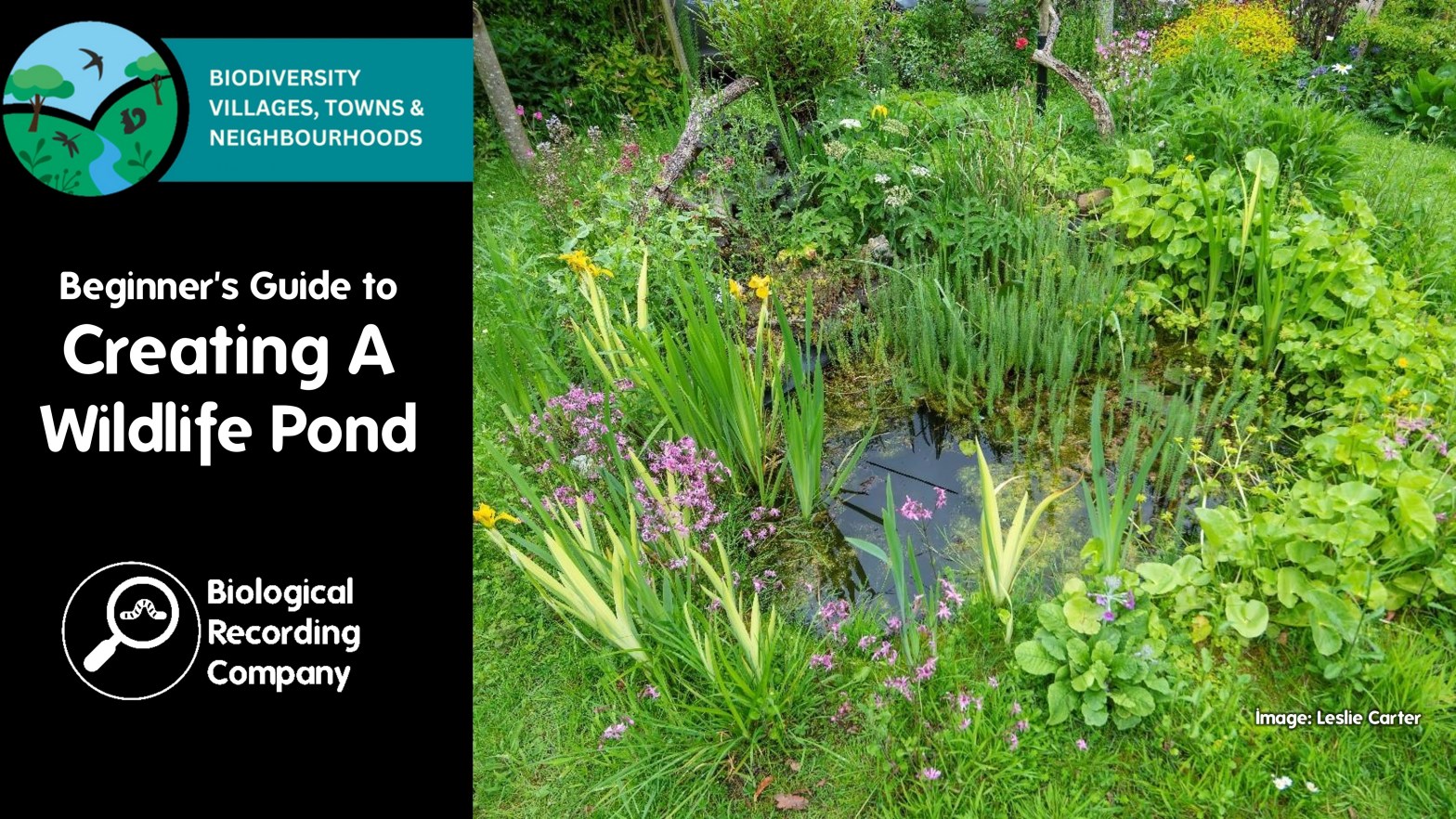
Learn about the art and science of creating a wildlife pond, so that you can establish a thriving aquatic habitat that attracts diverse species of flora and fauna. We’ll explore the essentials, from selecting the ideal location and materials to designing a pond that supports a wide variety of wildlife, including amphibians, insects, and birds. Attendees will learn how to choose native plants, create safe access points for animals, and maintain water quality without disrupting the natural ecosystem. With an emphasis on biodiversity, the talk provides actionable steps and inspiration for anyone eager to transform their outdoor space into a vibrant habitat.
Q&A with Lauren Kennedy
Lauren Kennedy is the Engagement Officer for the British Dragonfly Society and happily admits to being obsessed with invertebrates and plants. She graduated in Biology at Cardiff University before going on to study a masters in Environmental Biology at Swansea University. Lauren has previously worked for Natural England, the Field Studies Council and Bumblebee Conservation Trust, whereshe focused on public engagement, working with volunteers and creating training.
What is the ideal depth for a wildlife pond?
You want your wildlife pond to have gently sloping sides, getting gradually deeper toward the centre. If it is possible to have a depth of at least 60cm at the centre this will increase the oxygen available in the water and will also help to safe guard your pond from freezing over in the winter. Many invertebrates, including dragonfly larvae, will be overwintering in your pond so we don’t want them to freeze! Take a look at our full pond creation guide for more detailed information.
How do you avoid attracting too many mosquitoes to a garden pond?
Unfortunately, mosquitoes, to a certain extent, will be a natural part of your pond ecosystem. However, with a garden pond, when you create the ideal conditions to support a variety of wildlife you will be inviting in the natural predators of mosquitoes. Setting up your variety of plants, and structuring your pond for wildlife will bring in plenty of dragonflies and they love to feast on small insects like mosquitoes.
Why is autumn the best time to undertake pond maintenance?
Autumn and winter is the least disruptive time to undertake any pond maintenance. Wildlife is far less active at this time so you won’t be disturbing key parts of their life cycle. Dragonflies for example spend the spring and summer emerging from the water leaving their larval forms behind and emerging as adults. These adults will then go on to mate and lay eggs in your pond, thus a busy time. There will still be plenty of aquatic life in your pond during the autumn and winter so remember to leave any pond material that you are clearing out on the side of the pond for a couple of days to allow any pond life to crawl back into the water.
How can people get involved with monitoring dragonflies?
We would love to hear what species you are finding visiting your garden pond, and your sightings could help inform vital conservation work and help us map how dragonfly populations are changing in the face of climate change. For identification help you can find lots of ID resources on our website and you can submit records of dragonflies through our iRecord form.
Useful links
- British Dragonfly Society Garden and Habitat Management: https://british-dragonflies.org.uk/get-involved/resources/habitat-management-and-species-guidebooks/
- Damselflies of the UK entoLEARN course: https://courses.biologicalrecording.co.uk/courses/damselflies
- Freshwater Leeches of the UK entoLEARN course: https://courses.biologicalrecording.co.uk/courses/freshwater-leeches
- Dragonflies of the UK Part 2 entoLEARN webinar: https://www.eventbrite.co.uk/e/dragonflies-of-the-uk-part-2-tickets-1107775358919
- Dragonflies of the UK Part 3 webinar: https://www.eventbrite.co.uk/e/dragonflies-of-the-uk-part-3-tickets-1108051785719
- Dragonfly ID help: https://british-dragonflies.org.uk/odonata/species-and-identification/
- DragonflyWatch: The National Dragonfly Recording Scheme entoLIVE blog: https://biologicalrecording.co.uk/2023/04/27/dragonflywatch/
- Record dragonflies and damselflies on iRecord: https://irecord.org.uk/enter-dragonfly-list
Event Partners
This blog was produced by the by the Biological Recording Company as part of the Tayside Biodiversity Partnership Biodiversity Towns, Villages and Neighbourhoods project.

Learn more about British wildlife

 Biological Recording