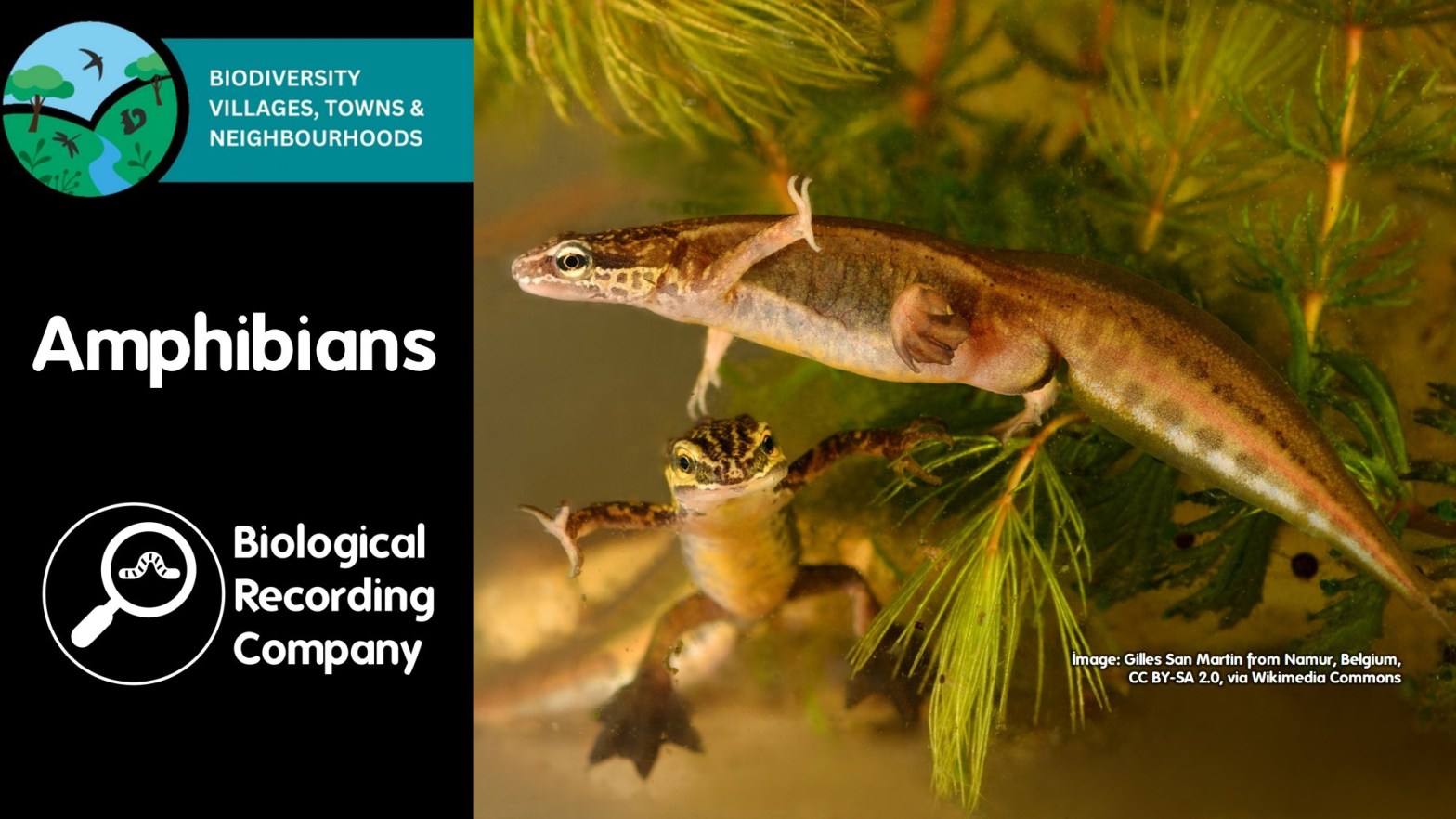
Amphibians are cold-blooded vertebrates that begin life breathing through gills in water and undergo metamorphosis to develop lungs for terrestrial living. The UK hosts seven native species of frogs, toads, and newts. This webinar will explore their life cycles and ecology, examine the threats they face, and discuss how we can support amphibians in our gardens and community spaces.
This blog features presentations from two amphibian specialists, that will explore the biology and ecology of these fascinating animals, before highlighting the threats that our amphibians face and what we can do to help them. This will be followed by an opportunity to put your amphibian-related questions to our panel!
Amphibians and their Ecology
Janet Ullman (Amphibian & Reptile Conservation Trust)
Discover the fascinating world of British amphibians, including frogs, toads, and newts. This presentation explores their unique life cycles, habitats and ecological roles. Join us to celebrate the unique role these creatures play in the natural balance of our ecosystems. Perfect for nature enthusiasts and conservation advocates alike!
Amphibian Threats and Conservation
Dr John Wilkinson (Amphibian & Reptile Conservation Trust)
Learn about the challenges facing British amphibians, including habitat loss, diseases, invasive species and roads. We’ll then explore the innovative conservation efforts aimed at safeguarding the future of our frogs, toads and newts, and highlight the importance of protecting these vital species and the steps we can all take to make a difference.
Q&A with Janet Ullman and Dr John Wilkinson
Janet Ullman is the Education Officer for Saving Scotland’s Amphibians and Reptiles (SSAAR) at the Amphibian and Reptile Conservation Trust. SSAR aims to encourage a greater understanding of our amphibian and reptile populations and to protect, restore or create habitat features to allow our amphibians and reptiles to thrive in Scotland.
Dr John Wilkinson is a conservation ecologist who has been working with amphibians and reptiles for over 25 years. He manages Regional, Science and Training Programmes for the Amphibian and Reptile Conservation Trust (ARC) and has a particular fascination for toads! John has also authored the Amphibian Survey and Monitoring Handbook and a number of scientific articles and technical reports focusing on herpetology.
What do amphibians eat?
Janet: Live prey only, they are sensory killing machines. The frogs and toads have those super shooting-out tongues which adhere to prey that swim, crawl, wiggle or buzz by. It’s a wide menu of insects, spiders, woodlice, earthworms (sorry Keiron), small slugs, snails and even small amphibian larvae and metamorphs. It’s pretty much the same for newts but with added small crustaceans in water and voracious predators of frogspawn and tadpoles. Newts smell their prey, whereas frogs and toads are more movement and sight.
What are the main predators of froglets?
Janet: In my experience just about everything will wolf up a froglet, but birds will be on the watch for them as soon as they realise it is that time of year. I’ve watched the carnage of mass emergence when seagulls swooped in.
Can any of the non-native newt species hybridise with our native species?
John: “Our” great crested newts are closely-related to Italian crested newts and marbled newts, and they can hybridise. Studies have shown this does happen in the UK. The important thing is to monitor where non-natives turn up and what effects they may be having.
Should we be removing a build up of leaf litter from garden ponds?
John: Sometimes, yes. A small pond will eventually disappear without management. The best time to remove excess weed and dead leaves from your ponds is late Autumn – when there will be fewer creatures in it but those that are there haven’t yet hunkered down for hibernation. Leave anything you remove on the side of the pond for a few days so any creatures can crawl back in! Check out our Creating Garden Ponds for Wildlife guide for more advice.
Is it safe to move frogspawn from non-viable puddles to a pond?
Janet: I would advise yes as long as the pond chosen as a new home is as close as possible, within 1 km is best. Do think about if it is a healthy pond to relocate too, will it have enough prey items, is it full of predators such as fish and does it have the capacity to take more spawn?
Is pollution in SuDS (Sustainable drainage systems) ponds an issue for amphibians that may colonise them?
John: A variety of pollutants from our roads (including winter salt) can turn up in SuDS, though ideally (and if the scheme is well-designed) these are filtered out by reeds and rushes that should be part of it. In some circumstances amphibians can be affected, but this will vary by the design and location of the scheme. It’s worth noting that NO SuDS ponds means nowhere for amphibians to breed, so having those ponds has to be better than not!
What is the one thing that you’d recommend people can do to help our amphibians?
Janet: This is hard, surveying is important, but seeing amphibians in urban settings is a wonderful thing and is all due to gardens and public green spaces having the right mix of habitats, especially refugia for animals to hide in, over winter and find prey. Whether in town or the countryside, good habitat is key.
John: Not everyone is able to create a pond or other habitat on their property, but there may be local community garden or park schemes where you can get involved. Otherwise, consider being an ARC volunteer and recording/monitoring your local species to help inform the efforts for their conservation.
Useful links
- Water For Wildlife free webinar: https://www.eventbrite.co.uk/e/water-for-wildlife-get-involved-with-water-conservation-tickets-1253217329769
- ARC’s Bitesize Herpetology Modules
- Identifying UK Frogs and Toads: https://www.arc-trust.org/Handlers/Download.ashx?IDMF=0845fa8a-7e68-4e96-8c01-dcd39c63a0f8
- Identifying UK Newts: https://www.arc-trust.org/Handlers/Download.ashx?IDMF=9c5fca7d-ab32-4f71-8cf8-5d4ca1a7a421
- Full list of modules: https://www.arc-trust.org/training
- Register as an ARC volunteer to take part in our monitoring or other volunteering: https://www.arc-trust.org/Listing/Category/volunteer
- Find out about our National Survey Programmes and projects: https://monitoring.arc-trust.org/
Amphibian conservation in Scotland
- Tayside Amphibian & Reptile Group: https://groups.arguk.org/tayarg
- Tayside ARG events: https://www.taysidebiodiversity.co.uk/2025/02/11/2025-tayarg-programme-of-events/
- The next Amphibian Ladder Workshop will be in Stanley (north of Perth) on 21st March. This will be led by Trevor Rose the inventor of the ladders and Daniele Muir of TayARG. Contact Daniele via taysidepondsproject@gmail.com for further information. The event is suitable for adults and older teens.
- ARC in Scotland: https://www.arc-trust.org/saving-scotlands-amphibians-and-reptiles
- School citizen science project for Scotland at https://www.arc-trust.org/champhibians
- Species on the Edge project: https://www.arc-trust.org/species-on-the-edge
Event Partners
This blog was produced by the by the Biological Recording Company as part of the Tayside Biodiversity Partnership Biodiversity Towns, Villages and Neighbourhoods project.

Learn more about British wildlife
 Biological Recording