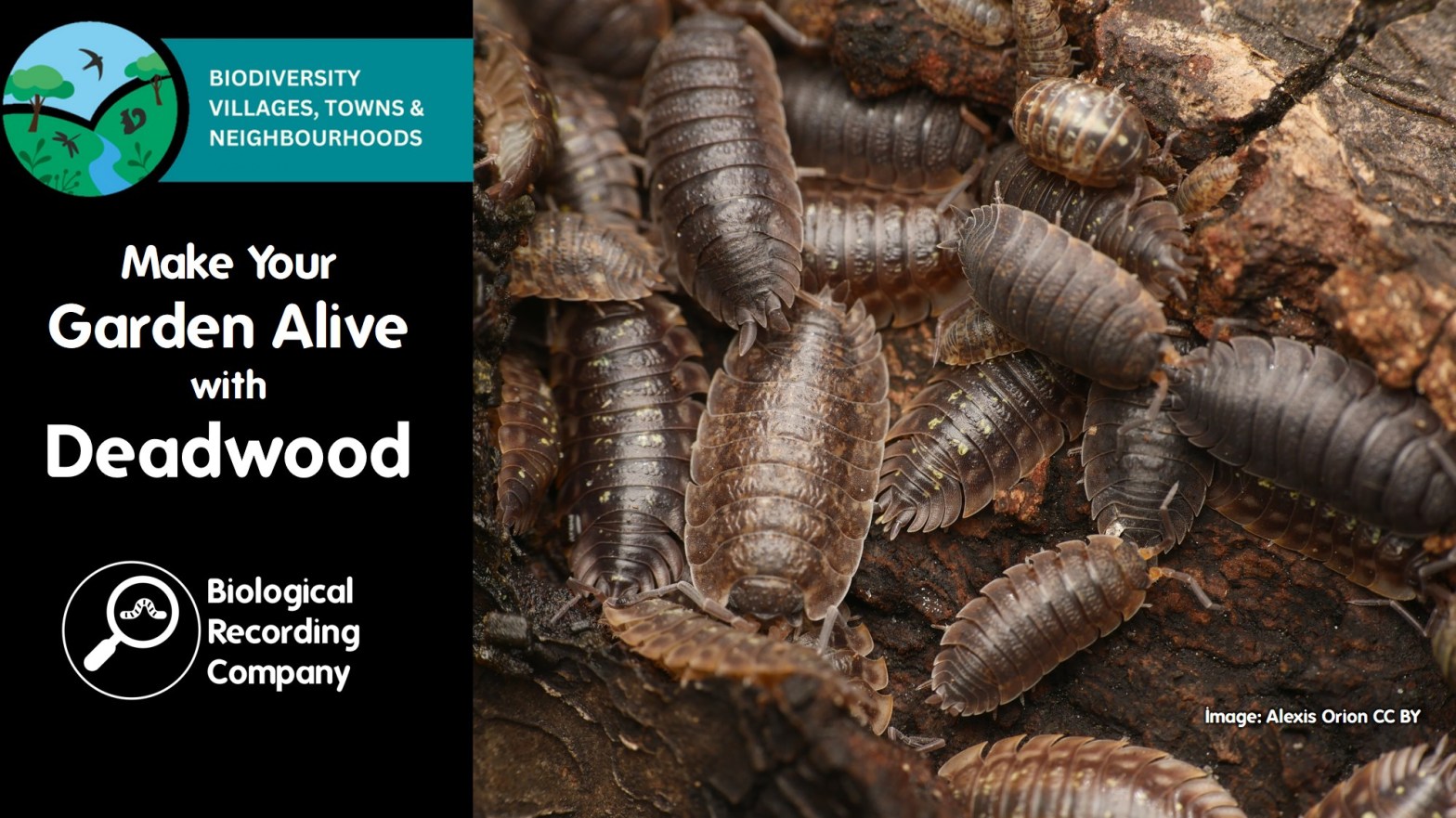
Transform your garden into a thriving ecosystem by incorporating deadwood features. This blog highlights the vital role deadwood plays in supporting invertebrates and other wildlife. Learn practical ways to add and manage deadwood in your garden, creating a natural haven that benefits biodiversity while adding rustic charm to your outdoor space.
Q&A with Caitlin McLeod
Caitlin McLeod is a Conservation Officer for Buglife – The Invertebrate Conservation Trust. Caitlin works on the Species on the Edge programme, with a focus on the East Coast of Scotland and teaches volunteers to identify and survey rare invertebrates such as the Northern Brown Argus butterfly, Small Blue butterfly and Bordered Brown Lacewing.
Can old Christmas trees be used to create log piles?
Yes! Old Christmas trees can be cut up and added to log piles, though pine and other coniferous woods tend to decompose slowly compared to deciduous wood – though they can still provide habitats. You can cut off smaller branches to use as ground cover or for mulch, improving habitat for various ground-dwelling species.
Are all tree species good for deadwood?
Most tree species are a great addition to deadwood habitats, though it is better to use a variety of species rather than just one, and there are a few things to take into consideration such as using native species, such as oak, beech, ash and elm. Conifers can also be used though they tend to acidify the soil as they break down so it is important to take this into consideration! The most important thing is to avoid using treated wood as the chemicals can harm wildlife rather than help it.
Should you drill holes into deadwood to create access for invertebrates?
Drilling holes in deadwood features such as log piles can certainly help create access for invertebrates like solitary bees and beetles, especially if you create a variety of hole sizes and depths (2-10mm diameter and 2-10cm deep). Creating holes that will collect water is also a brilliant way to support many species of hoverflies whose larvae are aquatic (2-5cm in diameter and varying depths, in a shady spot).
Is there any point in leaving small pieces of deadwod in the garden?
Absolutely! Even a small, standalone piece of deadwood can play a crucial role in the survival of many species, at the end of the day it creates habitat no matter the size. Twigs, sticks and leaf litter create habitat for species like woodlice and other decomposers, as well as providing areas of moisture and shelter for amphibians, reptiles and other animals. Over time small pieces of deadwood will also break down and enrich the soil – smaller bits of wood will decompose quicker, promoting the growth of fungi, further benefitting soil health and supporting the broader ecosystem in your garden!
Useful links
- Create Your Own Deadwood Habitats: https://www.buglife.org.uk/get-involved/create-your-own-dead-wood-habitats/
- Dead Wood Piles for Beetles: https://cdn.buglife.org.uk/2022/09/Create-a-Dead-wood-pile-for-beetles.pdf
- Deadwood (Scottish Invertebrate Habitat Management): https://cdn.buglife.org.uk/2019/07/Deadwood_1.pdf
- Managing Dead and Decaying Wood Habitats (BFTB Habitat Management Guidance): https://cdn.buglife.org.uk/2022/01/BFTB-Advice-Sheet-Managing-Dead-and-Decaying-Wood.FINAL_.pdf
- Get involved with Buglife in Scotland: https://www.buglife.org.uk/get-involved/near-me/buglife-scotland/
- Buglife – The Invertebrate Conservation Trust: https://www.buglife.org.uk/
- Don’t Stop The Rot – Dead wood invertebrates and their conservation
Event Partners
This blog was produced by the by the Biological Recording Company as part of the Tayside Biodiversity Partnership Biodiversity Towns, Villages and Neighbourhoods project.

Learn more about British wildlife

 Biological Recording