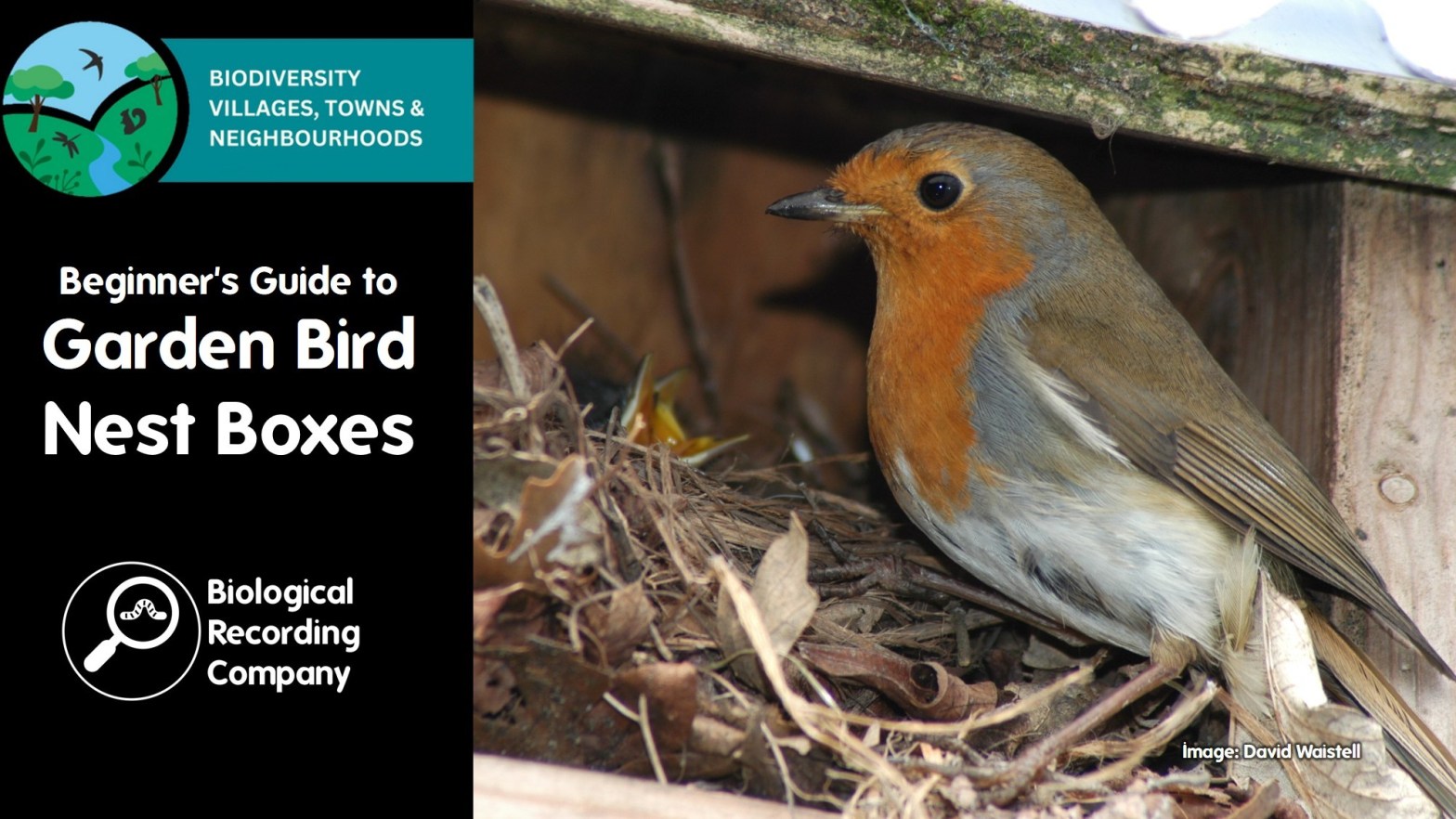
Invite nature into your garden by providing safe nesting spaces for birds. This blog explores the importance of nest boxes, how to select the ideal one for different species, considering maintenance and where to position them for maximum success. Whether you’re a seasoned birdwatcher or new to wildlife gardening, you’ll leave with practical tips to make your outdoor space a bird-friendly sanctuary.
Q&A with Hazel McCambridge
Hazel McCambridge is the lead organiser of Nesting Neighbours at the British Trust for Ornithology and works on data collection and volunteer communication as Scheme Support Officer for several projects, including the BTO Acoustic Pipeline, the Ringing Scheme and the Nest Record Scheme. She is also BTO’s Sustainability Officer and author of the Blue Tit Diary.
Is it important to clean out nest boxes regularly to prevent the spread of disease?
For nest boxes it is good to take out the old nest during the winter (legally between September – January), making sure there is no active nesting. This reduces the parasite load which can hibernate over winter and rehome themselves on the chicks once they hatch in the nest. Nest boxes can also become full up with nesting material over the years. Disease isn’t spread in nest boxes in the same way that it is on bird feeders so regular / weekly cleaning is not required.
What considerations are needed when installing a nest box camera?
You can buy nest box kits which include cameras and are fairly simple to install. There are many other small cameras available on the market, you might want to consider if you can run a cable for a wired camera or if you need an unwired camera which can connect to wifi. Remember, it is dark in the box, so it also needs to be a camera with infrared night vision. I tend to avoid the nest boxes with a perspex wall which is used to allow light in for the camera, as you lose some of the important insulation of the box. Make sure to install the camera well ahead of the breeding season (end of Feb at the latest) and ensure it is fastened very securely.
How long should you leave an unused nest box before considering moving it?
If you have considered the guidance on placement (out of direct sunlight, rain, direct flight line to the entrance hole, predator avoidance measures, distance from feeders) and it hasn’t been used after about 3 years it is worth considering if another suitable location is available. We don’t always have options, so it is worth leaving it in place if you only have one location available – in my previous tiny garden I only had one suitable option and it was eventually used after 7 years!
What is your number one recommendation for supporting garden birds?
Particularly in urban and suburban locations, birds are losing nesting locations. We are insulating houses and tidying up old trees, so providing a nest box gives a suitable space for a pair of birds to raise their family. Find guidance on nest boxes and free building plans on the BTO website. You can then add even more value to this by monitoring the nesting activity and submitting the details to Nesting Neighbours, to help us understand how climate change and urbanisation are impacting nesting birds.
Useful links
- Join the BTO Garden BirdWatch for free: https://www.bto.org/our-science/projects/gbw
- Nesting Neighbours: www.bto.org/our-science/projects/nesting-neighbours
- Providing for birds: www.bto.org/how-you-can-help/providing-birds
- Nest box building: www.bto.org/how-you-can-help/providing-birds/putting-nest-boxes-birds/make-nest-box
- Purchase the book Nestboxes: Your complete guide: www.bto.org/our-science/publications/bto-books-and-guides/nestboxes-your-complete-guide
- British Trust for Ornithology (BTO): www.bto.org
Event Partners
This blog was produced by the by the Biological Recording Company as part of the Tayside Biodiversity Partnership Biodiversity Towns, Villages and Neighbourhoods project.

Learn more about British wildlife

 Biological Recording