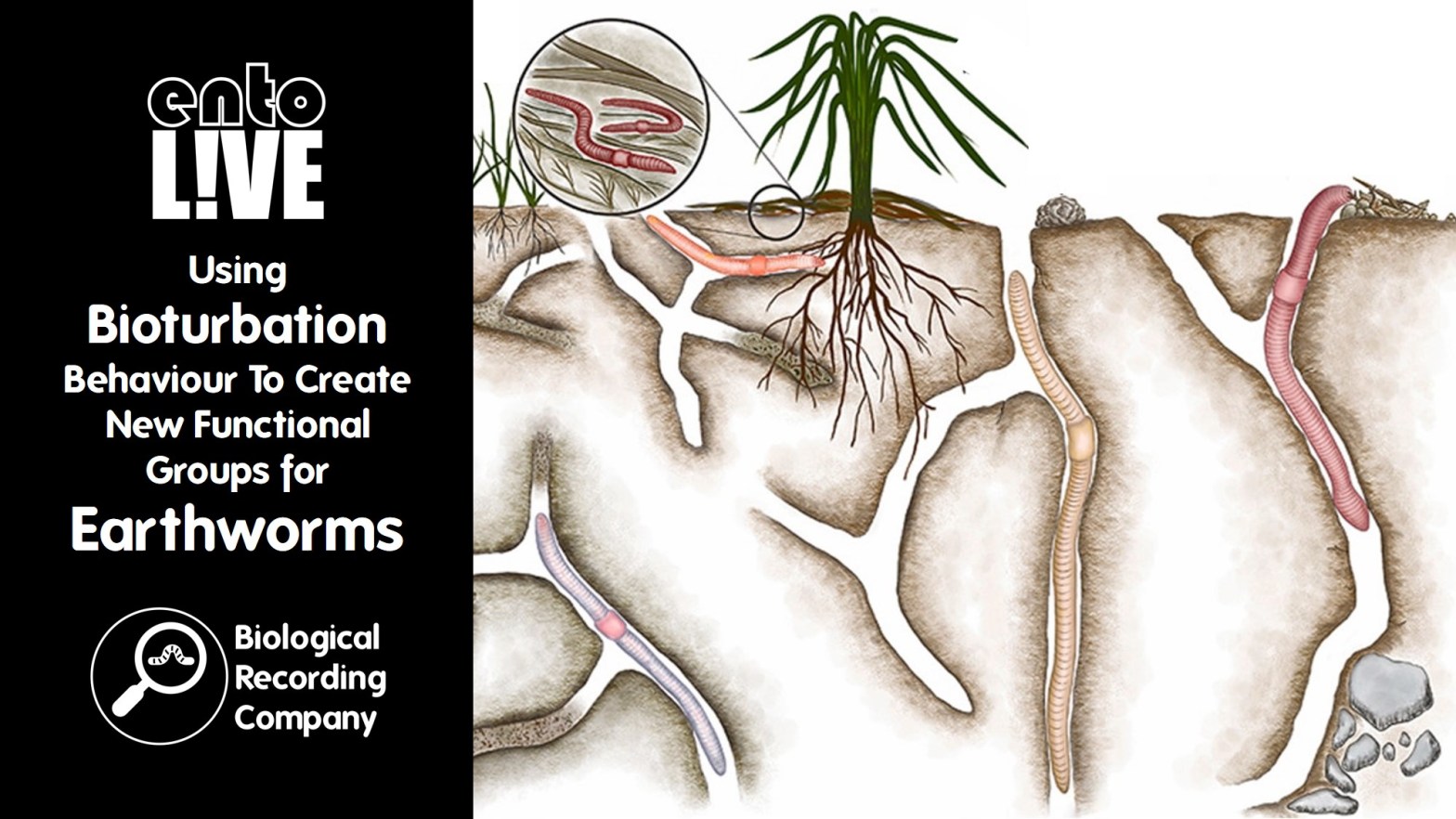
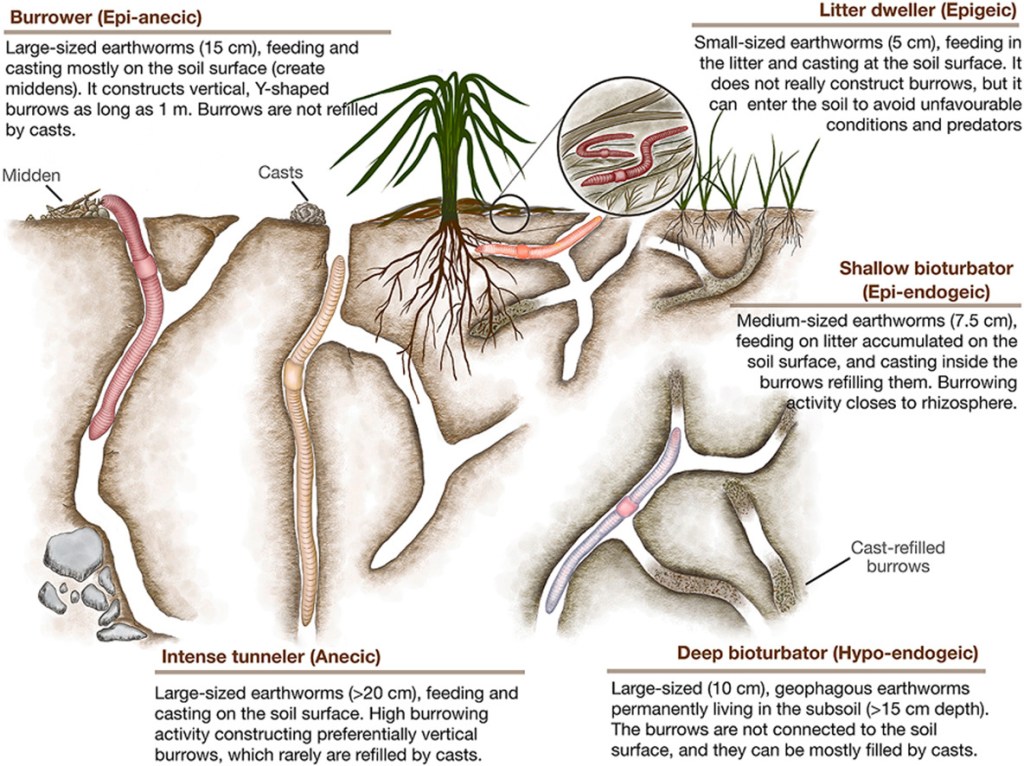
Earthworm ecological categories (anecic, epigeic, endogeic) based on morphology are commonly used as proxies to describe their effects on soils without validation of their actual behaviour. The first and main effects of earthworms are physical, they are physical ecosystem engineers so it makes sense to use a system where groupings are based on the physical behaviour of earthworms. This presentation will delve into an experiment that investigated the burrowing, feeding and casting behaviour of 50 species of earthworm under laboratory conditions and proposed new functional groups of earthworms based on their bioturbation behaviour.
Q&A with Yvan Capowiez
Yvan Capowiez is a researcher at INRAE (the National Research Institute for Agriculture, Food and the Environment in France). He specialises in earthworm ecology and the physical roles of earthworms in (agricultural) soils.
What is the deepest that earthworms can burrow?
Our work was done in the lab of course, so the worms could not go very deep. But if you ask archaeologists, earthworms can go very deep. For some Scherotheca species, we observe burrows at 1 to 2 metres down. However, we don’t have a lot of information, only indirect evidence, for the really deep burrowing species, so this is a very difficult question to answer.
Are the deep burrowers good for agricultural soils?
The deep burrowers are, I think, very lazy. They only do a few burrows. But they are powerful. For the farmer, it’s not that they make a lot of burrows (they don’t), but that they can go through very dense soil. I think that Lumbricus terrestris could support a bit of tillage so for farmers, these would be good earthworms. In pastures, the intense tunnellers are better because they tunnel a lot, letting in more water into the soils, which you want.
How much of the burrowing behaviour do you think was constrained by the soil cores that you used for your study?
Their behaviour was likely impacted by the soil cores. With the Scherotheca spp especially, we could see that they were burrowing a lot on the bottom and edges, trying to escape. Bigger soil mesocosms would obviously be better, but these are also more expensive. We are also looking at climate change, so the impact of soil moisture is something we do look at. We noticed that when the soil cores started to dry out, the behaviour of the anecic worms didn’t change but the behaviour of the endogeic species did – they dug deeper down to get to the moister soils.
Which of the six functional groups contributes the most to soil carbon fixation?
This is not an easy question because all groups have different roles. In terms of organic matter, I think it’s the burrowers. They’re the ones that take the most litter into the soil and bury it, more so than the intense tunnellers.
Literature References
- Bottinelli et al (2020) An explicit definition of earthworm ecological categories – Marcel Bouché’s triangle revisited: https://www.sciencedirect.com/science/article/abs/pii/S0016706119322323
- Bottinelli & Capowiez (2020) Earthworm ecological categories are not functional groups: https://link.springer.com/article/10.1007/s00374-020-01517-1
- Capowiez et al (2024) Let earthworms be functional – Definition of new functional groups based on their bioturbation behavior: https://www.sciencedirect.com/science/article/pii/S0038071723002717
Further Info
- Earthworm Ecology: https://www.earthwormsoc.org.uk/earthworm-ecology
- All the publications of Marcel Bouché are freely available: https://www.verdeterreprod.fr/publications-de-marcel-bouche/
- Contact authors to request research papers via ResearchGate: https://www.researchgate.net/
entoLIVE
entoLIVE webinars feature guest invertebrate researchers delving into their own invertebrate research. All events are free to attend and are suitable for adults of all abilities – a passion for invertebrates is all that’s required!
- Donate to entoLIVE: https://www.gofundme.com/f/entolive-2025
- Upcoming entoLIVE webinars: https://www.eventbrite.com/cc/entolive-webinars-74679
- entoLIVE blog: https://biologicalrecording.co.uk/category/entolive-blog/
- entoLIVE on YouTube: https://youtube.com/playlist?list=PLuEBNUcfMmE95Re19nMKQ3iX8ZFRFgUAg&feature=shared
entoLIVE is delivered by the Biological Recording Company in partnership with the British Entomological & Natural History Society, Royal Entomological Society and Amateur Entomologists’ Society, with support from Buglife, Field Studies Council and National Biodiversity Network Trust.
The entoLIVE programme is delivered by Biological Recording Company and receives sponsorship from the following organisations:
- British Entomological & Natural History Society
- Royal Entomological Society
- Amateur Entomogists’ Society
More on molluscs


 Biological Recording