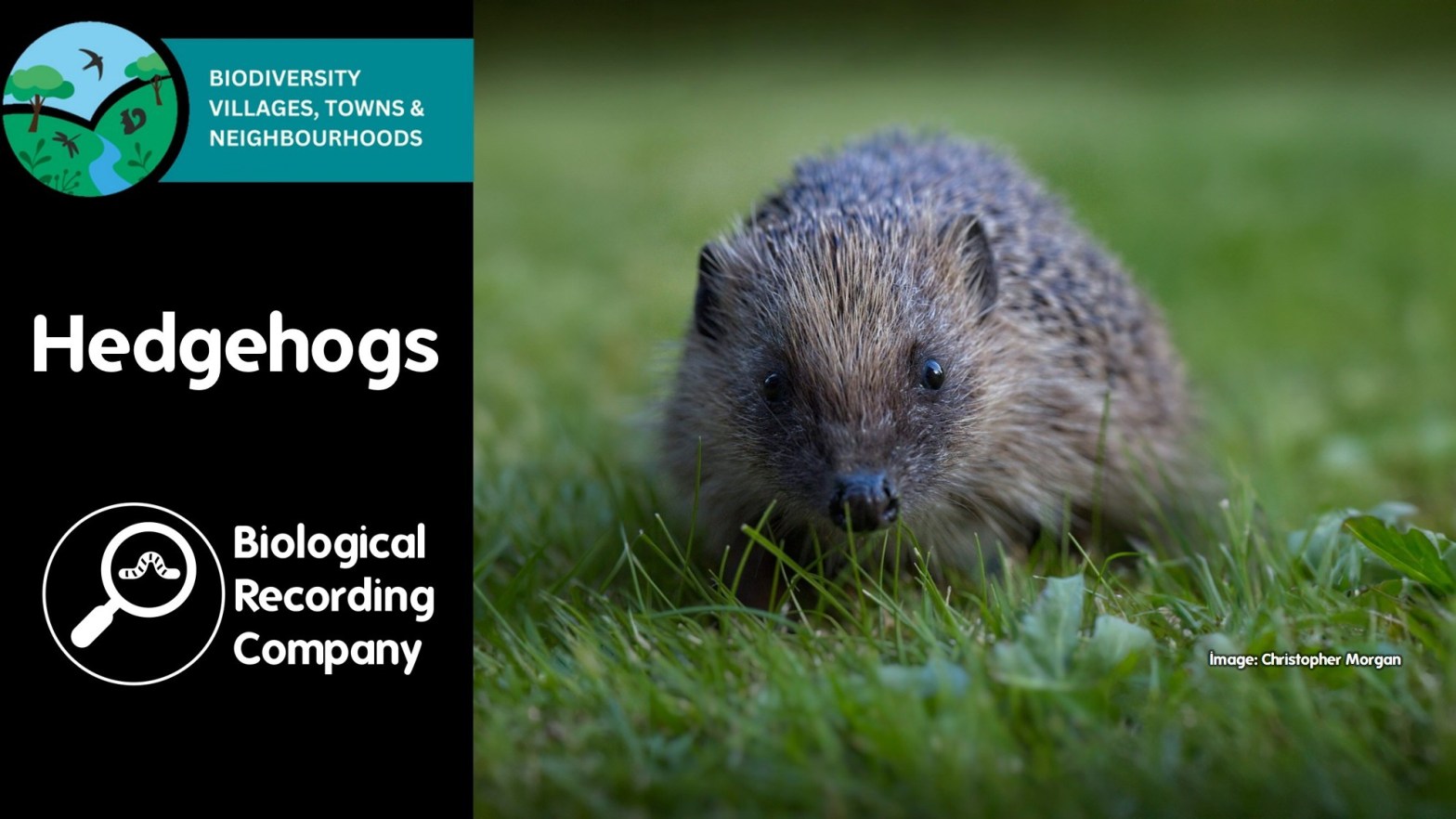
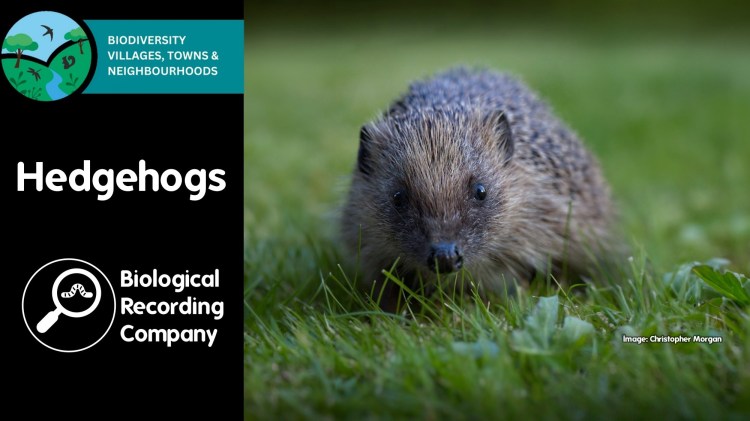
The West European Hedgehog (Erinaceus europaeus) was once a common sight in British gardens and the countryside. These nocturnal mammals feed on invertebrates and have been declining in numbers, with the International Union for Conservation of Nature recently adding them to the list of near threatened species on their Red List.
This blog features presentations from two Hedgehog specialists, that will explore the biology and ecology of these fascinating animals, before highlighting the threats that our hedgehogs face and what we can do to help them.
Hedgehogs and their Ecology
Hugh Warwick (British Hedgehog Preservation Society)
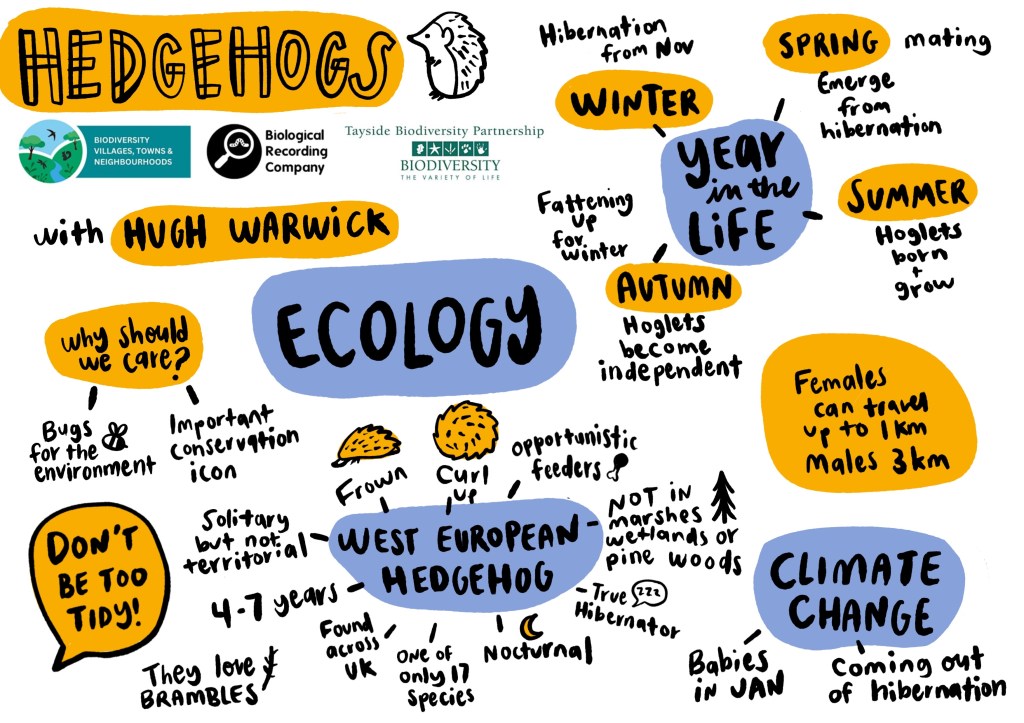
The British Hedgehog (Erinaceus europaeus) is a nocturnal mammal known for its unique spiny coat and ability to roll into a ball when threatened. This presentation explores their ecological role, focusing on their habitat preferences, foraging strategies and diet. We’ll also uncover their seasonal behaviours, including hibernation and breeding cycles, providing insight into how these small mammals interact with their environment and contribute to the UK’s ecosystems.
Hedgehog Threats and Conservation
Grace Johnson (Hedgehog Street)
British hedgehogs face threats from many angles: habitat loss, reduced connectivity between gardens, roads, pesticides, bonfires… the list goes on! There are lots of things that the general public can do to help, from linking your garden to a Hedgehog Highway to adding your sightings to the Big Hedgehog Map. Grace will take us through the various threats to hedgehogs and how we can mitigate these risks through the implementation of conservation actions and simple changes to our gardening techniques.
Q&A with Hugh Warwick and Grace Johnson
Hugh Warwick is an ecologist and writer with a particular fondness for hedgehogs. He has authored several books on hedgehogs and other British wildlife: A Prickly Affair (2010), The Beauty and the Beast (2012), Hedgehog (2014), Linescapes (2017) and The Hedgehog Book (2020). Hugh also does a lot of public speaking (from primary schools to postgraduate research groups via the WI and Wildlife Trusts) and delivers training on hedgehog conservation and creative writing. He is also the spokesperson for the British Hedgehog Preservation Society.
Grace Johnson is a Zoology graduate who is passionate about wildlife conservation. Following university, she worked in bat conservation before moving on to hedgehogs. Grace is the Hedgehog Officer for Hedgehog Street, a joint campaign by People’s Trust for Endangered Species and The British Hedgehog Preservation Society, where she works with a wide range of partners, stakeholders, volunteers and the general public.
Aside from invertebrates, what else do hedgehogs feed on?
Hugh: Hedgehogs will eat what they find in front of their inquisitive snouts – so if there are lots of invertebrates, then that is what they will eat. Other natural food includes carrion, small mammals (probably already injured ones), birds eggs and chicks. We also know that they will very happily tuck into any meaty treats we put out for them … kitten kibble is what I recommend.
Do you recommend feeding hedgehogs?
Grace: Yes! Provision of natural insect food via wildlife-friendly gardening is the best option in the first place: https://www.hedgehogstreet.org/help-hedgehogs/helpful-garden-features/. Then this can be topped up with supplementary food in the form of meaty cat or dog food: https://www.hedgehogstreet.org/help-hedgehogs/feed-hedgehogs/, just make sure to keep bowls and feeding areas clean.
Are changes to weather patterns impacting hibernation patterns of British hedgehogs?
Hugh: There is clear evidence from hedgehog rescues that youngsters are being seen in January – which implies mating taking place in November and December when we would normally expect them to be in hibernation. We do not know whether this is evidence of more people being aware of the risks hedgehogs face and therefore bringing them in – or evidence of a warning climate keeping them active for longer. There is no NEED for a hedgehog to hibernate – they do it for longer in Norway than they do in Spain for example. I think the biggest risk comes from hedgehogs being pulled out of hibernation more frequently – thus using up the fat reserves vital for their survival.
What is the best way to monitor local hedgehog populations?
Grace: We’ve launched a National Hedgehog Monitoring Programme and need your help to tag hedgehogs and other wildlife in camera trap images, more info here: https://ptes.org/campaigns/hedgehogs/nhmp/. If you spot a hedgehog out and about, logging it on the BIG Hedgehog Map also helps us understand hedgehog distribution: https://bighedgehogmap.org/.
What is the one thing you’d advise people to do to help hedgehogs?
Grace: Think hedgehog! Would a hedgehog be able to access your garden or do you need to install a hedgehog highway? Could a hedgehog be nesting in the messy area you’re about to strim? Definitely worth checking! Are there enough creepy crawlies in your garden for hedgehogs to feed on, or could you improve this with a log or leaf pile? We need to think more about sharing our gardens and greenspaces with hedgehogs and other wildlife.
Hugh: Get rid of the ‘cult of tidiness’ – embrace a bit of wildness, some might call it mess, in your garden … or accept that local parks should have areas set aside for sharing with nature rather than manicured deserts!
How did you become interested in hedgehogs?
Hugh: I started working with hedgehogs as an ecologist – doing the 3rd year project for my degree at Leicester Polytechnic. I ended up in Orkney, on the island of North Ronaldsay, seeing whether the imported hedgehogs were having a negative impact on the breeding success of the ground nesting birds. That was back in 1986 and got me hooked! Actually, what REALLY got me deep into the hedgehog world was the realisation that as people love them so much, the hedgehog then presents a way of talking about other, maybe less popular subjects – such as macro invertebrate population declines, the choices we make over what we eat, speed limits, planning law … talking about hedgehogs means we can talk about so much more!
Grace: In my first conservation role I worked with bats, which was fascinating. In this role my knowledge of mammalian ecology and hibernation grew, and so hedgehogs were a brilliant next step. Working with such a popular species is a fantastic gateway to encourage people to care about the natural world more widely, and how we can all protect it.
Useful links
- British Hedgehog Preservation Society: https://www.britishhedgehogs.org.uk/
- Hedgehog Street: https://www.hedgehogstreet.org/
- Sign up to the Hedgehog Street newsletter: https://www.hedgehogstreet.org/register/
- State of Britain’s Hedgehogs 2022 report: https://www.hedgehogstreet.org/about-our-hedgehog-street-campaign/stateof/
- National Hedgehog Monitoring Programme: https://ptes.org/campaigns/hedgehogs/nhmp/
- Britain’s National Hedgehog Conservation Strategy: http://www.hedgehogstreet.org/conservation-strategy
- Help hedgehogs in your neighbourhood: https://www.hedgehogstreet.org/help-hedgehogs/
- Log your sightings on the BIG Hedgehog Map: https://bighedgehogmap.org/
Check out more of Hugh’s work
- Hugh’s books: https://www.hive.co.uk/Search/Keyword?keyword=Hugh%20Warwick&productType=0
- Hugh’s gardening column on Scribehound (paid subscription required): https://join.scribehound.com/gardening?ref=share&sharer=xpn2mRmWZHQvyiugG&shareType=3z1QjLMt&channel=gardening
- Hugh’s Substack here (free subscription required): https://hughwarwick.substack.com/
Sketch Notes by Mel North
Follow Mel on Instagram here: https://www.instagram.com/mellifera_paper/

Event Partners
This blog was produced by the by the Biological Recording Company as part of the Tayside Biodiversity Partnership Biodiversity Towns, Villages and Neighbourhoods project.

Learn more about British wildlife

 Biological Recording