Biodiversity Net Gain (BNG) is a planning approach that requires new developments to leave nature in a measurably better state than it was before work began. In England, Biodiversity Net Gain became a legal requirement under the Environment Act 2021 and is now mandatory for most new developments.
BNG is a form of “biodiversity offsetting” and works in the following way:
- The current habitat on a site is assessed using a government metric (the Biodiversity Metric).
- Developers must deliver at least 10% more biodiversity units than the baseline.
- This is achieved according to a hierarchy of biodiversity offsetting options:
- Ideally, offsetting is accomplished on-site through actions such as planting native woodland, creating wildflower meadows or introducing ponds.
- If that is not possible, the biodiversity units can be delivered off-site by buying units from registered habitat banks.
- As a last resort, statutory biodiversity credits can be purchased from the government.
In theory, the system has the potential to benefit England’s biodiversity and improve habitat quality. In practice, the jury is still out as to whether BNG will be a success. It is therefore vital that we ensure ecologists and those offering biodiversity credits have all of the tools, training and research to help them evidence what does and does not work.
We’ve delivered a Biodiversity Net Gain Virtual Symposium every year since the Biological Recording Company was founded to provide updates from Natural England, disseminate good practice guidance and share case studies on the subject.
Biodiversity Net Gain Virtual Symposium
Each year, we host a Biodiversity Net Gain Virtual Symposium to bring together professionals from a range of sectors to discuss their experiences and lessons learned from working with BNG.
the presentations are all recorded and made available through our online learning platforms. For just £30 you can access all the content from these events.
2026 Presentations
- March 2026 BNG Update from Natural England with Dr Nick White (Natural England)
- Why We Need GIS Data Standards for BNG Assessments with Dr Katie Dawson (EcoSpatial)
- Mandatory BNG: ILM’s Experience Two Years In with Melanie Bachelier & Jasmyna Rees (Integrated Land Management)
- Designing and Delivering Biodiversity Net Gain from an LPA perspective with Sarah Hawes
- An Ecological Consultant’s Perspective on Applying Mandatory BNG with Dr Carly Benefer (GE Consulting)
2025 Presentations
- BNG: A Big Issue for Small Sites? with Peter Massini (Future Nature Consulting)
- Assessing Habitat Condition for BNG: How Consistent Are Ecologists? with Ivonne Salamanca (Bangor University)
- Considering Bats in Biodiversity Net Gain with Jo Ferguson (Bat Conservation Trust)
- Mandatory BNG in Practice: Findings from an Early Research Project with Ellie Savage (Institution of Environmental Sciences)
2024 Presentations
- Biodiversity Net Gain: March 2024 Update from Natural England with Dr Nick White (Natural England)
- Biodiversity Net Gain: The Warwickshire Way with David Lowe (Warwickshire County Council)
- Local Innovation: How LERC Services Are Shaping Up with Mandy Rudd (Association of Local Environmental Record Centres)
- Habitat Condition Assessment Methods for BNG with Dr Dan Carpenter (Digital Ecology)
2023 Presentations
- Biodiversity Net Gain: A Policy and Metric Update (March 2023) with Dr Nick Ian White (Natural England)
- Delivering Biodiversity Net Gain for Infrastructure Projects with Dr Julia Baker CEnv MCIEEM (Mott MacDonald)
- Biodiversity Net Gain: The Wiltshire Council Perspective with Rachel Jones (Wiltshire Council)
- The Wildlife Trusts Habitat Banking Investment with Martin Varley (Cheshire Wildlife Trust)
BNG & Invertebrates
We’ve featured research on the impact of BNG on invertebrates in two of our free entoLIVE webinars. You can catch up with all of the content from these webinars via the respective blogs and presentation recordings.
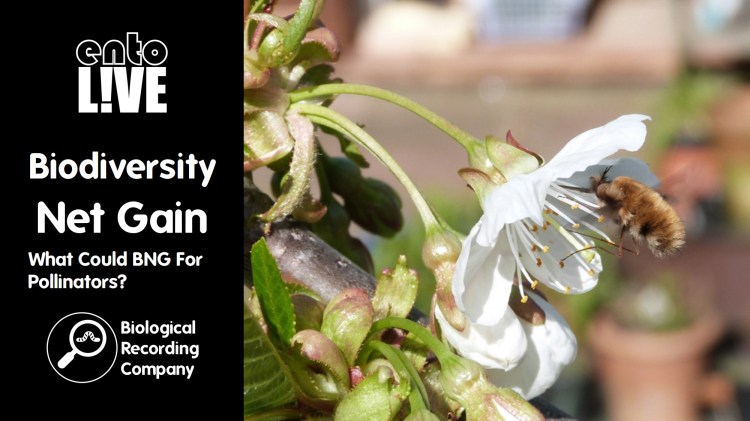
What Could BNG Mean For Pollinators?
Professor Jeff Ollerton explores what Biodiversity Net Gain could mean for pollinating insect conservation in England.
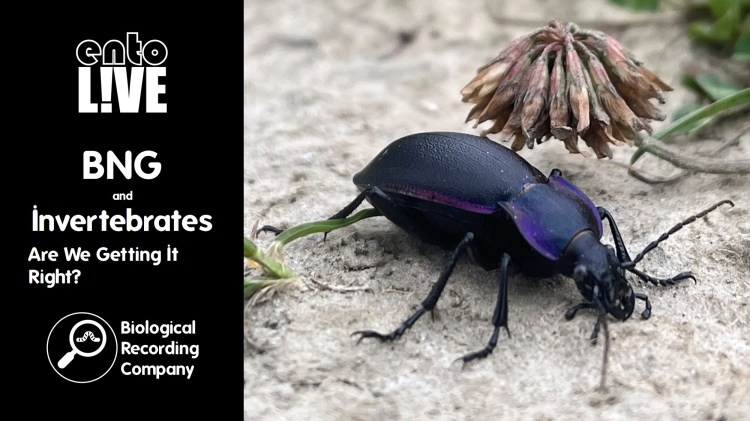
BNG & Invertebrates: Are We Getting It Right?
Natalie Duffus (University of Oxford) presents her research into the ecological outcomes from biodiversity offsetting.
 Biological Recording

8 thoughts on “Biodiversity Net Gain”