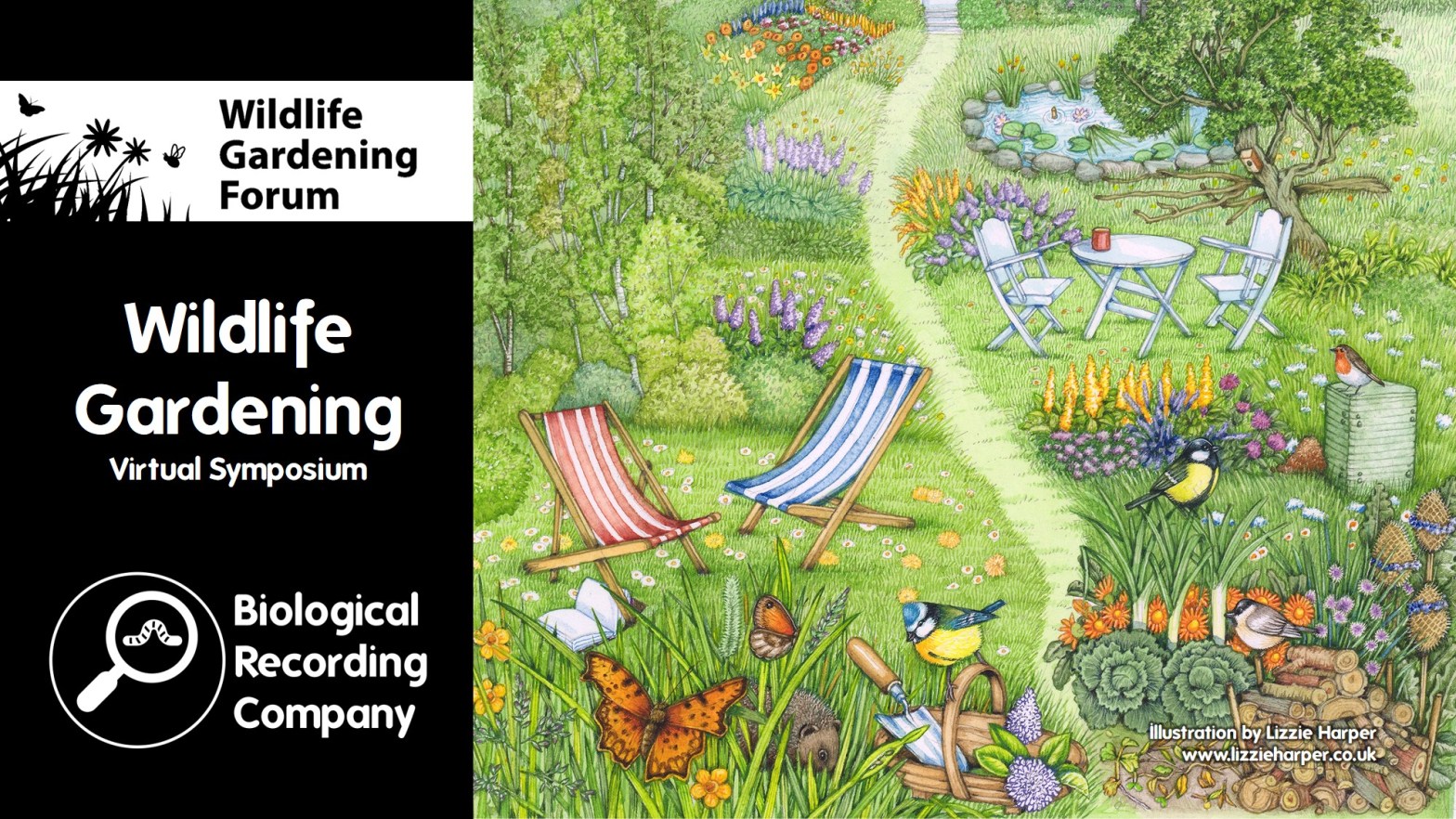
The UK, like most other countries worldwide, has seen significant loss of its plants, animals and fungi. The State of Nature reports that the UK is now one of the most nature-depleted countries on Earth, with species declining by an average of 19% over the past 50 years. This makes nature-friendly gardening more important than ever as our gardens can provide a haven for the wildlife that visit or reside within them.
Wildlife Gardening is now a popular approach, with members of the British public trying to do what they can to give our wildlife a helping hand. This also makes it a business opportunity, with pollinator seed mixes, insect hotels and bird feeders commonly stocked throughout garden centres and online retailers.
But how do we know that our wildlife gardening practices are actually beneficial for nature? The management of habitats that aren’t informed by scientific evidence is at best a matter of hearsay, and at worst, can be misinformed and counter-productive. The Wildlife Gardening Virtual Symposium provided a platform for scientists researching wildlife gardening to share their work and help us all take an evidence-based approach to how we manage our gardens for wildlife.
Speaker Programme
This event featured four presentations from conservation specialists:
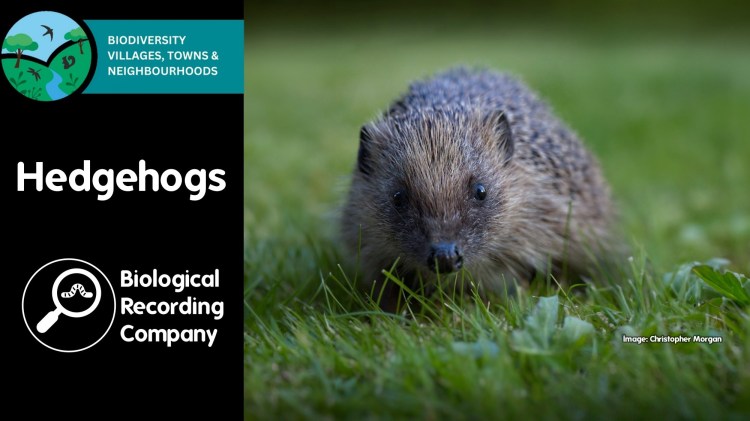
- How To Optimise Our Gardens As Habitats For Hedgehogs with Dr Sophie Lund Rasmussen (University of Oxford)
- The Impact of Wildlife-friendly Gardening on Butterflies with Dr Richard Fox (Butterfly Conservation)
- Garden Bird Feeding: Impacts, Challenges and Trade-offs with Dr Hugh Hanmer (British Trust for Ornithology)
- Gardening for Bats and People with Jo Ferguson (Bat Conservation Trust)
How To Optimise Our Gardens As Habitats For Hedgehogs
Dr Sophie Lund Rasmussen (University of Oxford)
Dr Hedgehog will present her research on the different challenges hedgehogs face when sharing habitats with humans and residing in our gardens. She’ll discuss what we can do to make our gardens more hedgehog-friendly, and thereby improve the conservation initiatives directed at this beloved and declining species.
The Impact of Wildlife-friendly Gardening on Butterflies
Dr Richard Fox (Butterfly Conservation)
Much advice and information is available on gardening for butterflies yet very little of it is evidence-based. This talk will present recent research by Butterfly Conservation showing the impacts on butterfly abundance and species richness of two commonly recommended wildlife-gardening practices: leaving grass to grow long and having flowering ivy.
Garden Bird Feeding: Impacts, Challenges and Trade-offs
Dr Hugh Hanmer (British Trust for Ornithology)
Garden bird feeding is a key and beloved form of human-wildlife interaction. Although generally positive for the people doing it and perceived to be helpful for bird conservation as part of wildlife gardening, this may not always be the case in reality. Here we will explore research on the impacts, challenges and trade-offs in garden bird feeding as currently carried out in the UK.
Gardening for Bats and People
Jo Ferguson (Bat Conservation Trust)
Hear how to create the ideal nocturnal space for bats and people! Learn what elements you can use to make gardens perfect for our bats, while also providing calm, beautiful spaces for people to enjoy connecting with nature.

Wildlife Gardening Updates
Steve Head from the Wildlife Gardening Forum provides a brief overview of news relating to wildlife gardening for the previous year or so.
- Sign up for the FREE Wildlife Gardening Forum Newsletter: https://mailchi.mp/03bdf55e1d11/wlgf
- Wildlife Gardening Forum: https://www.wlgf.org/
- Wildlife Gardening Forum Facebook Page: https://www.facebook.com/groups/wildlife.gardening.forum/
Natural History Museum
The Natural History Museum’s garden reopened in July with a focus on urban wildlife, although the geological half has got much more media coverage. Their new Urban Nature Project looks very interesting, with new techniques of eDNA and sound analysis being rolled out. With the Angela Marmont Centre’s community focus it looks to become a significant urban ecology player. Their Nature Recording Hub encourages people to collect and submit their own garden data.
UK butterfly emergency declared
Butterfly Conservation recorded 2024 as the worst ever Big Butterfly Count results. 80% of species are down, including garden favourites like the holly blue. At least partly due to weather, but the kind of headlines we don’t want.
Importance of common species and gardens
Ken Thompson’s typically excellent book “Common or Garden: Encounters with Britain’s 50 Most Successful Wild Plants” extols the much greater importance of common species than the rare ones that stamp-collecting-minded naturalists get so worked up about. e.g. for ragwort: If it were rare, ragwort would undoubtedly be the object of dedicated conservation, but it’s too common for its own good. This is backed by a paper in March in Biodiversity and Conservation from London lawyer Rob Amos – common species are more ecologically important than rare ones but are failed by rarity-biased international conservation regulation.
A “staggering “ diversity of >1100 spp was recorded in one small Australian garden in one year although it had 97% non-native plants. This provides strong backup to the Jennifer Owen results that effectively started the Wildlife Gardening Forum!
- Amos (2024) Protecting commonplace biodiversity under international conservation law: https://link.springer.com/article/10.1007/s10531-024-02823-y
- Rogers et al (2023) The house of a thousand species: The untapped potential of comprehensive biodiversity censuses of urban properties: https://esajournals.onlinelibrary.wiley.com/doi/10.1002/ecy.4225
Importance of moths
Two papers this year have opened our minds on how significant pollination is by moths, especially the abundant noctuids. In the case of bramble, moths visited more than bees, and nighttime pollen deposition was greater than daytime. Ecologists really do need to turn off the telly and get out more at night! A cartoon published in New depicted two birds in a tree looking down at a hairy ecologist with the caption “Ah – the first ecologist of Spring”.
Continuing with the moth theme, an amazingly simple experiment that at last showed why moths fly to light. They use low sky light above them to help orientate in flight, and so keep their backs to a point light source and spiral into it. People have been arguing about moths and light for years!
- Ellis et al (2023) Negative effects of urbanisation on diurnal and nocturnal pollen-transport networks: https://onlinelibrary.wiley.com/doi/10.1111/ele.14261
- Andreson et al (2023) Marvellous moths! pollen deposition rate of bramble (Rubus futicosus L. agg.) is greater at night than day: https://journals.plos.org/plosone/article?id=10.1371/journal.pone.0281810
- Fabian et al (2024) Why flying insects gather at artificial light: https://www.nature.com/articles/s41467-024-44785-3
People believe what they would like to believe
Wood Wide Web – connectivity and communication between trees due to fungal hyphal connections. Because its a fun and freaky story, this has been hugely promoted in media but hard-nosed examination of the evidence published this year shows the evidence base is very weak. People like to believe what they find appealing.
Likewise, the evidence for the mass media story of “insectageddon” stubbornly refuses to be quite as bad as some would have us believe. There was a paper this year on 50 years of change in macro-moths in Flanders. About 1/4 of species have declined, 1/4 have increased, and the rest are either stable or no clear trend. But a clear signal of climate change: Holarctic species have declined Mediterranean species have increased.
- Karst et al (2023) Positive citation bias and overinterpreted results lead to misinformation on common mycorrhizal networks in forests: https://www.nature.com/articles/s41559-023-01986-1
- Maes et al (2024) Species traits to guide moth conservation in anthropogenic regions: A multi-species approach using distribution trends in Flanders (northern Belgium): https://resjournals.onlinelibrary.wiley.com/doi/full/10.1111/icad.12767
COP meetings generally failed to make needed progress
COP29 UN Climate Change conference was held in a major oil exporting country. Agreement on financial help to developing countries was reached, but seen as wholly inadequate, and did nothing towards consensus on reducing emissions.
COP16 Biodiversity was rather better with many countries submitting biodiversity targets, ensuring the contribution of indigenous people, and some financial pledges. There was also finally recognition of the importance of fungi.
Climate change evidence mounts
Mentioned changes in species balance in Flanders with southern species replacing northern ones. We MUST reconsider “native” bias in UK conservation because some of them will be lost and need appropriate replacements.
In the UK, leaf break in spring is now about 16 days earlier than in the 2001 benchmark year. Big impacts on phenology of flowering plants in south of Iberian peninsula – more flowering now in early winter. Buglife reported Bumblebees nesting in winter– high risk.
Looking ahead
Government plans 1.5m new homes by 2029, with mandatory local targets, release of green belt land and changes to National Planning Policy Framework. Introduction of “grey belt” land as “that part of green belt that doesn’t strongly contribute to green belt purposes”.
Expect more development on brownfield sites – which include very biodiverse areas AND established mature gardens.
More support for low carbon energy e.g. windfarms onshore. Protection for peat bogs and fens
Changes will support climate change mitigation – but no suggestion of incorporation of better biodiversity standards in development, only minimising impacts.
Creating resilience in our gardens has to be an ongoing theme. RHS featured flood prevention with gardens as sponges last year and this, but we also need to consider the unpredictable climate impacts of extreme drought, flooding, winds and even frost.
Learn more about British wildlife
 Biological Recording
4 thoughts on “Wildlife Gardening Virtual Symposium”