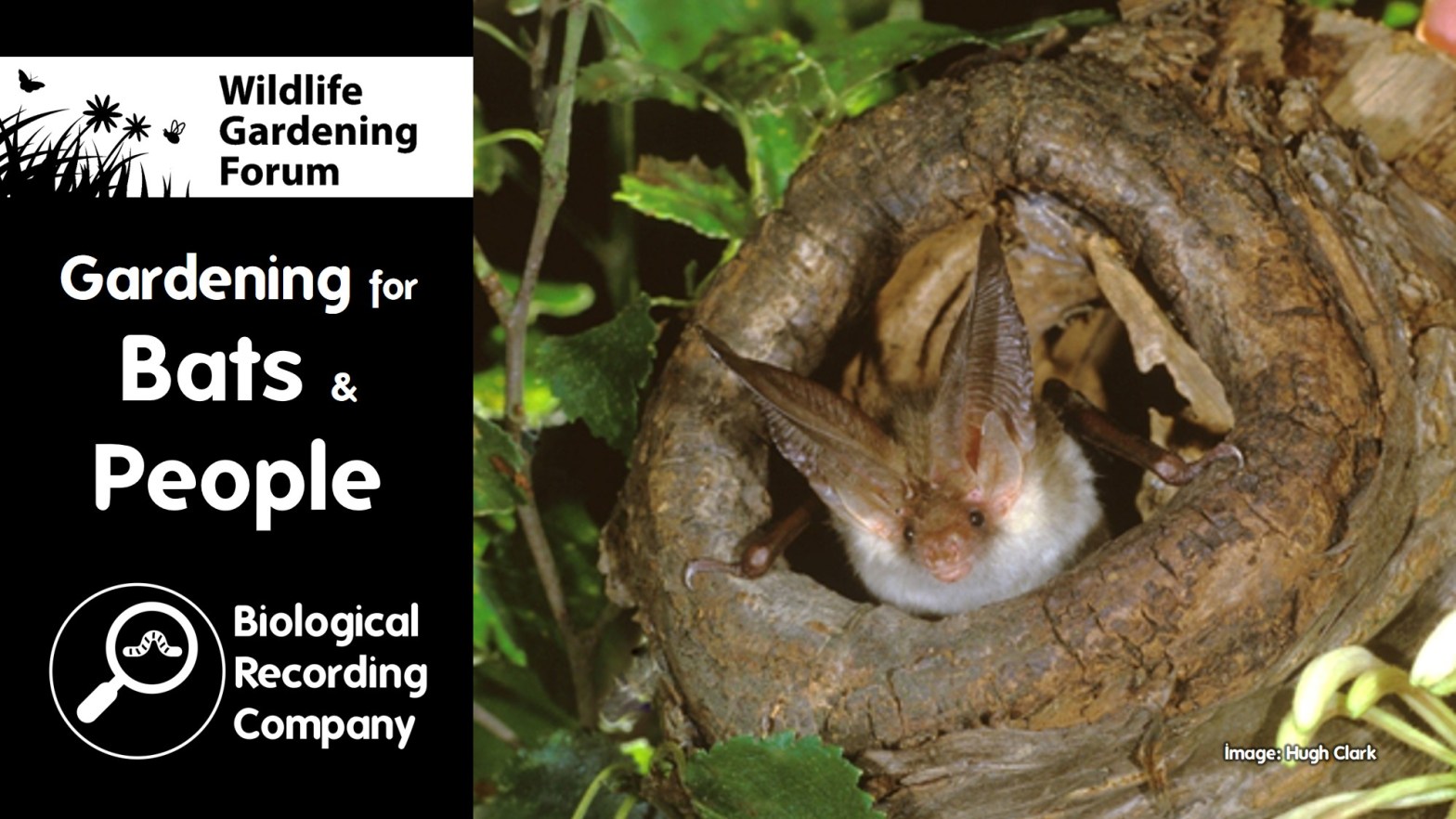
Hear how to create the ideal nocturnal space for bats and people! Learn what elements you can use to make gardens perfect for our bats, while also providing calm, beautiful spaces for people to enjoy connecting with nature.
Q&A with Jo Ferguson
Jo Ferguson is an urban ecologist and Principal Consultant working for the Bat Conservation Trust and Greengage Environmental. She has over 20 years of experience in both voluntary and professional sectors, from practical land management to ecological consultancy, both in the UK and abroad. She is passionate about creating a provision for biodiversity, particularly bats, within the built environment and helping people connect with nature in their own backyard!
Do different species of bats feed on different species of insects?
Yes, they are evolved to hunt in a certain way for different types of insects so they can exploit this niche as a feeding resource as much as possible. For example, slow-flying species, such as the brown long-eared bat, have big ears and quiet but detailed focused call to hunt moths. These woodland bats can even detect moths that are not in flight and pick them off leaves due to their sensitive hearing. It’s a bit of a war of attrition and bats are these fantastic hunting machines. There has also been some evidence of brown long-eared bats eating oak processionary moths from analysing their droppings.
On the other hand, faster flying species such as soprano pipistrelles and common pipistrelles hunt along the edge of habitat and dash out for really small flies, the type that hatch in waterbodies.
Because bats feed on a range of different insects, encouraging them in to your garden means bats can help with suppressing insect species attacking your plants!
Is bat box occupancy impacted by how many bird boxes are nearby?
There are a lot of bat boxes out there so it can depend on the design of the bat box. We would recommend a design that doesn’t allow bird access because some birds, such as Blue Tits, can get into small spaces and are aggressive enough to put bats off using the same area. For example, the Kent Bat Box design is open at the bottom and there’s no area to nest (bats don’t require any nest materials). Placement is also important as bats prefer positions that heat up in the sun. So if in doubt, pair your bird box on the cool side of a tree or a wall and pop a bat box on the warm side, and then the birds will go in their preferred habitat, and then you won’t get that clash.
Is a bat box for roosting in summer or only used for hibernation?
Bats will use different areas for summer roosting and hibernation. We usually recommend putting bat boxes on warm walls (or trees) for when bats are active in the summer months. We do have evidence of bats using bat boxes in winter for hibernation but they require cool, humid and constant conditions that can be difficult to achieve in an unsheltered bat box. The biggest issue we have is there’s not a lot of evidence of where some of our most common species go so it’s difficult to replicate conditions. They’ll tuck themselves away for months at a time somewhere cool and humid, traditionally places like inside a rubble filled wall of a barn or church. However this habitat has been lost in many areas, therefore there is no harm providing bat boxes on a range of elevations to give bats the best chance of finding somewhere to roost all year round.
Is it illegal to move or remove a bat box once it is installed?
Bats are protected by law so disturbing them and destroying their roosts is illegal. However, bat boxes can be moved with the right specialist advice if there is a need to, to protect the bats. For example, where bat boxes have been put up in a tree for roosting provision and then years later a tree needs to be removed for safety reasons. It’s all about making sure that bats are not harmed and that this resource is not lost, which requires getting specialist advice to for example, check boxes are empty but then the resource is relocated again nearby.
Are LED lights good for bats?
LED lights are just a type of lighting. You can get blue-rich LED lighting with UV content that is attractive to insects (and therefore harmful in the environment) and you can get warmer LEDs that don’t have this component so is less impactful. It’s important to remember though that no lighting is ‘good’ for bats, bats are nocturnal and are perfectly suited to completely dark habitats so we should be mindful any time we think about adding lighting to our gardens. The first question to ask therefore is, do we need lighting at all? If so, where should it be directed to ensure it does not disturb habitat, how long does it need to be on for and how little lighting is actually needed to do the job intended. There is loads of great guidance on our website or if in doubt, seek out specialist advice.
Where do bats roost in trees?
Bats are looking for trees that provide features for them to roost in such as splits, cracks, crevices and hollows, therefore more mature, deciduous trees tend to be better in providing these resources, species such as Ash and Oak for example.
What is the best bat detector for absolute beginners?
In terms of getting started, the Magenta Bat Detector is a nice entry-level device that is simple to use, you can often get them second hand – I’ve had mine for years. I’d recommend coupling this with a basic field guide, then it’s simply getting out there to hone your skills and enjoying connecting with nocturnal nature!
Literature References
- Bat Conservation Trust and Institute of Lighting Professionals (2023) Guidance Note 08/23 Bats and Artificial Lighting: https://theilp.org.uk/publication/guidance-note-8-bats-and-artificial-lighting/
- Mimet et al (2020) Contribution of private gardens to habitat availability, connectivity and conservation of the common pipistrelle in Paris: https://www.sciencedirect.com/science/article/abs/pii/S0169204619312861
- Jones et al (2009) Carpe noctem: the importance of bats as bioindicators: https://www.int-res.com/abstracts/esr/v8/n1-2/p93-115/
Further info and links
- UK Bat Species: https://www.bats.org.uk/about-bats/what-are-bats/uk-bats
- BCT eLearning platform: https://learn.bats.org.uk/
- Artificial Lighting best practice guidance and resources: https://www.bats.org.uk/our-work/buildings-planning-and-development/lighting
- Gardening for bats: https://www.bats.org.uk/advice/gardening-for-bats
- BCT’s Roost Partnership scheme: https://www.bats.org.uk/our-work/buildings-planning-and-development/roost-replacement-and-enhancement/partnerships
- Sunset Survey: https://www.bats.org.uk/our-work/national-bat-monitoring-programme/getting-started/sunset-survey
Learn more about British wildlife

 Biological Recording
One thought on “Gardening for Bats and People”