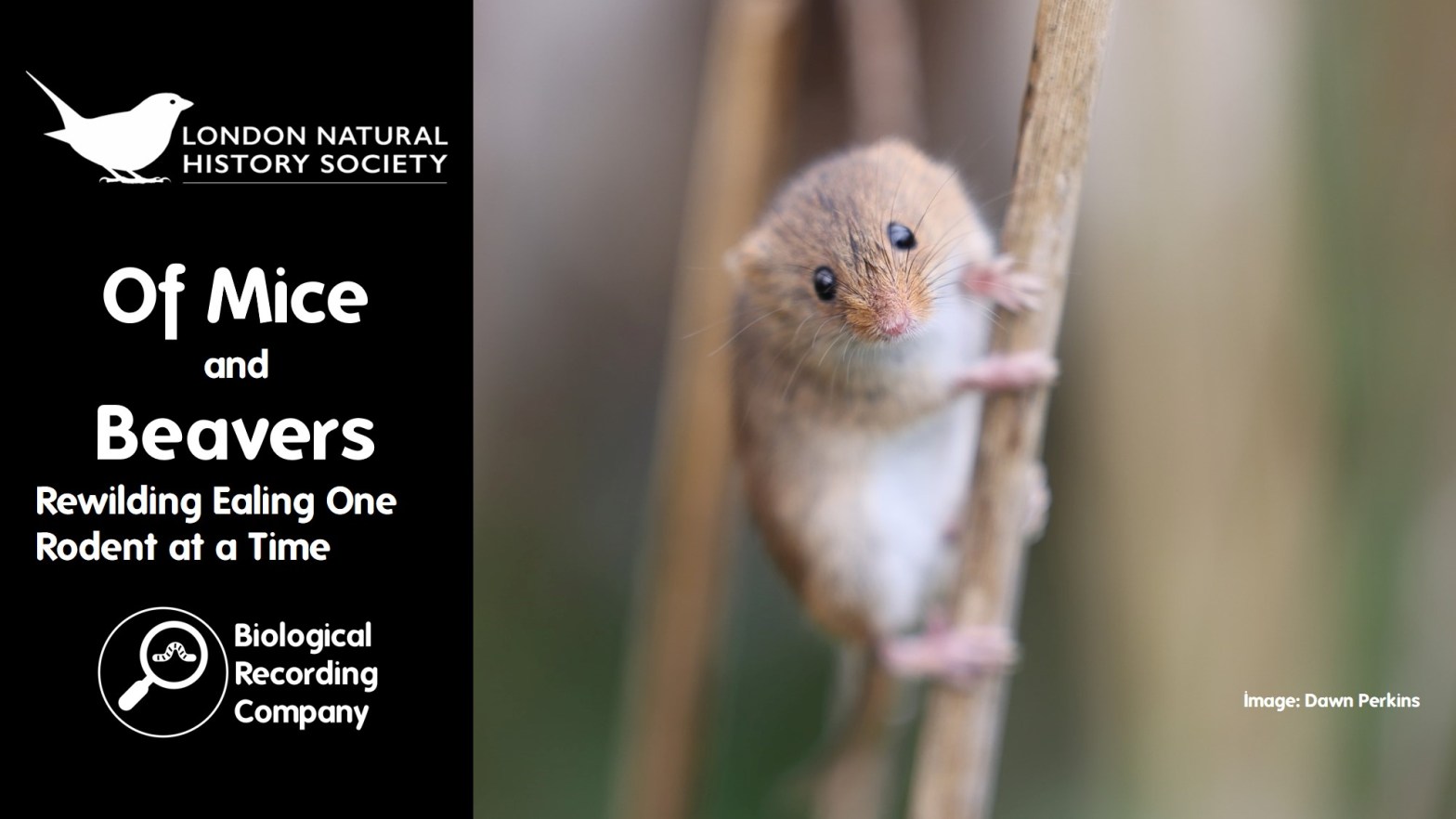
Dr Sean McCormack discusses his work with Ealing Wildlife Group and their ‘Rewilding Ealing’ initiative, focusing on the successful reintroduction of Britain’s smallest and largest native rodent species, the Harvest Mouse and Eurasian Beaver. He also touches on some of the group’s wider conservation efforts and future plans.
These projects harness the local community and are all volunteer-led. The Ealing Beaver Project is a collaboration between Ealing Wildlife Group, Citizen Zoo, Friends of Horsenden and Ealing Council. It is the first truly urban London beaver reintroduction and is fully accessible to the public to enter freely and immerse themselves in a beaver-shaped landscape. A family of five beavers were reintroduced here to Paradise Fields in October 2023 with support from the Mayor of London and Beaver Trust, for whom Sean is an ambassador.
Q&A with Dr Sean McCormack
Dr Sean McCormack is a conservationist, vet and occasional TV and radio presenter who has always had a passion for the natural world. In 2016 he set up Ealing Wildlife Group, a community conservation group working in partnership with the local Council and other landowners on various species-focused projects including Barn Owls, Peregrine Falcons, Great Crested Newts, Bats, Swifts, Hedgehogs and more recently reintroducing both Britain’s smallest and largest native rodents to Ealing, the Harvest Mouse and the Eurasian Beaver.
What are the predator risks to harvest mice that concern you?
The harvest mice (Micromys minutus) are not wrapped in cotton wool and we see them as part of the ecosystem, being an important part of the food chain with natural predators and one of the project aims is to put back that missing cog. We are concerned about unnatural predation of the mice causing local extinction of the reintroduced populations. We are particularly concerned about cats as they hunt for entertainment and even a single cat can cause a lot of damage if it is catching several prey items per day. The density of cats in the urban landscape makes this a particular issue. One of our sites identified for release was not used due to the fact that it was surrounded by residential areas and we felt the risk from cat predation was too high. We’ve also heard from some dog owners walking their dogs on Horsenden Hill that their dogs love to run off and catch mice so we’ve been trying to educate them that this could be damaging populations of a rare species and the response has been generally positive.
Have you had any beavers escape?
No! To reduce the temptation for the beavers (Castor fiber) to want to escape, we’ve given them a huge amount of space. The recommendation form the Beaver Trust was two hectares of good quality habitat for a family of beavers and we’ve created an enclosure with 8 hectares, particularly as we know there is a fair amount of human activity on site and we wanted the beavers to easily be able to get away from us! The pressure for a beaver to want to escape tends to happen when you get more and more beavers in a territory. The oldest offspring will then start wanting to disperse to find their own territory and start their own family. To mitigate this, the oldest offspring should be removed when the family gets too big for the enclosure. The fencing for the enclosure is a specially designed “beaver-proof” fence that has a skirt on the ground to prevent animals from digging out of the enclosure and an overhang to prevent animals from climbing over the fence. Any culverts and grates where water is coming in or out of the site have also been “beaver-proofed” where needed. We have had a team of wonderful volunteers who have been responsible for checking the fencing on a daily basis for the first year, and now check it 3-4 times per week. We have a plan for if the beavers escape and I’m confident that we could recover them quickly.
Do you expect to let the Paradise Beavers go free, either naturally or deliberately?
These beavers are at this site under a licence so it is not possible to let them naturally disperse into the surrounding area. Release of these beavers into the wild would need to be planned. Our licence is for 5 years. Natural England may suggest that the licence is continued but we need to consider the amount of work and effort that goes into maintaining this population and, as the licence holder, I can’t commit to looking after a family of beavers for the rest of my life. The aim of this project was never to restore beavers to Greater London at a population level, it is more of a demonstration and engagement project to see how we can live alongside one family of beavers. Paradise Fields would not be the best place to release beavers from as it has a busy road on one boundary and a very urban landscape (a retail park) on another. We’re in a strange situation politically at this current point in time where beavers are classed as a native protected species but the only way that they can be released is behind an expensive fence. There are signs that this may change with the new government, and I hope to see the kits born this year to be released at a suitable wetland environment site within Greater London without an enclosure!
Are you seeing an increase in the wider biodiversity from the beaver project?
Building up robust and statistically significant data to evidence this takes time, so we’re not quite there yet with evidencing this scientifically. However, we are definitely starting to see positive changes. We’re seeing more bats and new bat species on site, which are a good indicator for insect populations. We can see on a macro level that the number of invertebrates within the water is much improved, and we’ve recorded new species of Gammarus (freshwater shrimp), cased caddisflies. We’ve seen water rail (Rallus aquaticus) and snipe (Gallinago gallinago) on site for the first time. Remember we are only one year in and I can’t wait to see how transformed the site is by the end of the project.
Further Info
- A Rewilded London: Reimagining a Wilder Future for the City blog by Elliot Newton: https://biologicalrecording.co.uk/2025/01/01/a-rewilded-london/
- Rewild London Virtual Symposium: https://biologicalrecording.co.uk/2025/01/01/a-rewilded-london/
- Sign up for the Ealing Wildlife Group Newsletter: https://ealingwildlifegroup.com/newsletter/
- Harvest Mice (Ealing Wildlife Group): https://ealingwildlifegroup.com/harvest-mice/
- The Ealing Beaver Project: https://theealingbeaverproject.com/
- London Beaver Working Group: https://www.citizenzoo.org/our-work/london-beaver/
- Beaver tours at Paradise Fields: https://theealingbeaverproject.com/events/
- Get inVOLEd project: https://www.citizenzoo.org/our-work/water-voles/
More for environmental professionals


 Biological Recording
One thought on “Of Mice and Beavers: Rewilding Ealing One Rodent at a Time”