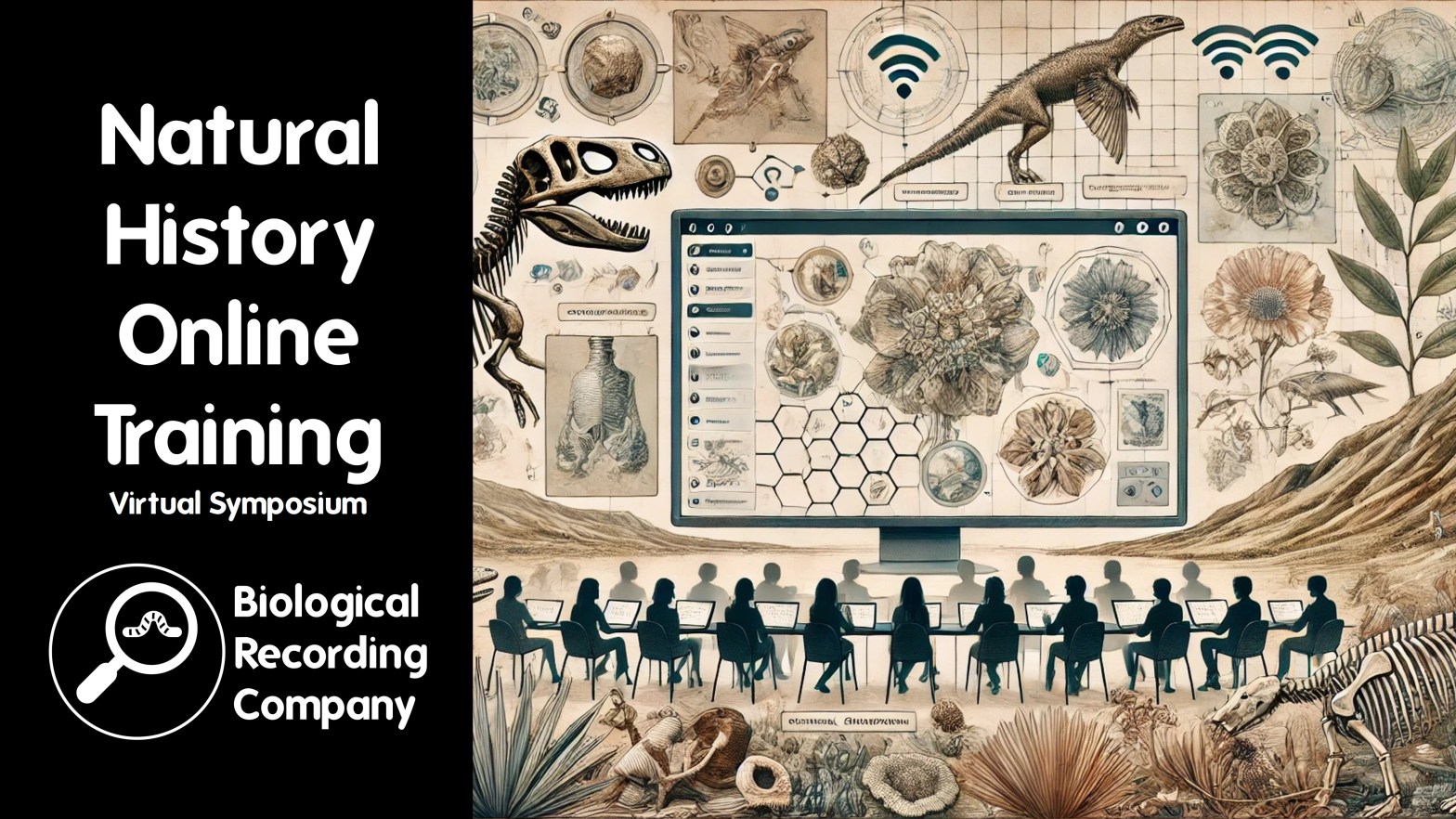
Over the last decade, there has been a boom in online training – both for professional development and personal enjoyment. Evolving technology and software have led to a variety of innovative methods for delivering biodiversity training to virtual audiences.
The Natural History Online Training Virtual Symposium explored how virtual training is not synonymous with sitting at a screen to learn about the natural world. We heardfrom four biodiversity education specialists about different online training delivery methods, delving into the challenges and benefits they have experienced through virtual engagement with learners.
This virtual event was aimed at environmental and education professionals that engage both professional and non-professional audiences with biodiversity subjects, such as ecology, species identification, conservation and wildlife monitoring.
Speaker Programme
This event featured four presentations from invertebrate specialists:
- The Power of the Webinar: Engaging Large Virtual Audiences with Natural History with Keiron Derek Brown (Biological Recording Company)
- Exploring the Digital Wild: Teaching Natural History Using a Learning Management System with Dan Asaw (Field Studies Council)
- Identiplant: A Unique Tutor-led Online Botany Course with Dr Chantal Helm (Botanical Society of Britain & Ireland)
- Online Training For Successful Conservation Projects with Ali Skeats (WildTeam)
The Power of the Webinar: Engaging Large Virtual Audiences with Natural History
Keiron Derek Brown (Biological Recording Company)
Since the coronavirus pandemic, the world of virtual events has grown significantly. Many natural history organisations have seized the opportunity to engage bigger and more diverse audiences and continue to do so alongside the traditional in-person training and engagement activities that have now recommenced. This presentation will explore the pros and cons of using webinars to engage with audiences and delve into case studies from the FSC BioLinks project, London Natural History Society and entoLIVE. We’ll explore some of the do’s and don’ts for delivering natural history content virtually and discuss the next steps for engaging large virtual audiences.
Exploring the Digital Wild: Teaching Natural History Using a Learning Management System
Dan Asaw (Field Studies Council)
The surge in popularity of Learning Management Systems (LMS) arises from their capacity to centralise educational materials, enhance course delivery efficiency, and enable interactive learning experiences. Using the Moodle LMS, the Field Studies Council has effectively engaged thousands of participants through initiatives like the BioLinks project and ongoing Biodiversity Team training courses. Join this presentation to delve into the outcomes and challenges encountered when utilizing an LMS for teaching natural history subjects, and share valuable lessons learned.
Identiplant: A Unique Tutor-led Online Botany Course
Dr Chantal Helm (Botanical Society of Britain & Ireland)
Identiplant is for those who want to get started with serious botany. It was created to take near beginners to an intermediate level with the help of an allocated Tutor, whose role is to guide students through the online course content (delivered through our in-house learning platform called Capsella) and provide feedback on submissions. Students are tasked with hunting for a number of common and widespread plant species through the seasons, in order to gain an understanding of the diagnostic features of the commonest plant families found in the UK. Students leave with a set of key skills allowing them to make further progress independently. This talk will discuss the challenges and benefits of delivering an online course to almost 300 students a year, across 5 countries, with the support of over 60 tutors.
Online Training For Successful Conservation Projects
Ali Skeats (WildTeam)
WildTeam teach a suite of best practices, designed to support wildlife conservation projects across global contexts. They have moved from classroom-based teaching to online teaching, in order to reach more people. This has come with challenges and successes; they continue to adapt in order to best teach and support conservationists across the world to deliver impactful projects. Ali will share WildTeam’s learning, and vision for the future of online training in the conservation sector.
More for environmental professionals
 Biological Recording
4 thoughts on “Natural History Online Training Virtual Symposium”