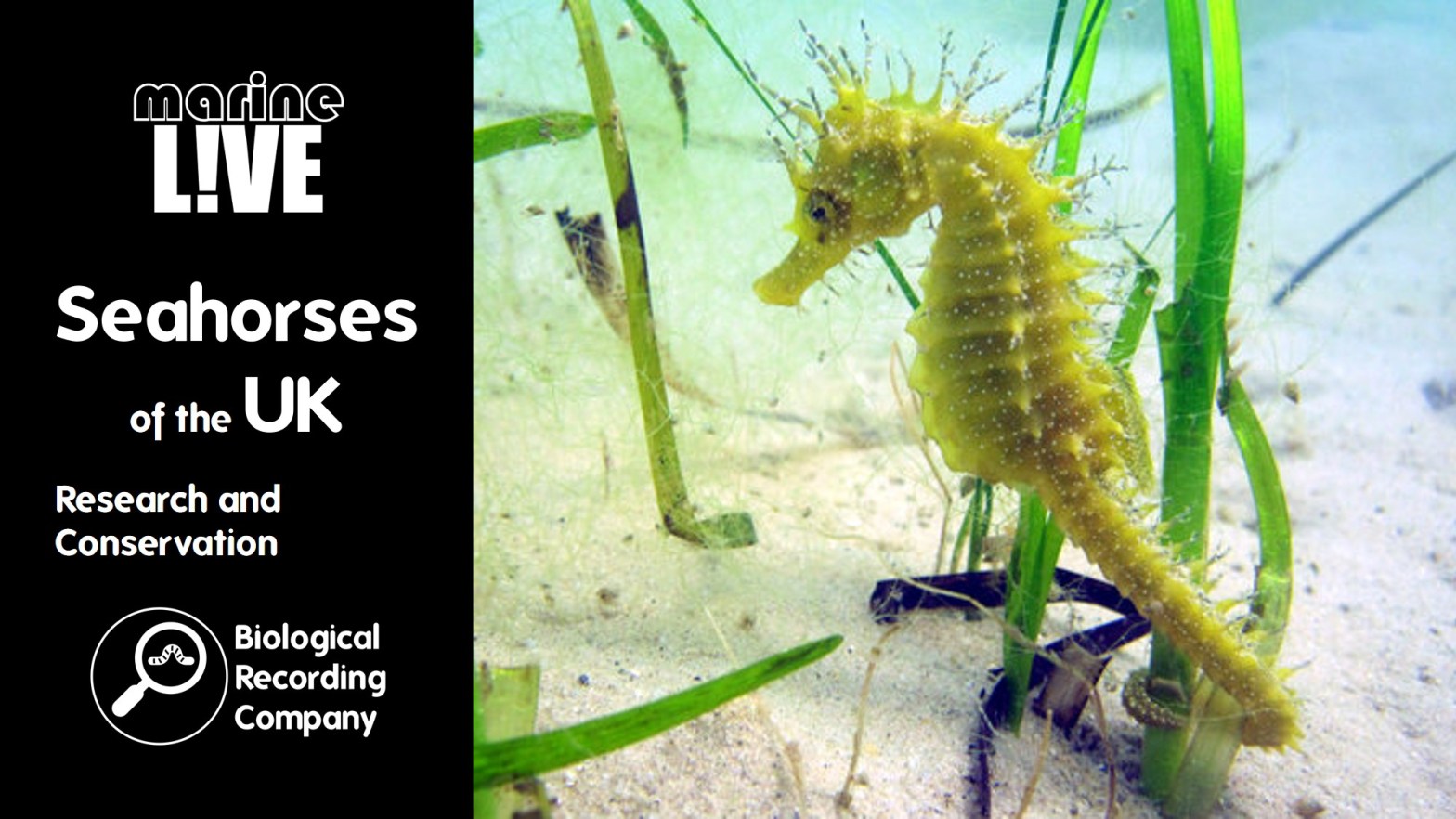
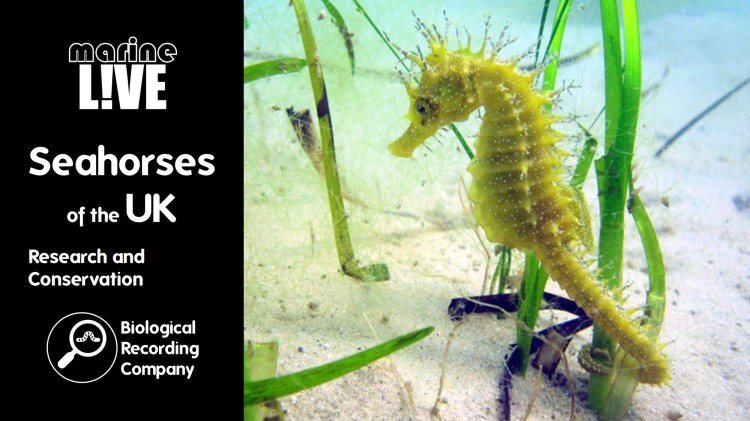
Seahorses are enigmatic species, their form and mythical appearance instilling a sense of wonder for many. Their status as a symbol for the oceans is used across the world, however little awareness is given to the threats and challenges that they face, the research and work being delivered to protect them, and for the UK, their presence in our waters. Join this session to hear more about these amazing creatures, and about how you can support our marine environment.
The Seahorse Trust is offering marineLIVE attendees an exclusive discount on their Seahorse Ecology online course. This course is normally priced £65 and can be purchased for just £50 by emailing the Seahorse Trust at theseahorsetrust@gmail.com to request a place on this course and quote the code marineLIVEto claim your discount!
Q&A with Beccy MacDonald-Lofts
Beccy MacDonald-Lofts is an enthusiastic marine conservationist and educator who is passionate about connecting people and nature. Her experience is cross-sector, providing her with a broad view of the challenges and solutions that face our coastal and marine environment, and those who depend upon them. Beccy is a Trustee for MARINElife, ordinary council member for the Porcupine Marine Natural History Society, sits on the National Seahorse Working Group and has been a volunteer surveyor, and previously a trustee, for The Seahorse Trust for whom she also coordinates their online learning course.
- What is the usual lifespan of a seahorse?
That depends on the species. It also depends on individuals in captivity versus in the wild. We don’t really have precise data for how long seahorses live in the wild. It is believed that for UK species it is up to 7-9 years, but we need research that tracks seahorses for their entire lives to confirm this. The difficulty with doing this in the wild is that individuals will leave an area and move around so it can be difficult to know if an individual is not in an area from year to the next because it is somewhere else or because it has died. Research into the life histories of wild seahorses has developed in recent years through the introduction of Photo Identification using the unique spot patterns of individuals, however this is still in its early application and their size limits the use of the current range of fish trackers. - What water depth range are they found at?
This varies depending on the time of year. At Studland Bay during the summer months, we find them at depths of 1 metre or less, but the tide is coming in and out during the day so this depth is also varying depending on the tide. During the winter months they are found further out in the English Channel at some quite significant depths and are sometimes caught by trawlers. Again, there’s a lot more research for us to do to understand this in more detail. - What eats seahorses?
UK seahorses range in size and can be as large as 30 cm so adults tend to be eaten by larger fish, including rays and smaller sharks. - How many species of seahorse are known in the UK?
It is only relatively recently that we established that seahorses are present year-round in the UK and breeding here. This was an important discovery and highlights how easy it is to overlook them. We have two species that occur in UK waters. The gaps in the Seahorse Trust distribution maps do not tell us that seahorses are not there, as survey effort is biased towards southern waters where more people dive. It is also possible that they are being missed in areas where they are not known as they are a cryptic species making them difficult to spot and people may well miss them as they are not expecting to see them. - Do we know why flash photography is so damaging to seahorses?
It is assumed that it is because of their eyesight. They live in a relatively darkened environment and have acute eyesight. Flashes of light are not something that is naturally occurring in these environments, so we need to be aware of how this sudden flash of light impacts the animal physically and psychologically. Research into the impacts upon the UK species is difficult as the populations are small and ethically, we need to consider whether it is appropriate to remove individuals and conduct research on them just for the purpose of using flash photography. - How do you tell the difference between a male and a female seahorse?
It is all to do with the shape of their body. The females have a protruding feature under the abdomen. This is the ovipositor. The males have an obvious hole underneath an expandable abdomen pouch, which is where the female inserts the ovipositor to insert her unfertilised eggs and where the fry exit from. The males experience a true pregnancy as the babies receive all their nutrition from the father and the pregnancy ends with contractions when giving birth! - What is the one thing that we can all do to help UK seahorses?
Just because you don’t live near the coast does not mean that you can’t be helpful. Seahorses aren’t just found in the sea… we are seeing seahorses moving into estuaries! Everyone can look at their own actions and think about what we can do to minimise their impact on our rivers and marine environments, for example, what chemicals are you pouring down the sink and making life choices that reduce our impact on the natural environment.
Literature References
- Lourie (2016) Seahorses A Life-Size Guide to Every Species: https://www.nhbs.com/seahorses-a-life-size-guide-to-every-species-book
Further Info
- The Seahorse Trust: https://www.theseahorsetrust.org/
- World Seahorse Survey: https://www.theseahorsetrust.org/conservation/world-seahorse-survey-2/
- Spiny Seahorse Factsheet: https://www.theseahorsetrust.org/wp-content/uploads/2023/04/H.guttulatus-fact-Sheet.pdf
- Short Snouted Seahorse Factsheet: https://www.theseahorsetrust.org/wp-content/uploads/2023/04/H.hippocampus-fact-Sheet.pdf
- Email theseahorsetrust@gmail.com with the code ‘marinelive’ to book the Seahorse Ecology online course.
- Seahorse species predicted habitat distributions and associated environmental data layers covering the shelf seas surrounding the UK: https://data.cefas.co.uk/view/21660
marineLIVE
marineLIVE webinars feature guest marine biologists talking about their research into the various organisms that inhabit our seas and oceans, and the threats that they face. All events are free to attend and are suitable for adults of all abilities – a passion for marine life is all that’s required!
- Upcoming marineLIVE webinars: https://www.eventbrite.co.uk/cc/marinelive-webinars-3182319
- Donate to marineLIVE: https://gofund.me/fe084e0f
- marineLIVE blog: https://biologicalrecording.co.uk/category/marinelive-blog/
- marineLIVE on YouTube: https://youtube.com/playlist?list=PLuEBNUcfMmE-t2dzcoX59iR41WnEf21fg&feature=shared
marineLIVE is delivered by the Biological Recording Company with funding from the British Ecological Society.
- Explore upcoming events and training opportunities from the Biological Recording Company: https://www.eventbrite.co.uk/o/the-biological-recording-company-35982868173
- Check out the British Ecological Society website for more information on membership, events, publications and special interest groups: https://www.britishecologicalsociety.org/
More on marine biology


 Biological Recording