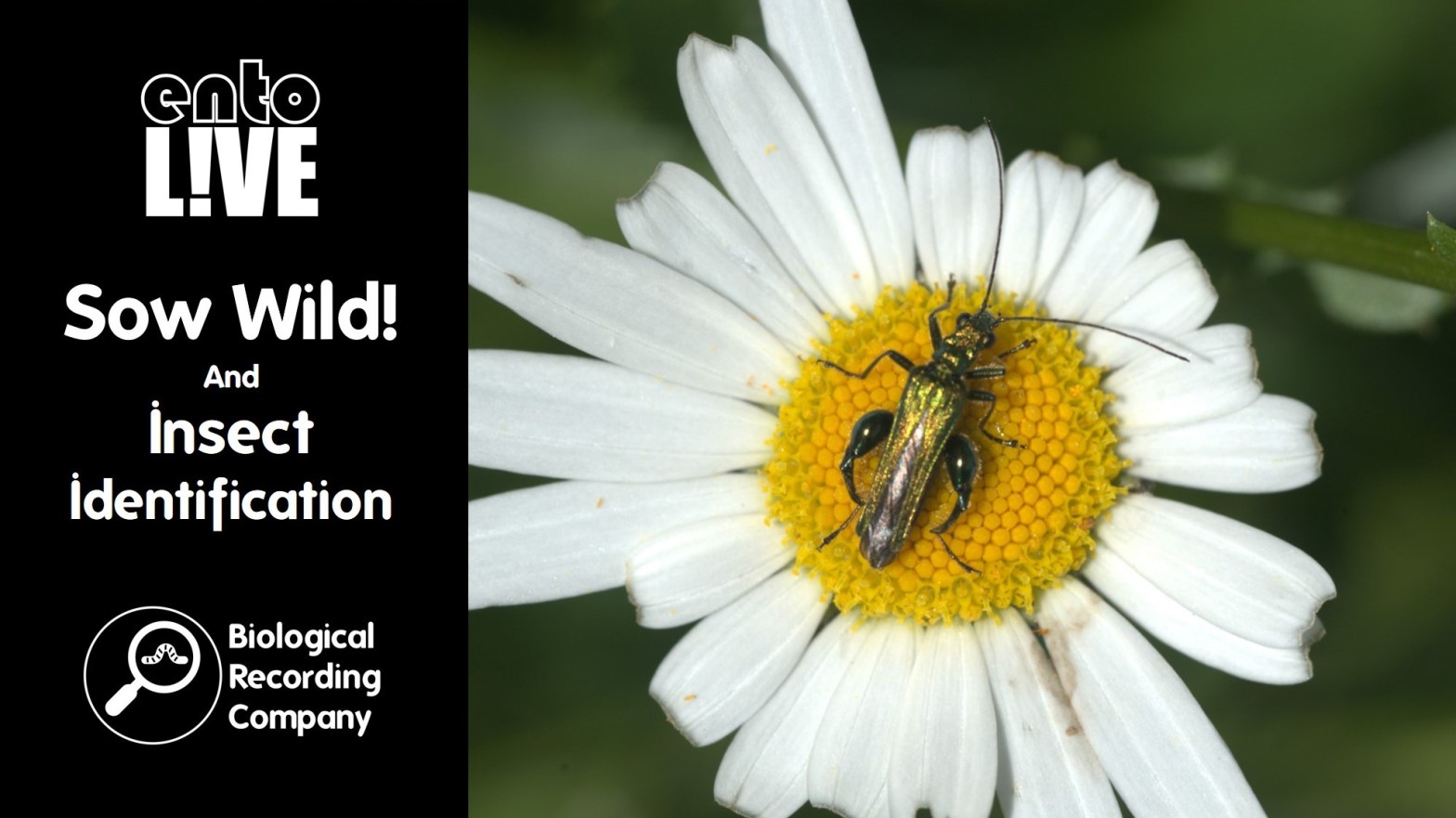
Habitat loss and fragmentation are considered the foremost threats in pollinator decline, and in England and Wales, 97% of wildflower meadows were lost by 1984. Gardens have considerable potential for supporting pollinators, covering large areas of urban landscapes often with diverse floral resources. Buzz Club used citizen science to investigate the effectiveness of small 4m2 sown wildflower ‘mini-meadows’ in UK gardens and allotments in recruiting beneficial insects. They then examined effective methods and any potential bias in the identification and sampling methods conducted by citizen scientists. Janine will explain the results of the ‘Sow Wild!’ project, followed by Issy who will talk about the Buzz Club’s new ‘Insect ID Quiz’ project. The insect ID Quiz is helping the Buzz Club determine if training will help to limit any identification bias in citizen science observations.
Q&A with Dr Janine Griffiths-Lee
Dr Janine Griffiths-Lee is a post-doctoral researcher at RBG Kew. Based at Wakehurst, she works in the Nature Unlocked team studying pollinators in the landscape. Her current focus is the benefits of different tree species to pollinators, habitat management in urban gardens, and citizen science.
Does the richness of wild bee species refer to the number of species or the diversity of species?
This refers to the number of species. Looking at the diversity is more complicated and looking at the significance of this was not something that we were able to look at in detail. In the paper, we do discuss the diversity but it’s quite complicated, so if you are interested in the diversity of bees that we collected I’d recommend checking out the paper.
Is it possible to get details of the wildflower mixes used in the Sow Wild! Project?
All of our mixes are listed in the appendix of the research paper. I made my own mixes for this project, but the Buzz Club also have a really successful wildflower mix as part of our sponsor packs. Its lovely and bees come throughout the year with this mix.
You can find out more about becoming a sponsor and learn about our sponsor packs here: https://www.thebuzzclub.uk/memberandsponsor
Have you considered using bioacoustics and machine learning to look at insect activity in denser patches?
We are looking into different methods of bioacoustics and how accurate the level of detail is, for example, can you get to genus or just to broad groups? It was certainly out of scope for this study because it would have been a great expense to send such equipment to citizen scientists. We had 150 participants, so we really had to be quite aware of our limitations. But it is something interesting that I am working with at the moment – bioacoustics, and camera trapping as well.
Is it possible to get details of the wildflower mixes used in the Sow Wild! Project?
All of our mixes are listed in the appendix of the research paper. I made my own mixes for this project, but the Buzz Club also have a really successful wildflower mix as part of our sponsor packs. Its lovely and bees come throughout the year with this mix.
Q&A with Isobel Sexton
Issy Sexton is a Research Assistant at the University of Sussex, specialising in pollinator-focused citizen science. She also has a background in community engagement and environmental policy.
Are there any plans to follow on from the Sow Wild project?
Isobel: The Insect ID project leads directly on from it of course, but we don’t have any other projects in the pipeline leading on from this just yet. However, we’re always expanding our programme of projects so watch this space
Are the resources from these experiments available online?
The training webinar from the project is only available to the participants currently. The quizzes and online resources are free for everyone so you can go and try the quizzes here: https://www.thebuzzclub.uk/resources We also have flash cards. I haven’t created them yet for the bee project, but for others, you can print them off and take them into your garden to practise IDing. To access the training videos you need to be signed up as a project participant.
What is the plan for Insect ID in 2025?
What I’d really like to do is analyse the results and then take it forward in terms of how the skills gained from looking at the photos online are then transferred to the field. All of this is showing that it works really well online but how well does this translate when using the skills in the field?
I’d also like to look at the training and look at how long the skills are retained. Everyone was given two weeks to complete the first quiz, then a week’s break to do the training if they were in the training-between-quizzes group, or just a week’s break if they were in the control group, then they had two weeks to do the quiz. I left it like that because it was a citizen science project and I wanted people to enjoy doing it and not feel like it was a task. However, and again, I haven’t done the statistics on this yet, but just by looking, the people who did the training and then did the quiz straight away got the highest scores. Those who left it for two weeks still improved their scores somewhat. Those who did it straight away doubled their scores and the people who left it added four or five points. So that is something interesting to look at and to develop to make sure we can retain the information.
Literature References
- Klein et al (2007) Importance of pollinators in changing landscapes for world crops: https://doi.org/10.1098/rspb.2006.3721
- Ollerton et al (2011) How many flowering plants are pollinated by animals?: https://doi.org/10.1111/j.1600-0706.2010.18644.x
- Intergovernmental Science-Policy Platform on Biodiversity and Ecosystem Services (2016) Summary for policy makers of the global assessment report of the Intergovernmental Science-Policy Platform on Biodiversity and Ecosystem Services on pollinators, pollination, and food production: https://www.ipbes.net/assessment-reports/pollinators
- Baldock et al (2019) A systems approach reveals urban pollinator hotspots and conservation opportunities: https://doi.org/10.1038/s41559-018-0769-y
- Smith & Fellowes 2013 (2013) Towards a lawn without grass: the journey of the imperfect lawn and its analogues: https://doi.org/10.1080/14601176.2013.799314
- Goddard et al (2013) Why garden for wildlife? Social and ecological drivers, motivations and barriers for biodiversity management in residential landscapes: https://doi.org/10.1016/j.ecolecon.2012.07.016
- Balfour & Ratnieks (2022) The disproportionate value of ‘weeds’ to pollinators and biodiversity: https://doi.org/10.1111/1365-2664.14132
- Griffiths-Lee et al (2022). Sown mini-meadows increase pollinator diversity in gardens: https://doi.org/10.1007/s10841-022-00387-2
- Bonney et al (2009) Citizen Science: A Developing Tool for Expanding Science Knowledge and Scientific Literacy: https://doi.org/10.1525/bio.2009.59.11.9
- Birkin and Goulson (2015) Using citizen science to monitor pollination services: Citizen science and pollination services: https://doi.org/10.1111/een.12227
- Maher et al (2019) Using citizen science to examine the nesting ecology of ground-nesting bees: https://doi.org/10.1002/ecs2.2911
- Lye et al (2012) Using citizen science to monitor Bombus populations in the UK: Nesting ecology and relative abundance in the urban environment: https://doi.org/10.1007/s10841-011-9450-3
- Merenlender et al (2016) Evaluating environmental education, citizen science, and stewardship through naturalist programs: https://doi.org/10.1111/cobi.12737
- Gardiner et al (2012) Lessons from lady beetles: Accuracy of monitoring data from US and UK citizen-science programs: https://doi.org/10.1890/110185
- Burgess et al (2017) The science of 139 citizen science: Exploring barriers to use as a primary research tool: https://doi.org/10.1016/j.biocon.2016.05.014
- Law et al (2017) Crowdsourcing as a Tool for Research: Implications of Uncertainty: https://doi.org/10.1145/2998181.2998197
- Kremen et al (2011) Evaluating the Quality of CitizenScientist Data on Pollinator Communities: Citizen-Scientist Pollinator Monitoring: https://doi.org/10.1111/j.1523-1739.2011.01657.x
- Griffiths-Lee et al (2023) Sow Wild! Effective Methods and Identification Bias in Pollinator-Focused Experimental Citizen Science: https://doi.org/10.5334/cstp.550
Further Info
- Buzz Club website: https://www.thebuzzclub.uk/
- Insect ID Project page: https://www.thebuzzclub.uk/insectid
- Buzz Club Publications: https://www.thebuzzclub.uk/publications
- Buzz Club Quizzes: https://www.thebuzzclub.uk/resources
- Wildlife Gardening: https://www.wildlifetrusts.org/gardening
- Urban Food Agenda: https://www.fao.org/urban-agriculture/en/
- UK Pollinator Monitoring Scheme: https://ukpoms.org.uk/
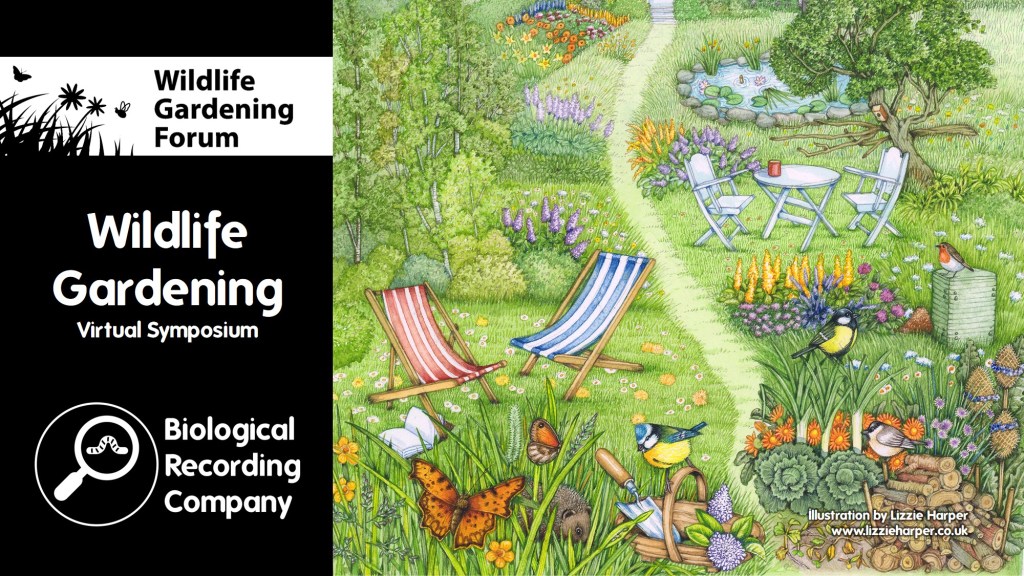
- Wildlife Gardening Virtual Symposium: https://www.eventbrite.co.uk/e/wildlife-gardening-virtual-symposium-tickets-928434401287
- entoLEARN webinars: https://www.eventbrite.co.uk/cc/entolearn-webinars-1574569
entoLIVE
entoLIVE webinars feature guest invertebrate researchers delving into their own invertebrate research. All events are free to attend and are suitable for adults of all abilities – a passion for invertebrates is all that’s required!
- Donate to entoLIVE: https://www.gofundme.com/f/entolive-2025
- Upcoming entoLIVE webinars: https://www.eventbrite.com/cc/entolive-webinars-74679
- entoLIVE blog: https://biologicalrecording.co.uk/category/entolive-blog/
- entoLIVE on YouTube: https://youtube.com/playlist?list=PLuEBNUcfMmE95Re19nMKQ3iX8ZFRFgUAg&feature=shared
entoLIVE is delivered by the Biological Recording Company in partnership with the British Entomological & Natural History Society, Royal Entomological Society and Amateur Entomologists’ Society, with support from Buglife, Field Studies Council and National Biodiversity Network Trust.
The entoLIVE programme is delivered by Biological Recording Company and receives sponsorship from the following organisations:
- British Entomological & Natural History Society
- Royal Entomological Society
- Amateur Entomogists’ Society
More on citizen science

 Biological Recording