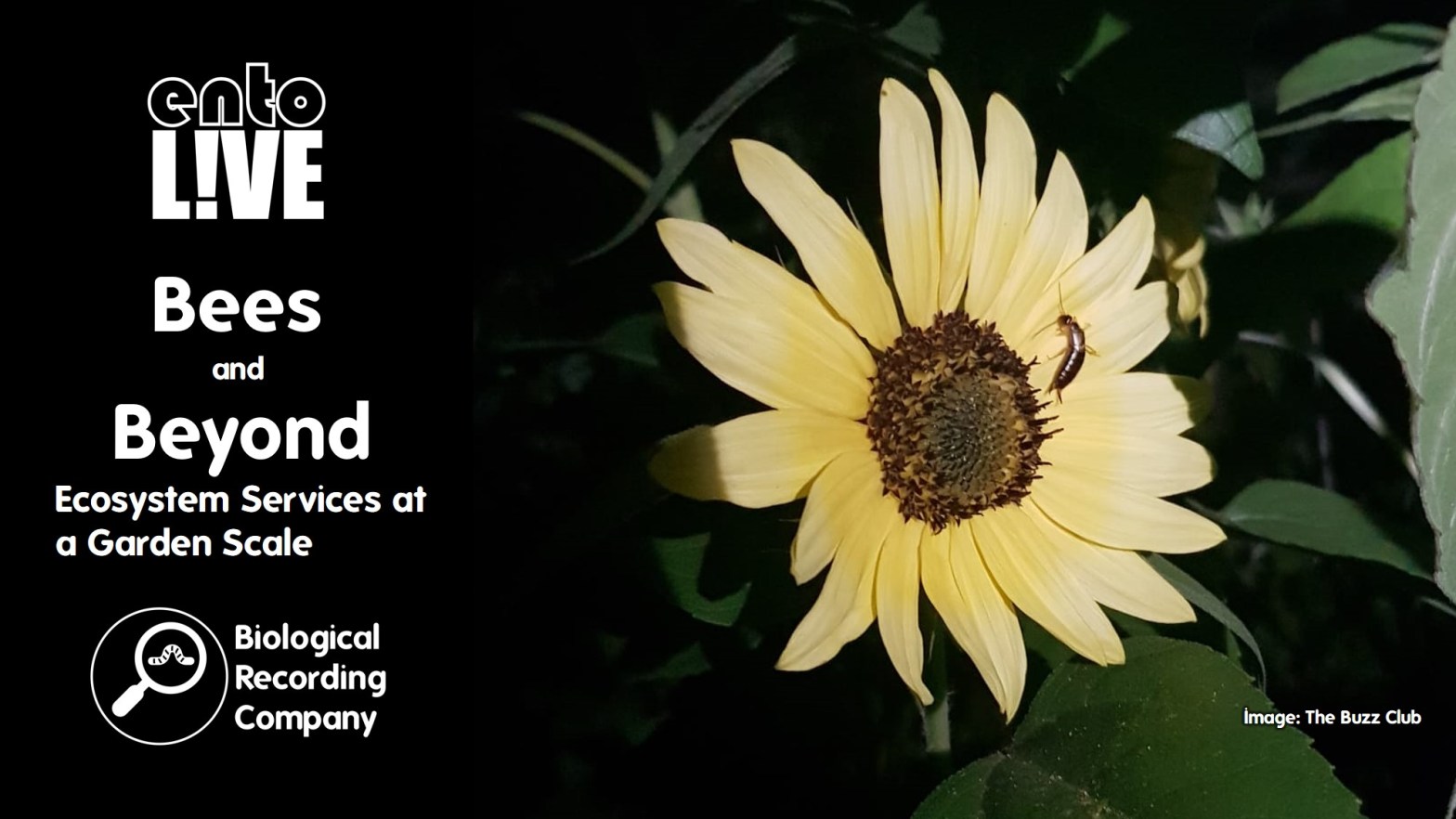
Gardening success and invertebrate activity are deeply intertwined, for better or worse! Demonstrating that the beneficial side of this relationship vastly outweighs the negative is hugely important for maximising the ecological value of gardens – as well as improving horticultural outcomes. Pollination and pest control are the easiest of these ‘ecosystem services’ to illustrate at garden scales. These Buzz Club projects aim to highlight both in practical and entertaining ways.
Q&A with Dr Linda Birkin
Dr Linda Birkin is a specialist in citizen science and urban entomology. She has a particular interest in ecological outreach and wildlife gardening.
Do the bags that you used exclude all pollination, including wind pollination?
I used mesh bags and material so they kept the insects out but allowed wind and pollen to go through. I supplied the mesh material in the first year of the project and in the following two, volunteers provided their own mesh material, including a wedding veil and old net curtains!
Are there any plans to extend the Garden Shop project outside of the UK?
I have had some interest from people in other countries. It is a case of finding a collaborator in that country who can update the cost values. I send the spreadsheet with the cost values stripped out, with instructions to look up local values and put those in. The pollination requirement would still be the same.
Does pet poo provide any food for any invertebrates?
The thing about pet poop is that it depends on the pet. Cat and dog waste, for instance, is predator waste. They are predators that you wouldn’t have at these population numbers naturally and so there’s an unnaturally high level of nitrogen and phosphorous being deposited because of their poop. These shouldn’t be left lying around. Other pets that produce dung, like rabbits, are herbivores and you can compost their poop. It’s something that can go safely back into the environment.
There have been some interesting papers lately regarding dog poop and urine at nature sites and the difference in nutrient spikes in terms of over-fertilisation levels between the side of the path and further in. There are massive spikes in phosphorus and nitrogen just on the sides of the paths. Even if dogs are on a lead, they are still peeing on the side and that has a knock-on effect on the rest of the ecosystem.
There are invertebrates and other living organisms that use animal waste, but the issue is more about how quickly it degrades back into the environment and if it causes problems when it does. Dog and cat poo has quite a high level of bacteria and parasites – many that can cause problems for humans and that you wouldn’t find in that concentration naturally. Worming and flea treatments are another issue. They are designed to, for instance, to kill parasites in the animals but they are not designed to stop once they exit the animal. This is something we are also thinking about researching.
Literature References
- Birkin (2018) Pollination ecosystem services and the urban environment: https://hdl.handle.net/10779/uos.23455604.v1
- Birkin & Goulson (2015) Using citizen science to monitor pollination services: https://resjournals.onlinelibrary.wiley.com/doi/10.1111/een.12227
- Griffiths-Lee et al (2022) Sown mini-meadows increase pollinator diversity in gardens. https://doi.org/10.1007/s10841-022-00387-2
- Nicholls et a (2020). The contribution of small-scale food production in urban areas to the sustainable development goals: a review and case study: https://doi.org/10.1007/s11625-020-00792-z
- Burton et al (2024) Earthworm Watch: Insights into urban earthworm communities in the UK using citizen science: https://doi.org/10.1016/j.ejsobi.2024.103622.
- Gillner et al (2015) Role of street trees in mitigating effects of heat and drought at highly sealed urban sites: https://doi.org/10.1016/j.landurbplan.2015.06.005.
- Sheikh et al (2023) Efficacy of green infrastructure in reducing exposure to local, traffic-related sources of airborne particulate matter (PM): https://doi.org/10.1016/j.scitotenv.2023.166598.
Further Info
- The Buzz Club: https://www.thebuzzclub.uk/
- Bumblebees of the UK online course: https://courses.biologicalrecording.co.uk/courses/bumblebees
- Garden Shop Calculator: Garden Shop Calculator | Buzz Club (thebuzzclub.uk)
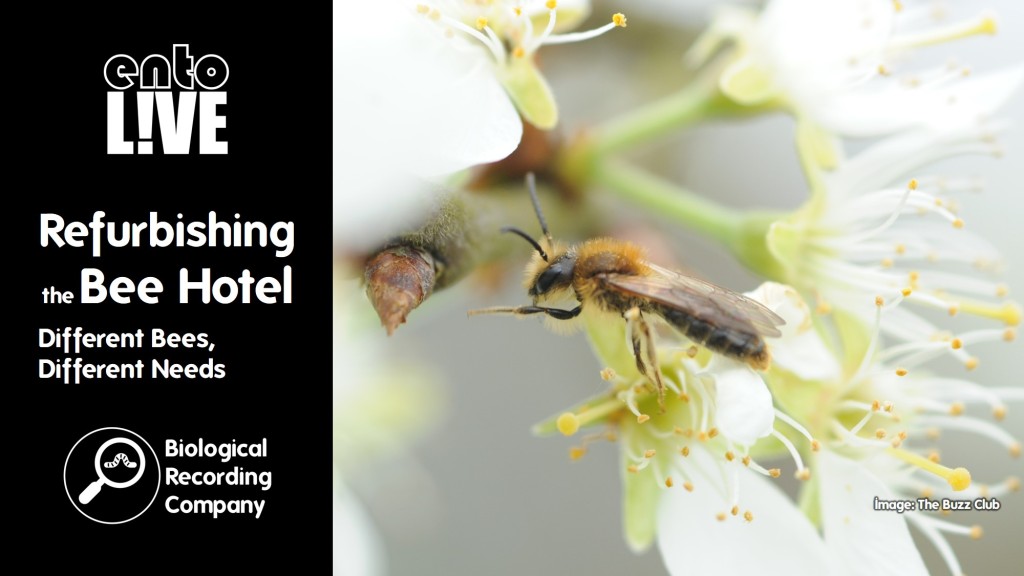
- Refurbishing the Bee Hotel: Different Bees, Different Needs entoLIVE blog article: https://biologicalrecording.co.uk/2024/04/11/refurbishing-the-bee-hotel/
- Keeping the Spark Alive: Volunteer Retention in Citizen Science blog article: https://biologicalrecording.co.uk/2024/05/16/volunteer-retention-in-citizen-science/
entoLIVE
entoLIVE webinars feature guest invertebrate researchers delving into their own invertebrate research. All events are free to attend and are suitable for adults of all abilities – a passion for invertebrates is all that’s required!
- Donate to entoLIVE: https://www.gofundme.com/f/entolive-2025
- Upcoming entoLIVE webinars: https://www.eventbrite.com/cc/entolive-webinars-74679
- entoLIVE blog: https://biologicalrecording.co.uk/category/entolive-blog/
- entoLIVE on YouTube: https://youtube.com/playlist?list=PLuEBNUcfMmE95Re19nMKQ3iX8ZFRFgUAg&feature=shared
entoLIVE is delivered by the Biological Recording Company in partnership with the British Entomological & Natural History Society, Royal Entomological Society and Amateur Entomologists’ Society, with support from Buglife, Field Studies Council and National Biodiversity Network Trust.
The entoLIVE programme is delivered by Biological Recording Company and receives sponsorship from the following organisations:
- British Entomological & Natural History Society
- Royal Entomological Society
- Amateur Entomogists’ Society
More on citizen science

 Biological Recording
One thought on “Bees and Beyond: Ecosystem Services at a Garden Scale”