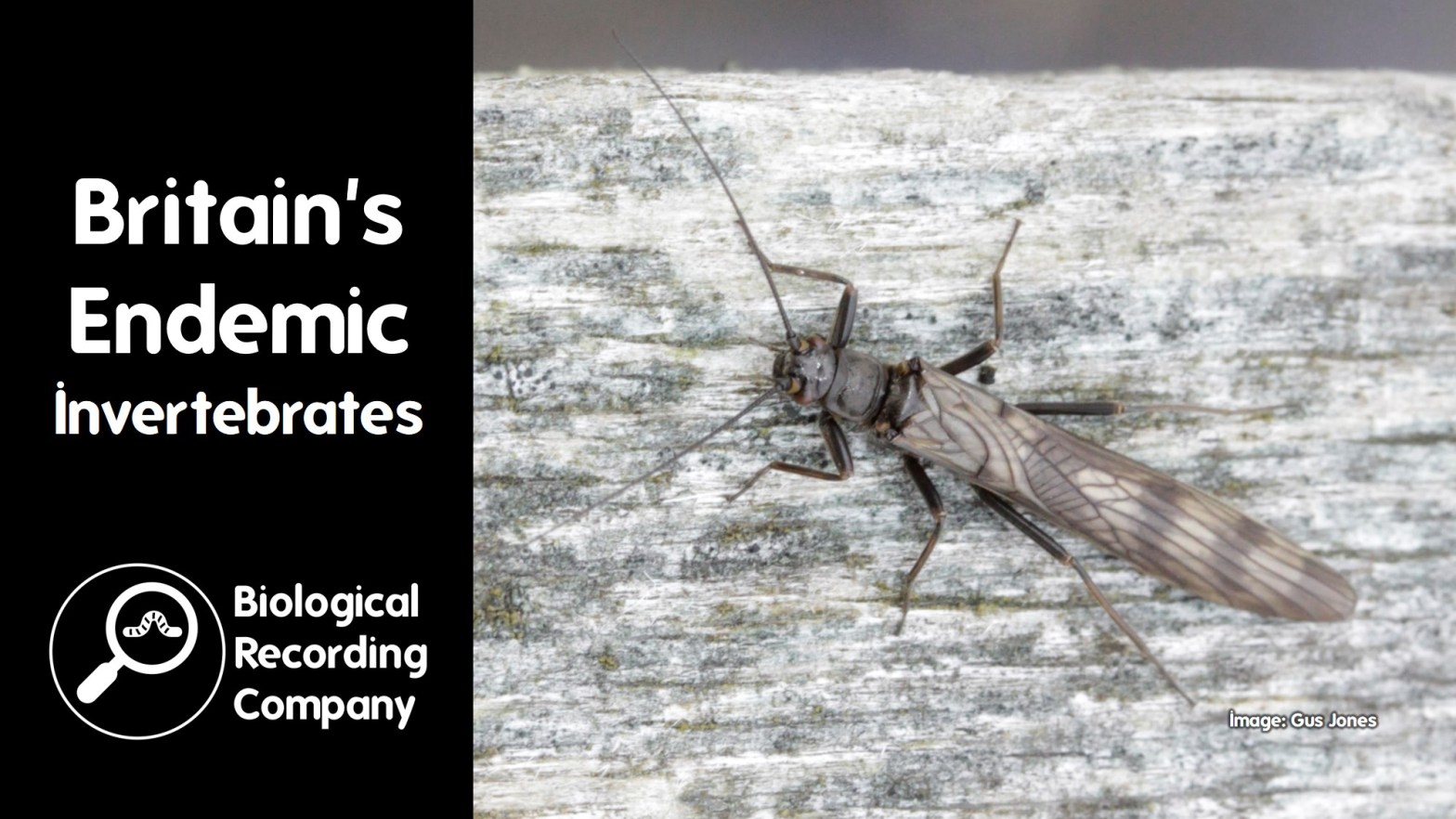
Britain’s endemic invertebrates are the crown jewels of our biodiversity. There are 22 endemic species ranging from the Turk’s Earth Centipede (Nothogeophilus turki) to the Manx Shearwater Flea (Ceratophyllus fionnus). Last year Buglife undertook global IUCN Red List assessments for 20 of these species. This presentation will explain the assessment results and introduce participants to these amazing species.
Craig Macadam is Conservation Director with Buglife where he oversees all practical action and advocacy to restore invertebrate populations. He is the national recorder for mayflies, stoneflies and leeches, and represents Buglife on a number of fora including the IUCN Species Survival Commission and the IUCN Task Force on Global Freshwater Macroinvertebrate Sampling Protocols.
Q&A with Craig Macadam
- Are there many additional invertebrate species that are considered endemic to the British Isles rather than just Great Britain?
There are a few. Off the top of my head, I think there are a couple of beetles and a moth that are found in Ireland. I’ve been chatting to people in Ireland to enquire if there is a list of species that are endemic to Ireland so that we can cross reference this with our lists of UK species. - Has the Manx Shearwater Flea (Ceratophyllus fionnus) been searched for on the Calf of Man?
There have been very brief investigations of nest material at most of the Manx Shearwater (Puffinus puffinus) sites. However, there is a need to look at this in more detail, particularly in places like the Calf of Man, Skomer and other Manx Shearwater roosts. A lot of the existing work on this was done in the 1960s and 1970s, with the most recent data from the Isle of Rum. You would need a licence to take the material and we’re in discussions with the RSPB about how this could progress. - What is the current state of data for UK endemic invertebrate species?
It is a really mixed bag. For some species there is really regular monitoring, such as the Environment Agency monitoring of freshwater invertebrates. There are also some really active recording schemes that target some of these species, for example, Lee Knight is looking for the British Cave Shrimp (Niphargellus glenniei) in sites all over southwest England and he’s generated a great dataset. The active Dipterist Forum recording schemes involve surveys going on in areas where these species should be picked up if they are present so if they are not detected we can infer that they are absent. - How do you establish that a species is endemic and not present elsewhere?
It took a while! Every time I thought that I had my list completed, I’d receive emails from people asking about other species. We contacted experts across Europe and did a very extensive literature search, including looking at specialist journals for the various groups. Luckily, for some species there had been European or global reviews of the families which allowed us to get really up-to-date information. There are still other species on the long list that could be endemic but we don’t have enough information on them to state confidently that they are. - Are there any key actions that the public or conservationists can take to support our endemic invertebrates?
I’d advise people to support the efforts of invertebrate NGOs. At the moment we have the campaign to protect the Fonseca’s Seed Fly (Botanophila fonsecai) and save Coul Links from development, where over 11,000 people across Scotland and the UK have written to the Planning Minister urging him to call-in the application, resulting in a public inquiry. If you’re interested in a specific endemic species and record that group, keep an eye out for it and ensure that your data is making its way to the NBN Atlas.
Literature References
- Macadam (2023) Britain’s Endemic Invertebrates: https://cdn.buglife.org.uk/2023/11/Endemic-Species-Report-2023-Final.pdf
Further info and links
- Buglife: https://www.buglife.org.uk/
- IUCN: https://www.iucnredlist.org/en
- IUCN Red List Categories and Criteria: https://www.iucnredlist.org/resources/categories-and-criteria
- IUCN Red List Criteria summary sheet: https://www.iucnredlist.org/resources/summary-sheet
More for environmental professionals

 Biological Recording
One thought on “Britain’s Endemic Invertebrates”