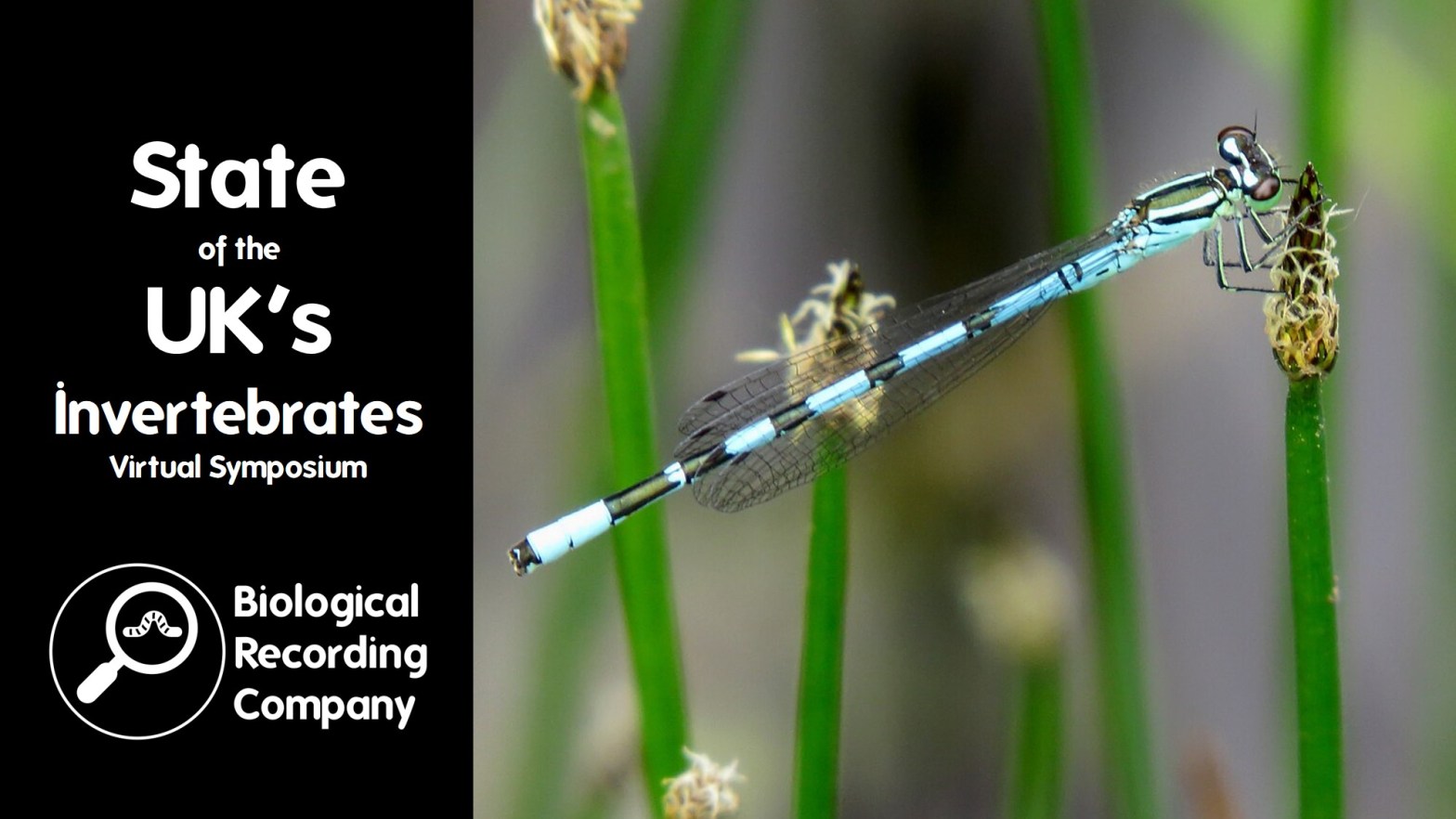
British invertebrates make up the majority of our native fauna and provide a wealth of ecosystem services, yet they often fly under the radar compared to their vertebrate counterparts. Understanding the status of invertebrate populations is vital to evidence-based conservation but with only a fraction of our invertebrates assessed against IUCN Red List criteria, how can we ensure that we are protecting populations that we don’t understand?
The 2023 State of Nature Report unveiled alarming statistics: 476 of our beloved invertebrates are teetering on the brink of extinction, with their species distributions decreasing by an average of 13% since 1970. It’s a wake-up call to action!
The State of the UK’s Invertebrates Virtual Symposium brought together a range of invertebrate specialists to showcase some of the innovative work that is being undertaken. This blog explores what is being done to improve our understanding of British inve
Speaker Programme
This event featured four presentations from invertebrate specialists:
- Monitoring, Modelling and Mitigating UK Insect Declines: 20 years of Research at UKCEH with Dr Claire Carvell (UK Centre for Ecology & Hydrology)
- Ten Years of Invertebrate Surveying in the Natural England Field Unit with Pete Boardman (Natural England)
- Britain’s Endemic Invertebrates with Craig Macadam (Buglife)
- Assessing the Status of UK Earthworms with Keiron Derek Brown (Biological Recording Company)
Monitoring, Modelling and Mitigating UK Insect Declines: 20 years of Research at UKCEH
Dr Claire Carvell (UK Centre for Ecology & Hydrology)
Researchers at UKCEH have played a major role in collating and analysing biological records and survey data to track changes in the status of UK insects. This presentation highlights some of the insights gained, focusing on the last 20 years, including the latest updates from the UK Pollinator Monitoring Scheme. It also features parallel research into management interventions on farmland to better understand how we can mitigate against further insect declines and conserve the critical ecosystem services that insects provide.
Ten Years of Invertebrate Surveying in the Natural England Field Unit
Pete Boardman (Natural England)
This second iteration of the Natural England Field Unit (NEFU) will celebrate its tenth year in 2024. NEFU currently has 5 entomologists working on condition assessments for the organisation, as well as contributing to a host of other entomological work, including DNA work, supporting PhDs, training and a range of other work. This presentation introduces a range of this work, showing the valuable entomological work NEFU does.
Britain’s Endemic Invertebrates
Craig Macadam (Buglife)
Britain’s endemic invertebrates are the crown jewels of our biodiversity. There are 22 endemic species ranging from the Turk’s Earth Centipede to the Manx Shearwater Flea. Last year Buglife undertook global IUCN Red List assessments for 20 of these species. This presentation explains the assessment results and introduces these amazing species.
Assessing the Status of UK Earthworms
Keiron Derek Brown (Biological Recording Company)
The standard method for determining the conservation status of a species is to assess the species against IUCN Red List criteria and apply an IUCN Red List category. These criteria require species data, and many species can therefore only be classed as ‘data deficient’ based on current record holdings. UK earthworms fall into this category and are rarely considered within site management plans, environmental policy or conservation projects.
The Provisional Earthworm Conservation Status Assessment for the UK aims to apply a provisional version of the IUCN categories for all 31 UK species of earthworm based on the little data that we do have and the opinions of the UK’s leading earthworm specialists. This presentation explores this experimental approach and highlight the benefits and challenges resulting from this project.
More for environmental professionals

 Biological Recording
One thought on “State of the UK’s Invertebrates Virtual Symposium”