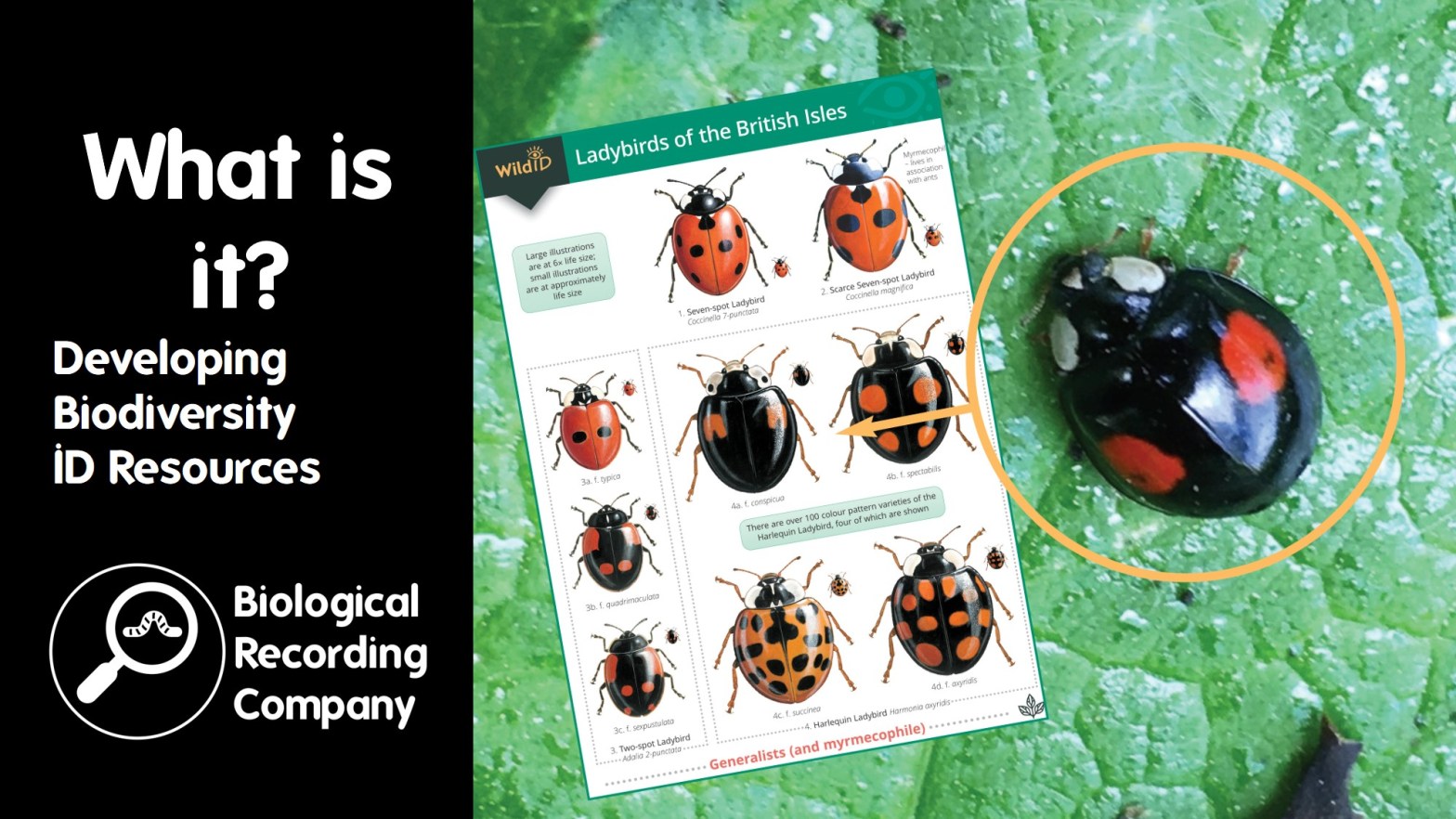
A lack of suitable resources hampers identification. A good guide needs to be suitable for the user’s level of experience as well as accurate and easy to use. Over 40 years ago the AIDGAP (Aids to Difficult Groups of Animals and Plants) project started to develop ‘user tested’ keys, this since has grown into a range of over 175 identification resources.
Dr Rebecca Farley-Brown is Head of Publications for the Field Studies Council, where a key part of her role is the development of identification guides that are both accurate and accessible. Over the last 25 years Bek has helped produce over 200 identification resources, including guides for beginners and citizen science projects, WildID fold-out guides, AIDGAP books and specialist keys (with the Freshwater Biological Association, UK Centre for Ecology & Hydrology, Royal Entomological Society and Linnean Society of London).
Q&A with Dr Rebecca Farley-Brown
- Have you had much kickback regarding concerns that beginner’s ID guides are ‘dumbed down’?
We had a lot of kickback initially as people were concerned that we were dumbing down and making things too simple, with the opinion that species ID was a job for the experts. The perception of this has changed hugely over the years, with a better understanding that there is a need for a range of guides at different levels. It is important to make it clear what level an ID guide is aimed at and be clear about any limitations. - How are these guides funded?
Originally the project was grant-funded, with money from the Natural Environment Research Council and the Linnean Society of London. Most publications are now self-funded, with the sales of the guides feeding back into the development and production of guides. Some guides, such as the slug and freshwater snails guides, were produced as part of projects where the author had included the production of a guide as part of the project plan. - What are the pros and cons of testing workshops versus mailing out test guides to testers?
Workshops enable you to watch people and see how they are working through the guide. You can also check to see if their identification is correct. However, if an expert is on hand in these workshops (which they usually are) it can lead to the expert coaching the workshop attendee to the correct answer, which is not something that would usually be available to a user of the guide. If you are sending things out blind, you need to be aware that your testers are likely to be of varying ability and some may not be the true target audience of the guide. You need to ensure that you really sort through the comments and figure out which comments are valid, looking for patterns or consensus regarding issues. It’s a balancing act, but there is a role for both! If anyone is interested in trialling future AIDGAP guides, they can get in touch via aidgap.pu@field-studies-council.org. - What are the pros and cons of scientific illustrations versus photographs in ID guides?
Stripped-down black and white line drawings are great pinpointing features important for ID, but it can also be difficult to match what you are seeing on a specimen as it may look less obvious than the line drawing suggests. Colour photographs give a much more representative image of what the reader would expect to see. Personally, I prefer it when guides use both side-by-side. Colour photography has come a long way as most people now have access to relatively decent cameras on their s smartphones and the cost of producing colour guides has come down considerably.
Literature References
- House of Lords (2008) Systematics and Taxonomy: Follow-up Report with Evidence: https://publications.parliament.uk/pa/ld200708/ldselect/ldsctech/162/162.pdf
- Hopkins & Freckleton (2006) Declines in the numbers of amateur and professional taxonomists: implications for conservation: https://doi.org/10.1017/S1367943002002299
- Löbl et al (2023) The Silent Extinction of Species and Taxonomists—An Appeal to Science Policymakers and Legislators: https://doi.org/10.3390/d15101053
Further info and links
- Field Studies Council publications: https://www.field-studies-council.org/shop/
FSC natural history courses: https://www.field-studies-council.org/fsc-natural-history-courses/ - A new AIDGAP guide to freshwater leeches (FSC news): https://www.field-studies-council.org/2024/05/10/new-aidgap-guide-to-freshwater-leeches/
- A New Guide for Identifying Grasses (FSC BioLinks blog): https://www.fscbiodiversity.uk/blog/new-guide-identifying-grasses
- New AIDGAP guide: Adult Caddis (Trichoptera) of Britain and Ireland (FSC Biodiversity blog): https://www.fscbiodiversity.uk/blog/new-aidgap-guide-adult-caddis-trichoptera-britain-and-ireland
- Pre-order the Orthoptera and Dermaptera AIDGAP guide by David Williams: www.field-studies-council.org/shop/publications/orthoptera-and-dermaptera/
- Online guides using FSC Identikit: https://www.fscbiodiversity.uk/id-resources-fsc-identikit
- Lucidcentral digital Identification tools: https://www.lucidcentral.org/
- Beetles families online test key: https://www.eclectic-ecologist.com/
More for environmental professionals

 Biological Recording
One thought on “What is it? Developing Biodiversity identification Resources”