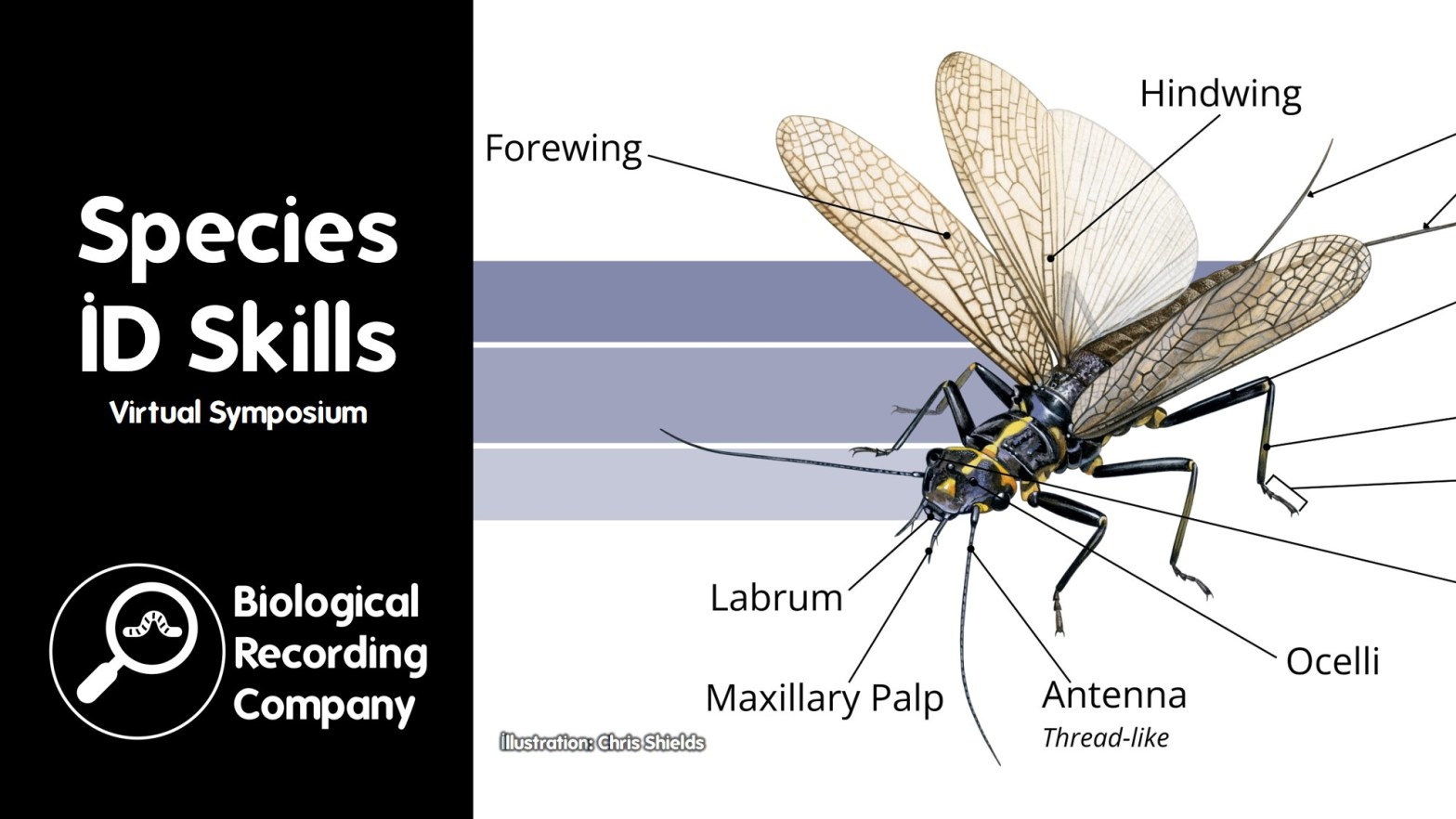
Species identification skills are essential for taxonomists, museum collection managers, biological recorders, conservationists and ecologists. The ability to accurately determine plants, animals and fungi to species level ranges from relatively easy for some groups, to highly technical and specialised in others.
The Species ID Skills Virtual Symposium took place on 20 June 2024 and brought together conservationists, environmental educators, biological recording schemes and more to discuss the challenges and opportunities relating to developing species ID skills in both professional and non-professional audiences. We explored how training, ID guides, assessments and emerging technologies can be used to develop these skills in both professional and non-professional audiences.
The event featured four presentations:
- What is it? Developing Biodiversity identification Resources with Dr Rebecca Farley-Brown (Field Studies Council)
- BioLinks: Developing Structured ID Training Pathways for Invertebrate Groups with Keiron Derek Brown (Biological Recording Company)
- Image Recognition and AI for Species Identification with Alba Gomez Segura (UK Centre for Ecology & Hydrology)
- The Field Identification Skills Certificate: Assessing Botanical ID Skills with Dr Chantal Helm (Botanical Society of Britain & Ireland)
What is it? Developing Biodiversity identification Resources
Dr Rebecca Farley-Brown (Field Studies Council)
A lack of suitable resources hampers identification. A good guide needs to be suitable for the user’s level of experience as well as accurate and easy to use. Over 40 years ago the AIDGAP (Aids to Difficult Groups of Animals and Plants) project started to develop ‘user tested’ keys, this since has grown into a range of over 175 identification resources.
BioLinks: Developing Structured ID Training Pathways for Invertebrate Groups
Keiron Derek Brown (Biological Recording Company)
The FSC BioLinks project aimed to address the shortage of biological recorders for under-recorded and difficult-to-identify invertebrate groups through a substantial training programme based on structured ID training pathways for each focus species group. This presentation will focus on the classroom, field and lab-based training courses delivered through BioLinks, and discuss the challenges and successes demonstrated by BioLinks in relation to developing species ID skills in the biological recording community.
Image Recognition and AI for Species Identification
Alba Gomez Segura (UK Centre for Ecology & Hydrology)
This presentation will explore how image recognition and artificial intelligence (AI) can revolutionize the identification of insect species. By leveraging advanced machine learning algorithms and high-resolution imaging technology, UK CEH aims to enhance the accuracy and efficiency of monitoring insect populations. Alba will discuss the development and application of the Automated Moth Identification (AMI) system, which exemplifies these technologies in action. Additionally, she will highlight the role of citizen science in this initiative, enabling broader participation and data collection. This approach not only provides critical data for addressing the biodiversity crisis but also bridges the gap between technological innovation and ecological research.
The Field Identification Skills Certificate: Assessing Botanical ID Skills
Dr Chantal Helm (Botanical Society of Britain and Ireland)
The Field Identification Skills Certificate (FISC) is a test that assesses your botanical proficiency on a scale from 1 (beginner) to 5 (professional), with a level 6 awarded in exceptional cases. Originally developed by Sarah Whild and Sue Dancey, the BSBI’s FISC Development Working Group (including a number of experienced FISC Assessors) now supports and oversees the running of FISCs.
The FISC assesses your real-life botanical skills and is gaining popularity and becoming an industry standard, with some consultancies sending their staff annually to encourage skill development. This talk will discuss how the assessments are improving the quality of professional botanical skills, especially in light of recent changes to legislation and the introduction of BNG, as well as their impact on the “amateur” botanical community.
More for environmental professionals

 Biological Recording
6 thoughts on “Species ID Skills Virtual Symposium”