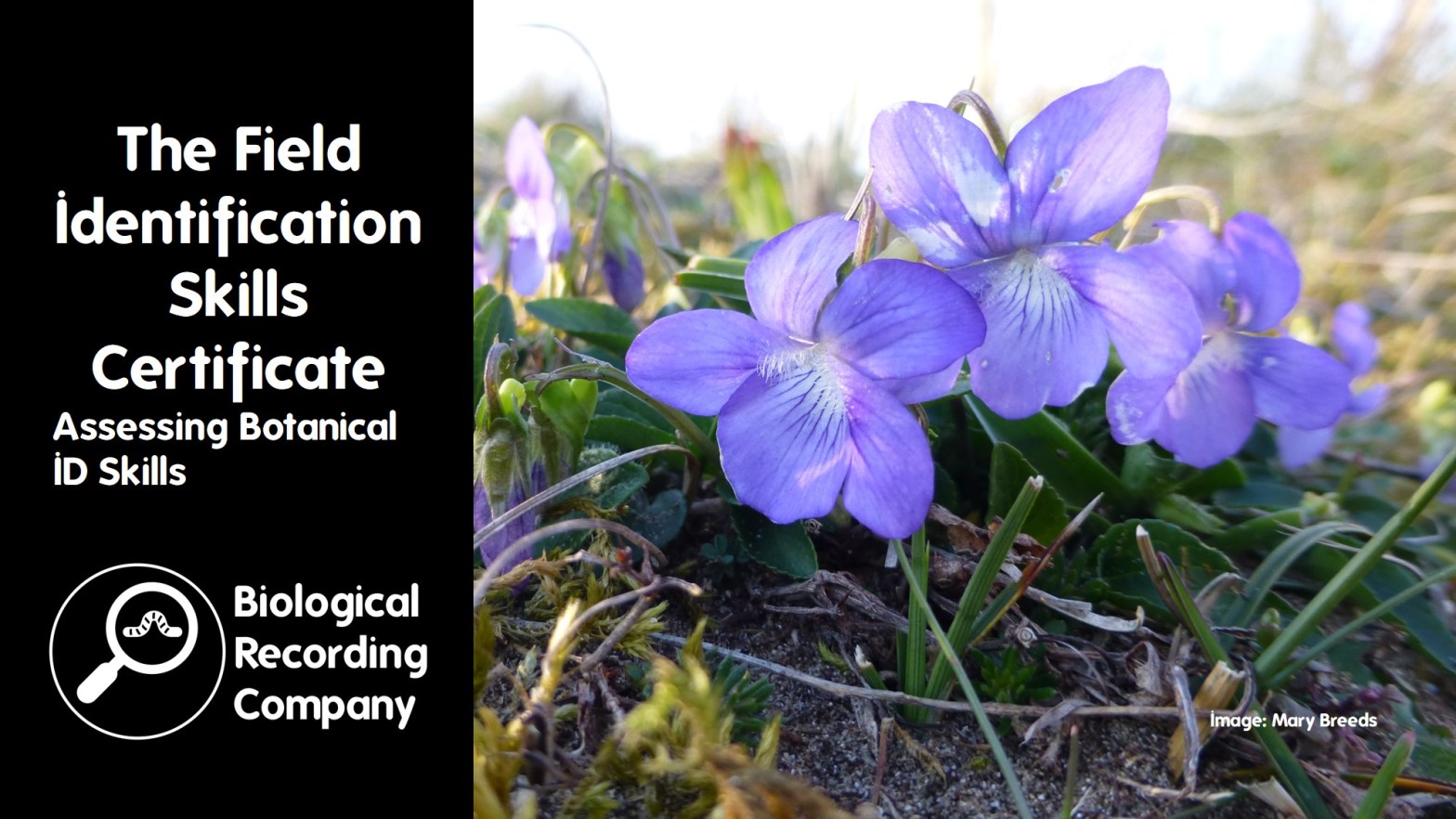
The Field Identification Skills Certificate (FISC) is a test that assesses your botanical proficiency on a scale from 1 (beginner) to 5 (professional), with a level 6 awarded in exceptional cases. Originally developed by Sarah Whild and Sue Dancey, the BSBI’s FISC Development Working Group (including a number of experienced FISC Assessors) now supports and oversees the running of FISCs.
The FISC assesses your real-life botanical skills and is gaining popularity and becoming an industry standard, with some consultancies sending their staff annually to encourage skill development. This talk will discuss how the assessments are improving the quality of professional botanical skills, especially in light of recent changes to legislation and the introduction of BNG, as well as their impact on the “amateur” botanical community.
Dr Chantal Helm is the BSBI’s training coordinator responsible for FISC and Identiplant. She is also a terrestrial ecologist with field experience in South Africa and the UK, with a broad interest in natural history. After a decade in academia, Chantal now focuses on delivering local voluntary conservation projects, encouraging local biological recording, undertaking freelance bat surveys and supporting students as a visiting lecturer, alongside her part-time BSBI role.
Q&A with Dr Chantal Helm
- How much does it cost to undertake a FISC assessment?
It is up to the individual provider what they charge. It is also up to the provider what they pay their FISC Assessors. The only fixed cost is a set fee that is payable to BSBI for the quality assurance, coordination and development of the FISC. Each candidate will have this set cost incorporated in the fee that they pay the provider. BSBI doesn’t run any FISC assessments in-house and FISC assessments are all delivered through partners. Prices are very variable and range from £125 (for students with one provider) to around £260 (for professional consultants). - How many people can have on a single FISC assessment day?
Again, this depends on the provider. We recommend a maximum of 25 people, because of the amount of space that you need for specimens in the labs and for monitoring the participants in the field to ensure that they are following the rules. - Why have FISC assessments not been rolled out in Scotland?
We’ve been trying to encourage experts at the appropriate level to come forward and become FISC Assessors in Scotland. Taking on the assessor role is a fair bit of work so a number of expert botanists are reluctant to take it on. We are having conversations with the Royal Botanic Garden Edinburgh regarding the possibility of some of their staff running FISC assessment days from next year. We’re keen to expand into Scotland, as well as Wales, Northern Ireland and Ireland. - Why do BSBI recommend that FISC assessment days are not included at the end of training courses?
It’s all about ensuring that there are no biases. Firstly, we wouldn’t want the assessor to be in any way linked to the students in teaching. We also wouldn’t want students to have training on the same sites that are being used for the assessment. The outcome of FISC assessments could also be biased if the students have knowledge of the specimens being used or have been trained on the local flora to the assessment site. Ideally, if a course was being provided that included a FISC assessment day, the students would be shipped off to another region and an independent FISC assessor would lead the day. - What FISC level would an Identiplant graduate expect to achieve upon completion of the course?
We suggest that someone who has completed Identiplant to a satisfactory level and who then engages the following year with their local botany group and/or gets out recording plants to practice their botanical field skills may be able to achieve a FISC level 3 the following year. Obviously, it is going to vary by person and it is really important that field botany is practiced regularly in order to cement those skills.
Literature References
- Bebington (2010) The ability of A-level students to name plants: https://doi.org/10.1080/00219266.2005.9655963
- Stroud et al (2022) The botanical education extinction and the fall of plant awareness: https://doi.org/10.1002/ece3.9019
Further info and links
- Field Identification Skills Certificate: https://bsbi.org/field-skills
- Botanical Skills Ladder: https://bsbi.org/wp-content/uploads/dlm_uploads/2024/05/BSBI-Skills-Ladder-2024.jpg
- Identiplant: https://identiplant.bsbi.org/
- Everything you need to know about FISCs (FISC Information Booklet 2024): https://bsbi.org/wp-content/uploads/dlm_uploads/2024/04/FISC-Information-Booklet-2024-Final.pdf
- Take the risk – do a FISC! (BSBI News article): https://bsbi.org/wp-content/uploads/dlm_uploads/2023/10/BSBI-News-152-p34-36-FISCs.pdf
- Join the Botanical Society of Britain & Ireland: https://bsbi.org/join-us
More for environmental professionals

 Biological Recording

One thought on “The Field Identification Skills Certificate: Assessing Botanical ID Skills”