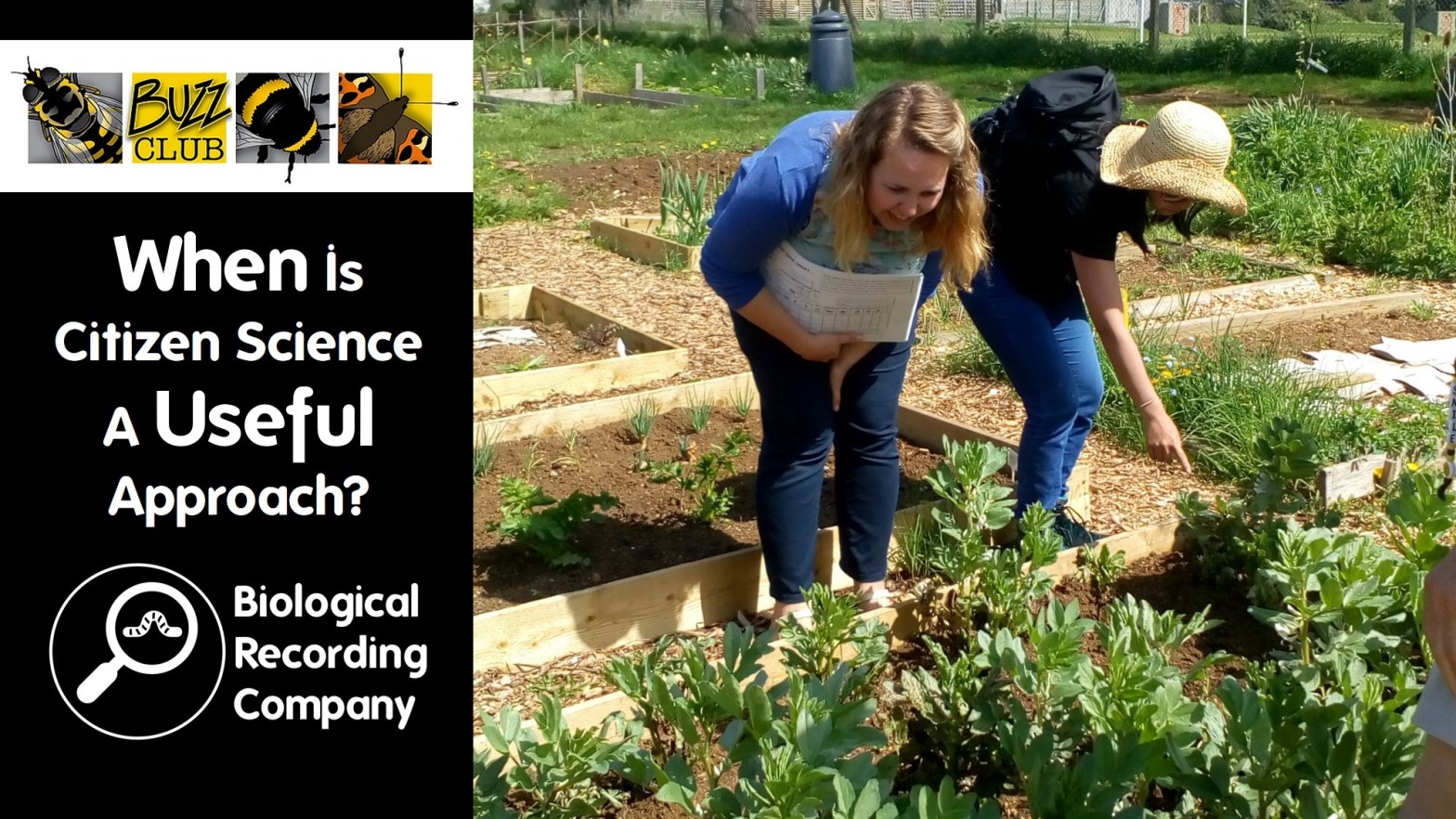
Using examples from the Buzz Club and beyond, this presentation will outline some of the key things to consider before embarking on a citizen science project, such as budget, motivations of participants and the potential for engagement and behaviour change.
Dr Beth Nicholls is a senior research fellow at the University of Sussex. She has led citizen science projects on monitoring solitary bee populations and urban food production and provided advice to the National Trust and Buglife on incorporating citizen science into their community outreach and conservation programmes.
Q&A with Dr Beth Robinason
- Did you provide advice or feedback to Team PollinATE participants that were using chemical controls in their allotment plots?
No, we didn’t give specific advice. To be honest, it was a very low number of participants and I flagged that most participants were engaging in pro-environmental practices. This is probably not too surprising, as recruitment is most likely biased towards people who are interested in pollination (particularly considering the name of the project) and may not be truly representative of allotment plot holders across the UK. - Have you published the researcher versus citizen science work?
The manuscript is still in progress and I’m hoping to get it submitted soon. It can take a little while for this to become available as it needs to go through the journal’s review process before it is published. The paper will go into more detail regarding the discrepancies between researcher and citizen scientist result, the drivers that may be causing these discrepancies and the feedback from participants. I go into more detail about this project in the Team PollinATE entoLIVE blog. - How can we reach out to recruit citizen scientists?
I think this really depends on the project. This project was very localised and had a specific audience in mind: allotment plot holders in Brighton! Therefore, I opted for the old-school method of visiting the relevant sites and putting up posters as well as speaking at the Brighton Allotment Association AGM to reach their members. It is always very useful to reach out to other groups or organisations that are already embedded within the community that you are trying to reach. I also posted in relevant Facebook groups.
Further info and links
- Team PollinATE entoLIVE blog: https://biologicalrecording.co.uk/2023/10/05/team-pollinate/
- Cornell Lab: Engagement in Science and Nature: https://www.birds.cornell.edu/home/engagement-in-science-and-nature.
- Zooniverse webpage: https://www.zooniverse.org/
- The Noise Project: https://noiseproject.org
- UK CEH Citizen Science Best Practice Guide: https://www.ceh.ac.uk/our-science/citizen-science/citizen-science-best-practice-guide
- European Citizen Science Association: https://www.ecsa.ngo/
More for environmental professionals
 Biological Recording
One thought on “When Is Citizen Science A Useful Approach? ”