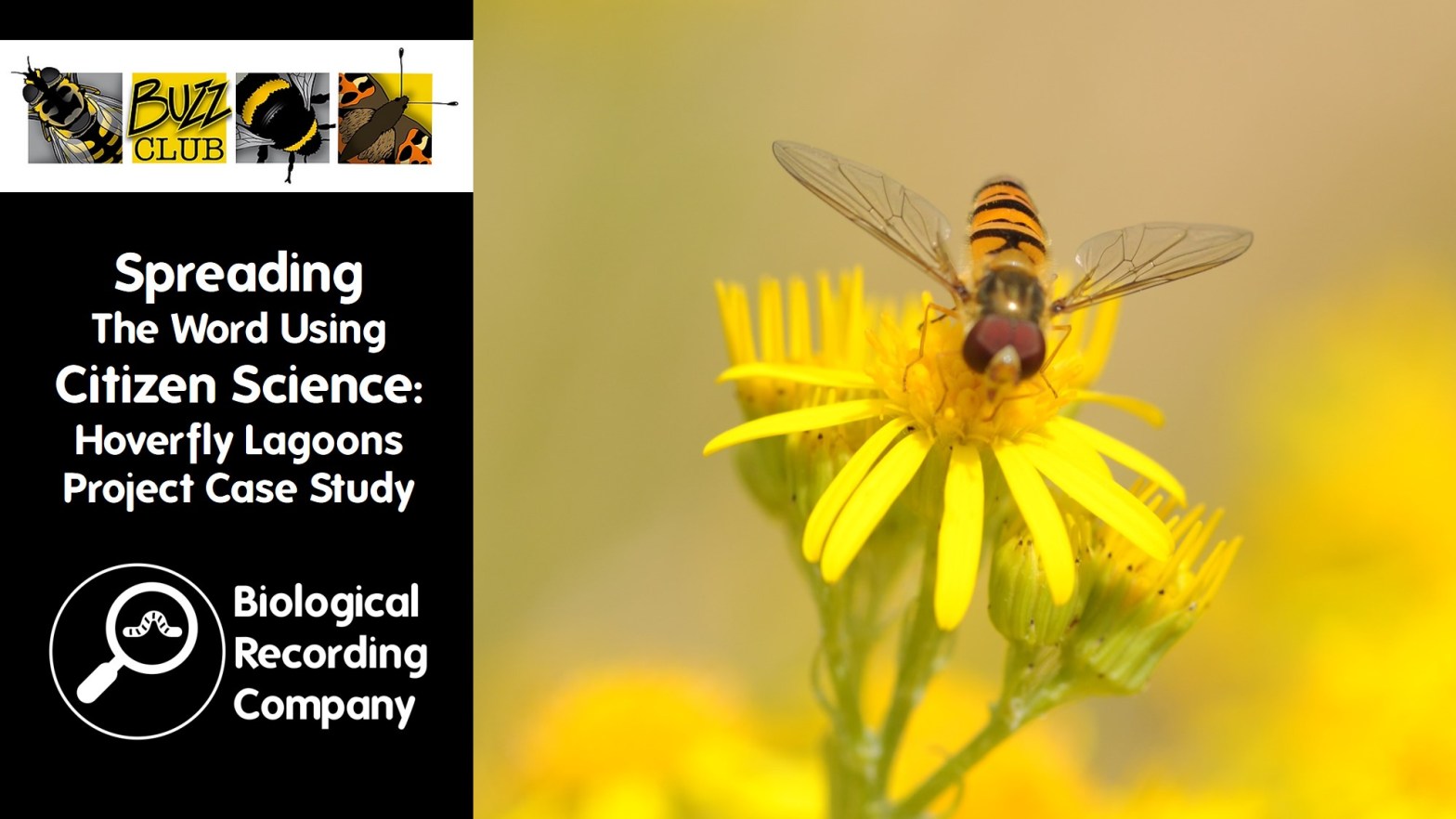
The Hoverfly Lagoons project was invented in 2016, to develop an easy, cheap wildlife gardening technique. Since then the idea of creating a Lagoon for hoverflies has captured the imagination of people around the globe. This presentation will describe the reach and application of this citizen science project, as a method for raising awareness and engaging with people.
Dr Ellen Rotheray is a senior lecturer in Ecology and Conservation, primarily interested in needs-led research and evidence-based practice with a focus on insect conservation management. Ellie has led the Hoverfly Lagoons project since 2016, and also the Buzz Club’s Buzzing Balconies project in 2018. Ellie is an advisor on the Pine Hoverfly Biodiversity Action Plan steering group and a member of the IUCN Hoverfly Specialist Group.
Q&A with Dr Ellen Rotheray
- What is the participation level for the Hoverfly Lagoons project?
This is super variable. Annually, the sites that are retained for the season are between 20 and 30, with over 200 registering their interest for each season. We don’t know how many of these never start or start but don’t finish. - What is this year’s Hoverfly Lagoon project and how do you sign up?
For this year we are exploring the effect of ponds on the recruitment to Hoverfly Lagoons, with questions such as “Do ponds and lagoons cater for the same or different species?” and “How does the presence of a pond impact the uptake of hoverfly lagoons?”. We need participants both with and without ponds so everyone is welcome to participate. You can sign up to the project via the Hoverfly Lagoons project webpage on the Buzz Club website. - Where should hoverfly lagoons be located?
You want to put it in a sheltered space and avoid exposing it to direct sunlight. Location is really important, even more so outside of gardens. If you own a woodland, it’s great to set some up there so that we can investigate what species are found in woodland versus gardens. Putting them at height (rather than on the ground) can limit the number of larvae predators. - Are hoverflies good pollinators?
Yes, they are! In some cases, flies may visit more plants than bees and their importance as pollinators is often overlooked. - Do the milk cartons used degrade over time in the water?
We strongly encourage that the milk carton is replaced each month as part of the recommended methodology. This should mean that people can still recycle it, though if it has degraded, you’d need to check this with the recycling scheme you are using. We’re not aware of any specific impact that degradation has on the hoverflies, and I personally don’t suspect there is any but we now recommend not leaving your single-use plastic in the field for longer than one month.
Literature References
- Rotheray and Rotheray (2021) The puparium and development site of Rhingia rostrata (Linnaeus) and comparison with R. campestris Meigen (Diptera, Syrphidae): https://nms.iro.bl.uk/concern/articles/b1f42219-fdf3-451c-aadc-58062edae0f7
- IUCN SSC HSG/CPSG (2022) European Hoverflies: Moving from Assessment to Conservation Planning: https://cbsg.org/sites/cbsg.org/files/documents/European%20Hoverflies%20Moving%20from%20Assessment%20to%20Conservation%20Planning.pdf
- Vujić et al (2022). Pollinators on the edge: our European hoverflies. The European Red List of Hoverflies: https://wikis.ec.europa.eu/display/EUPKH/European+Red+List+of+Hoverflies?preview=/23462140/102630586/ERL%20Hoverflies.pdf
Further info and links
- Hoverfly Lagoons entoLIVE: https://biologicalrecording.co.uk/2024/07/17/hoverfly-lagoons/
- Hoverfly Lagoons website: https://hoverflylagoons.co.uk/
More for environmental professionals

 Biological Recording
One thought on “Spreading the Word Using Citizen Science: Hoverfly Lagoons Project Case Study”