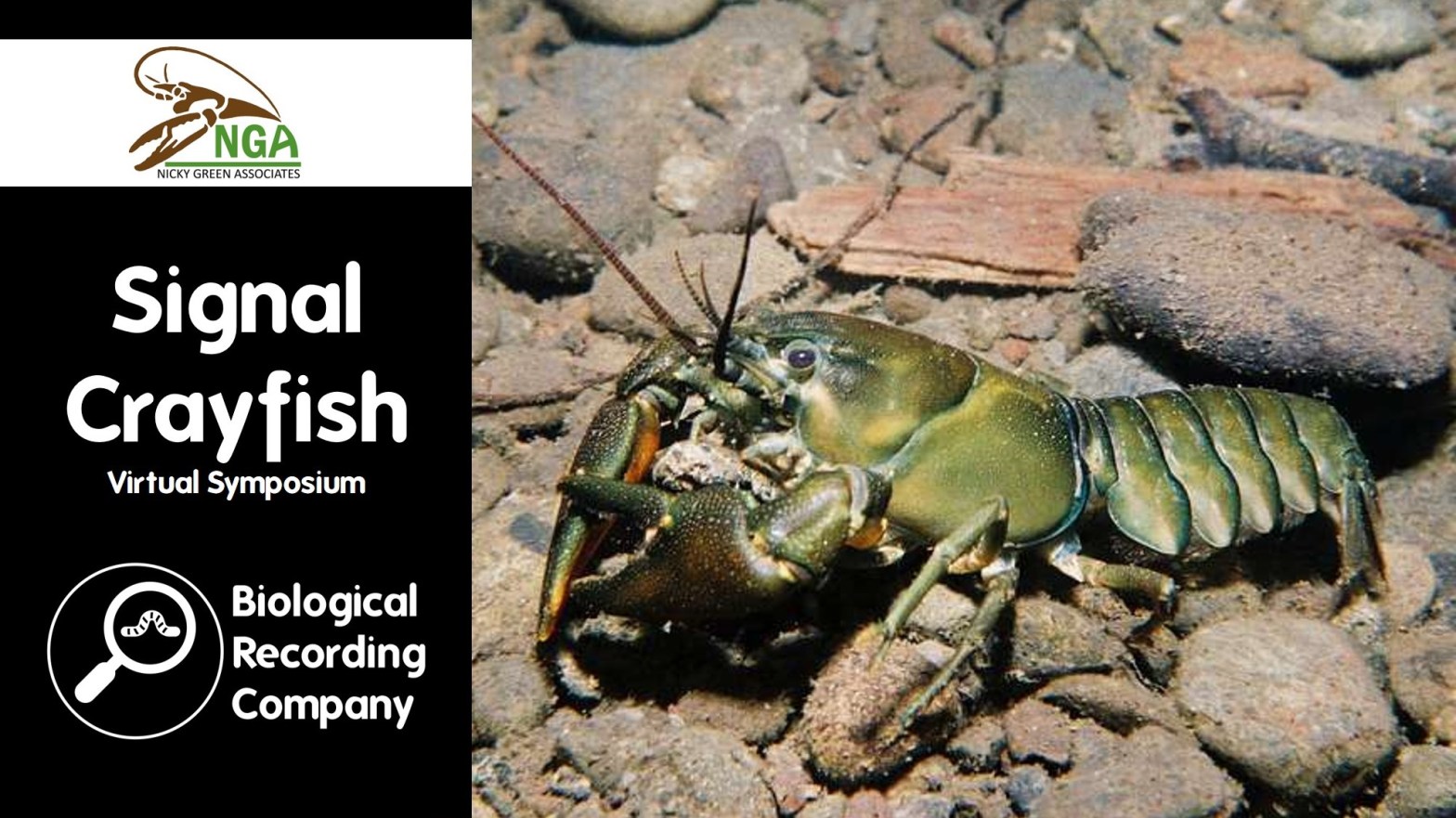
Invasive crayfish are one of the biggest threats to aquatic ecosystems worldwide. They can cause major adverse effects on native crayfish, invertebrates, fish and plant communities as well as bank erosion and sedimentation. The American Signal Crayfish (Pacifastacus leniusculus) has been responsible for a massive decline in the UK’s native White-clawed Crayfish (Austropotamobius pallipes) due to competition and the transmission of a deadly disease, crayfish plague. It continues to expand across Great Britain and Europe, causing major negative impacts on aquatic ecosystems.
A variety of signal crayfish control methods have been attempted with varying degrees of success. This Signal Crayfish Virtual Symposium will bring together conservationists, ecologists, freshwater biologists and more to discuss the latest in Signal Crayfish control in Europe and what more can be done.
This event featured four presentations:
- American Signal Crayfish: England Case Study with Dr Eleri Pritchard (Environment Agency)
- Can Fish Help Us Control Signal Crayfish? with Dr Nicky Green (Nicky Green Associates)
- Barriers to Stop the Spread of Invasive Crayfish with Armin Zenker and Raphael Krieg (University of Applied Sciences and Arts Northwestern Switzerland)
- Genetic ‘Immunisation’ of Invasive Species with Prof Bruce Whitelaw (University of Edinburgh)
American Signal Crayfish: England Case Study
Dr Eleri Pritchard (Environment Agency)
The American Signal Crayfish (Pacifastacus leniusculus) is classed as an invasive species in the UK, where it is known to erode riverbanks and be driving the native White-clawed Crayfish (an) towards extinction through the spread of crayfish plague and competition for resources (refuges in particular). This presentation will provide an England case study in terms of invasion history, current status, impacts, legislation and current efforts to control.
Dr Eleri Pritchard is a freshwater ecologist with a particular interest in aquatic invasive species. Eleri works as an Environmental Monitoring Officer in the Cumbria and Lancashire Area of the Environment Agency. Eleri completed her NERC-funded PhD on invasion biology and ecological impacts of signal crayfish in headwater streams.
Can Fish Help Us Control Signal Crayfish?
Dr Nicky Green (Nicky Green Associates)
Some species of fish have been shown to be valuable tools in the fight against signal crayfish. This presentation discusses how fish can influence crayfish survival and presents case studies where fish have been used as part of integrated crayfish control projects.
Dr. Nicky Green has been working with both native and non-native crayfish in the UK since 2003. Her main focus is the development of simple, cost effective ways of reducing the impacts of American signal crayfish.
Barriers to Stop the Spread of Invasive Crayfish
Armin Zenker and Raphael Krieg (University of Applied Sciences and Arts Northwestern Switzerland)
Crayfish barriers are the only way to stop the non-anthropogenic spread of non-native crayfish species. Various barriers have been installed in Switzerland in recent years. In addition, field trials have been carried out to check their effectiveness and fish passability.
Armin Zenker and Raphael Krieg, are founders of the “Swiss Coordination Office for Crayfish” on behalf of the Federal Office for the Environment in Switzerland, which campaigns for the protection of native crayfish species. As part of their activities, they have carried out various scientific projects on crayfish barriers, population genetic studies and work closely with local fisheries authorities.
Genetic ‘Immunisation’ of Invasive Species
Prof Bruce Whitelaw (University of Edinburgh)
Engineering biology technology can provide humane approaches to control invasive non-native animal populations. Within the developing toolbox, gene drive strategies offer much potential for species-specific applications, but have yet to be deployed. To become a practical option to control signal crayfish populations will require establishing embryology capability in this species, with subsequent testing of gene drive strategies.
Professor Bruce Whitelaw is an academic who develops genetic engineering applications in livestock species, aiming to mitigate the impact of disease and produce more productive animals. Recognising this technology could be applied to wild animals, he is exploring strategies to assist in maintaining biodiversity in the face of invasive, non-native species.
Event Partners
This event is delivered by the Biological Recording Company and Nicky Green Associates.

More on freshwater biology




 Biological Recording
4 thoughts on “Signal Crayfish Virtual Symposium”