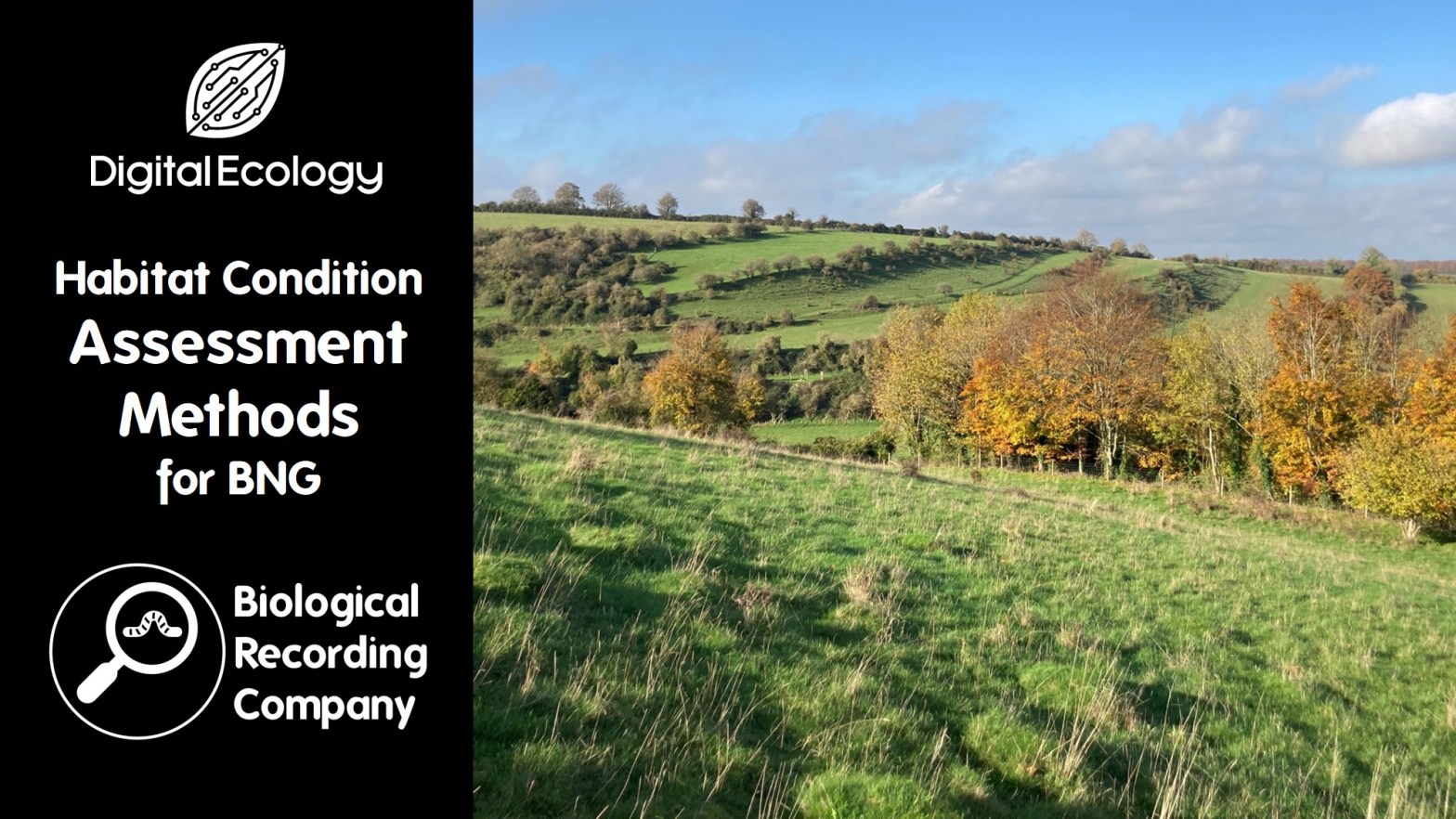
Habitat condition is a key component of the data required to calculate BNG units in the DEFRA metric. Criteria for habitat condition are provided with the metric, but no method for condition assessments accompanies these criteria. How then do we collect robust data to support condition assessments to ensure regulators have confidence in our condition assessments? Dan will introduce an emerging method for condition assessments that takes a standardised approach to data collection to ensure condition assessments are underpinned by robust data and evidence.
Q&A with Dr Dan Carpenter
Dr Dan Carpenter is a Digital Ecologist working, at the interface of ecology and digital technology. He is interested in how digital tech can be harnessed to help deliver better biodiversity outcomes. He is also interested in biodiversity net gain methods and practice, working to ensure that BNG assessments are underpinned by data and evidence.
Are the specific ‘rules’ for the criteria that you’ve set out adaptable for future iterations?
Absolutely- it is by no means a finished product. I welcome feedback to improve how it works. Ultimately I hope to have a shared agreed approach to doing condition assessments that is robust and proves us with the data and evidence to support our BNG assessments.
How much do you believe, if this is implemented, ecological consultants or BNG surveyors should be able to use their own expertise to override a score?
Absolutely always. Ecology is generally not an exact science. Surveyors will be on the ground and will be able to provide evidence as part of the condition assessment based on what they have seen. The idea is that we are, as far as possible, recording quantitative data.
If you complete a transect and no Invasive Non-Native Species have been recorded, but you do observe them elsewhere in the field, is what you’re staying that you should override those criteria in your report?
100% yes. You don’t ignore the evidence you have seen with your own eyes. The idea isn’t to be restrictive and to take away decision-making from ecologists, it’s to help support ecologists to come up with data that is robust and provides evidence.
Further info and links
- Digital Ecology website: https://digital-ecology.co.uk/
- DEFRA statutory metric: https://www.gov.uk/government/publications/statutory-biodiversity-metric-tools-and-guides
- DEFRA metric 4.0 guidance: https://publications.naturalengland.org.uk/publication/5850908674228224
- UN SEEA guidance: https://unstats.un.org/unsd/statcom/52nd-session/documents/BG-3f-SEEA-EA_Final_draft-E.pdf
- Non-Native Species Secretariat: https://www.nonnativespecies.org/
- HCA Method Codeberg repository: https://codeberg.org/Digital-Ecology/habitat-condition-method
- HCA Method wiki – Accessing the method: https://conditionassessmentmethod.co.uk
- QGIS repository: https://codeberg.org/Digital-Ecology/qgis-hca
- QField: https://www.qfield.org/
- MerginMaps: https://merginmaps.com/
- Digital Ecology mailing list: https://buttondown.email/digital-ecology
More on Biodiversity Net Gain


 Biological Recording
2 thoughts on “Habitat Condition Assessment Methods for BNG”