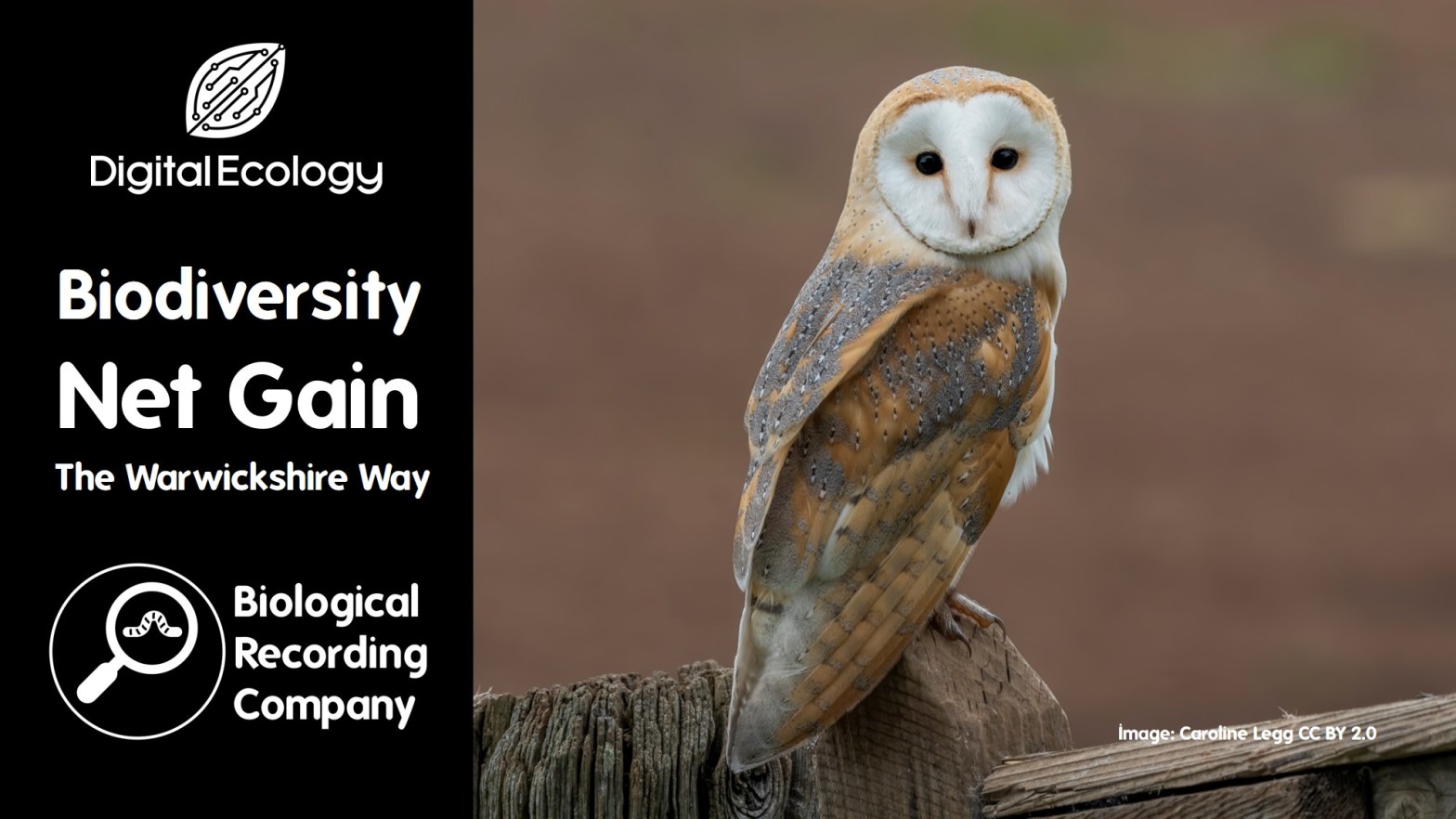
Warwickshire was one of the pilots of Biodiversity Net Gain and has been the first local authority to successfully implement it in practice. Warwickshire’s metric has been used to form the approved metric for national use. Bold claims indeed! So how has Warwickshire achieved BNG so far and what else is there left to do?
Q&A with David Lowe
David Lowe is the Service Manager of the Ecology, Historic Environment and Landscape Team at Warwickshire County Council which is one of the largest teams of Ecologists in any local authority in the UK. He is passionate about achieving real change to benefit the environment at a local level by leading innovative ideas that can be implemented beyond Warwickshire at a national or even international scale
How do you think your Local Nature Recovery Strategy will interact with your Green Infrastructure Strategy?
Our Green Infrastructure Strategy is a policy forming document and I see our Local Nature Recovery Strategy as a framework document. Our Green Infrastructure Strategy is evidence-based, and it also identifies where Biodiversity Net Gain wants to go and other nature markets. The Local Nature Recovery Strategy is going to set the targets, set what we want to do and sign post towards other useful documents.
Do you think the LNRS will drive offsites into the places you want them to be?
There are the local authorities decision-making processes that like to see their Biodiversity Net Gain delivered within their own boroughs or districts. The officers have been good in saying they don’t mind if it goes anywhere in the county, as long as it’s fair in the end. That’s given us some room to be flexible. Offsite numbers vary hugely between district so with the Local Nature Recovery Strategy we could buy some land in boroughs or districts with less offsite numbers to even everything out.
Do you have enough offsite sites to meet the demand locally?
Yes, as we are tackling it from many angles. Landowners have been unsure about Biodiversity Net Gain due to the 30-year agreement, but we have more people wanting to do good than are doing bad. We are flush with units probably because we have section 39 agreements, which have now been converted into Conservation Covenant, so as soon as we are designated as the responsible body it will be full steam ahead.
On the other angle, this is only a Biodiversity Net Gain market, we are not planting any woodlands in these schemes so it won’t solve our woodland crisis, but the carbon market should. We’re actually going to create a lot of different markets so the landowner, if they plant some woodland, could sell it for Biodiversity Net Gain or carbon and get the same price.
Have you had any landowners pulling out of schemes due to risk?
Yes, we had loads of people in the beginning wanting to know but only 1 in 6 went forward, though some of those who dropped out have come back now. Landowners also realised that we only wanted their marginal land, we want the flooded bits, not the arable land and that makes us more appealing. They are businessmen and they know exactly what they need to do.
Further info and links
- Environment Act 2021: https://www.legislation.gov.uk/ukpga/2021/30/contents/enacted
- Warwickshire Green Infrastructure Strategy: https://www.warwickshire.gov.uk/greeninfrastructure
- Warwickshire GI map: https://maps.warwickshire.gov.uk/greeninfrastructure/
- Local Nature Recovery Strategies event presentations: https://biologicalrecording.co.uk/2024/02/08/local-nature-recovery-strategies/
- Article on Warwickshire LNRS: https://www.warwickshire.gov.uk/news/article/4434/giving-warwickshire-s-natural-world-helping-hands-to-recover
- Nature for Water: https://nature4water.org/
- Warwickshire Natural Capital investment approach: https://www.warwickdc.gov.uk/download/downloads/id/7742/exam_5_-_natural_environment_investment_readiness_fund_report_%E2%80%93_warwickshire_carbon_and_environmental_markets-wcc_neirf_final_report.pdf
More on Biodiversity Net Gain

 Biological Recording
2 thoughts on “Biodiversity Net Gain: The Warwickshire Way”