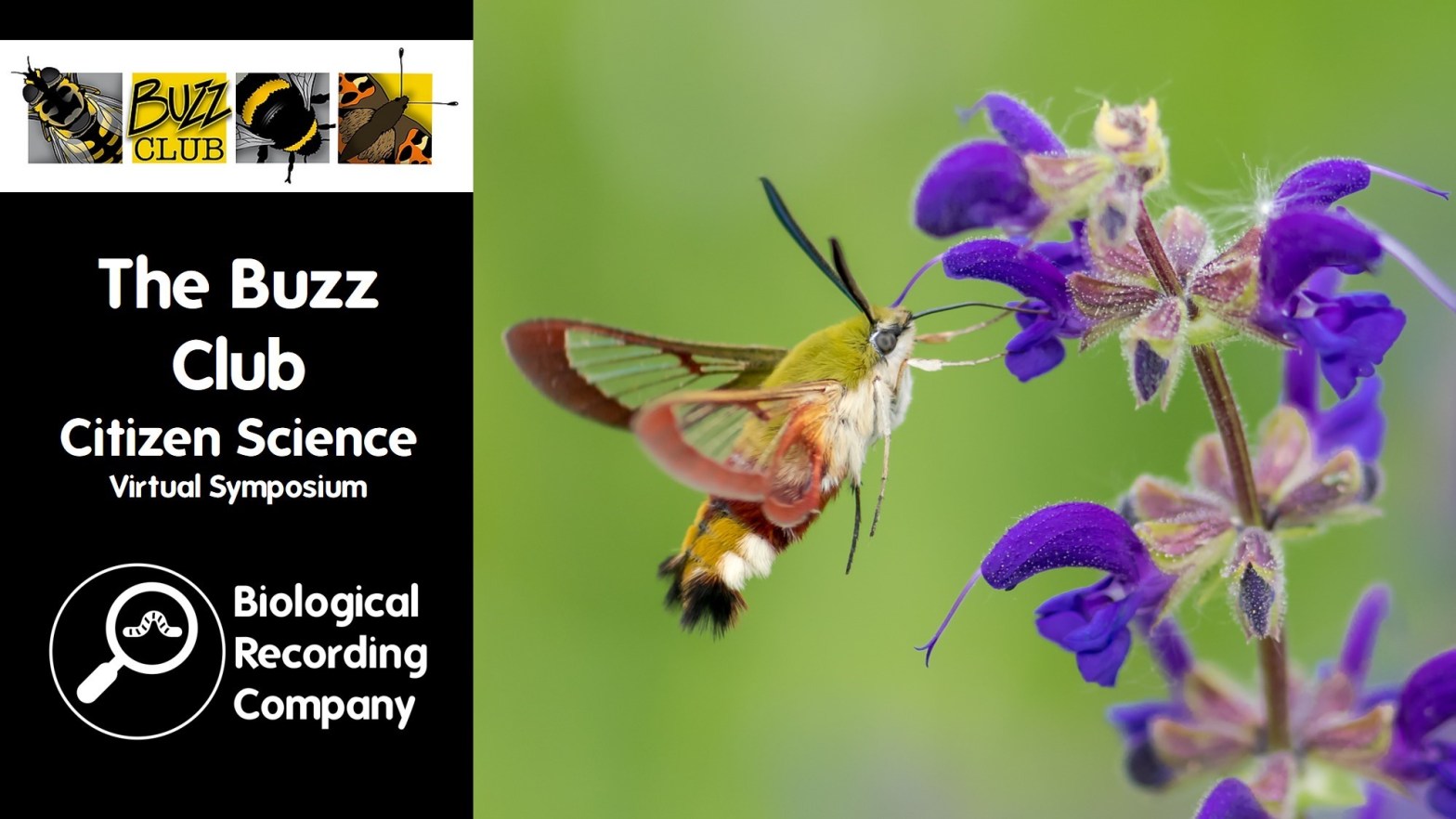
Gardening is a popular pastime, but not one that we do alone. Whether hidden beneath the soil, buzzing in the borders or singing on the fence, thousands of wild animals share our spaces. They provide vital support to our own horticultural successes – yet we know very little about most of them!
The Buzz Club intends to change that. It is a citizen science club, run by scientists at the University of Sussex. Citizen Science is a way of conducting research in collaboration with the general public. The Buzz Club creates experiments that help us understand the wildlife we share our gardens with, and what we can do to conserve it. Volunteers all over the UK help the Buzz Club to answer these important questions.
‘The Buzz Club: Citizen Science Virtual Symposium’ showcased the successes and lessons learnt by the Buzz Club, using their large portfolio of citizen science projects as case studies. We’ll delve into examples that have formed part of PhD studies and how various studies are linked or have fed into one another.
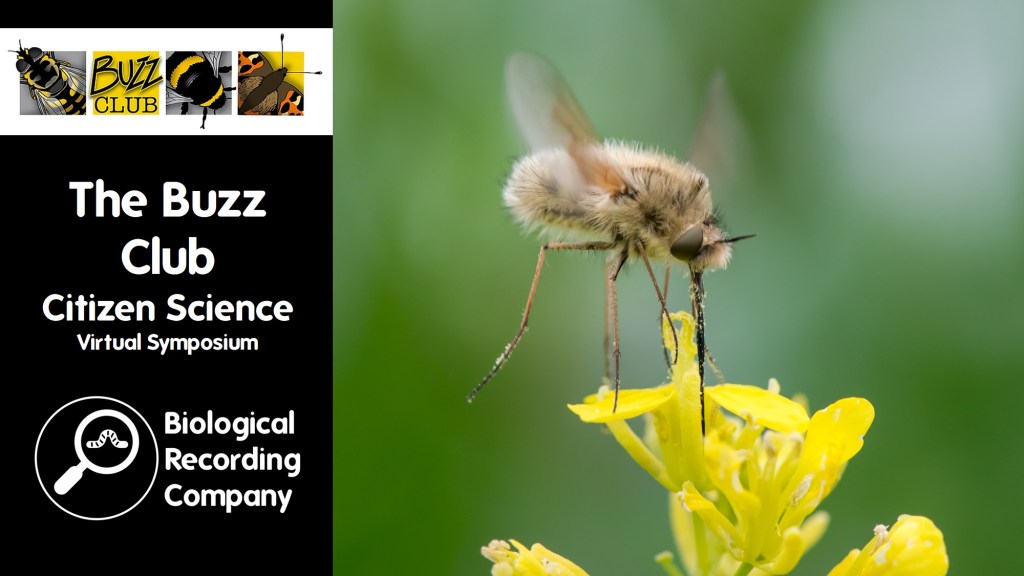
The event was hosted by Professor Dave Goulson and featured presentations from the Buzz Club team that focus on the origins, engagement, scientific outputs and lessons learned of this citizen science programme.
- Introduction to the Buzz Club with Prof Dave Goulson
- When Is Citizen Science A Useful Approach? with Dr Beth Nicholls
- Spreading the Word Using Citizen Science: Hoverfly Lagoons Project Case Study with Dr Ellen Rotheray
- Bee-hind the Bees and Heatwaves Project: Lessons Learnt from PhD Research with the Buzz Club with Yanet Sepulveda
- Keeping the Spark Alive: Volunteer Retention in Citizen Science with Dr Linda Birkin
Introduction to the Buzz Club
with Prof Dave Goulson
Prof Dave Goulson will explain why insects are important, and describe the many threats they face in the modern world. He will explain how gardens and gardeners can help in providing a home for thousands of species, and the role that Buzz Club is playing in trying to inform how best to encourage insect life in gardens through conducting nationwide “citizen science” experiments.
Dave Goulson is a Professor of Biology at the University of Sussex (UK). He has published more than 350 scientific articles on the ecology of insects. He is the author of Bumblebees (OUP 2010), and of several bestselling popular books including A Sting in the Tale (2013), A Buzz in the Meadow ( 2014), The Garden Jungle (2019) and Silent Earth (2021), collectively translated in 20 languages. Goulson founded the Bumblebee Conservation Trust in 2006, a charity that has grown to 12,000 members.
Literature References
- Hallman et al (2017) More than 75 percent decline over 27 years in total flying insect biomass in protected areas: https://journals.plos.org/plosone/article?id=10.1371/journal.pone.0185809
- Goulson et al (2002) Colony growth of the bumblebee, Bombus Terrestris, in improved and conventional agricultural and suburban habitats: https://pubmed.ncbi.nlm.nih.gov/28547150/
- Rollings & Goulson (2019) Quantifying the attractiveness of garden flowers for pollinators: https://link.springer.com/article/10.1007/s10841-019-00177-3
- Balfour & Ratnieks (2022) The disproportionate value of ‘weeds’ to pollinate and biodiversity: https://appliedecologistsblog.com/2022/03/17/the-disproportionate-value-of-weeds-to-pollinators-and-biodiversity/
- Tassin de Montaigu & Goulson (2024) Factors influencing butterfly and bumblebee richness and abundance in gardens: https://www.sciencedirect.com/science/article/pii/S0048969723066226
- Lentola et al (2017) Ornamental plants on sale to the public are a significant source of pesticide residues with implications for the health of pollinating insects: https://www.sciencedirect.com/science/article/abs/pii/S0269749117305158
- Blackmore and Goulson (2014) Evaluating the effectiveness of wildflower seed mixes for boosting floral diversity and bumblebee and hoverfly abundance in urban areas: https://resjournals.onlinelibrary.wiley.com/doi/abs/10.1111/icad.12071
Useful Links
- Buzz Club webpage: https://www.thebuzzclub.uk/
- Buzz Club Publications: https://www.thebuzzclub.uk/publications
- Buzz Club Events: https://www.thebuzzclub.uk/events
- Buzz Club Sponsorship/Membership: https://www.thebuzzclub.uk/get-involved
- Buzz Club Local Facilitators/ Engagement Volunteers: https://www.thebuzzclub.uk/get-involved
- Buzz Club Projects: https://www.thebuzzclub.uk/projects
- The Big Bee Hotel Experiment: https://www.thebuzzclub.uk/thebigbeehotelexperiment
- Air Bee ‘n’ Bee: https://www.thebuzzclub.uk/air-bee-n-bee
- Bees and Heatwaves: https://www.thebuzzclub.uk/bees-heatwaves
- Garden Shop Calculator: https://www.thebuzzclub.uk/garden-shop
- Hoverfly Lagoons: https://www.thebuzzclub.uk/hoverfly-lagoons
- Buzz Kids: https://www.thebuzzclub.uk/buzzkids
- Shrill Carder Bee data: https://nbnatlas.org/
- The Bigs Matter Citizen Science Survey: https://cdn.buglife.org.uk/2024/04/Bugs-Matter-Technical-Report-2023.pdf
- Dave’s Books:https://www.waterstones.com/books/search/term/goulson
When Is Citizen Science A Useful Approach?
Dr Beth Nicholls
Using examples from the Buzz Club and beyond, this presentation will outline some of the key things to consider before embarking on a citizen science project, such as budget, motivations of participants and the potential for engagement and behaviour change.
Spreading the Word Using Citizen Science: Hoverfly Lagoons Project Case Study
Dr Ellen Rotheray
The Hoverfly Lagoons project was invented in 2016, to develop an easy, cheap wildlife gardening technique. Since then the idea of creating a Lagoon for hoverflies has captured the imagination of people around the globe. This presentation will describe the reach and application of this citizen science project, as a method for raising awareness and engaging with people.
Bee-hind the Bees and Heatwaves Project: Lessons Learnt from PhD Research with the Buzz Club
Yanet Sepulveda
The Buzz Club’s Bees and Heatwaves project is part of a PhD study aimed at using citizen science to investigate how bees respond to heatwave events. This presentation explores the project’s objectives, discussing the advantages, challenges, and future prospects of working alongside citizens to support pollinators in a warming world.
Keeping the Spark Alive: Volunteer Retention in Citizen Science
Dr Linda Birkin
Citizen science relies on the data returned by volunteers – thus, such projects need to maximise the chances of that happening. Clear communication, transparency about methods and objectives, and fostering a sense of ownership and community are all extremely important to keeping volunteers engaged, and invested in the success of a project. Dr Linda Birkin will delve into her experience of striking this balance, from her PhD ‘Bees & Beans’ and into the Buzz Club’s current roster of projects.
Citizen Science Panel Discussion
Transcription of the Panel Discussion coming soon…
Event Partners
This event was delivered by the Biological Recording Company and the Buzz Club.
More for environmental professionals
 Biological Recording
One thought on “The Buzz Club: Citizen Science Virtual Symposium”