
Earthworms are vital for maintaining healthy soils and provide a host of other benefits to garden habitats. However, few people realise we have 31 different species of earthworm in the British Isles, with differing requirements and providing different benefits. Keiron will provide tips and guidance on how you can improve the earthworm diversity and abundance within your garden, regardless of whether you have a small urban garden or extensive grounds.
Keiron Derek Brown is the UK’s national recorder for earthworms, a trustee of the Earthworm Society of Britain and delivers training on earthworm ecology, surveying and identification.
Q&A with Keiron Derek Brown
- How do the different types of earthworms find the environments that suit them?
That’s a fantastic question – and one that I’d love to have the answer to. I’m not sure how the specialists locate the oasis-style habitats that they prefer. We know that earthworms can sense chemicals, but as far as I’m aware we don’t know how this could impact dispersal and how they locate their preferred environments. - Where do the surface-dwelling species go during hot dry summers where there is no leaf litter?
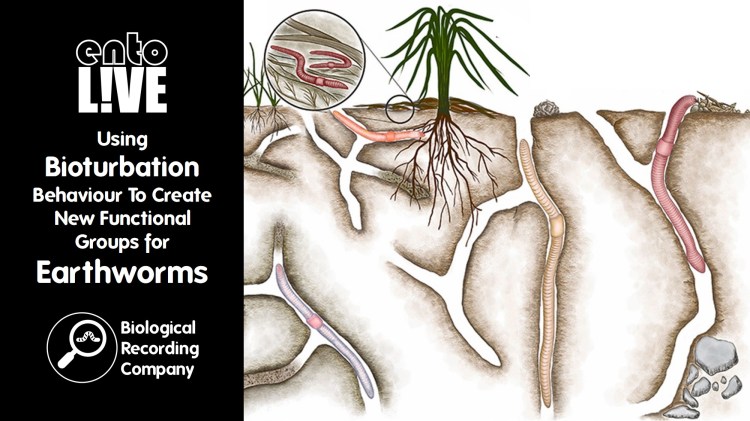
Earthworms will retreat deeper through the soil programme to avoid unfavourable environmental conditions, such as drought/dry weather. surface-dwelling species may retreat a small amount into the soil, shallow-burrowing species more so and the deep-burrowing species can go down past a couple of metres! Some species may have a seasonal life cycle, where few adult earthworms survive during the tougher parts of the year and the population overwinters (or over-summers) as the cocoon stage. Cocoons have been shown to delay hatching for considerable amounts of time until the environmental conditions are more favourable. - Does composting pesticide-treated plant material affect compost earthworms?
I’m not aware of any research into this specifically, but my educated guess would be that it is most likely to have an impact. If the chemicals used are harmful to earthworms, they will come into contact with composting species in the compost bin. These chemicals could have a significant (even potentially fatal) impact on the composting worms, but even if they didn’t the earthworms could end up as a reservoir for these chemicals and significantly impact their predators through bioaccumulation. - What is your view on transposing earthworms into a new compost bin?
Personally, I’m quite wary of purchasing earthworms online and having them posted. It’s important that we don’t introduce non-native species and can we really be sure that we are receiving the species that is advertised? Outdoor composting systems are often colonised naturally, however, I understand that indoor and some sealed systems may need inoculating with earthworms to get the system started. In these instances, I recommend using a reputable supplier or asking for some worms from someone who has an active compost bin locally (such as a neighbour). I tend to point people to The Urban Worm for composting advice. - Have you gene sequenced the 31 species of earthworm?
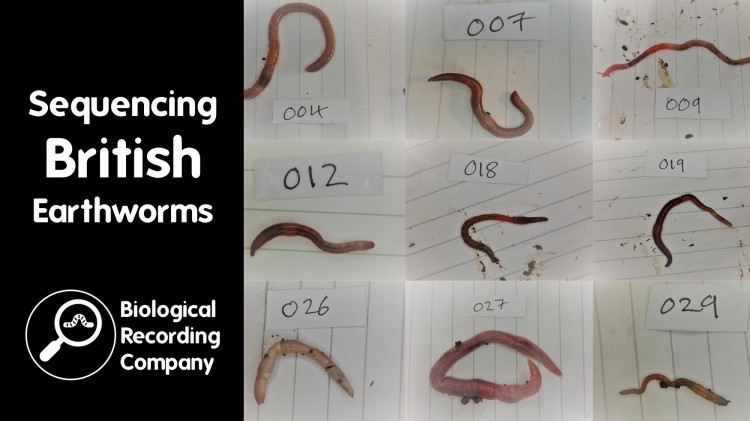
I’ve been working with Oxford University and the Natural History Museum on the Darwin Tree of Life Project – an ambitious project to sequence all 70,000 species of eukaryotic organisms within the UK and Ireland. We’ve managed to sequence the genomes of most earthworm species and are now just missing some of the rarer species. You can read more about this in my Sequencing British Earthworms blog or the Unlocking the Invertebrate Genome entoLIVE presentation with Dr Liam Crowley.
Literature references
- Bottinelli et al (2020) An explicit definition of earthworm ecological categories–Marcel Bouché’s triangle revisited: https://www.sciencedirect.com/science/article/abs/pii/S0016706119322323?via%3Dihub
Further info
- Earthworm AIDGAP from the FSC: https://www.field-studies-council.org/shop/publications/earthworms-aidgap/
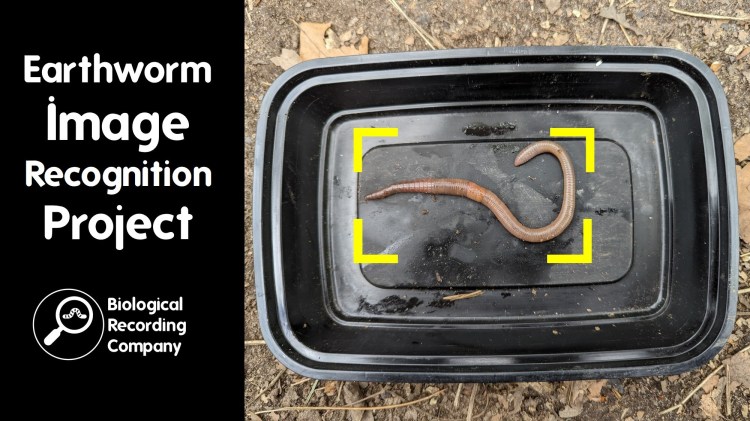
- Earthworm Image Recognition Project blog: https://biologicalrecording.co.uk/2023/09/13/earthworm-image-recognition-project/
- Earthworm Image Recognition project presentation: https://youtu.be/KoOs4DU6HME
- Sequencing British Earthworms blog: https://biologicalrecording.co.uk/2021/07/04/sequencing-earthworms/
- Earthworm Society of Britain: https://www.earthwormsoc.org.uk/
entoLIVE
entoLIVE webinars feature guest invertebrate researchers delving into their own invertebrate research. All events are free to attend and are suitable for adults of all abilities – a passion for invertebrates is all that’s required!
- Donate to entoLIVE: https://www.gofundme.com/f/entolive-2025
- Upcoming entoLIVE webinars: https://www.eventbrite.com/cc/entolive-webinars-74679
- entoLIVE blog: https://biologicalrecording.co.uk/category/entolive-blog/
- entoLIVE on YouTube: https://youtube.com/playlist?list=PLuEBNUcfMmE95Re19nMKQ3iX8ZFRFgUAg&feature=shared
entoLIVE is only possible due to contributions from our partners and supporters.
- Find out about more about the British Entomological & Natural History Society: https://www.benhs.org.uk/
- Browse the list of identification guides and other publications from the Field Studies Council: https://www.field-studies-council.org/shop/
- Check out environmentjob.co.uk for the latest jobs, volunteering opportunities, courses and events: https://www.environmentjob.co.uk/
- Learn more about the Nurturing Nature project: https://cranbornechase.org.uk/chaseandchalke/nurturing-nature/
- Check out the Royal Entomological Society‘s NEW £15 Associate Membership: https://www.royensoc.co.uk/shop/membership-and-fellowship/associate-member/

More on earthworms
 Biological Recording
One thought on “Gardening For Earthworms: Mutual Benefits of Earthworm-friendly Gardening”