The first season of entoLIVE aimed to make invertebrate science more accessible through a programme of presentations and blogs covering a wide range of taxonomic groups, including insects, annelids, molluscs, crustaceans and jellyfish. Entomological groups included mayflies, grasshoppers, true flies, beetles, bees, dragonflies and wasps. Invertebrates across terrestrial, marine and freshwater environments were covered, in addition to presentations that covered multiple taxa (such as presentations on sequencing invertebrates and invertebrate sentience).
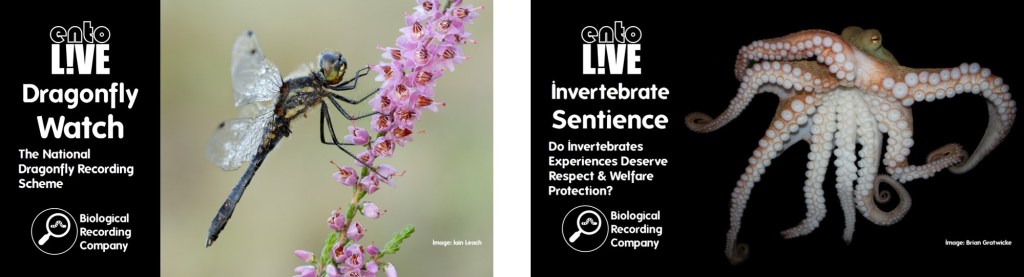
The entoLIVE Summary Report provides a breakdown of the season 1 engagement stats, presents the feedback survey results and outlines the future for entoLIVE. The full report can be viewed and downloaded below and some key findings are summarised in the sections below.
Season 1 Engagement
Season 1 of entoLIVE took place between February and July of 2023 and included 20 live webinars, alongside their associated YouTube videos and blogs. It was delivered by the Biological Recording Company with funding from the British Entomological & Natural History Society and the Royal Entomological Society.
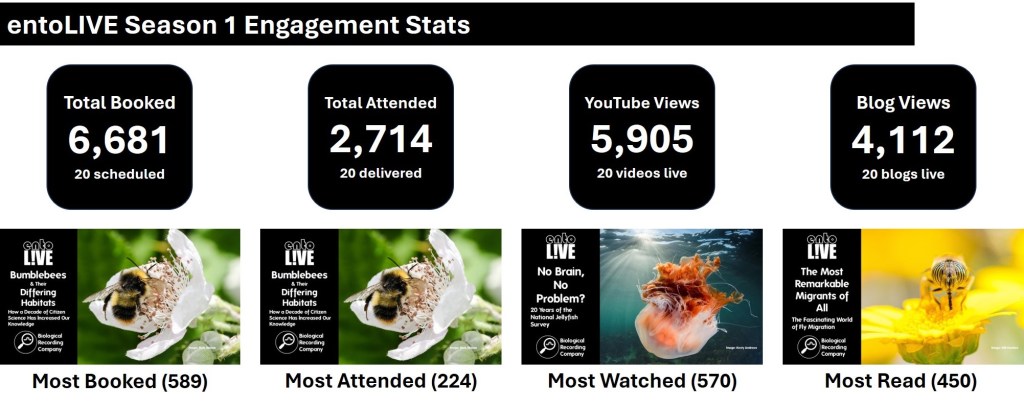
The entoLIVE programme has been successful in engaging large audiences, with season 1 webinars receiving over 6.6k bookings and over 2.7k live webinar attendees. The YouTube videos for season 1 have been viewed over 5.5k times and the blogs have over 3.9k views. The average number of bookings for season 1 webinars was 334 bookings, and the average attendance was 135 attendees.
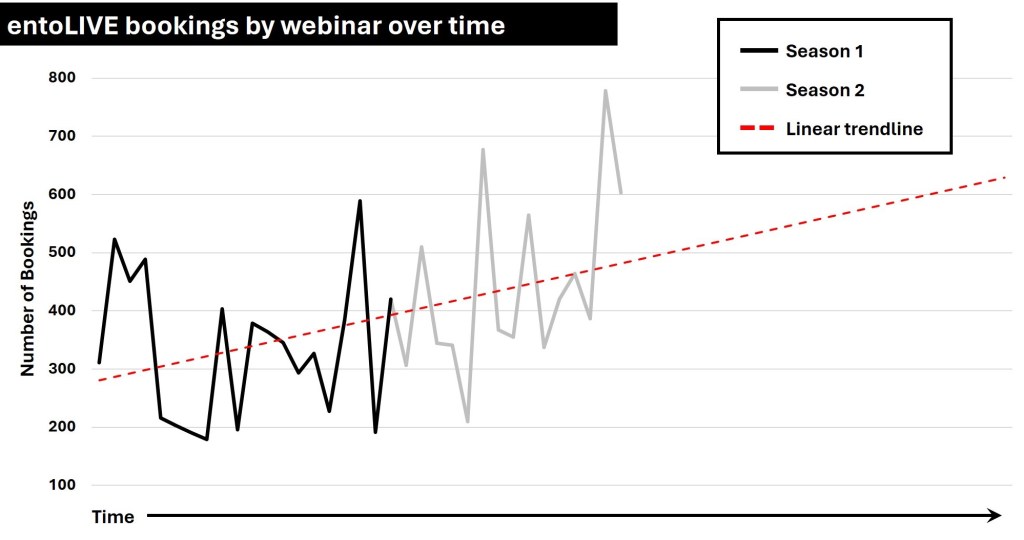
When the bookings are plotted over time (from webinar 1 onwards), there is a clear upward trend in the number of bookings (as can be seen by the dashed red line in the graph below). This is further supported by comparing the average number of bookings per webinar by season, with the season 1 average being 334 bookings and the season 2 average being 444 bookings (as of the 15 webinars that have aired to date).
Season 1 Feedback
An online feedback survey form was sent to all individuals that had booked on a minimum of one of the 20 webinars within season 1 of entoLIVE. 179 responses to the survey were received.
One of the primary aims of entoLIVE is to raise awareness of research outputs and increase the use of these, so it was encouraging that over half (55%) of the respondents reported that they had gained awareness of new research outputs and 28% had gone on to look up invertebrate research outputs as a result of their engagement with entoLIVE.
Furthermore, 43% of respondents were motivated to take part in invertebrate research (such as citizen science projects), 35% had used knowledge gained from entoLIVE in their voluntary or paid work and 11% had referenced research outputs presented in entoLIVE within their own work.
In addition to these direct benefits, 37% of respondents felt more connected to the invertebrate research community and 28% reported learning about the work of entoLIVE sponsors.
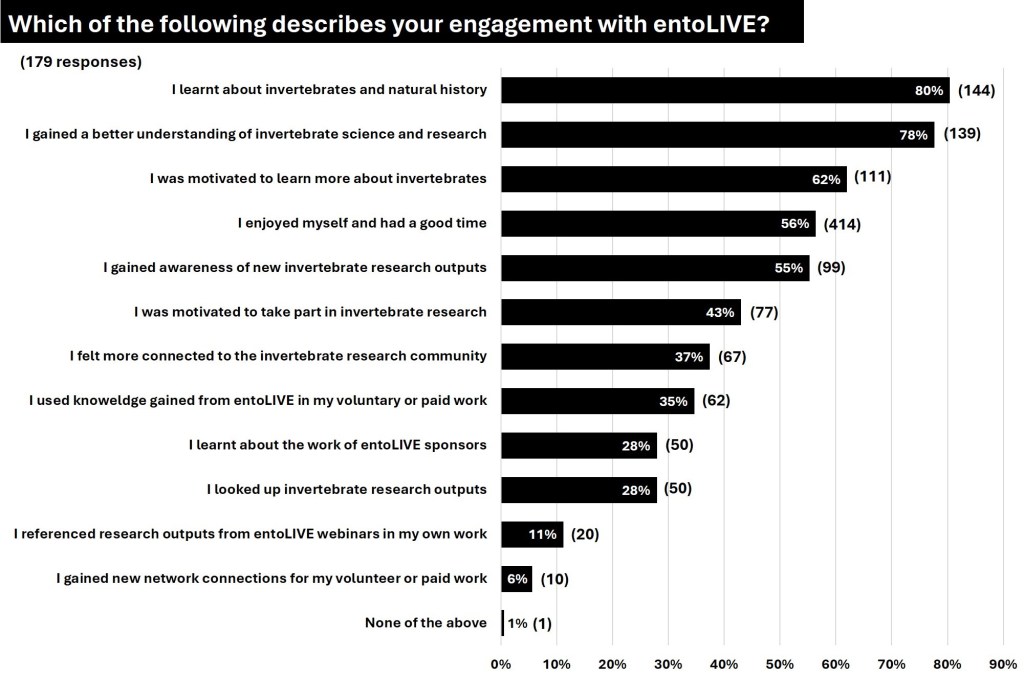
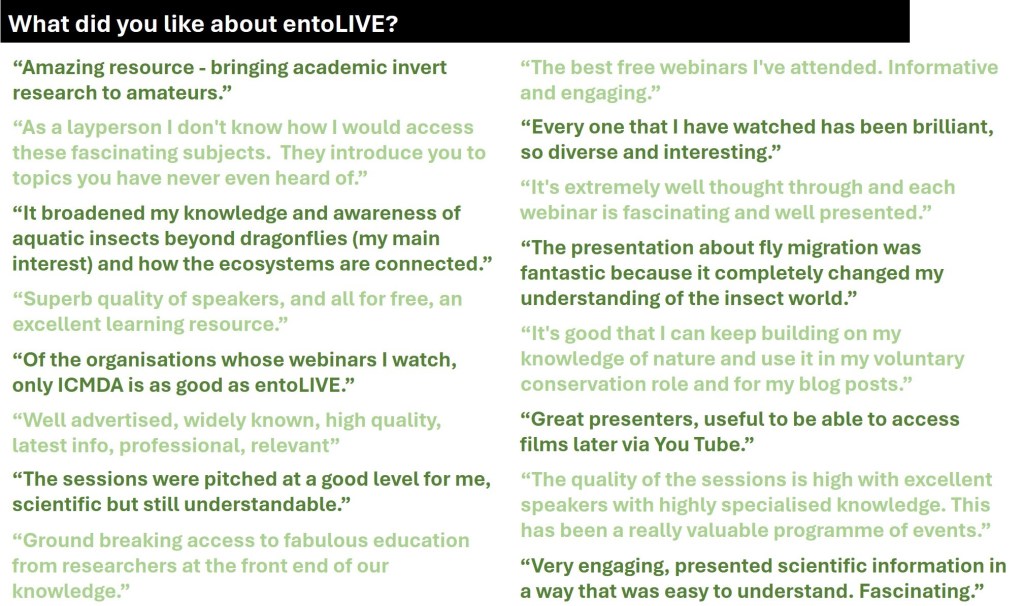
Survey respondents were asked what they most liked and disliked about the entoLIVE webinar programme. The feedback was overwhelmingly positive. A selection of positive comments from the survey are listed below.
Looking Forward…
Season 2 is currently underway and runs from mid-July 2023 until the end of December 2023. A total of 15 webinars from season 2 have already been delivered and 5 more are currently scheduled and open for bookings.
Season 3 will take place during 2024 (running from January to December) and will include a minimum of 20 webinars. To date, 11 webinars have been scheduled:
- Showcase Butterflies: Expanding Networks of Farmers & Biological Recorders (Dr Stuart Edwards)
- The Return of the Native: The Great Fox-spider in Britain (Mike Waite)
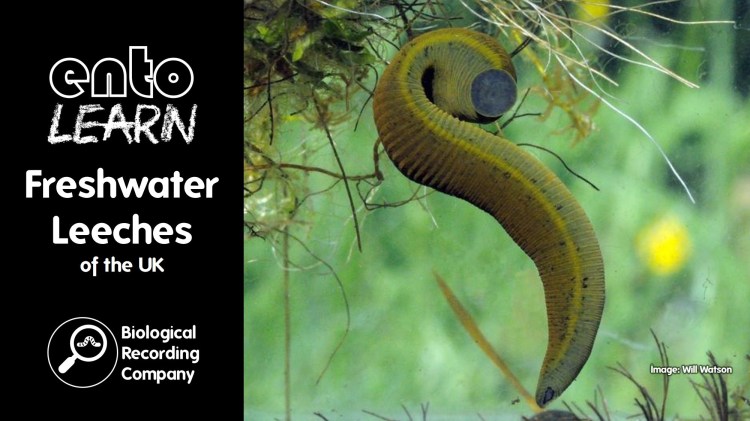
- Leeches: Life History and Identification (Craig Macadam)
- Darwin’s Earthworms: A Groundbreaking Piece of Soil Ecology (Kerry Calloway)
- Nature Overheard: Acoustic Monitoring for Insects Through Community Science (Dr Abigail Lowe)
- The Plight of the Bumblebee: A 12-Year Reintroduction Case Study (Dr Nikki Gammans)
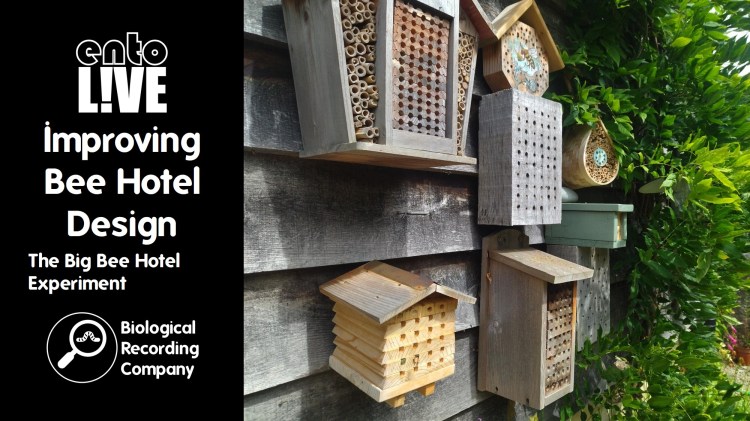
- Refurbishing the Bee Hotel: Different Bees, Different Needs (Dr Linda Birkin & Isobel Sexton)
- Spiders, Earthworms and Spiders: The Impacts of Cover Crop Frost Tolerance (Dr Amelia Hood)
- Butterflies Through Time: Climate Change, Conservation & Historic Specimens (Matthew Hayes)
- Bees and Heatwaves: Preparing For A Warming World (Yanet Sepulveda & Isobel Sexton)
- Bees and Beyond: Ecosystem Services at a Garden Scale (Dr Linda Birkin)

More on invertebrates
 Biological Recording