A blog by Keiron Brown, Founder of the Biological Recording Company
The primary aim of the Biological Recording Company is to support and expand biological recording activities within the UK. We do this through all of our products and services (such as earthworm consultancy or pollinator field recorder days). But if we take away the activities that are paid for by partners, clients and projects, there are still a number of things that the Biological Recording Company does for no financial gain and this blog celebrates 5 ways in which the Biological Recording Company is giving back to the biological recording community.
1. National Biodiversity Network Member
The National Biodiversity Network (NBN) brings together a range of organisations involved in the creation, management and exchange of biodiversity information. In addition to providing guidance and supporting the UK biological recording community, they developed and manage the NBN Atlas – a repository for storing biodiversity data in one place and the UK node for the Global Biodiversity Information Facility.
The Biological Recording Company is a proud paid member of the NBN and committed to supporting the work of the NBN through biological recording training, consultancy and, of course, the generation of species occurrence records.
Within the NBN, we also promise to ensure that the records that we generate make their way to the relevant National Recording Scheme/Society and Local Environmental Record Centre.
2. Recording London’s Invertebrates
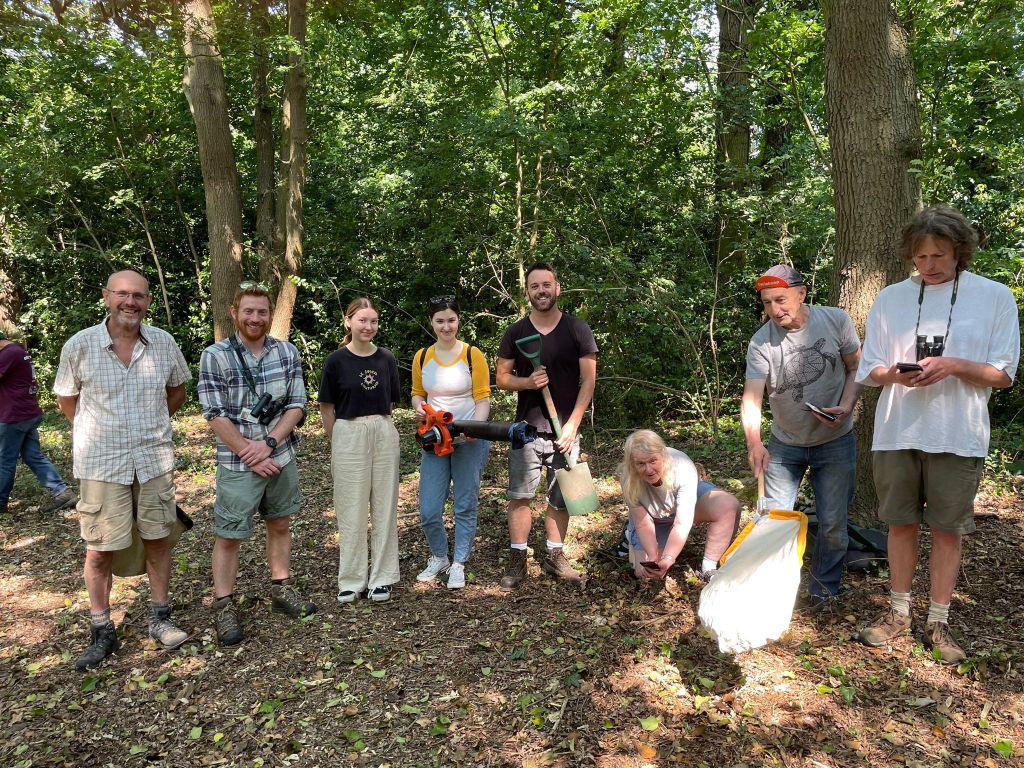
Our Field Recorder Days help generate new species occurrence records and the events bring together both novice and experienced naturalists. Although many of these events are delivered through funded projects, I’ve delivered 3 Invertebrate Field Recorder Days in London during 2023 with no funding:
- Tolworth Court Farm – 35 invertebrate recorders met to further the work that was started with the FSC BioLinks project and record the invertebrates of Tolworth Court Farm Fields and Tolworth Court Farm Moated Manor nature reserves to help gather evidence for the Wild Tolworth project. Specimens of the very rare Kenleenus armadas earthworm were collected by the Natural History Museum for genome sequencing as part of the Darwin Tree of Life project.
- Chiswick House & Gardens – this joint event with the London Natural History Society (LNHS) brought together 25 naturalists, ranging from national experts to beginners. We focused on earthworms, bees, wasps, flies and ants and the event resulted in 109 species occurrence records being submitted to the LNHS iRecord activity
- Hounslow Heath – another joint LNHS event, following a period of hot dry weather 11 invertebrate recorders did well to generate the 77 species occurrence records that were submitted to the LNHS iRecord Activity. Earthworms, ants, plant galls, flies and spiders were the focus.
3. Shining A Spotlight on Research
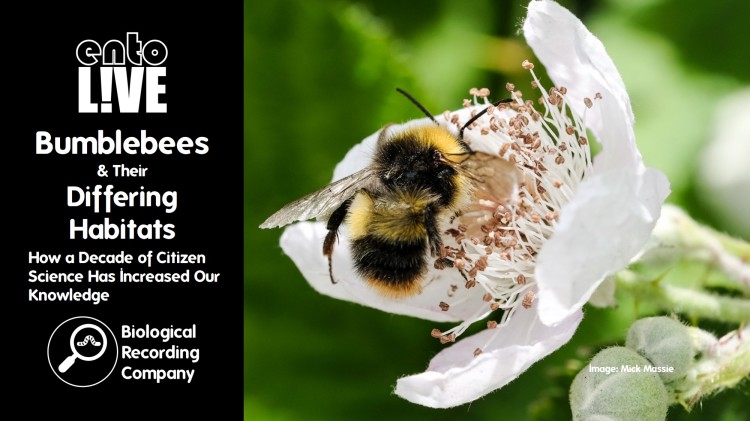
entoLIVE was a passion project. Why should research be inaccessible to the wider naturalist audience and reserved for academics? Evidence-based conservation is essential for successful conservation.
The project involves recruiting guest invertebrate scientist speakers to talk about their research in live webinars and publishing the recorded presentations on YouTube. With 38 speakers booked at the time of writing and over 9,000 people booked, entoLIVE has been a big success.
Furthermore, it has now attracted sponsorship from the British Entomological & Natural History Society, environmentjob, Field Studies Council and Royal Entomological Society… meaning that entoLIVE will continue into the future as a truly collaborative initiative.

4. Providing Guidance on iRecord
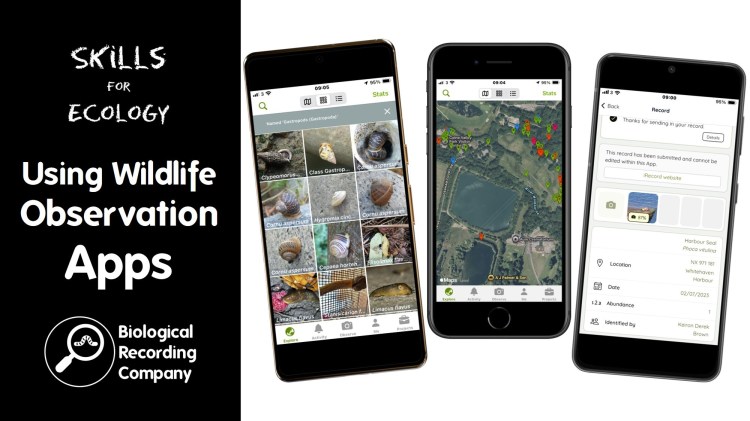
The Biological Recording Company stands firmly behind iRecord as our online recording platform of choice, mostly due to the method it uses for verification and the availability of records submitted to the platform to the relevant National Recording Scheme/Society and Local Environmental Record Centre for a given record.
That doesn’t mean that I think iRecord is perfect. It has its pros and cons, with some users finding it difficult to use it initiatlly. I hope to break down some of the barriers to using iRecord so that people don’t feel they need to be expert biological recorders in order to contribute data. I’ve produced a number of guidance videos about iRecord to help people better understand the platform and get more out of it. All the videos are publicly available via our YouTube channel, and I have more planned for the near future.
5. National Earthworm Recording Scheme
As the National Recorder for Earthworms and a trustee for the Earthworm Society of Britain, I have been an active volunteer within the biological recording community for over 10 years. Verifying records on iRecord, responding to earthworm recorder queries, managing the species occurrence data and writing the National Earthworm Recording Scheme Bulletin are just some of the tasks that I perform. Working for the Biological Recording Company has enabled me to continue this work and even freed up more time to do a better job of it.
It’s also enabled me to find time to schedule additional Earthworm Sampling Days outside of the funded projects we work on for our clients.
- Grove Farm Nature Reserve – this sampling day will take place on Sat 07 Oct 2023 and will be the first-ever earthworm survey for this site. We’re hoping to demonstrate that biological recording events at this site can be both popular and productive to encourage potential funders to back a larger biological recording programme.
- Barnes Common – the team at Barnes Common Ltd have been trying to record as many species as possible to better understand the wildlife present and inform them how to manage their site for nature. They now have 13 earthworm species added to their list (see the report below) thanks to us!
I’m only able to find the time and capacity to give back to the biological recording sector because of the variety of projects and partners that I work alongside on funded work. So I’d like to end this article with a HUGE thank you to all of those that have commissioned or supported the Biological Recording Company throughout our first 18 months! Keiron
Keep updated about our courses and events
More on biological recording




 Biological Recording