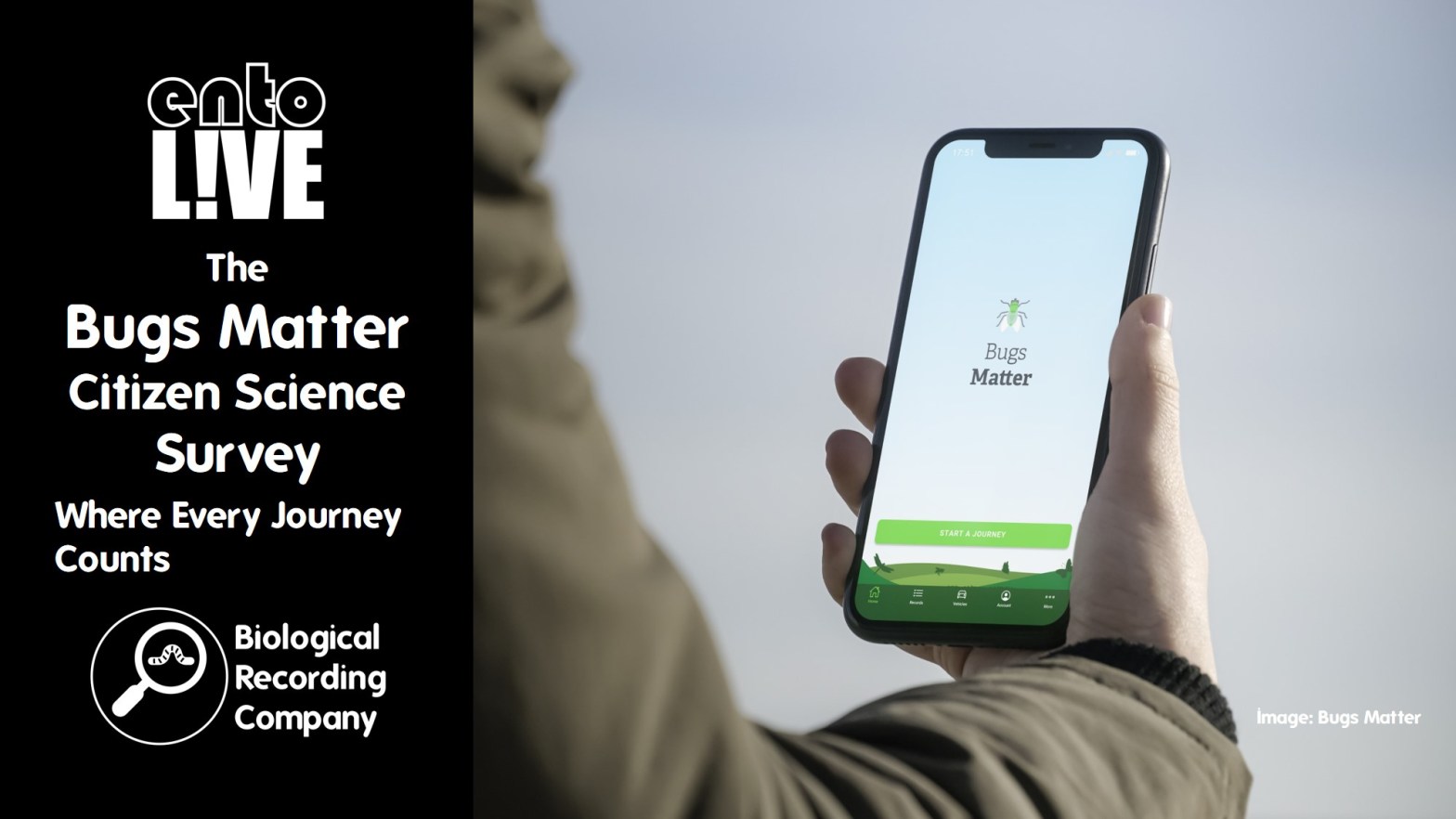
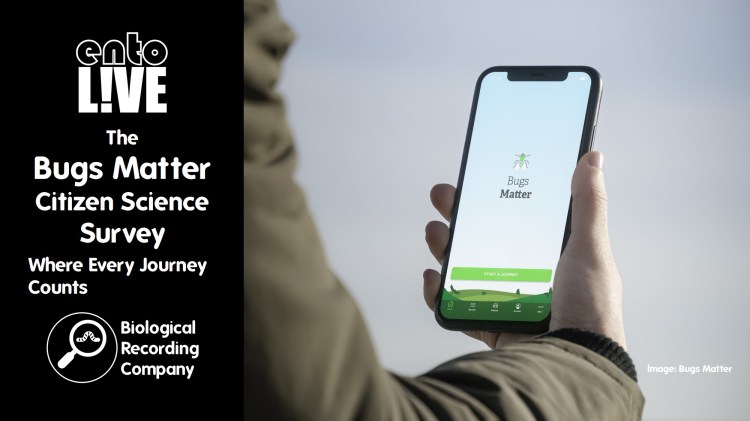
The annual Bugs Matter survey is a national citizen science survey run by Kent Wildlife Trust and Buglife, which aims to quantify trends in flying insect abundance. Participants record the number of insect splats on their vehicle number plates after completing a journey. This talk will explain how the data is collected and analyzed, what the results can tell us about insect population trends, and the challenges and opportunities for the survey in the future.
Q&A with Dr Lawrence Ball
Dr Lawrence Ball is a conservation scientist with over 10 years of experience in conservation research. Previously a postdoctoral researcher at Ohio State University, and an ESRC-funded PhD student at DICE, University of Kent, Lawrence now oversees data analytics within Kent Wildlife Trust’s Evidence and Monitoring department and manages Bugs Matter.
- As cars are more aerodynamic in design now compared to the past, could this impact the results in any way?
We have done an analysis looking at vehicle age against the number of splats and haven’t found any strong relationship between the two. We did actually find a slight positive relationship, with newer cars having slightly more splats. Unfortunately, we can’t fully test this until we do a wind tunnel experiment and stick some different types of vehicles in there and throw some bug-like items in there to try to understand it in more detail. - Do you take into account the increase in the volume of cars on the road over the years?
We have tried to look into traffic density using Google traffic data, but it turned out quite expensive due to the number of roads and months we required data for. There are so many other factors or co-variates that I personally think may have more of an impact, such as the surrounding habitats, speeds of vehicles, insect activity, flight periods and seasonality. There is a lot for us to explore so we have to prioritise what we have the capacity to investigate, but it would be great to understand the impacts of traffic density better. - Could the difference in HGV splats be due to the height of the number plate?
Yes, there are a number of reasons that could be causing the difference. the aerodynamics going on at the front of the vehicle are going to be very different. In HGVs, the number plate can be slightly off-set compared with other vehicles and this could impact results too. - How will you make the new survey data comparable to the old data that used the splatometer to maintain the long-term dataset?
Our previous unit of measurement was splats per mile and now the measurement will be splats per cm2 per mile, enabling us to compare the old and the new data. - Are there plans to swab the plates and do DNA analysis?
This is something that could be possible in the future and could give us information on species diversity or even which individual species are being impacted. Obviously, there are costs associated with sequencing so it would really depend on funding and cost limitations, but would be great for helping us understand what is going on!
Literature references
- Ball (2022) The Bugs Matter Citizen Science Survey: the 2022 Report https://www.kentwildlifetrust.org.uk/sites/default/files/2022-12/KWT%20Bugs%20Matter%20Technical%20Report%202022_compressed.pdf
- Fox et al (2021) The State of Britain’s Larger Moths 2021 https://butterfly-conservation.org/sites/default/files/2021-03/StateofMothsReport2021.pdf
- Fox et al (2023) The State of the UK’s Butterflies 2022 https://butterfly-conservation.org/sites/default/files/2023-01/State%20of%20UK%20Butterflies%202022%20Report.pdf
- Hallmann et al (2017) More than 75 percent decline over 27 years in total flying insect biomass in protected areas https://journals.plos.org/plosone/article?id=10.1371/journal.pone.0185809
- Møller (2019) Parallel declines in abundance of insects and insectivorous birds in Denmark over 22 years https://onlinelibrary.wiley.com/doi/full/10.1002/ece3.5236
- Hallmann et al (2019) Declining abundance of beetles, moths and caddisflies in the Netherlands https://resjournals.onlinelibrary.wiley.com/doi/10.1111/icad.12377
- van Klink et al (2020) Meta-analysis reveals declines in terrestrial but increases in freshwater insect abundances https://par.nsf.gov/servlets/purl/10161461
- Harris et al (2019) Decline in beetle abundance and diversity in an intact temperate forest linked to climate warming https://www.birds.cornell.edu/hubbardbrook/wp-content/uploads/2019/12/Harris-et-al.-2019-Biol-Conserv.pdf
- Wepprich et al (2019) Butterfly abundance declines over 20 years of systematic monitoring in Ohio, USA https://journals.plos.org/plosone/article?id=10.1371/journal.pone.0216270
Further info
- ‘How To Take Part in Bugs Matter’ video: https://youtu.be/tLpEgfIQx-A
- Contact info: info@bugsmatter.app and lawrence.ball@kentwildlife.org.uk
- Bugs Matter app download (Android): https://play.google.com/store/apps/details?id=com.natural_apptitude.bugsmatter&gl=US
- Bugs Matter app download (iOS): https://apps.apple.com/gb/app/bugs-matter/id1525891356
entoLIVE
entoLIVE webinars feature guest invertebrate researchers delving into their own invertebrate research. All events are free to attend and are suitable for adults of all abilities – a passion for invertebrates is all that’s required!
- Donate to entoLIVE: https://www.gofundme.com/f/entolive-2026
- Upcoming entoLIVE webinars: https://www.eventbrite.com/cc/entolive-webinars-74679
- entoLIVE blog: https://biologicalrecording.co.uk/category/entolive-blog/
- entoLIVE on YouTube: https://youtube.com/playlist?list=PLuEBNUcfMmE95Re19nMKQ3iX8ZFRFgUAg&feature=shared
entoLIVE is only possible due to contributions from our partners and supporters.
- Find out about more about the British Entomological & Natural History Society: https://www.benhs.org.uk/
- Check out the Royal Entomological Society‘s NEW £15 Associate Membership: https://www.royensoc.co.uk/shop/membership-and-fellowship/associate-member/

More on citizen science

 Biological Recording