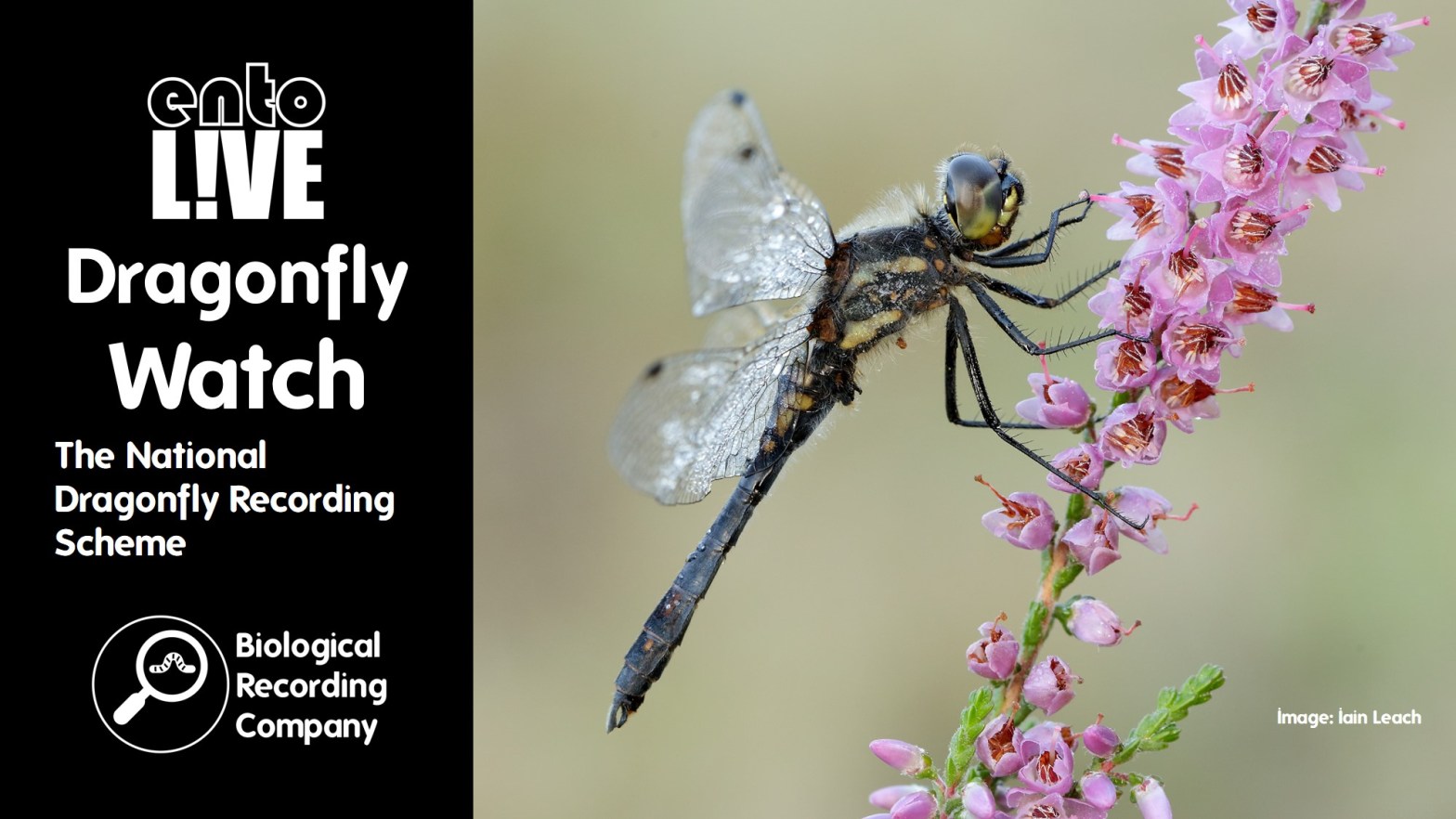
Dragonflies and damselflies make up the insect order Odonata and are the focus of the British Dragonfly Society (BDS). The BDS has accumulated over a million verified species occurrence records of dragonflies and damselflies have been accumulated through monitoring and recording of these fascinating insects, some dating back to the 19th century. This talk will provide an overview of the National Dragonfly Recording Scheme, how it influences dragonfly conservation and how you can get involved.
Q&A with Eleanor Colver
Eleanor Colver is Conservation Officer for the British Dragonfly Society. She graduated with a BSc Zoology with Conservation from Bangor University and an MSc Biodiversity and Conservation from Leeds University. After graduating, Ellie spent a year wading around in RSPB wetland reserves as a Warden Intern, performing practical habitat management with volunteers. She also spent two seasons as the Langholm Moor Demonstration Project’s Senior Research Assistant, monitoring upland wildlife. During this time Ellie had the opportunity to observe Odonata in a range of habitats and found that the more she learnt about their ecology the more she wanted to discover, leading her to her current role.
- Can we use iRecord to submit data?
The easiest way to submit records is through the Submit Your Records page on the British Dragonfly Society website, with the records going from there into the iRecord database. We also have the specific dragonfly forms listed on iRecord as an activity so you can also submit records through those and they are verified by our network of county recorders. We do also get the iRecord records not submitted through the dragonfly forms, but the dragonfly forms is tailored for dragonflies so it gives us better quality data. The dragonfly forms provide additional information on dragonfly life stages. - Do you receive records from Local Environmental Record Centres?
We receive records from some LERCs. Our data is all publicly accessible and we encourage anyone that can use the data to access those – including the network of LERCs. LERCs are also able to access all of the iRecord data for the area that they cover. - Is there a cost to set up a monitoring scheme?
Nope – we want more people to record dragonflies! It’s free and there are lots of resources on the Monitoring page on the BDS website. Alternatively, you can drop me an email and we’d be very happy to help you set one up. Obviously, joining BDS as a member supports our monitoring work and helps us do even more. - Are the reasons for the declines of Common Emerald, Black Darter and Common Hawker understood?
Both the common Hawker and Black Darter are generally associated with peatland wetlands, specifically bog pools, and the main decline for both of these species has been seen in the south of England on lowland heaths, so we believe the decline is due to habitat loss – due to drainage, scrubbing over and climate change causing drought. We’re not entirely sure about the reasons for the decline in Common Emerald. It is still common but has declined significantly since 1970. We think it could possibly be related to climate change as this species is associated with shallow wetlands which could be drying out too early for the life cycle to be completed. This shows why it is so important to record the common species and not just the rarities – hence our push for complete lists at sites! - Can large populations of larvae affect amphibians success e.g. tadpoles and newts?
Ponds will fluctuate over time with regard to the density of species. I advise leaving nature to run its course as dragonflies and amphibians have evolved alongside one another and it’s not uncommon to have lots of dragonflies one year and then switch to lots of amphibians the following year. Larger dragonfly larvae will eat tadpoles, but smaller dragonfly species are a food source for tadpoles/ - Can we help dragonflies by creating a pond?
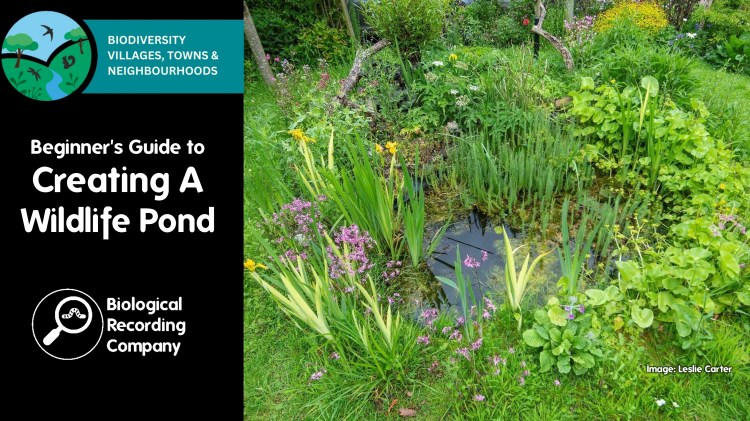
We’ve lost so many of of our natural and farmland ponds over the past 100 years. Even a small pond is really helpful, though the bigger, the better. A significant proportion of UK dragonflies will breed in small ponds. Just don’t add fish as these will eat the larvae. The Gardening page on the BDS website provides advice and further links for anyone considering a pond. I’m really excited about this year as it is hopefully going to be the first year that I get dragonflies in my new garden pond!
Literature references
- Brooks et al (2018) Field Guide to the Dragonflies & Damselflies of Great Britain and Ireland: https://www.nhbs.com/field-guide-to-the-dragonflies-damselflies-of-great-britain-and-ireland-book
- Cham (2012) Field Guide to the Larvae and Exuviae of British Dragonflies: https://www.nhbs.com/field-guide-to-the-larvae-and-exuviae-of-british-dragonflies-book
- Cham et al (2014) Atlas of Dragonflies in Britain and Ireland: https://british-dragonflies.org.uk/product/atlas/
- Daguet et al (2008) The Odonata Red Data List for Great Britain (Species Status No. 11): https://hub.jncc.gov.uk/assets/8e18c30d-794e-4b0c-8d1c-378c3faf0e7c
- Smallshire and Swash (2012) Britain’s Dragonflies: https://www.nhbs.com/britains-dragonflies-book
Further info
- British Dragonfly Society: https://british-dragonflies.org.uk/
- BDS Newsletter: https://british-dragonflies.org.uk/get-involved/sign-up-for-e-news/
- BDS Events: https://british-dragonflies.org.uk/news-events/our-events/
- Become a member of BDS: https://british-dragonflies.org.uk/membership-shop/become-a-member/
- British Dragonfly Society Recording Scheme dataset on the NBN Atlas: https://registry.nbnatlas.org/public/show/dp97
- Drivers and Repercussions of UK Insect Declines (DRUID): https://environment.leeds.ac.uk/geography-research-river-basin-processes-management/dir-record/research-projects/1656/drivers-and-repercussions-of-uk-insect-declines-druid
- Submit dragonfly records through the dragonfly iRecord form: https://irecord.org.uk/enter-dragonfly-list
- Northern Damselfly Survey: https://british-dragonflies.org.uk/recording/northern-damselfly-survey/
- Willow Emerald Watch: https://british-dragonflies.org.uk/recording/willow-emerald-watch/
- Migrant Damselfly Project: https://british-dragonflies.org.uk/recording/migrant-dragonfly-project/
- Site Monitoring: https://british-dragonflies.org.uk/recording/monitoring/
- More info on submitting dragonfly records: https://british-dragonflies.org.uk/recording/submit-your-records/
- State of the UK Dragonflies: https://british-dragonflies.org.uk/recording/state-of-dragonflies-2021/
entoLIVE
entoLIVE webinars feature guest invertebrate researchers delving into their own invertebrate research. All events are free to attend and are suitable for adults of all abilities – a passion for invertebrates is all that’s required!
- Donate to entoLIVE: https://www.gofundme.com/f/entolive-2025
- Upcoming entoLIVE webinars: https://www.eventbrite.com/cc/entolive-webinars-74679
- entoLIVE blog: https://biologicalrecording.co.uk/category/entolive-blog/
- entoLIVE on YouTube: https://youtube.com/playlist?list=PLuEBNUcfMmE95Re19nMKQ3iX8ZFRFgUAg&feature=shared
entoLIVE is only possible due to contributions from our partners and supporters.
- Find out about more about the British Entomological & Natural History Society: https://www.benhs.org.uk/
- Learn more about the Nurturing Nature project: https://cranbornechase.org.uk/chaseandchalke/nurturing-nature/
- Check out the Royal Entomological Society‘s NEW £15 Associate Membership: https://www.royensoc.co.uk/shop/membership-and-fellowship/associate-member/
More on freshwater biology




 Biological Recording
One thought on “DragonflyWatch: The National Dragonfly Recording Scheme”